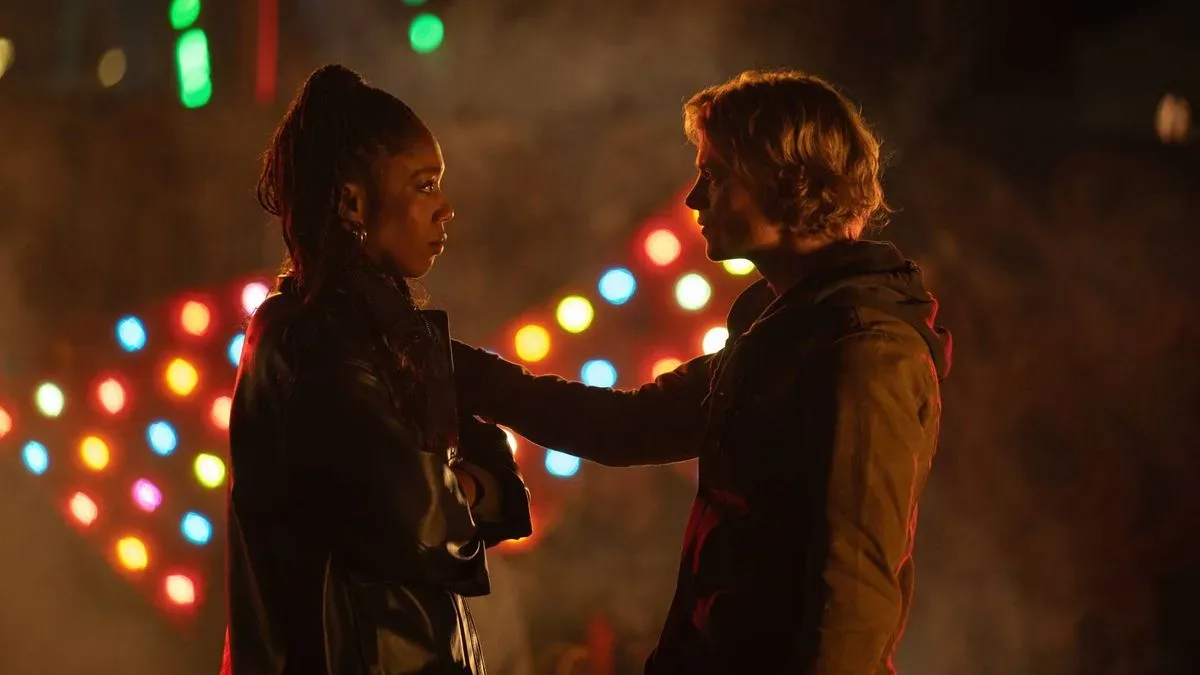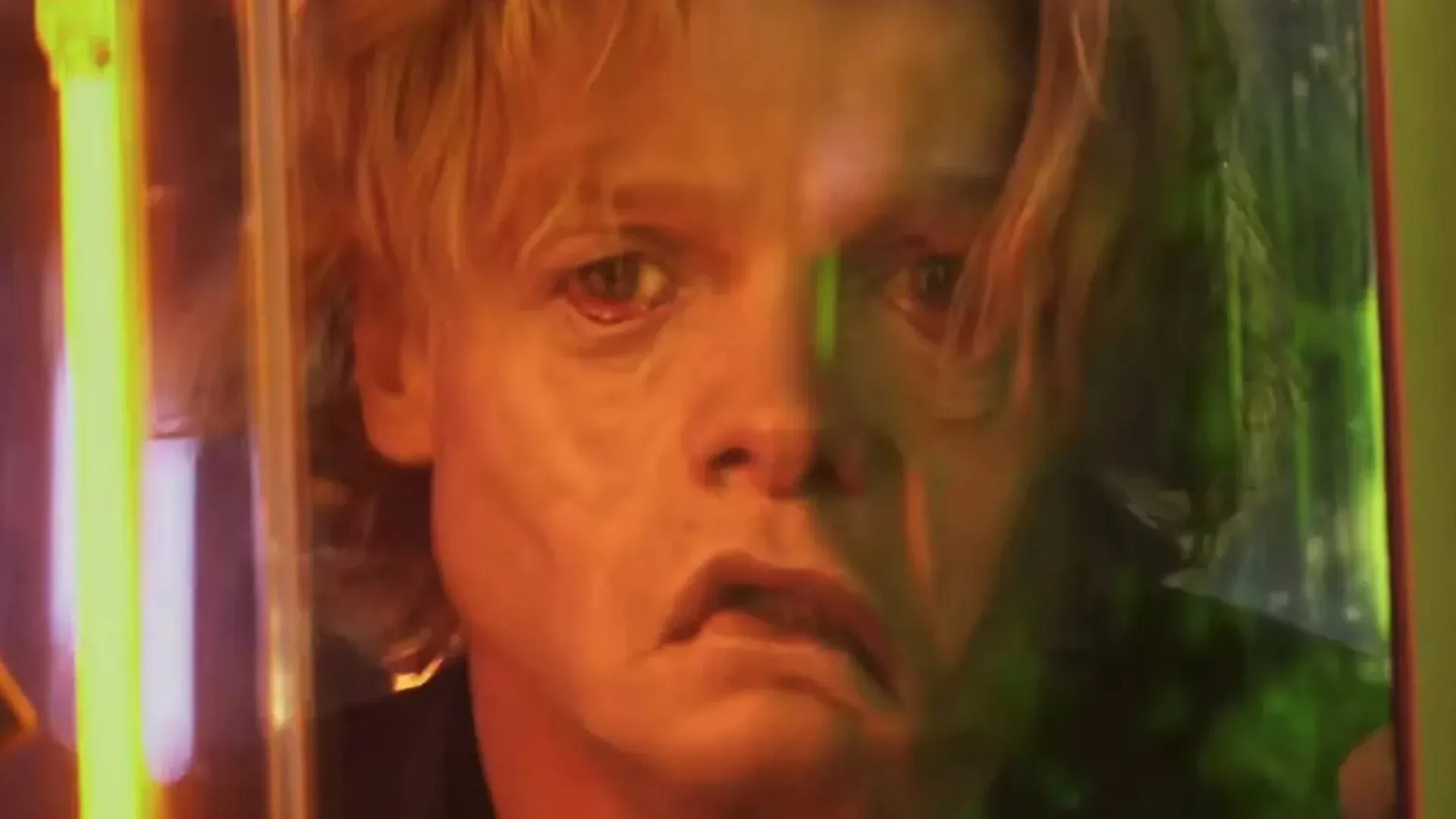
Clayface occupies an unusually early slot in the DC Universe chronology. Although the film arrived in 2026, Matt Hagen’s origin and murder spree occur before Creature Commandos, placing the movie ahead of several DCU stories that audiences encountered earlier or around the same period. An on-screen year is not provided, so the precise dating remains unresolved. Still, the available continuity clues point most plausibly to 2021 or 2022.
That makes Clayface an important test of how the DCU intends to tell its larger story. It is not simply another chapter moving forward from the latest adventure. It goes back to establish an earlier stage of a character who has already been seen in a very different form. The release order and the in-universe order are deliberately not the same.
What is confirmed about Clayface’s place in continuity
The firmest anchor is Creature Commandos, which is set across 2023 and 2024. In that animated series, Clayface appears as the familiar shapeshifting, amorphous version of the character. Because Clayface depicts Matt Hagen’s origin, the movie’s events necessarily happen before that later appearance.
That establishes a clear before-and-after relationship without solving every calendar question. Hagen’s story is earlier than Creature Commandos, and therefore also earlier than the DCU entries placed in 2025 and 2026. It is specifically positioned before Superman, Peacemaker season 2, Supergirl, and the 2026-set material in Lanterns.
The significant point is that this is not a continuity mistake caused by an incomplete timeline. The out-of-order presentation is intentional: Clayface is described as the first DCU film released outside the universe’s chronological sequence. In practical terms, the audience receives a prequel-like origin story after meeting the transformed version of its central villain elsewhere.
The estimated year: 2021 or 2022
No stated date locks the movie to a particular year, which means 2021 or 2022 should be treated as an inference, not a confirmed timestamp. The estimate comes from the gap between the film’s apparent Gotham status quo and the 2023/2024 placement of Creature Commandos.
There is also a Batman-related wrinkle. Batman is understood to be active during the events of Clayface. Yet the Gotham City Police Department does not refer to him in the movie, suggesting that he may not yet be a broadly recognized public figure. The most workable interpretation is that he is operating at the level of an urban legend: real enough to be active, but not established enough to be routine police conversation.
That reading is reinforced by the available Lanterns clue. Sheriff Kane’s Gotham-focused backstory is set years before the series’ 2016 investigation timeline, and Batman is not mentioned there either. This does not prove exactly when Batman began his career; it only limits how confidently viewers can use Batman as a dating tool. His absence from those references leaves room for an early, low-profile period before he becomes more visible within the wider DCU.
Put together, the evidence supports a careful timeline label: Clayface is set sometime before 2023, most likely around 2021 or 2022, but the year has not been formally confirmed.
Why Batman does not settle the question
It is tempting to treat any Batman reference as a precise timestamp. That would overstate what the current material establishes. Batman is briefly visible in Creature Commandos and is mentioned in Lanterns, so his existence and activity are not in doubt. What remains unknown is the length and public profile of his career at the time of Clayface.
“Crimefighting” is also broader than “being a famous Gotham institution.” A vigilante can be active before police departments speak about him openly, before citizens regard him as more than a rumor, or before his exploits are tied into a city’s official narrative. The apparent lack of GCPD discussion in Clayface therefore works better as a tonal and chronological clue than as a hard date.
For now, the upcoming The Brave and the Bold standalone film is the most obvious place for the DCU to clarify Batman’s tenure. Until it does, a timeline should not claim that Clayface depicts Batman’s first night, first case, or first public sighting. None of those specifics have been established.
That distinction matters because the DCU already spans decades. A character can be active in one corner of this world without every city, police department, or future story immediately acknowledging them. The continuity question is not whether Batman exists during Clayface; it is how developed his Gotham reputation is at that point.
Release order versus chronological order
A shared-universe timeline has two separate sequences. Release order is the order in which viewers receive films and shows. Chronological order is the order in which their events occur within the fiction. They often overlap, but they do not have to.
Clayface is a straightforward example of the difference. The movie arrived in 2026, but its story is earlier than the 2023/2024 setting of Creature Commandos. Viewers who follow releases as they happen are not watching the DCU in strict calendar order; they are receiving information as the franchise chooses to reveal it.
This approach has a practical benefit for a villain-led story. Instead of delaying Clayface’s earlier history until every surrounding project reaches that point, the DCU can show how Matt Hagen became the character audiences recognize from Creature Commandos. The movie can supply origin context after the outcome is already known. That is not the same as a contradiction. It is a narrative choice built around dramatic irony, where the audience understands a future development that the characters in the earlier story have not reached.
It also means viewers should separate confirmed ordering from speculation. “Before Creature Commandos” is confirmed by Clayface’s transformed appearance in the animated series. “2021 or 2022” is a reasoned placement based on the surrounding evidence. The distinction is especially useful as additional DCU titles add references that may narrow, revise, or finally specify the date.
The current DCU chronology, including Clayface
Based on the dates and placements presently established, the DCU’s relevant timeline reads as follows:
- 1986: Hal Jordan becomes Green Lantern in Lanterns.
- 2016: Manhunter is found in Rushville in Lanterns.
- 2021 or 2022: Clayface, an unconfirmed estimate.
- 2023/2024: Creature Commandos.
- 2025: Superman.
- 2025: Peacemaker season 2.
- 2026: Supergirl.
- 2026: Hal Jordan is found dead in Lanterns.
- 2027: Man of Tomorrow.
The list does not mean every story is designed to be watched in that sequence for a first viewing. It is a continuity map, not necessarily a recommended viewing order. For Clayface in particular, watching after knowing the character’s later form in Creature Commandos is part of the intended structure.
What Clayface’s placement means for Gotham
Gotham is present in the broader DCU picture, but its chronology is still being built in pieces. Clayface supplies a period in which Matt Hagen’s crimes occur while Batman is apparently active but not openly prominent in the GCPD’s dialogue. Creature Commandos then confirms that Clayface has become a full shapeshifting threat by 2023 or 2024.
Those are meaningful boundaries, even if they are not a complete Gotham history. They tell viewers that Hagen’s transformation and origin precede his animated-series appearance. They also caution against assuming the absence of a Batman cameo or a police mention means Batman is absent from the setting. For more on that distinction, see why Batman does not appear in Clayface even as the DCU’s Gotham takes shape.
The most accurate answer, then, is concise: Clayface takes place before Creature Commandos, likely in 2021 or 2022, and well before the DCU’s 2025 and 2026 stories. The exact year is still open. That ambiguity is not a reason to discard the timeline; it is a reminder to keep confirmed facts and sensible interpretation in separate boxes.