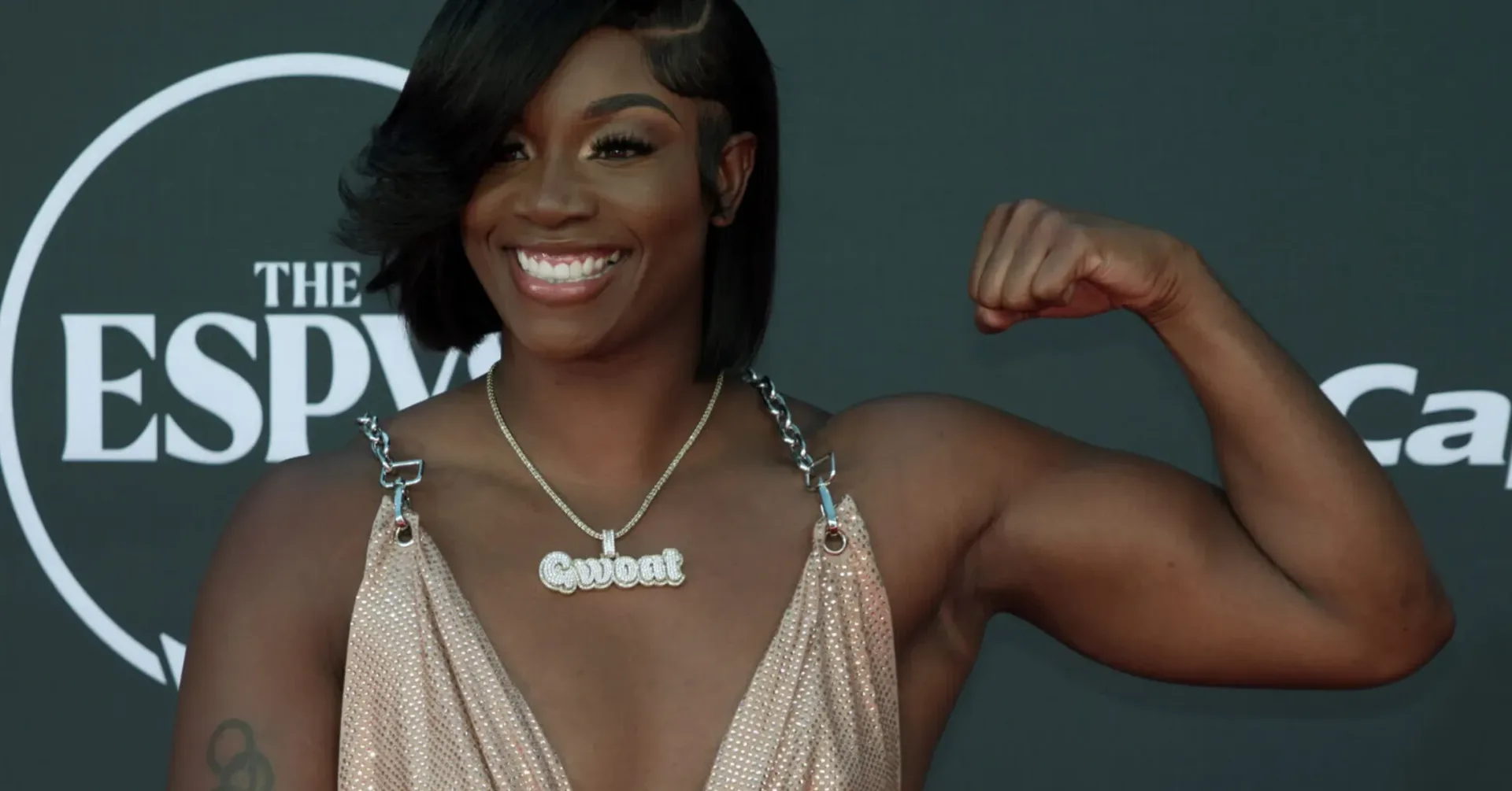
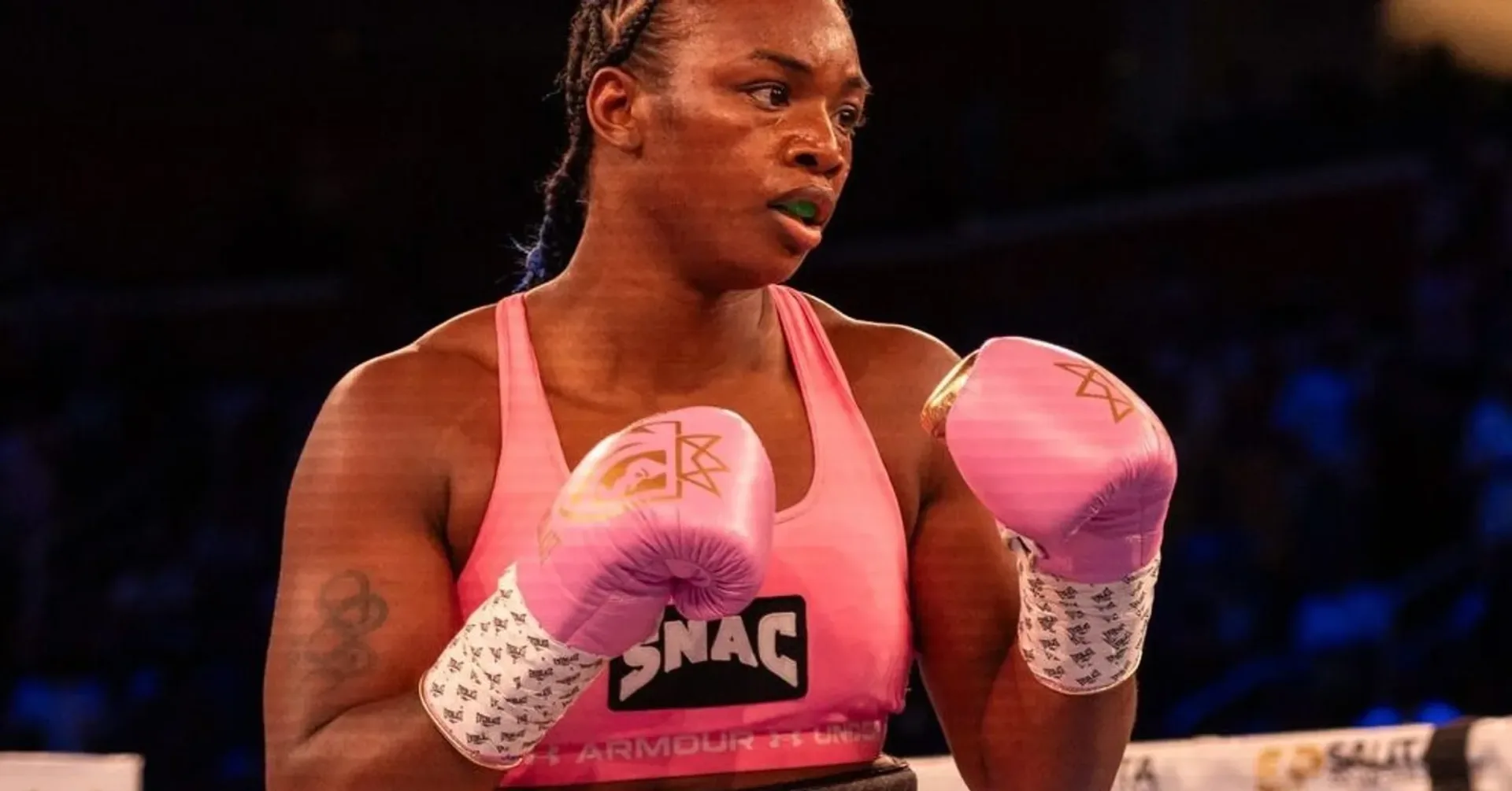
Claressa Shields says the newest round of public sparring with Gervonta Davis did not truly start with a red-carpet look. In her telling, Davis has been carrying a grievance since she repeatedly said she rates Shakur Stevenson above him as a fighter.
That distinction matters because the argument now contains two very different layers. The immediate flashpoint was Davis criticizing the outfit Shields wore to her November 2 listening party in Atlanta. But Shields’ explanation places the conflict in the endlessly combustible territory of boxing rankings: who is more skilled, whose résumé is stronger, and whether a public assessment should be taken as a personal slight.
The dispute has since sprawled across social media, with Shields, Davis and rapper Papoose all participating. It has also turned far more serious than fashion commentary. Shields has referenced domestic-violence allegations involving Davis, allegations he has disputed and for which he has denied wrongdoing in legal proceedings. She has also denied claims she says Davis made about her relationships with other fighters.
Those subjects should not be flattened into ordinary promotional trash talk. Athletes criticizing each other’s records, ring craft or fashion choices is one thing; allegations involving violence and private relationships are another. The available accounts establish that the claims and denials have been exchanged publicly, not that the accusations have been newly proven by this feud.
Shields points to a boxing opinion as the real fault line
In a recent social-media video, Shields said she and Davis had previously been on good terms and had no major personal problem. She said the dynamic changed after she began voicing her belief that Stevenson was the superior fighter.
That was not a one-off opinion raised only after the latest dispute. During a 2024 appearance on Cigar Talk, Shields put Stevenson ahead of Davis and other notable fighters. Her argument centered on Stevenson’s technical ability and his experience against demanding opposition. Her concise verdict was that Stevenson was better than “Tank,” Davis’ nickname.
There is an important difference between that type of ranking and a claim that Davis lacks ability. Shields has criticized aspects of Davis’ boxing résumé, but she has also praised his skills publicly. Notably, she defended Davis’ ability after his March 2025 draw with Lamont Roach Jr. Her current position, then, is not that Davis is incapable; it is that Stevenson’s all-around craft and body of work earn the higher place in her personal evaluation.
That may sound like hair-splitting to casual observers, but it reflects a familiar divide in fight discourse. A fighter can be regarded as dangerous, talented and capable of producing spectacular moments while still being ranked below another athlete on technical grounds. “Technical ability” generally refers to the repeatable tools that shape a bout: distance management, defensive positioning, timing, punch selection, footwork and the ability to adjust when an opponent changes tactics. A résumé is the record of opponents and accomplishments used to assess how those tools have held up at a high level.
Related coverage includes Claressa Shields Says Shakur Stevenson Debate Fueled Gervonta Davis Rift.
Shields’ stated case for Stevenson is based on those kinds of criteria. It is a subjective ranking, not a settled fact. But it is also the kind of opinion that routinely starts arguments among fighters and fans, particularly when the athletes being compared are prominent and active in the same broader boxing conversation.
The outfit comment reopened the dispute
The immediate exchange began after Davis commented on Shields’ revealing black lace-up jumpsuit and red boots from the Atlanta event, writing that she looked “a hot ass mess.” Shields answered with insults and references to the domestic-violence allegations Davis has disputed.
From there, the story became less about the outfit itself than about the relationship behind the insults. Shields has argued that Davis’ comment was simply the latest expression of resentment over her Stevenson view. Davis’ original remark supplied a simple, highly shareable provocation; Shields’ response supplied the older context she believes explains why it landed with such force.
Public feuds frequently work this way. A visible trigger is easy to identify, while the participants frame it as evidence of a much older disagreement. That does not independently verify either person’s motives. It does clarify why a criticism that might otherwise have remained a brief exchange has drawn in old opinions, prior grievances and people close to the two fighters.
It also makes the conversation harder to contain. Once an online argument moves from the stated issue to private messages, friendships and allegations about conduct, every repost can be treated as a new development even when it does little to clarify the initial disagreement.
Papoose enters as Shields rejects any ‘bro code’ claim
Papoose, Shields’ boyfriend, joined the dispute by mocking Davis’ controversial fight with Roach. Shields later said Davis had selectively shared material from a private exchange with Papoose and had questioned why Papoose was defending her.
Shields rejected the idea that Papoose owed Davis any loyalty based on a friendship or “bro code.” Her response made her position plain: Papoose was supporting his partner, and she said the couple does not associate with Davis.
This is where a sporting argument has become a relationship argument. Papoose’s involvement does not change Shields’ technical case for Stevenson, but it does change the social stakes of the back-and-forth. What began publicly as an insult about clothing now includes competing narratives about whether Davis and Papoose have a relationship worth protecting and what was said in their private communication.
For readers trying to follow the dispute, the practical distinction is straightforward: the messages described by Shields are assertions about a private exchange, while her longstanding Stevenson-over-Davis ranking is a documented public opinion. Treating both as equivalent would blur what can be directly understood from the public record and what remains contested between the people involved.
An AI image keeps the visual jab alive
On Thursday, November 5, Shields added a visual response by posting an AI-generated image of Davis in a version of the black lace-up jumpsuit and red boots he had criticized. The manipulated image moved the outfit’s revealing cutouts to the front.
The post is an example of how generative-AI imagery is now being used in celebrity and athlete feuds: not as evidence, but as a fast visual punchline. That distinction is essential. The image was presented as altered content, not a real photograph of Davis. In a social-media environment where screenshots and cropped posts can travel without context, clear labeling is particularly important.
As a tactic, the image turned Davis’ original criticism back on him. As a development in the larger feud, it reinforced Shields’ view that she was not going to let the outfit comment stand unanswered. Its accompanying message was more severe than the joke, including further accusations about Davis’ behavior and the claims she says he spread about her. Davis has disputed allegations of domestic violence and denied wrongdoing in related legal proceedings.
The image also illustrates why visual posts can drive a story more quickly than a detailed explanation of a fighter ranking. A technical case for Stevenson requires people to discuss craft, opposition and style. An altered outfit image communicates its point instantly. The risk is that the shareable joke can eclipse the more consequential disputes surrounding it.
What the Stevenson comparison does—and does not—resolve
Shields’ explanation gives the feud a clearer origin story from her perspective, but it does not resolve the underlying boxing debate. Ranking Stevenson over Davis remains an evaluative judgment. Fans can reasonably emphasize different traits: technical command, opponent quality, power, entertainment value, consistency or success in particular situations. The supplied record establishes that Shields favors Stevenson because of his skill set and experience against difficult opponents; it does not require everyone else to adopt that ranking.
Nor does that disagreement automatically explain every subsequent exchange. Shields believes Davis took the opinion personally. That is her account of his motivation. The public record described here shows that the debate predates this week’s fashion dispute and that the two athletes have traded insults, but private intent is not something outsiders can conclusively determine from posts alone.
What is clear is that Shields has been consistent on the central point. She has not presented Davis as a fighter without ability, even defending his skills after the Roach draw. Instead, she has maintained a hierarchy that places Stevenson first. In boxing, where status is debated as fiercely as results, that can be enough to keep an old disagreement alive.
The episode also fits a wider pattern in entertainment-facing social media: a seemingly small criticism becomes a vessel for older tensions, and the conversation expands through reposts, relationship alliances and visual memes. Similar uncertainty can surround public lyrical disputes, as seen in debate over the target of Drake’s “Ya Hit” verse. In both cases, audiences can distinguish what was actually said from assumptions about intention.
For now, the key fact is not a newly settled answer to the Stevenson-versus-Davis question. It is Shields’ insistence that the question is the reason this conflict became personal in the first place. The outfit criticism may have reignited the exchange, but Shields says the rivalry was already there.