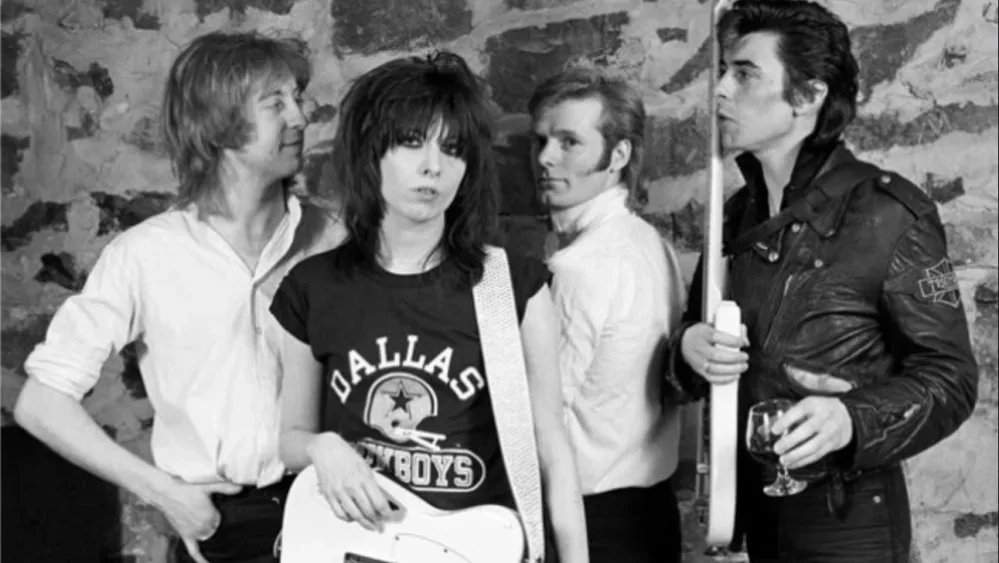
There is a particular irony in a documentary about Chrissie Hynde arriving with her blessing: the singer, guitarist and defining force behind the Pretenders has never seemed interested in turning her life into a monument. She wanted to be in a band. She still frames it that simply. But The Pretenders, directed by Joss Crowley and scheduled to premiere Sunday at the Toronto International Film Festival, takes that resistance seriously rather than sanding it away for a familiar celebrity-documentary victory lap.
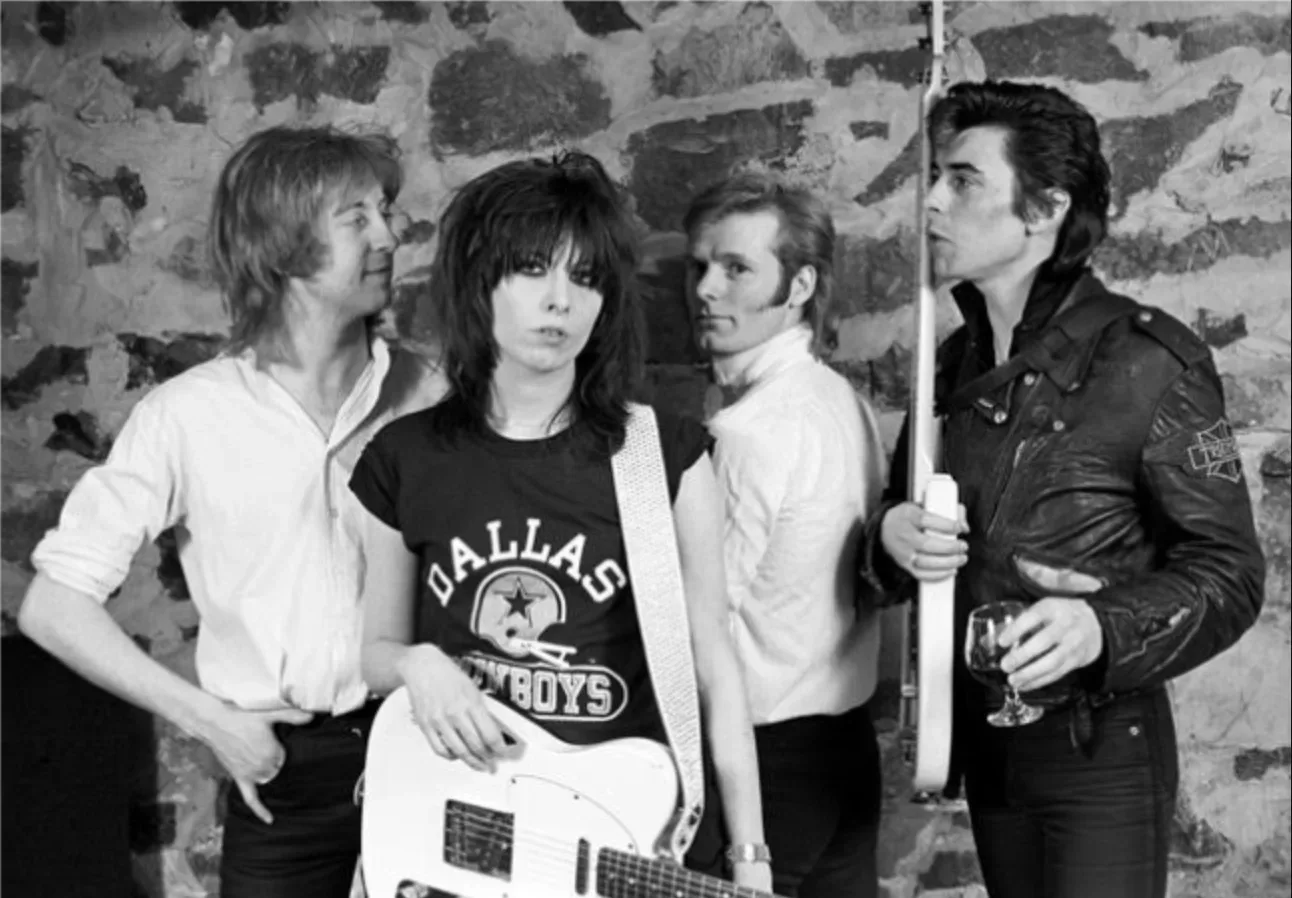
The film is built around the band’s first decisive stretch: the road from Hynde’s late-1970s Akron beginnings to the U.K. scene where the Pretenders coalesced, followed by the fast, exhilarating and frequently devastating early-1980s years. That means the original lineup is central: Hynde, guitarist James Honeyman-Scott, bassist Pete Farndon and drummer Martin Chambers. It also means the documentary has to reckon with extraordinary music alongside losses that remain inseparable from the group’s history.
The Pretenders released their self-titled debut in January 1980, an album often placed among rock’s most formidable first statements. Yet the film is not positioned as a simple exercise in canon-building. Hynde’s stated preference was for a band story rather than a personal-brand study or another broad argument about women in rock. That distinction sounds small on paper, but it gives Crowley’s approach a useful tension: the band cannot be separated from Hynde, while Hynde clearly does not want the film to act as a shrine to her.
A documentary born from hesitation
Crowley had pursued the project for more than a decade before the timing finally worked. His first recorded interview with Hynde came near the end of 2023, shortly after they met. The process did not begin with a conventional promotional blueprint. Instead, Hynde established boundaries that shaped the finished form: archive material would carry much of the visual storytelling, the focus would remain on the group, and the film would avoid reducing its subject to a ready-made cultural symbol.
Her decision to participate was also partly practical. Hynde became aware that an unrelated Pretenders documentary had been presented to people in her orbit as if it were official. Faced with the possibility that more unofficial retellings might appear, she chose to help make one that she believed would be truthful. It is a sharply unsentimental reason to authorize a biography, and it suits a musician who has consistently resisted the idea that public attention automatically entitles anyone to every private detail.
That outlook extends to the way the film handles its interviews. Hynde is notably camera-shy, and much of what she contributed was recorded as audio. She described the early sessions as more like choosing a memory or event, speaking about it for an hour, having tea and leaving Crowley to make narrative sense of the material. Later conversations became more explicitly interview-based, but the design remained responsive to her discomfort with being watched.
There is eventually an on-camera interview with Hynde, placed at the end. The limited appearance is not merely a stylistic flourish. It reflects the push and pull at the center of the entire production: a performer willing to give audiences music, but far less comfortable with the machinery of celebrity observation. Hynde has said she has not seen the completed film and may not watch it, explaining that she has already lived those years and does not need to relive them through a screen.
The archives that changed the project
An archive-driven music documentary lives or dies on whether the past can be made vivid without pretending it has been preserved more completely than it was. The Pretenders’ formative period predates phones that were constantly ready to record every rehearsal, backstage argument or roadside stop. Access was not always available to photographers and camera crews, either. Crowley’s team therefore had to build the film around material that was scarce, uneven and sometimes nearly unusable.
Related coverage includes Chrissie Hynde’s Pretenders Documentary Brings an Archive-Driven Story to TIFF.
One major discovery came through cameraman Andy Watt, who is from Hereford, as are key roots of the band’s early story. Watt joined the original group on a North American tour roughly three months before Farndon left the band and Honeyman-Scott died. He had documented two weeks of the tour on 20 tapes. The footage had never been seen publicly, but the tapes were in poor condition. A retired engineer was ultimately able to restore them, providing a window into a period that had been at risk of disappearing altogether.
The material has special weight because the documentary concentrates on the roughly five-year span bridging the end of the 1970s and the beginning of the 1980s. Honeyman-Scott died in 1981, only two days after Farndon was dismissed from the band. Farndon died the following year. Those dates are stark enough by themselves; footage from near that era gives the film a chance to let the musicians register as working people in a band rather than only as figures frozen in hindsight.
Another key thread comes from former tour manager Stan Tippins, who reads from his diaries on camera. For Hynde, the diaries were a revelation of their own: Tippins would mention going off to write in them, but she and the band had not actually seen what he recorded. Crowley has described the moment when Tippins found his earliest recollection of meeting Hynde in rehearsals as a breakthrough for the production. His diary perspective supplies the kind of everyday texture that official timelines often flatten out.
Hynde remembers Tippins as a stabilizing, almost scout-leader-like figure in a young band learning as it went. His past included singing with Mott the Hoople before Ian Hunter. More importantly for this story, he seems to represent an affectionate counterweight to the chaos: someone the band teased but also regarded as wise. The diaries may be among the documentary’s most valuable devices precisely because they do not begin with the myth. They begin with people meeting, rehearsing, touring and trying to work out what their lives had become.
Giving James Honeyman-Scott his due
Hynde has identified Honeyman-Scott as a major reason she agreed to participate. To her, electric guitar is fundamental to what a rock band is, and she believes he should be remembered among its great players. She has long felt that his name is absent too often from broad “greatest guitarist” lists, despite the centrality of his playing to the Pretenders’ identity.
That is a meaningful corrective mission, but it is not presented as an attempt to turn the documentary into a ranking exercise. Honeyman-Scott’s legacy is in the sound, the arrangements and the volatile brilliance of the original band. A story that takes his musicianship seriously also has to acknowledge how abruptly the original formation was broken apart. The recovered touring footage and Tippins’ diaries may help bridge that gap between reputation and personhood.
It also clarifies why Hynde’s insistence on the collective matters. The Pretenders were never simply an excuse for a frontperson’s mythology. Any accurate account must make room for Chambers, Honeyman-Scott and Farndon as musicians with agency, chemistry and histories of their own. Crowley’s stated goal was to tell the Pretenders’ story first, even while making sure that Hynde’s unmistakable personality came through.
Awkwardness is part of the record
Crowley has said that he decided to retain some of his own questions, including moments when Hynde initially did not want to answer them. In a documentary landscape where interviews are frequently edited into smooth declarations, that choice could be revealing. A refusal, delay or change of direction can say as much about a subject as an expertly polished anecdote.
Hynde’s boundaries are not a tease for hidden revelations. They are part of her ethics. She does not want to discuss Ray Davies or members of her family because, in her view, their privacy is theirs to keep. She has also rejected the implication that a famous person’s grief, mistakes, victories and disappointments are automatically more fascinating than those experienced by anyone else. Her stance is not anti-story; it is anti-extraction.
That makes The Pretenders potentially more interesting than a documentary built around unrestricted access. It has to find character in the gaps, in the sound of a voice rather than a flood of talking heads, and in found images that survived despite a lack of cameras in the room. The same attention to performance and persona can be seen in current music culture, where even a brief cryptic social-media post can trigger elaborate interpretation. Hynde’s position is a useful reminder that not every silence is an invitation to fill it.
Her influences underline the point. Hynde has cited Lemmy as someone who never changed, joking that if a request would not be made of the Motörhead frontman, it should not be made of her. She also pointed to Neil Young, Bob Dylan, Willie Nelson and Paul McCartney as artists whose core relationship to making music has endured despite enormous public expectations. The through line is less about fame than vocation: keep playing because playing was the point before anyone started asking for symbolism.
Toronto, but not a beauty contest
Hynde is expected to attend the Toronto premiere with Chambers. Her dry description of the two arriving on the red carpet captures the tone around the project: present, cooperative, but unimpressed by ceremony for its own sake. The film’s value will not rest on whether its subject embraces the apparatus surrounding it. Its appeal lies in the prospect of a rare early-era archive, a respected band’s full ensemble story and a lead musician who is willing to be candid without pretending she enjoys the spotlight.
For fans, the documentary promises something more useful than a checklist of iconic songs and crises. It is an attempt to preserve the human working life of the Pretenders at the moment when their music became permanent, while the people making it were still moving through uncertainty, ambition, humor and loss in real time.