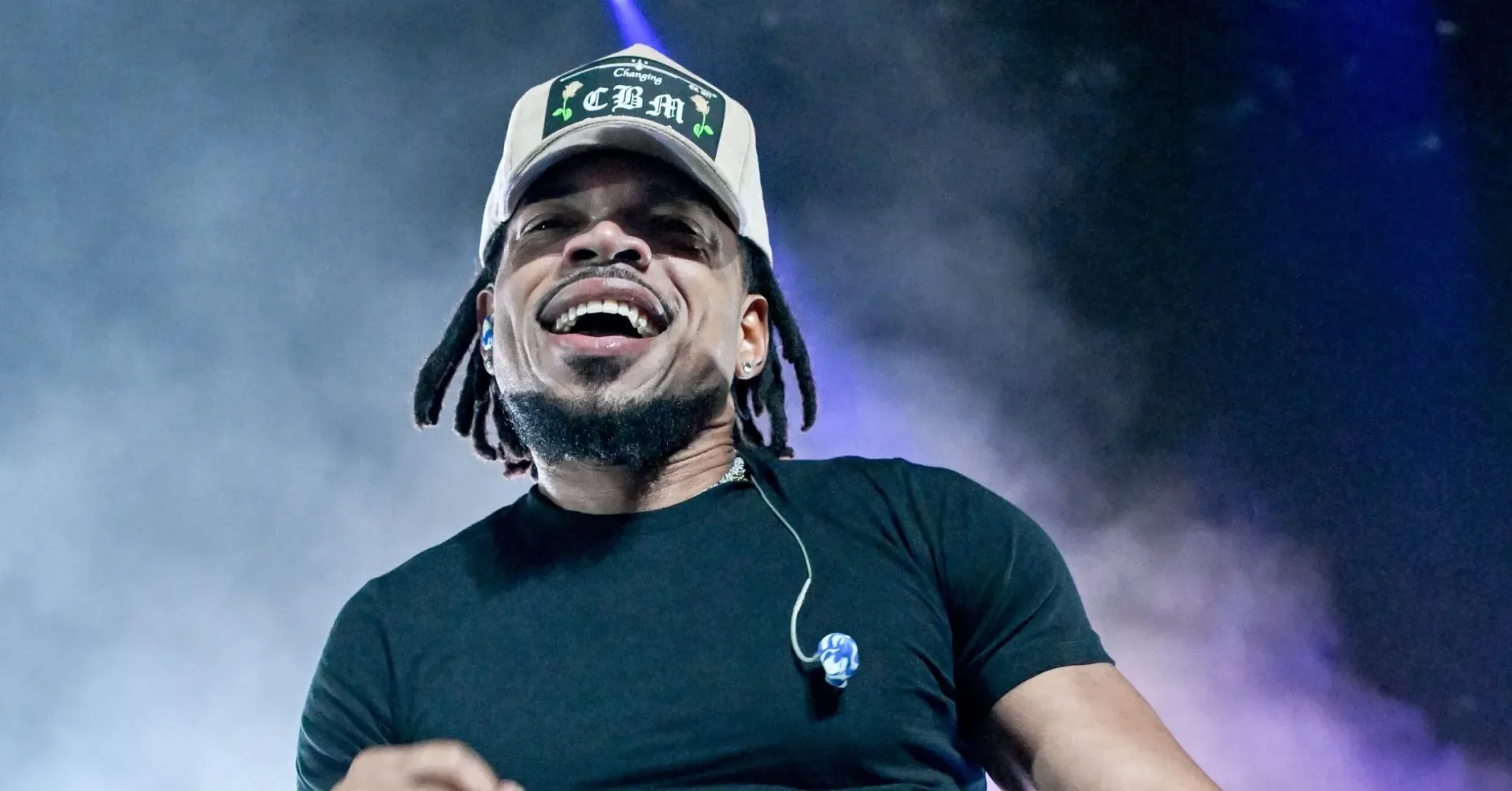
Chance The Rapper is considering a strikingly simple revision to one of hip-hop’s most recognizable stage names: he may eventually perform as “The Rapper.”
Speaking on the Tea Time podcast with Raven-Symoné and Miranda Maday, the Chicago artist said he has been thinking extensively about removing “Chance” from the name. The proposal is not presented as a confirmed rebrand with a timetable, new release, or formal rollout. It is an idea he is actively weighing, one connected to how he wants to make music and how much of his own day-to-day life he wants that music to reveal.
That distinction matters. The name “Chance The Rapper” has long held two ideas together: a personal identity in “Chance,” and a declared allegiance to an art form in “The Rapper.” His comments suggest that the latter has become more important to him than the former.
Why “The Rapper” appeals to him
The artist, born Chancelor Jonathan Bennett, explained that a girl from his high school gave him the original moniker. Over his career, he said people have urged him to change it on the premise that he had become more than a rapper. His answer has been to retain the connection: no matter what else he does, hip-hop remains foundational to him.
His possible new name turns that position into a much blunter statement. “The Rapper” is less biographical and more occupational, even archetypal. Rather than suggesting an artist is defined by a particular personality or personal narrative, it puts the craft at the center.
Chance described great rappers as people deeply invested in language, pointing to the work of etymologists and linguists. In plain terms, etymology studies where words come from and how their meanings change, while linguistics studies how language works: its sounds, structures, uses, and social context. He was not outlining an academic requirement for rap. He was emphasizing the attention to vocabulary, phrasing, meaning, and verbal construction that he sees as central to the form.
That is also why the prospective change should not be read merely as a branding maneuver. The proposed name reflects a stated shift in artistic emphasis—from the person named Chance toward rap as a creative discipline with its own tools, traditions, and possibilities.
Vulnerability versus privacy is not a simple divide
Chance did not dismiss personal writing. He said that his favorite rappers have been vulnerable, and acknowledged the value of artists speaking from their own lives. But he also expressed renewed interest in other approaches: writing about public conditions, imagining a better future, making songs driven by wordplay, or otherwise exploring subjects not intrinsically tied to his immediate experience.
That is a useful distinction in discussions of rap and authenticity. Personal disclosure is one way to make work feel honest, but it is not the only one. A writer can be sincere about a political concern, vivid in an imagined scenario, technically inventive in wordplay, or committed to a broader social idea without turning every song into a diary entry.
For Chance, the issue appears to be ownership of the boundary between public expression and private life. He said he does not always want events in his life—or details involving his family—to become material for the audience. Keeping some experiences private, in this view, is not a rejection of meaningful songwriting. It is a choice about what a public-facing artistic identity should demand from the person behind it.
That perspective gives “The Rapper” a second meaning. It could create a little more distance between the performer and Chancelor Bennett, allowing the former to operate as a role focused on technique, perspective, and subject matter rather than continual self-exposure.
A name change would carry unusual creative expectations
If the change happens, listeners may understandably look for it to signal something in the music. A performer calling himself “The Rapper” invites attention to the mechanics of rapping: cadence, rhyme construction, imagery, point of view, and the choices made from one bar to the next. It is a name that foregrounds the medium.
Still, a new name would not require a total abandonment of autobiography. The comments point to an expanded set of options, not a rigid ban on intimacy. Chance’s stated interest is in being able to make a song that is not necessarily about what happened to him on a given day, while preserving the ability to be vulnerable when that is artistically appropriate.
There is a practical side to that too. Artists often find that audiences treat the personal “I” in a song as a direct factual report, even when a lyric is selective, stylized, dramatized, or fictional. Creating more separation between a legal name, a familiar nickname, and a performance identity can help clarify that art does not automatically grant the public access to every private detail.
The exact form of any transition remains unknown. Chance has not specified when he would make the change, whether it would apply to releases and touring, or how existing work would be presented alongside a new billing. Until those details exist, “The Rapper” is best understood as a seriously considered possibility rather than an enacted replacement.
Coloring Book’s anniversary tour is the backdrop
The conversation arrives while Chance is touring around the tenth anniversary of Coloring Book. That setting makes the reflection especially notable: an anniversary naturally invites an artist to look backward at a pivotal period, but it can also prompt questions about what should change next.
His reasoning does not frame rap as a phase he has outgrown. In fact, it argues the opposite. The pressure he described—being told he is “more than a rapper”—could lead an artist to downplay the label. Instead, Chance is considering a name that would elevate it, while redefining what being a rapper can encompass.
That includes autobiography, but not only autobiography. It includes critique, aspiration, and linguistic play. It includes the freedom to choose when a song opens the door to a personal life and when it directs attention somewhere else.
For pop-culture audiences, changes in artistic names can often look like straightforward marketing. Chance’s explanation gives this one a more specific creative motive: he wants a name that keeps him connected to hip-hop while giving him room to make work that does not require his private life to be permanently available for public consumption. For more entertainment coverage across television, fandom, and culture, see our look at NYCC 2026’s major TV panels.