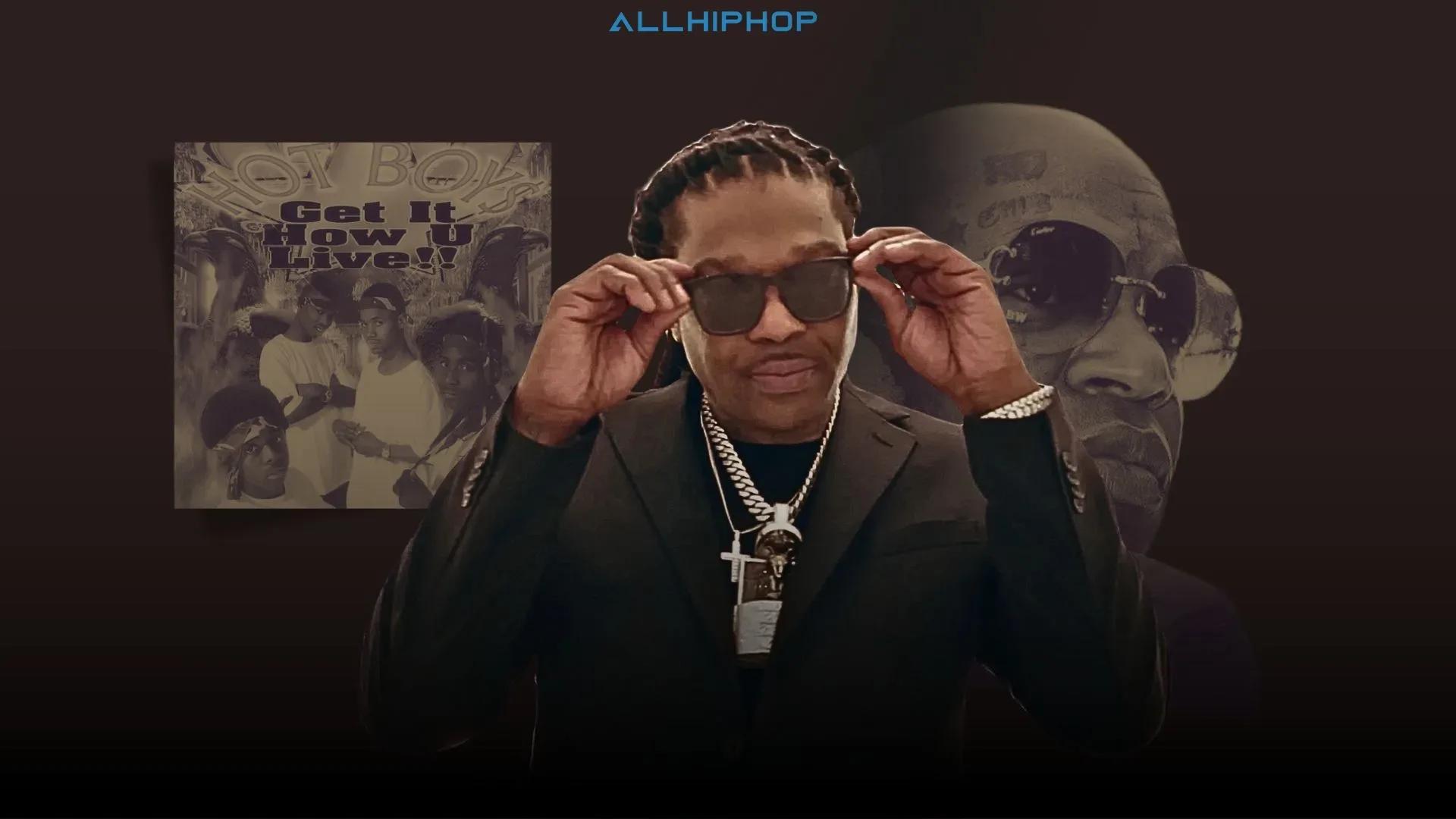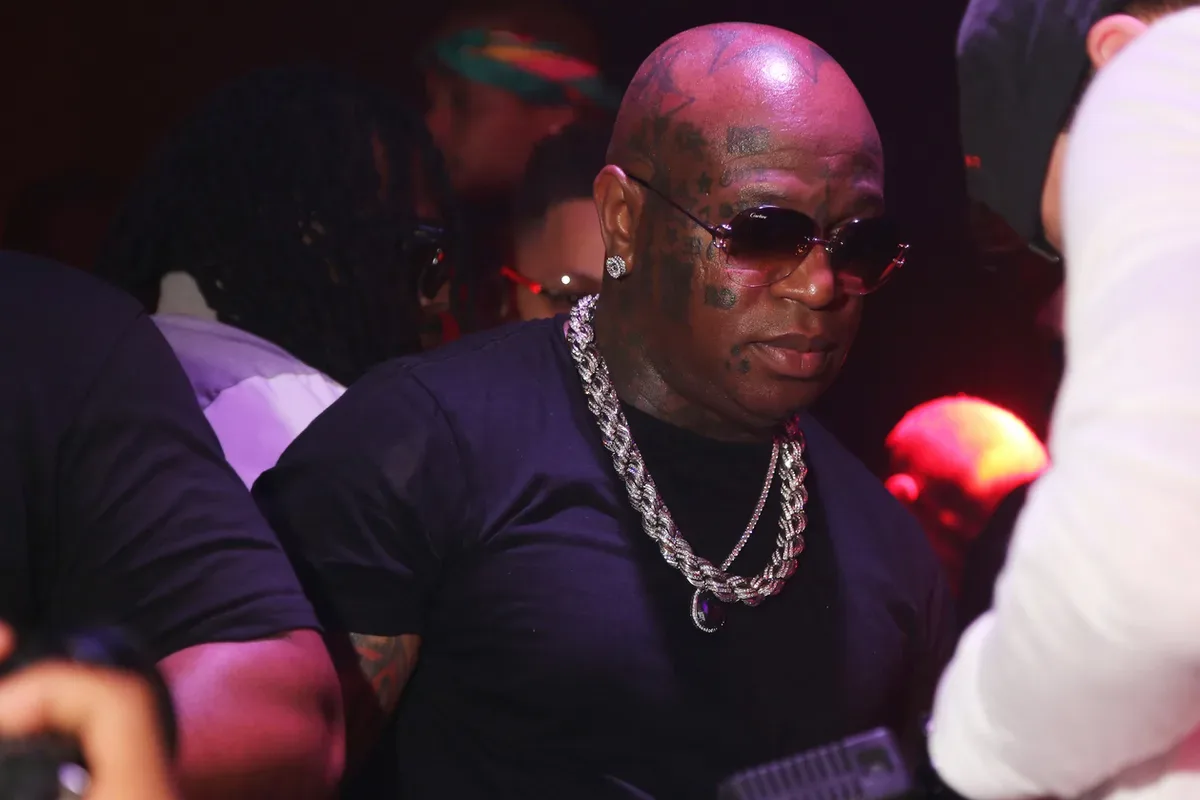
For years, Cash Money Records and No Limit Records represented two separate routes out of New Orleans and into the center of hip-hop. They came from the same city, built during the same broad era, and commanded immense loyalty from listeners—yet they were understood as competing camps rather than collaborators. The Cash Money and No Limit Tour changes that framing in a very public way: Birdman and Master P are headlining a 17-city run that places the catalogs, communities and artists associated with both institutions on the same bill.
The tour began with consecutive sold-out shows in Houston and New Orleans. That opening matters beyond the typical “legacy act” reunion narrative. New Orleans is not simply a convenient tour market here; it is the place that produced both label ecosystems. The shared stage functions as a homecoming, an acknowledgement of parallel histories and a statement that the old divide no longer needs to define the story.
Birdman described the purpose in communal terms: “Bringing our people together on one stage, in front of the fans who rode with us from the beginning is what this is about. We built something that lasted, and this tour is us celebrating that with everybody.”
Two New Orleans institutions, finally presented together
Cash Money and No Limit emerged from New Orleans in the early 1990s, each becoming a major force on its own terms. Cash Money was founded by Birdman and Slim Williams in 1991, later becoming closely associated with artists including Juvenile, B.G. and Lil Wayne. No Limit was founded by Master P and grew into a powerhouse with acts including Mystikal and Silkk the Shocker; Snoop Dogg would join its roster later.
Calling them “labels” is correct, but incomplete. In this context, a label is not merely a logo on an album spine or a business that distributes recordings. Each became a broad cultural movement with a distinct artist roster, sound, audience allegiance and regional identity. Their accomplishments helped demonstrate that Southern hip-hop could build national influence without following the existing expectations around where commercial rap success was supposed to originate.
That shared geography also encouraged audiences to read the relationship as a rivalry. Competition was real in the basic sense: two hometown operations wanted to be the city’s biggest movement. But Mannie Fresh has drawn an important line between that public perception and the relationships behind it. Speaking in a Houston radio interview, he said the connection between people around the two camps went back before fame, even if the scene’s competitive structure made affiliations feel inevitable.
“We all came from that music thing,” Mannie Fresh said, “but somebody had to pick a side.”
That explanation helps clarify why this tour is resonating. It does not require pretending that the two organizations were always one unit. Instead, it recognizes that competition and personal familiarity can coexist—especially when artists, producers and associates grow up in the same local musical world. The point of the new presentation is not to erase separate identities. It is to let both identities be celebrated without asking the crowd to choose between them.
Why the scale of the pairing is significant
The defining fact is not only that familiar performers are revisiting older material. The tour is described as the first major-scale union of the Cash Money and No Limit catalogs. A catalog, in music-business language, is the body of recordings tied to an artist or label. In a live setting, pairing catalogs means fans can encounter songs and eras normally housed in different histories of the genre within one event.
That creates a more expansive kind of retrospective. Cash Money’s history can be represented by Birdman alongside Juvenile, Mannie Fresh and B.G.; the tour also puts Master P at the center of No Limit’s side of the occasion. Boosie Badazz is set to appear as a special guest on select dates. The lineup does not turn the two institutions into a single act, and it should not be read as doing so. Rather, it establishes a shared platform for two distinct New Orleans legacies.
For longtime listeners, that difference may be exactly the appeal. A nostalgia tour can sometimes flatten the past into a greatest-hits checklist. This one has a clearer underlying idea: the audience is being invited to see two historical narratives placed in conversation. Both labels reshaped Southern hip-hop and influenced the industry, but they did it while operating as separate empires during their peak years. The live format supplies a meeting point that the original moment did not.
It also foregrounds the people who remained invested. Birdman’s reference to fans who were there “from the beginning” speaks to sustained support rather than a fleeting reunion-market curiosity. Sold-out opening nights in Houston and New Orleans suggest that the combination has immediate draw, though they do not by themselves establish how every remaining date will perform. What they do show is that this pairing has moved beyond an abstract “what if” and into a live event with substantial early demand.
A New Orleans homecoming with an unscriptable moment
The New Orleans stop at the Superdome supplied the tour’s most personal public scene so far. During the show, B.G. proposed to his girlfriend, Brooke Jones, onstage in front of the crowd. In a production built around institutional history, the proposal added an individual milestone—a moment belonging to two people, played out amid a celebration of a city’s music culture.
It is easy to overstate any single concert moment, but this one aligns naturally with the tour’s wider message. The event is being positioned around legacy and New Orleans pride, and the proposal brought love and personal commitment into that frame. It gave the homecoming a human texture that cannot be captured solely by terms such as “reunion,” “catalog” or “headliner.”
Slim Williams expressed the broader intention this way: “New Orleans raised us and Hip-Hop gave us a platform to show the world what we were made of. Putting Cash Money and No Limit on the same stage is bigger than a tour. It’s a tribute to where we come from and everything that city poured into us.”
That statement identifies the city as an active part of the narrative rather than passive scenery. The labels became nationally consequential, but their roots remain central to how this collaboration is being understood. The Houston launch and the New Orleans Superdome show placed the tour’s beginning in markets with direct regional and cultural significance, with the latter providing the clearest symbolic homecoming.
What fans should take from the current tour details
The announced itinerary spans 17 cities. Remaining dates are scheduled to run through November 15, 2026, with stops in major markets including Atlanta, Chicago and Tampa. Birdman and Master P are the headliners, while the stated Cash Money lineup includes Juvenile, Mannie Fresh and B.G. Boosie Badazz’s involvement is limited to select dates, an important qualification for anyone assessing a specific stop rather than the tour as a whole.
- Headliners: Birdman and Master P.
- Named Cash Money performers: Juvenile, Mannie Fresh and B.G., alongside Birdman.
- Select-date guest: Boosie Badazz.
- Schedule scope: 17 cities, with remaining dates announced through November 15, 2026.
- Named remaining markets: Atlanta, Chicago and Tampa.
There is a practical lesson in those details: a tour-wide billing is not always identical to the lineup at every individual show. The “select dates” description for Boosie Badazz makes that explicit. Fans considering a particular market should treat the announced tour information as a broad framework and pay close attention to the listed performers for the event they are interested in, rather than assuming every guest appears everywhere.
The tour’s importance, though, is not dependent on every stop reproducing the exact same combination of people. Its core achievement is the agreed-upon premise of Cash Money and No Limit occupying one major touring stage after decades in separate lanes. That premise has meaning because the labels’ separation was historically part of their identity, not because listeners have forgotten who they were.
The legacy is in the coexistence, not the rewrite
There is no need to recast the past as a harmonious alliance to appreciate the present collaboration. Mannie Fresh’s “pick a side” line captures the period’s reality more honestly: a shared foundation existed, but public loyalties and ambitions divided the landscape. The present-day tour recognizes both sides of that equation. It honors the independent strength of each organization while making room for a unified New Orleans celebration.
That distinction gives the event a sturdier purpose than simple nostalgia. Nostalgia often asks an audience to return mentally to a prior era. This tour instead brings the past into a new arrangement. The artists and catalogs retain their individual histories, but the live setting lets those histories interact. For fans, the appeal is not that the old competition never mattered; it is that it no longer has to prevent a collective moment.
Music and game culture frequently overlap through shared eras, physical formats and the communities that preserve them. For a different example of music being treated as a collectible object rather than only a stream, see this look at the announced GTA 6 soundtrack editions. The Cash Money and No Limit Tour approaches legacy through performance instead: the archive is activated by the people, songs and hometown history gathered in the room.
With sold-out opening shows already behind it and dates continuing into mid-November 2026, the tour is a current celebration rather than merely a hypothetical reconciliation. Cash Money and No Limit remain separate names with separate achievements. Sharing the stage does not reduce that history. It puts its scale into focus.