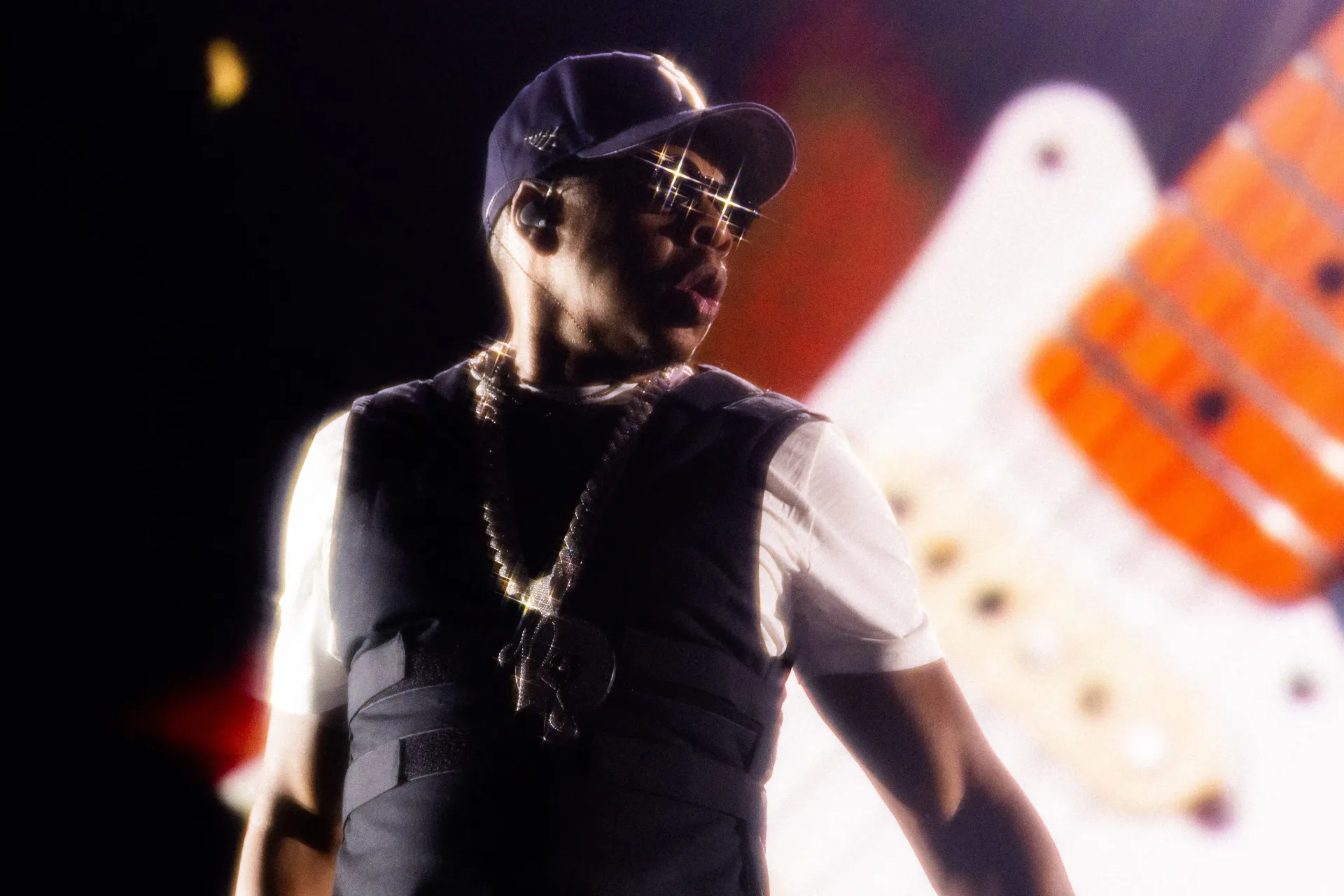
Jay-Z has not been confirmed as a Super Bowl performer, but a report suggesting he could take the stage has already sparked the kind of argument built for a sports-and-culture podcast: not whether he has a major catalogue, but whether that catalogue is the right tool for the biggest live music slot in American television.
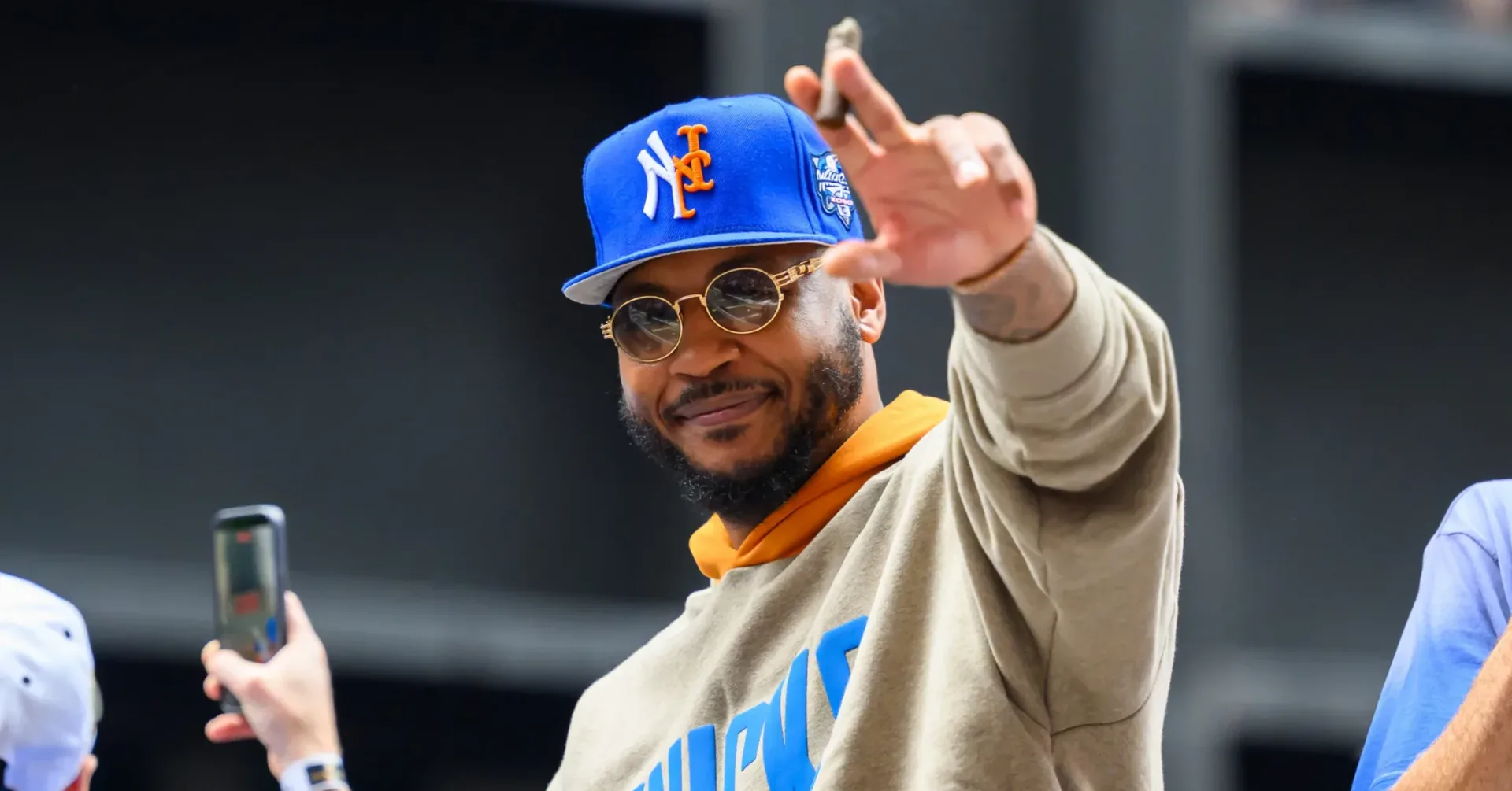
On 7 PM in Brooklyn, Carmelo Anthony and Kazeem Famuyide approached the question from notably different angles. Famuyide’s position was not that Jay-Z lacks hits or stature. Instead, he questioned whether Jay-Z’s body of work naturally translates to the particular demands of a Super Bowl performance. Anthony saw a different possibility: Jay-Z could turn the occasion into a larger event by bringing out major artists from across music.
Monica McNutt took a more reserved view in the discussion. With no official confirmation and no revealed production plan, the actual shape of any show remains unknowable. That distinction matters. A halftime-performance debate often treats the potential set as if it already exists, when the key variables—songs, guests, staging and the intended emotional arc—are still entirely speculative.
The actual disagreement is about format, not résumé
Both sides of this debate begin with a shared premise: Jay-Z has an extensive, high-profile career. The disagreement is really about what a Super Bowl stage asks an artist to do.
Famuyide argued that the show needs a performer who can tell a story and unify a massive audience in the way he felt Bad Bunny did. In this framing, a great Super Bowl set is more than a sequence of recognizable records. It needs a clear through-line that works immediately for viewers with vastly different levels of familiarity with the performer.
That is a useful distinction between a catalogue and a show concept. A catalogue is the collection of music an artist can draw from. A show concept is the decision about how to arrange that material into a short, high-stakes broadcast spectacle. An artist can possess an enormous catalogue and still face a difficult question: which songs establish instant recognition, what connective idea binds them, and how does the production make room for the audience beyond dedicated fans?
Anthony’s response focused on another part of the format: the potential for collaborators. His argument is that Jay-Z could bring a broad group of artists onto the stage, extending the performance beyond one voice and one era. That is not a confirmed plan; it is an argument for why Jay-Z could be uniquely suited to construct a wide-ranging program if he is selected.
In practical terms, the two positions are not mutually exclusive. A guest-heavy performance can create reach and variety, but it still needs direction. Conversely, a tightly authored narrative can be powerful, but it must leave room for the scale and surprise viewers expect from the event. The disagreement is over which challenge Jay-Z would solve most effectively, not whether the opportunity would be significant.
Why guest potential has become central to the conversation
Anthony’s case rests on Jay-Z’s capacity to connect performers from different walks of life. For a broadcast of this size, that possibility changes the debate. If the performance were built only around a compressed run of Jay-Z songs, the question would be whether those selections can create a singular mass-audience moment. If it were built as a collaborative showcase, it could become a wider survey of artists and styles linked through Jay-Z’s career and relationships.
But that possibility also explains why it is premature to judge the reported booking either positively or negatively. Guests can be an asset, yet they are not an automatic solution. Too many appearances can turn a set into a string of introductions; too few can leave the central performer carrying every transition. The strongest guest spots generally serve a defined role: they widen the musical range, sharpen a particular song, introduce contrast, or give the set a fresh burst of momentum.
The source material offers no names, no song list and no staging details. As a result, claims about a hypothetical lineup should remain claims about potential, not reporting about plans. That boundary is particularly important in a debate that has already attracted loud reactions.
Jay-Z’s possible involvement is being discussed during what has been characterized as a comeback year, adding another layer to the conversation. For supporters, that context makes the prospect feel like a fitting high-profile return. For skeptics, it can intensify expectations before any official announcement has even arrived.
Backlash is predictable, but it is not a verdict
The discussion notes that similarly loud reactions followed Super Bowl-related debates involving Kendrick Lamar and Bad Bunny. That comparison does not establish how a Jay-Z performance would be received; it does establish that the booking itself has become part of the spectacle.
In other words, public reaction now arrives in two stages. First comes the response to the reported choice of artist. Later comes the response to the actual performance. Those stages are often blurred together online, where people argue from taste, cultural identification, expectations around genre, and beliefs about what the event should represent. The result can be a debate where a performance is declared successful or doomed before anyone knows its basic structure.
Famuyide’s skepticism is best read in that context. He is raising a programming question: can this artist create the kind of unifying story he associates with an ideal Super Bowl set? Anthony is making an opposing programming argument: Jay-Z’s reach and ability to assemble major artists could itself be the mechanism that produces unity.
The question is not simply whether Jay-Z has enough songs for the stage. It is whether a potential show could turn his range, collaborators and cultural reach into one coherent broadcast moment.
McNutt’s neutral stance is consequently the most grounded position available at this point. Without confirmation from the NFL and without details from any involved party, certainty would be misplaced. The eventual performance—if the report proves accurate—would be the relevant evidence.
What to watch if the report is confirmed
Should an official announcement follow, the debate will become more concrete quickly. Rather than treating every rumor as fact, viewers can look for a few meaningful signs of what the show is trying to accomplish:
- The central premise: Is the set designed as a Jay-Z-focused performance, a career-spanning retrospective, or a multi-artist event?
- The role of guests: Are collaborators there to support key songs and transitions, or are they the main organizing feature of the production?
- The musical balance: Does the selection aim for immediate recognition, storytelling, variety, or some mixture of all three?
- The performance arc: Does the show move with a clear sense of escalation and connection, addressing Famuyide’s concern about narrative cohesion?
- The official status: Until the NFL confirms a performer, the claim remains a report rather than a finalized booking.
Those details would determine whether Anthony’s vision of a wide-ranging event is realized, whether Famuyide’s concern about fit is answered, or whether the final result creates an entirely different conversation. For now, the podcast exchange captures the real state of play: one reported possibility, a large amount of anticipation, and no confirmed blueprint.
The broader music discussion will likely continue alongside other major rap and R&B developments, including Westside Gunn’s forthcoming HEELMATIC release. But the Super Bowl question has its own unusual scale. It is not simply an argument over a songbook. It is an argument over how one of entertainment’s biggest stages should use an artist’s legacy, collaborators and ability to reach a divided audience.