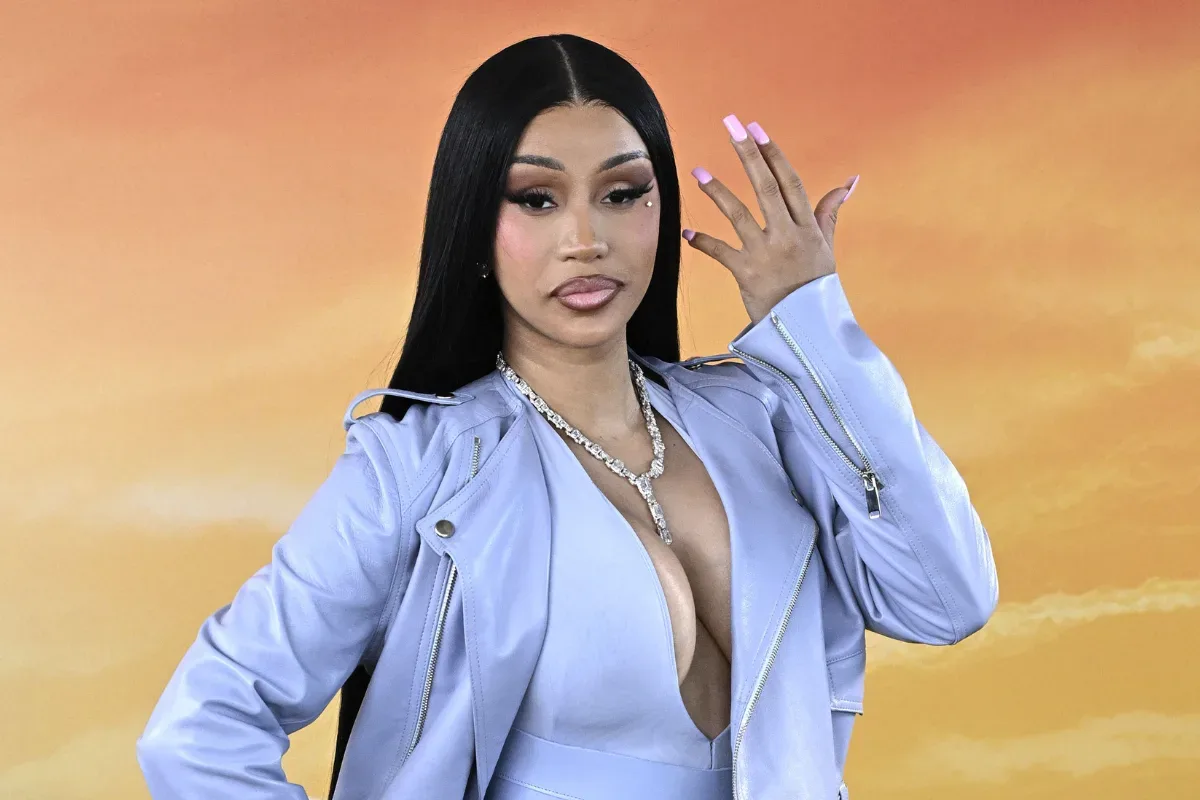
Cardi B used an acceptance speech in Toronto to put a spotlight on a relationship that has played out both publicly and behind the scenes: her friendship and ongoing musical connection with Summer Walker.
At a ceremony held at Rebel on Tuesday, November 24, Cardi B accepted the inaugural Global Woman of the Year award and became emotional while thanking Walker for supporting her privately as well as in public. Walker, who attended the event to receive the Global Visionary Award, had congratulated Cardi B during her own speech. Cardi B returned the gesture from the stage, making the exchange one of the evening’s most personal moments.
The recognition also gave Cardi B an opportunity to reflect on an unusually full year. She spoke about welcoming her fourth child, mounting a sold-out arena tour and starting a hair-care company. Rather than treating the award as only a career milestone, she framed her remarks as encouragement for other women in the room.
“There is gold waiting at the end of the tunnel. Go get it,” Cardi B said.
She also said the year had reminded her of who she is, before adding her own punchline to the global honor: “I’m just globally that b####.”
A collaboration history with more than one kind of feature
The warmth of the moment makes more sense in the context of Cardi B and Walker’s shared discography. Their work together has not been limited to one promotional single or a brief guest verse. Instead, it has taken several forms across both artists’ albums, moving between narration, conventional vocal appearances and a multi-artist collaboration.
Cardi B narrated “Bitter,” the opening track on Walker’s 2021 album Still Over It. Narration is distinct from a standard featured performance: it can establish an album’s tone, introduce its emotional perspective or connect its larger themes without functioning as a sung hook or rap verse. In this case, putting Cardi B on the first track positioned her voice at the entrance to Walker’s project.
The pair connected again the following year on an extended version of Walker’s “No Love,” which also included SZA. An extended version generally builds on an existing release rather than replacing it outright, often introducing a new performer, section or arrangement that gives listeners another way into the song. The track brought together artists with different vocal and stylistic roles, while preserving Walker’s song as the center of the collaboration.
Walker later appeared twice on Cardi B’s Am I the Drama?. She joined Cardi B on “Dead,” which opens the album, and returned on “Shower Tears.” The placement is notable even without assigning motives to it: an opening track carries the responsibility of setting the first impression for an album, and a second appearance reinforces that the partnership was more than a one-song crossover.
Across those releases, the artists have effectively traded invitations into each other’s work. That reciprocal pattern gave added weight to Cardi B’s description of Walker’s support as something that exists away from the stage as well.
Why the Toronto exchange mattered
Awards speeches can be carefully timed, fast-moving affairs centered on the recipient’s own milestones. Cardi B said she had expected to collect her award and leave, but the performances and remarks from the other women at the ceremony affected her more than she had anticipated. She watched from a table near the stage in a sold-out room, then used her own moment at the microphone to acknowledge what she had heard and who had helped her.
Walker’s Global Visionary Award and Cardi B’s first Global Woman of the Year honor created a setting in which their shared history could be recognized without being reduced to a release-cycle collaboration. Walker congratulated Cardi B first; Cardi B’s response made clear that the gesture was meaningful because it reflected a longer record of solidarity.
That distinction matters in pop culture, where visible friendships are often judged solely through collaborations, social-media posts or public appearances. The available details point to both a documented professional connection and Cardi B’s account of more personal support. Those are related but not identical things: the songs provide the observable creative record, while the speech expresses what Cardi B believes the relationship has meant in her life.
A year measured in different kinds of work
Cardi B’s remarks touched on creative, personal and business milestones in the same breath. Her sold-out arena tour represents the live-performance side of an artist’s career; a hair-care company signals a move into consumer business; and the birth of her fourth child is a family milestone separate from either category. Taken together, the details explain why she described the year as clarifying.
There is also a practical message in the way she framed that list. A public-facing career is often discussed through a single metric at a time: album releases, tour sales, awards or a new business. Cardi B’s speech instead presented achievement as a wider picture, with family, touring and entrepreneurship all occupying space at once. It was not a claim that these paths are easy to balance, but an acknowledgement that several major parts of her life had moved forward during the same period.
For the audience in Toronto, her “gold” line turned that reflection outward. It was addressed as encouragement, not as a blueprint or guarantee. The sentiment fits the ceremony’s broader focus on honoring women while avoiding the implication that the recognition belonged to one person in isolation.
The people behind the surprise tribute
Cardi B also received support from people who were not seated with her. The ceremony surprised her with a tribute video featuring Missy Elliott, Lizzo, Charlamagne tha God and Cardi B’s creative and brand manager, Patience Foster.
A tribute video is a familiar awards-show device, but its value often lies in the range of people asked to participate. Here, the participants spanned fellow artists, a media personality and a member of Cardi B’s own professional team. The mix reflected the different circles that can surround a public figure: creative peers, media relationships and the operational partnership required to manage an artist’s public-facing work and brand.
Cardi B later thanked the people who appeared in the video on Instagram. She also specifically praised a speech from rising R&B singer Chxrry. That follow-up extended the event beyond the room itself, while keeping the emphasis on appreciation rather than turning the night into a larger announcement.
What the moment says about collaboration
Cardi B and Summer Walker’s Toronto exchange is a reminder that features can document an artistic relationship over time. Their recorded work includes a narrated album opener, an expanded version of a song with SZA, and two Walker appearances on Cardi B’s album. Each is a different format, but together they show an ongoing willingness to make room for the other artist’s voice.
It also illustrates why public recognition can land differently when it is connected to relationships built before the award is handed over. Walker’s congratulations were not presented as a random celebrity cameo, and Cardi B’s thanks were not confined to a credit list. They were grounded in the history Cardi B described: a person who had shown up in public and private, and whose support mattered enough to mention during a career-defining honor.
That is the point that remained after the applause: not simply that two artists have worked together, but that Cardi B used one of the biggest recognitions of her year to thank Summer Walker for being there through it. For another recent look at how musicians describe the pressures surrounding public response, read Ariana Grande’s comments on the “Petal” video backlash.