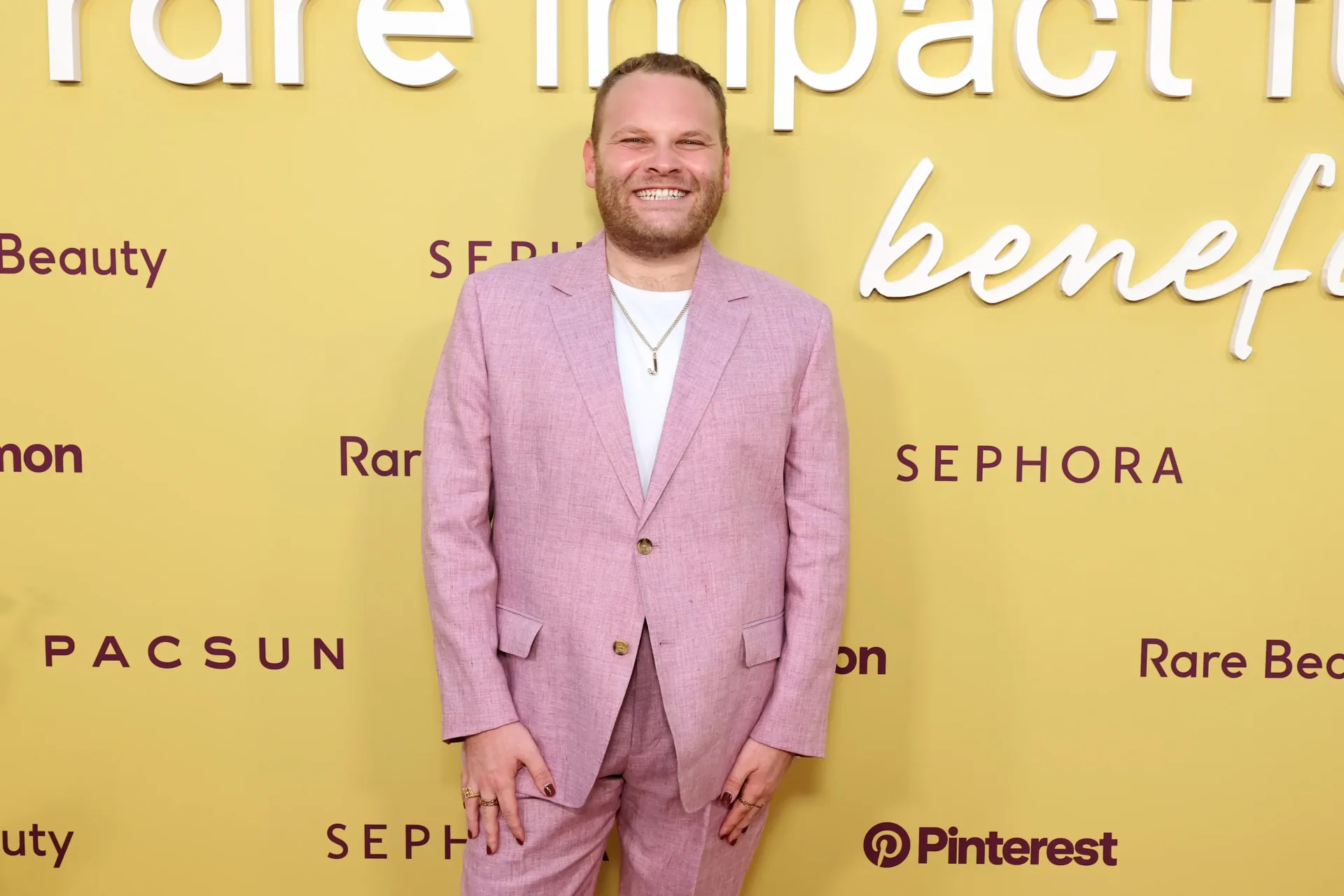
Brandon Edelman, the creator better known online as Bran Flakezz, has emerged from Unwell Summer Games with $25,000, a winning team, and the kind of on-screen storyline that illustrates why putting internet personalities under one roof remains such reliable competition-show fuel.
The four-episode YouTube series, created through Alex Cooper’s Unwell network, assembled 16 established creators at a luxury ranch in Canada. Across four days, they faced challenges tied to a $250,000 overall prize pool, with money distributed during the competition. In the final episode, the field was divided into four teams for the final challenge. Edelman won alongside Jourdan Riane, Blake Gray and Carly Sutherland Lawrence.
That last name is crucial to the story rather than a footnote to the result. Edelman and Sutherland Lawrence had clashed during the series, then landed on the same final team and won together. That reversal is not merely tidy reality-TV structure. It underlines the particular format of Unwell Summer Games: people compete, but they also have to navigate pre-existing friendships, past encounters, audience assumptions and, in some cases, former romantic relationships.
For an audience accustomed to creators presenting polished, highly controlled slices of themselves, a shared-house competition creates a different proposition. The point is not just who completes a challenge. It is how someone responds when their public persona has to coexist with people who may already know the person behind it.
A creator competition with social history built in
Traditional competition television often begins with strangers receiving a crash course in one another’s personalities. Here, many contestants already had history. Edelman said he had met more than half of the cast before entering the ranch, while others had been friends or exes. That changes the starting line.
Social capital is a useful term for what is at stake in this sort of cast. It means the value carried by relationships: trust, familiarity, a reputation for being supportive, or an unresolved conflict that can influence decisions. In a house full of creators, social capital can be especially layered because public content creates another kind of familiarity. A contestant might know somebody personally, know them through their videos, or believe they know them after years of watching them online. Those are not the same thing, and the gap between them can become the show.
Edelman described that dynamic plainly: a viewer’s first impression can come from a creator’s existing online persona, well before the two people occupy the same room. The format effectively asks participants to live inside that disconnect. They are not arriving as blank slates, and neither is the audience.
That is also why a house-based creator show can produce drama without needing every disagreement to begin with a formal competitive twist. Edelman characterized the conflicts as real rather than manufactured. Viewers should still remember that a completed series is an edited work: footage is selected, interviews are sequenced and scenes have finite runtime. But the underlying conditions he describes—an intense four-day schedule, familiar faces, competing interests and a camera-ready group—are already a formidable pressure cooker.
Related coverage includes Bran Flakezz Wins $25,000 in ‘Unwell Summer Games’ Finale.
The finale made a conflict into an alliance
Edelman’s partnership with Sutherland Lawrence is the clearest example of those pressure points converging with the game. He said the pair had a “crazy storyline,” and that their argument was followed by the surprise of joining forces in the final challenge. They ultimately shared the win with Riane and Gray.
It is an outcome that complicates the usual instinct to treat conflict as the opposite of cooperation. In reality competitions, two contestants do not need to become best friends to operate effectively as teammates. A shared incentive can be enough. The structure of a final team challenge rewards people who can put aside a dispute long enough to solve the immediate problem, even if the emotional question remains unresolved.
That distinction matters for viewers parsing the finale. Winning alongside someone does not erase the argument that preceded it. Conversely, the argument does not mean the team was incapable of functioning. The strongest narrative beat is precisely that both things were true: there was a confrontation, and there was a successful collaboration.
Edelman has acknowledged that he reached a breaking point in his exchange with Sutherland Lawrence and said he was not proud of yelling. He framed his frustration around what he saw as her reaction to feeling excluded and her reluctance to directly approach team captains. His account is still his perspective on an interpersonal dispute, not an objective verdict on everyone involved. What is clear is that the compressed environment amplified small social choices: who joins a group, who speaks first, who feels left out, and who interprets silence as rejection.
Those moments are easy to dismiss as minor because the series lasted four days. Yet a short production window can heighten stakes rather than lower them. There is little time to cool down, rebuild trust or separate a fleeting misunderstanding from a lasting pattern. Everyone knows they will leave soon, but they also know their conversations may be seen later by large audiences.
Drama, empathy and the limits of the on-screen role
Edelman entered the series as its only contestant in a relationship, he said, and described his initial approach as being a matchmaker and a safe person for others to talk to. He was interested in honest interactions rather than a harmony-only environment. That is an interesting position in any ensemble: he could encourage people to say what they meant without being the central romantic participant.
The show’s Blake-Zarah-Carly triangle nonetheless pulled him into the social orbit of the drama. Edelman said he valued all three people and urged Zarah to be direct about her feelings for Blake. He also described Carly’s actions as scattered, while noting Blake seemed to be there to enjoy himself rather than become absorbed in a conflict.
It is tempting for audiences to flatten an ensemble into fixed labels—hero, villain, instigator, victim, narrator—but Edelman’s own description of watching episodes argues against that. He said he has discovered remarks made in interviews that he did not know about when filming, and has occasionally watched himself back and thought he was being mean.
That is the most useful reality-TV literacy lesson in this story. A confessional, or a filmed interview recorded for the series, gives an audience access to thoughts that other participants may not have heard at the time. It is designed to add context, but it also creates an asymmetry: viewers can know more than the people in the scene. When episodes air, cast members can experience that asymmetry alongside the audience.
The cast remains in a lively group chat as the series is released, Edelman said. Their reactions include surprise about interview comments, editorial sequence and material that did not make the final cut. That does not mean a show is somehow false; editing is how raw footage becomes an episode. It does mean the final version should be understood as a constructed viewing experience, rather than a complete record of every conversation and consequence.
Why the win fits Edelman’s broader online identity
Before the ranch competition, Edelman built an audience through candid social-media posts, including his “TikTok Transparency” videos about life in Philadelphia and the financial realities of being a creator. He has more than 1 million TikTok followers and was included in Forbes’ 30 Under 30 Social Media list. His route to that position was not presented as a straight line: he previously worked in a Forever 21 fitting room and later competed on Barstool’s Project Verified. He is also involved with Michelle Obama’s Gen Z voter-registration initiative.
Those details make his approach to reality TV more legible. His public work has emphasized explaining the creator economy from the inside, rather than treating online success as effortless. He also drew a practical boundary around future appearances: a three-month shoot such as Big Brother would be difficult because stepping away from posting for that long could harm his online work. He likes Survivor, but made clear that an island survival setting is not his preferred assignment.
That is not a rejection of reality television. It is a case-by-case approach based on what a format demands from an active creator. For independent online personalities, regular publishing is not simply promotion around a TV appearance; it can be the core job. A long absence may affect audience habits, commercial work and the creative rhythm that built the following in the first place.
Edelman said he would be interested in reality projects that feel meaningful and real rather than excessively produced. Unwell Summer Games gave him a smaller, concentrated test of that balance: enough time for relationships and conflict to matter, but a short enough window that he could return to his primary platforms.
Brains over brawn, and a reminder not to turn every woman into a rivalry
Discussing the victory, Edelman invoked a lesson associated with Survivor favorite Cirie Fields: physical strength is not the only competitive advantage. His version was direct—he might not win a race, but he believed he could win with strategy and thought.
That outlook suits an ensemble contest where persuasion, emotional awareness and team selection may matter as much as athletic ability. The supplied details do not establish exactly how every challenge was scored or which skills determined the final result, so it would be wrong to reduce the $25,000 win to a single tactic. But Edelman’s explanation makes clear that he saw intelligence and social navigation as central parts of his own competitive toolset.
He also addressed conversation around Alex Cooper and Alix Earle, declining to feed a narrative of competition between them. His broader point was that audiences often push successful women toward feud framing and team-picking, instead of acknowledging their work and their capacity to pursue opportunities without taking them from mutual friends.
It is a fitting coda to a series built around creator relationships. Conflict can be compelling television, but it need not become the only lens through which people interpret every interaction. Unwell Summer Games has an actual competitive result: four winners, $25,000 each, and a final team that overcame at least one visible rupture. The more revealing story may be the one around it—what happens when people whose audiences think they know them must negotiate real relationships, limited time and a prize worth working together for.
For more on the changing contest to build and retain audiences across entertainment, read Entertainment’s Next Battle Is for Fans, Not Just Subscribers.