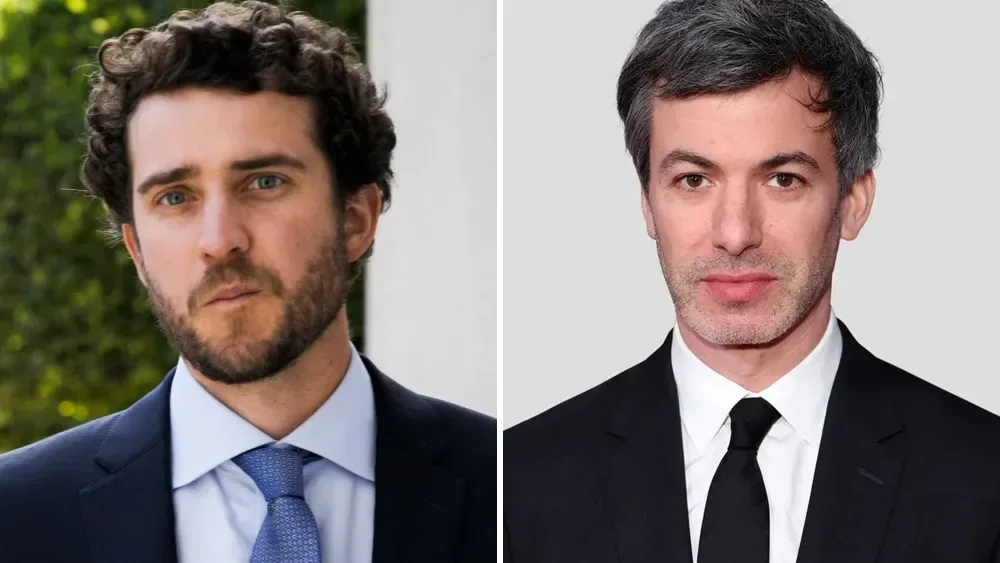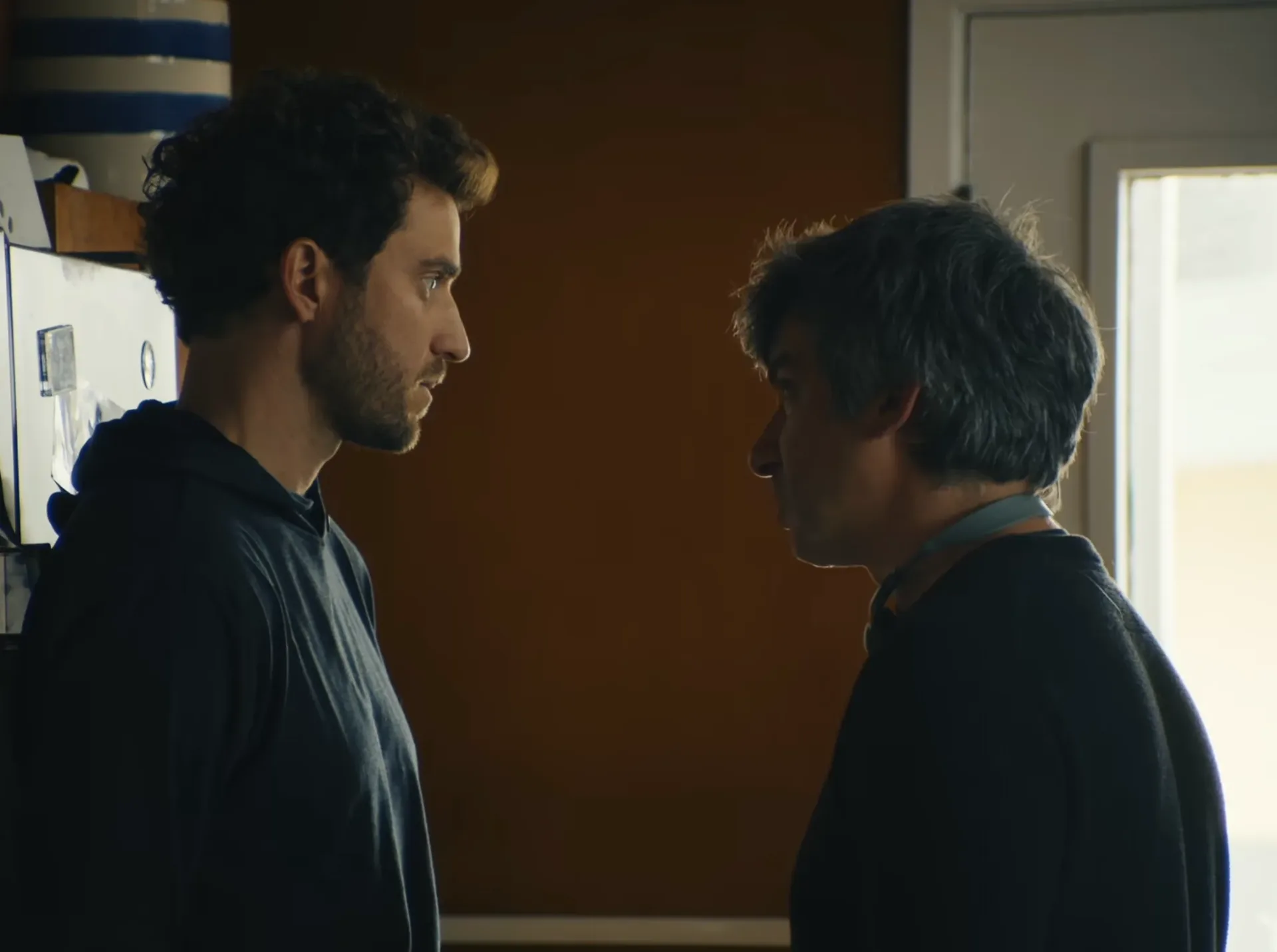
Billy Evans is not disputing that You Can See Everything makes him look bad. In a preview for an upcoming interview, Evans acknowledges that the three-hour documentary can make him appear “crazy,” and responds to its villain-shaped portrait with a notably restrained assessment: he would have preferred a different outcome, but he sees it as entertainment and notes that the final edit was not his to control.
That does not mean Evans is retreating from the project or disowning his decision to participate. His larger point is that the film’s effect on his own image is secondary to what he hoped viewers would take from its depiction of Elizabeth Holmes, his romantic partner and the former Theranos executive convicted of fraud. Evans says that, when he watches the movie, he sees the person he loves and recognizes her as she is.
It is an unusually calm answer for someone explicitly confronted with the idea that a movie presents him as a “conniving, manipulative villain.” Yet it also points to the central friction built into documentaries involving private lives, public scandals and recognizable filmmakers: access may be voluntary, but control over the meaning of that access usually is not.
A participant can open the door without owning the story
You Can See Everything, directed by Nathan Fielder and Lance Oppenheim, is described as an experimental documentary. It follows Fielder’s efforts to determine whether Holmes is being truthful, while Evans and Fielder clash during that inquiry. In that setup, Evans can be both a participant and an obstacle: someone whose relationship to Holmes shapes what the audience can learn, and someone whose resistance can be framed as dramatic conflict.
That distinction matters. A documentary edit is the selection and arrangement of footage, conversations and scenes into a finished argument or experience. It is not merely a recording of everything that occurred. The phrase “I didn’t get to control the edit,” then, is not necessarily a claim that a particular moment was fabricated. It is an acknowledgement of authorship. The people appearing on screen may supply the raw material, while filmmakers decide which material is foregrounded, juxtaposed or left out.
Evans appears to understand that bargain. He has said he does not regret agreeing to take part in the documentary at all. Before Fielder came into Evans and Holmes’ San Diego home, Evans had watched almost all of Fielder’s earlier work. That detail complicates any easy picture of a participant blindsided by a filmmaker’s sensibility. Evans knew enough of Fielder’s body of work to make an informed choice about inviting him into an intensely scrutinized relationship, even if he did not welcome the finished portrayal of himself.
There is a practical lesson in that distinction for anyone watching—or participating in—nonfiction storytelling. Consent to be filmed is not a promise of flattering treatment. Nor is a negative portrayal, by itself, proof that a work is dishonest. The difficult question is how a film reaches its interpretation, and viewers can weigh that question while recognizing that documentaries are constructed works rather than neutral surveillance footage.
The misconception Evans most wants to reject
Evans’ sharpest response concerns a specific reading of the film: the belief that he controls Holmes. In a social-media question-and-answer session, he called that notion absurd to people who know her. He characterized Holmes as fiercely independent and strong-willed, described the pair as partners who challenge and disagree with one another, and said that mutual friends would hold him accountable if he mistreated her.
Related coverage includes Billy Evans Addresses His Villainous Portrayal in ‘You Can See Everything’.
That rebuttal does not ask audiences to forget the tension depicted in the documentary. Instead, it challenges the interpretation placed on that tension. Relationship arguments, protective behavior and disagreement can be read in multiple ways on screen, especially when the people involved are already surrounded by a major public narrative. Holmes’ past as the leader of Theranos—and her conviction for fraud connected to that blood-testing company—means viewers arrive with established questions about credibility, judgment and influence. A film that investigates honesty will inevitably intensify those questions.
Evans’ position is that his relationship should not be reduced to a control dynamic. He says the goal of participating was to help people see Holmes, not simply the widely known corporate scandal attached to her name. In his account, the movie succeeds at least on that personal level, because he sees the individual he loves in it.
That is a narrower claim than saying the documentary has treated him fairly. It is also why his reaction is more complicated than a conventional public-relations denial. Evans concedes the sting of the portrayal while finding value in a film that puts him in an antagonistic role.
Why the framing has become part of the story
The documentary’s commercial run has given that disagreement a much bigger stage. After premiering in October, You Can See Everything reached $80 million in four weekends and became the second-biggest documentary in North America. It is continuing its international rollout as awards season begins.
Those numbers help explain why a short interview preview and an earlier online answer from Evans now carry weight beyond celebrity gossip. This is not a small work seen only by a limited festival crowd. The film’s success means its characterizations are likely to become the default reference point for a much larger audience. When a documentary catches the cultural moment, its editing choices can harden into shorthand: one participant becomes the investigator, another becomes the subject, another becomes the impediment or villain.
That shorthand is useful for discussing a complex three-hour film, but it can also flatten people into roles. “Villain” is an especially powerful label because it implies intention. It does not merely describe someone as difficult, defensive or disagreeable; it suggests a person knowingly operating against the audience’s moral interest. Evans plainly objects to occupying that role, even as he accepts that the movie has assigned it to him.
There is an irony in his response. Calling the result entertainment does not erase the stakes, because entertainment can shape public memory as effectively as a formal argument. But it does show that Evans is separating his personal disappointment from the project’s existence. He is not presenting participation as a mistake. He is saying that participation came with an outcome he could not dictate.
Fielder’s investigation and the limits of certainty
At the heart of the film is Fielder’s attempt to investigate whether Holmes is being honest. That is a deliberately difficult premise. Honesty is not a switch that a documentary can simply flip from unknown to proven. Filmmakers can record claims, responses, inconsistencies, silences and interpersonal reactions. They can contextualize those moments through structure. But an audience is still asked to interpret what it sees.
Evans’ comments add another layer to that process. He does not contest that Fielder was trying to investigate Holmes, nor does he suggest that the film hides their disputes. What he rejects is the conclusion that his own presence means Holmes lacks agency. In other words, he is arguing over character interpretation rather than the basic fact that the documentary captured conflict.
That kind of disagreement is familiar whenever real people become documentary characters. Screen time, music, sequencing and repetition can all guide viewers toward a particular impression. None of those tools need to manufacture an event to influence how it feels. An awkward pause placed after a question can land differently from the same pause shown before it; a recurring disagreement can become the defining feature of a relationship, even if it represents only part of it.
Viewers do not need to choose between blind trust and blanket cynicism. A better approach is to distinguish observable moments from the film’s larger framing, then compare that framing with what participants say afterward. Evans’ remarks are relevant because they provide his account of the relationship and of his decision to be involved. They are not a substitute for the movie, and they do not give him control of its meaning. They do, however, make the conversation around the film more complete.
The tension between authored narratives and personal self-definition extends beyond nonfiction, even if the stakes differ. Games regularly ask players to reconcile a character’s authored identity with their own interpretation, a subject explored in this discussion of Cyberpunk 2077’s V and uncomfortable headcanon. In Evans’ case, there is no fictional buffer: the disagreement is over how a real person and a real relationship are being read by a mass audience.
What Evans is, and is not, conceding
Evans’ answer contains two positions that can coexist. First, he believes the documentary makes him look like someone he is not, particularly if viewers infer that he controls Holmes. Second, he believes the film lets audiences encounter Holmes as a person he recognizes and loves. The first is a complaint about portrayal; the second is a defense of why participation still mattered.
That combination is likely to remain central as the documentary reaches more territories and draws awards-season attention. The movie’s success has made its storytelling choices part of the public conversation. Evans’ response does not resolve the conflict with Fielder depicted on screen, and it does not seek to. It instead draws a boundary around one idea he is unwilling to accept: that the film’s villain framing should be mistaken for a full account of his relationship with Holmes.