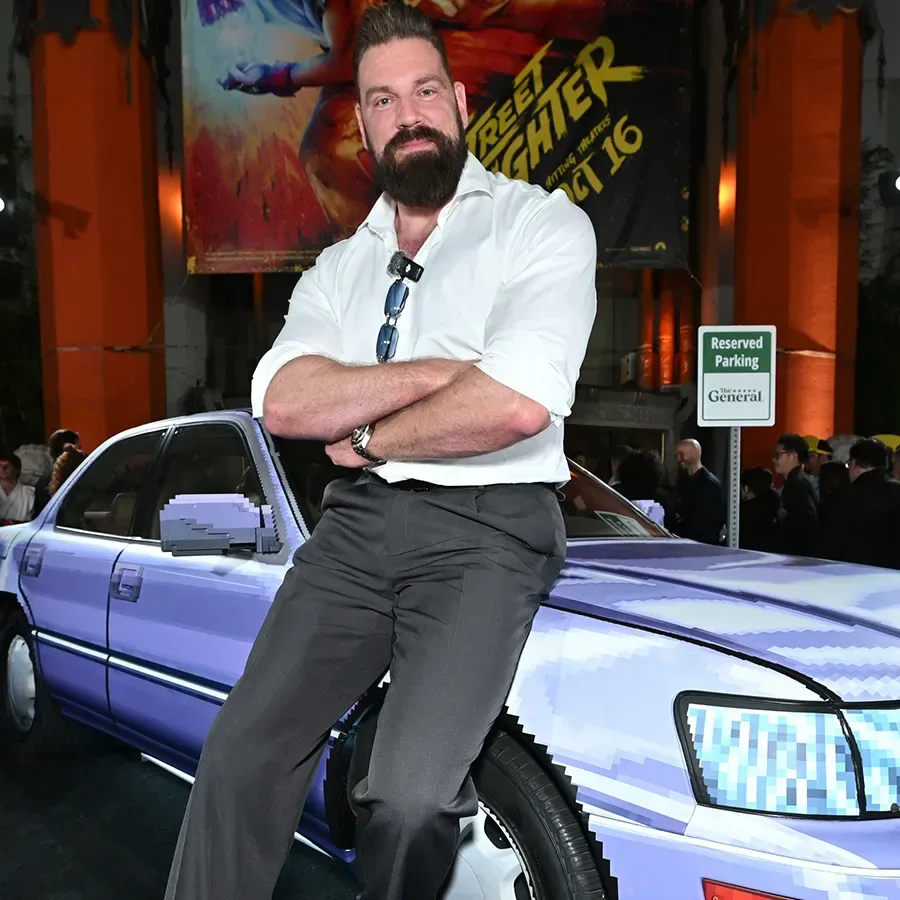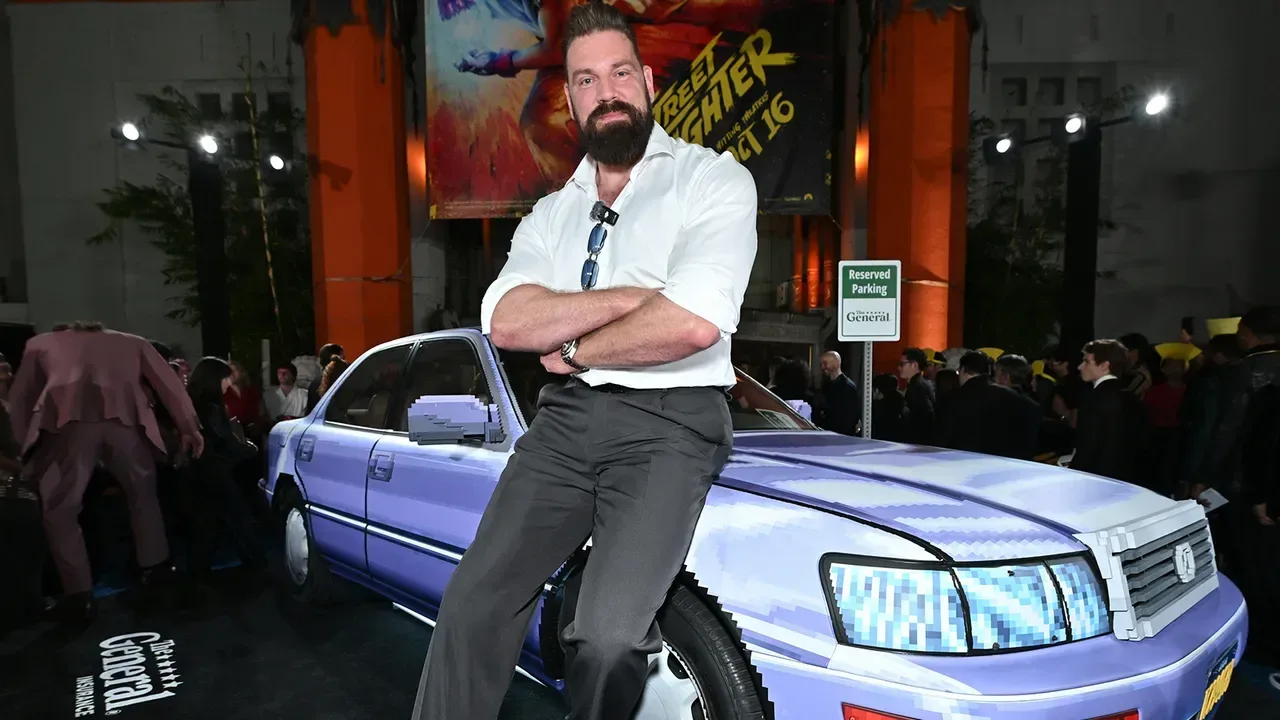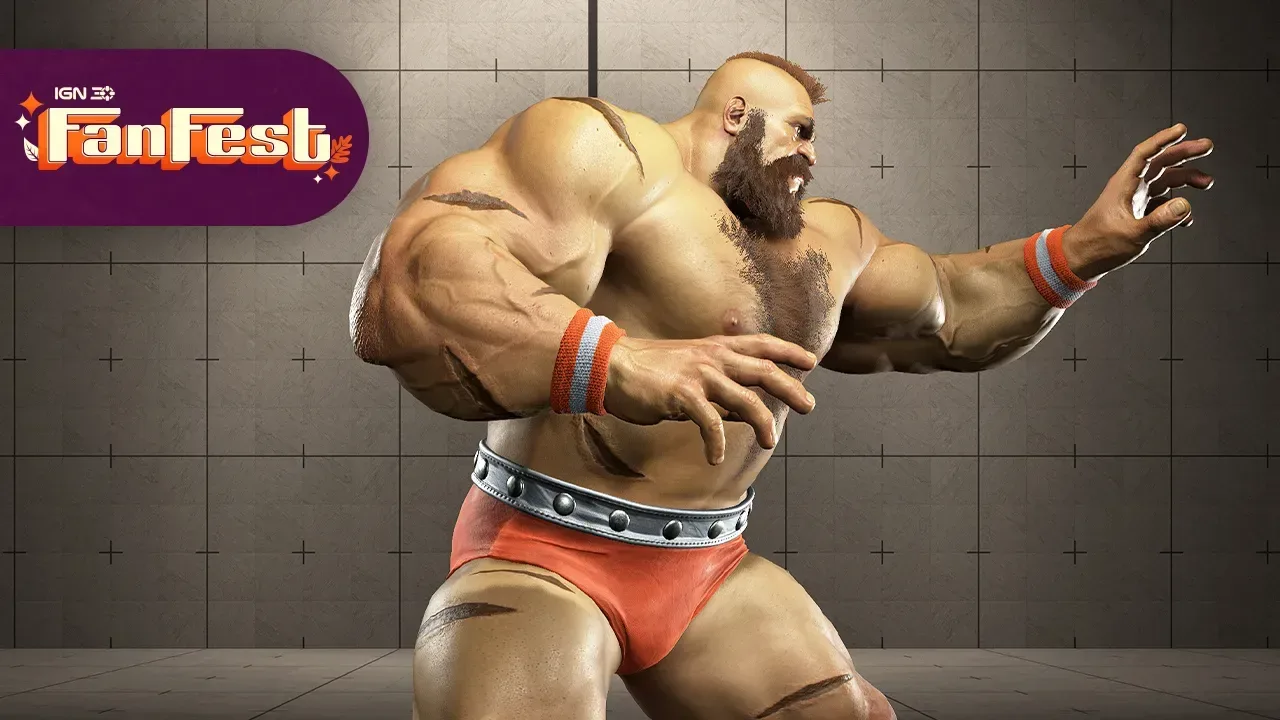
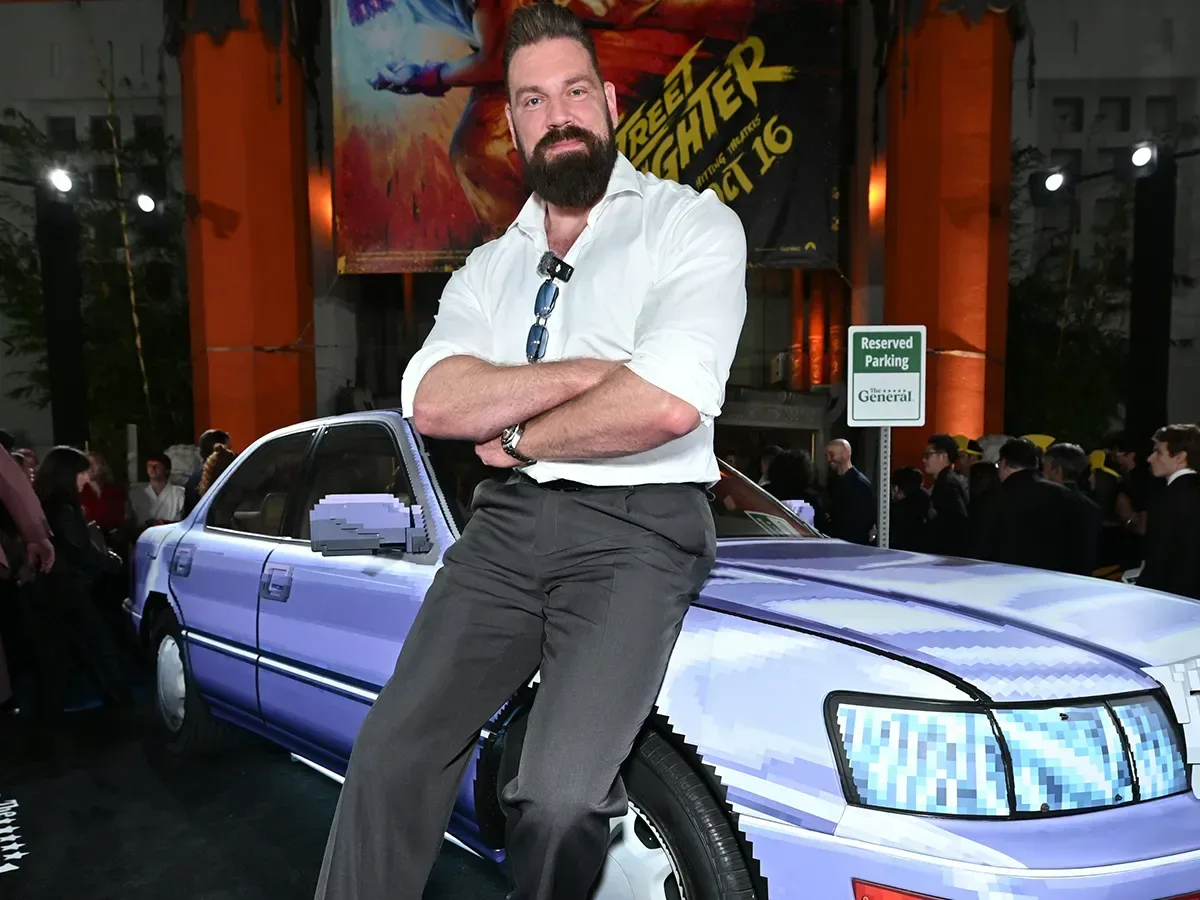
Olivier Richters has taken his connection to Zangief beyond the film set and into a tournament bracket. The actor, who portrayed the hulking wrestler in the 2026 Street Fighter movie, entered the Chip Damage Street Fighter 6 event in the Netherlands under the tag TheDutchGiant—and, fittingly, selected Zangief.
It is an appealingly direct bit of character commitment: an actor cast as one of fighting games’ most physically imposing icons stepping into a competitive environment with that same icon. Richters used Modern controls, the simplified control option in Street Fighter 6, and footage from the event shows that the appearance was more than a novelty photo opportunity. He was participating on stream, understood key elements of his character, and took a round from an opponent as the local crowd reacted.
The tournament result should not be overstated. The available bracket record shows Richters was sent out of the winners side, received two set wins by disqualification, and was later defeated by a player listed as BlackBeard. But tournament placement is only one part of what made the entry travel quickly through the fighting-game community. Richters was willing to sit down in a real bracket, use the character he played on screen, and put his learning in public.
A movie role turns into a competitive goal
Richters has said he wants to become “the ultimate Zangief.” He described that as a serious personal target rather than a one-off promotional stunt: he wants to develop into one of the better Zangief players, has met a professional Zangief player, and said the pair planned to train together. His stated ambition is to eventually enter a tournament as “the real Zangief” playing Zangief.
That matters because competitive fighting games are unusually exposed hobbies. A player can study privately, but a local tournament asks them to make decisions with a clock running, an opponent adapting, spectators nearby, and every mistake immediately visible. There is no editing around a dropped opportunity or a poorly chosen move. Richters’ bracket appearance therefore represents a tangible first step toward the objective he described, even if it does not establish a competitive ranking or prove mastery.
It also gives the film connection a more useful shape than simple cosplay or a social-media nod. Playing the character is different from learning to compete with the character. Zangief’s game plan, like any character’s, has to be applied against another person who is trying to prevent it. The appeal here is not that an actor automatically ought to be elite at the game tied to a role. It is that Richters appears to be treating the gap between portrayal and play as something worth closing.
What Modern controls mean in Street Fighter 6
Modern controls are one of Street Fighter 6’s control schemes. They simplify inputs relative to the more traditional arrangement, making the game more approachable for players who may not be accustomed to executing complex directional-and-button combinations. That accessibility is particularly relevant to a public tournament debut: it lets a newer competitor focus more of their attention on spacing, defense, timing, and reading an opponent rather than solely on input execution.
Using Modern is not a separate version of the game or a reason to treat a match as less legitimate. It is an available system in Street Fighter 6, and Richters chose the arrangement that was more convenient to him. Community responses to the appearance reflected that point, with players praising the actor’s interest in the material rather than dismissing the run because of his control choice.
Related coverage includes Street Fighter Movie's Zangief Actor Takes His Grappler to a Street Fighter 6 Tournament.
That distinction is worth making because fighting-game terminology can easily become gatekeeping shorthand. A control scheme affects how a player accesses actions, but competitive improvement still involves making choices under pressure. A player must know when an opponent is vulnerable, avoid taking unnecessary risks, react to changes in momentum, and capitalize when an opening appears. Simplified controls can reduce an entry barrier; they do not remove the need to learn the match.
For players broadly, the practical lesson is uncomplicated: use the control format that helps you play, learn, and enjoy the game. Those moving between games or platforms may also find it useful to review basic system configuration; our guide to Nintendo Switch 2 settings worth changing before your next game session covers the value of checking the setup around a game, though Modern controls are a game-specific Street Fighter 6 option.
Why Zangief is a fitting tournament pick
Zangief is commonly described as a grappler: a character archetype built around threatening powerful close-range throws. The broad strategic tension is easy to understand even for viewers unfamiliar with the finer details of Street Fighter. Zangief wants to make the opponent fear standing too close; the opponent generally wants to control distance and avoid the moments where the grappler can impose that threat.
That makes a Zangief tournament run inherently readable. When he gets in, the pressure is immediate. When he is kept out, the challenge is visible. It is also why “solid understanding” matters more than an individual flashy moment. A grappler player has to navigate range, find safe approaches, and recognize when an opponent is likely to defend against a throw or a strike. The event video showing Richters taking a round does not settle how far along he is in that development, but it does provide a concrete sign that he is engaging with the character’s fundamental challenge.
Richters’ casting also creates an obvious visual overlap with the role. At seven feet tall, he already has a stature that makes the choice of Zangief intuitive. Yet the tournament appearance adds a different dimension. On screen, a performer sells a character through direction, costuming, movement, and acting. In a match, the identity has to be expressed through decisions: pressure at close range, patience at distance, and the willingness to keep learning after a loss.
A local bracket, a viral moment, and a healthy signal for the FGC
The fighting-game community’s positive response was driven largely by that willingness to participate. Veteran player and commentator Ryan Hart shared photos with Richters and helped amplify his presence at the event. Other players focused on the sincerity of an actor showing up to play the source material rather than simply appearing beside it.
There is a productive difference between fame entering a competitive scene and fame asking the scene to revolve around it. The information available from Chip Damage points toward the former. Richters played under a screen name, entered the bracket, took the results that came with it, and has talked about training to improve. The disqualification wins should remain clearly labeled as such, and one round win should not be turned into a grand competitive claim. Still, the larger moment is credible precisely because it does not need embellishment.
His participation may also be encouraging to newcomers who assume fighting-game events are only for seasoned specialists. A local bracket can be competitive and still accommodate someone at an earlier stage of learning. Entering does not require a player to claim expertise; it requires a willingness to play. Modern controls gave Richters a practical on-ramp, while the tournament setting gave him a meaningful benchmark.
As for the film series, a second Street Fighter movie has not been confirmed. A sequel is reportedly being written, while cast and crew have expressed interest in working together again and even discussed the possibility of a crossover with the Mortal Kombat film cast. Those are ambitions rather than a confirmed production plan. For now, the confirmed competitive story is smaller and more immediate: Zangief’s on-screen performer has begun taking the Red Cyclone into real Street Fighter 6 brackets, and wants to keep getting better.