Warhammer Tone Pro has been framed as a premium-minded advance for experienced miniature painters, but the most meaningful part of the new range may be what it does for people still learning how not to turn a Space Marine’s armour into a blue geological formation.
The paint line was revealed during the Big Autumn Warhammer Preview 2026 and is scheduled to open for pre-order through the Warhammer Store on Saturday, October 10. Its headline promises are stronger flow, fuller coverage, higher pigmentation and a self-levelling finish. Those characteristics naturally appeal to hobbyists pursuing smooth blends and punchy colour. Yet they also address the exact technical frustrations that make the first few painted miniatures feel more like evidence than achievements.
That distinction is important. Beginner-friendly does not necessarily mean simplistic or low-end. In this case, the reported appeal is that Tone Pro may remove some of the penalties for imperfect technique while still leaving room for deliberate layering, highlighting and more advanced work. It is a paint range that appears designed to let a newcomer learn the vocabulary of miniature painting without every early mistake becoming permanently visible on a tiny plastic soldier.
Coverage and flow are not just expert concerns
Two terms sit at the centre of the Tone Pro pitch: coverage and flow. Coverage is how evenly and opaquely a paint coats the surface beneath it. A paint with weak coverage may leave a patchy result, requiring repeated applications to achieve a solid colour. Flow describes how readily paint moves from brush to miniature and across that miniature’s surface.
Those qualities influence practically every stage of a paint job. Better coverage can reduce the number of passes needed for an even base colour. Better flow can make paint easier to guide into broad armour panels, folds, weapons and other sculpted areas without it catching unevenly or dragging into a streaky finish.
Tone Pro is said to provide enough consistency in a single layer that the usual maxim of applying two thin coats is less necessary. That is a substantial claim because “two thin coats” has long been an easily repeated piece of hobby advice—and for good reason. Conventional miniature paint applied too thickly can pool, leave brush marks, dry in clumps, and bury the delicate sculpted details that make a model readable at arm’s length.
But advice is not always the same thing as accessibility. A newcomer may understand that thin coats are desirable while still having no reliable feel for how much paint should be loaded onto the brush, how much water is too much, or when a coat has been allowed to dry. A formula that reaches a smooth, opaque look with less fuss could make that learning period less discouraging.
The value of a paint that levels itself
The most beginner-relevant feature described for Tone Pro may be its self-levelling behavior. Self-levelling paint settles into a more even surface as it dries, rather than preserving every thick ridge or blob left by application. That does not mean careful brush control stops mattering. It means the paint is potentially more forgiving when that control is still developing.
Related coverage includes Warhammer Tone Pro Could Be the Rare Paint Range That Helps Beginners Paint Better Faster.
In miniature painting, detail loss is one of the toughest early mistakes to reverse. A thick layer can soften facial features, obscure armour lines, clog decorative trim and fill in recesses that would otherwise create visual depth. The result can look muddy even when the painter chose good colours. It is especially frustrating because the problem is often not obvious until the paint has dried.
The reported self-levelling performance of Tone Pro is therefore more than a cosmetic upgrade. If it dries evenly even after a less-than-ideal application, it could help preserve a model’s sculpted detail and provide a cleaner foundation for later stages. A painter can still improve technique over time, but their first army need not carry quite as many permanent reminders of the process.
That matters for motivation, too. Miniature painting is a hobby built around repetition: painting one model teaches lessons that carry into the next. When a paint system makes acceptable results more reachable, it can let beginners focus on colour placement, brush handling and the pleasure of finishing figures rather than being stalled by a basic consistency problem.
A numbered route through highlights
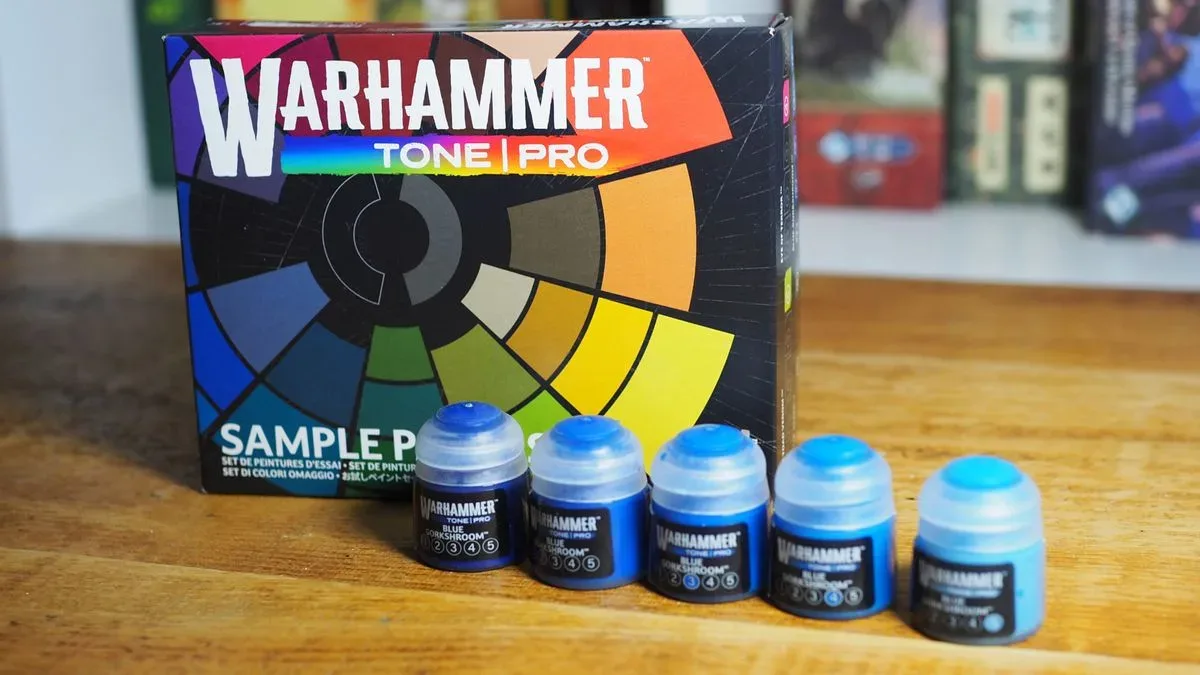
Tone Pro also uses a numerical shade system in which colours progress from dark at 1 to light at 5. On paper, that is a modest labeling decision. In practice, it could make a common painting process considerably easier to understand.
Layering is the method of applying successively lighter shades to selected areas over a darker base. Highlighting is the related practice of placing lighter colour where light would naturally hit: raised edges, top-facing surfaces and prominent ridges. Together, these techniques give a miniature contrast and shape. Without them, a one-colour armour plate can look flat even if it has been painted neatly.
The difficult part for a newer painter is often choosing compatible colours. Older paint ranges may use imaginative, setting-specific names. Those names can be fun and memorable, but they do not inherently tell a painter whether one blue is intended to be darker or lighter than another, or whether the jump between them will produce a smooth result. That creates extra decision-making before a brush even touches the miniature.
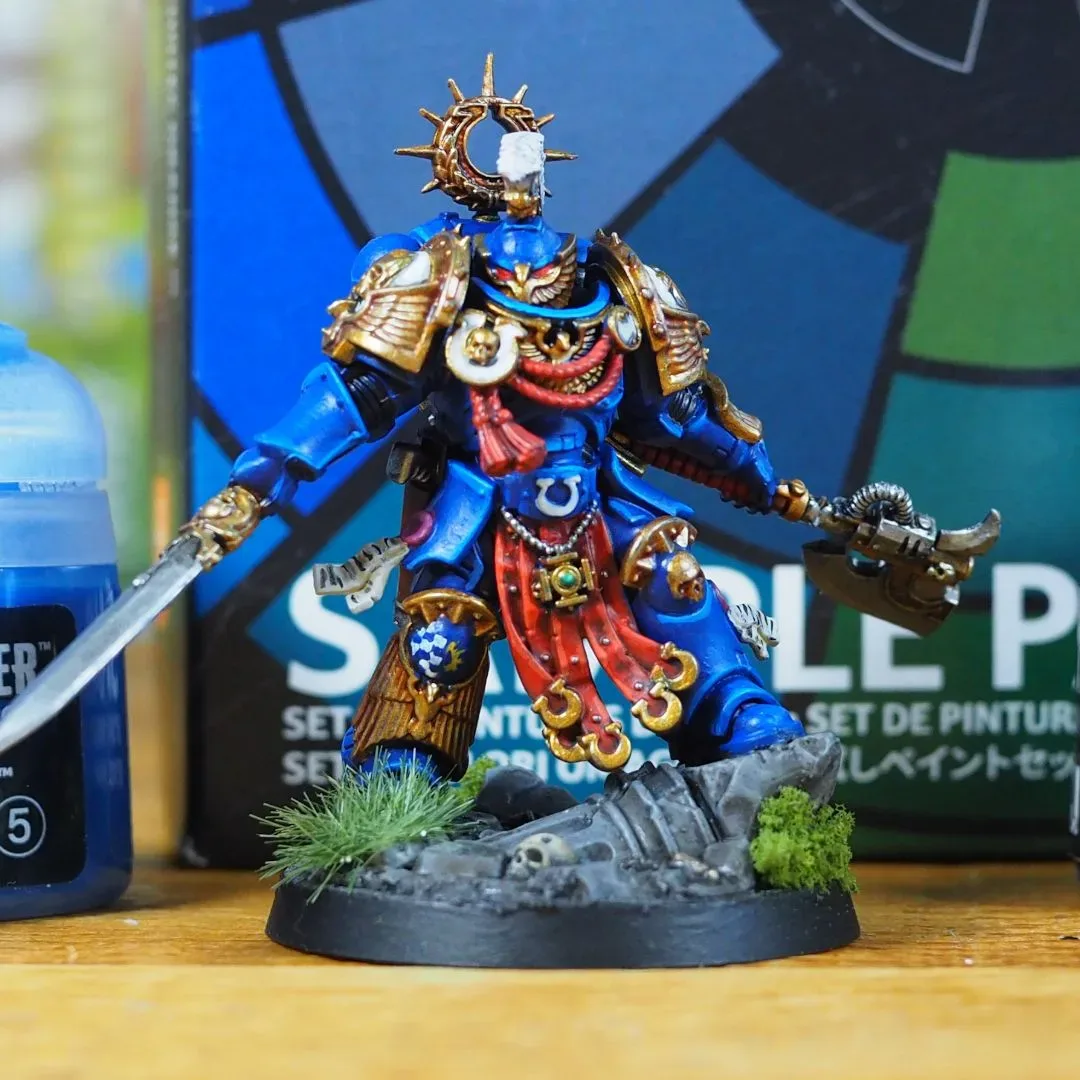
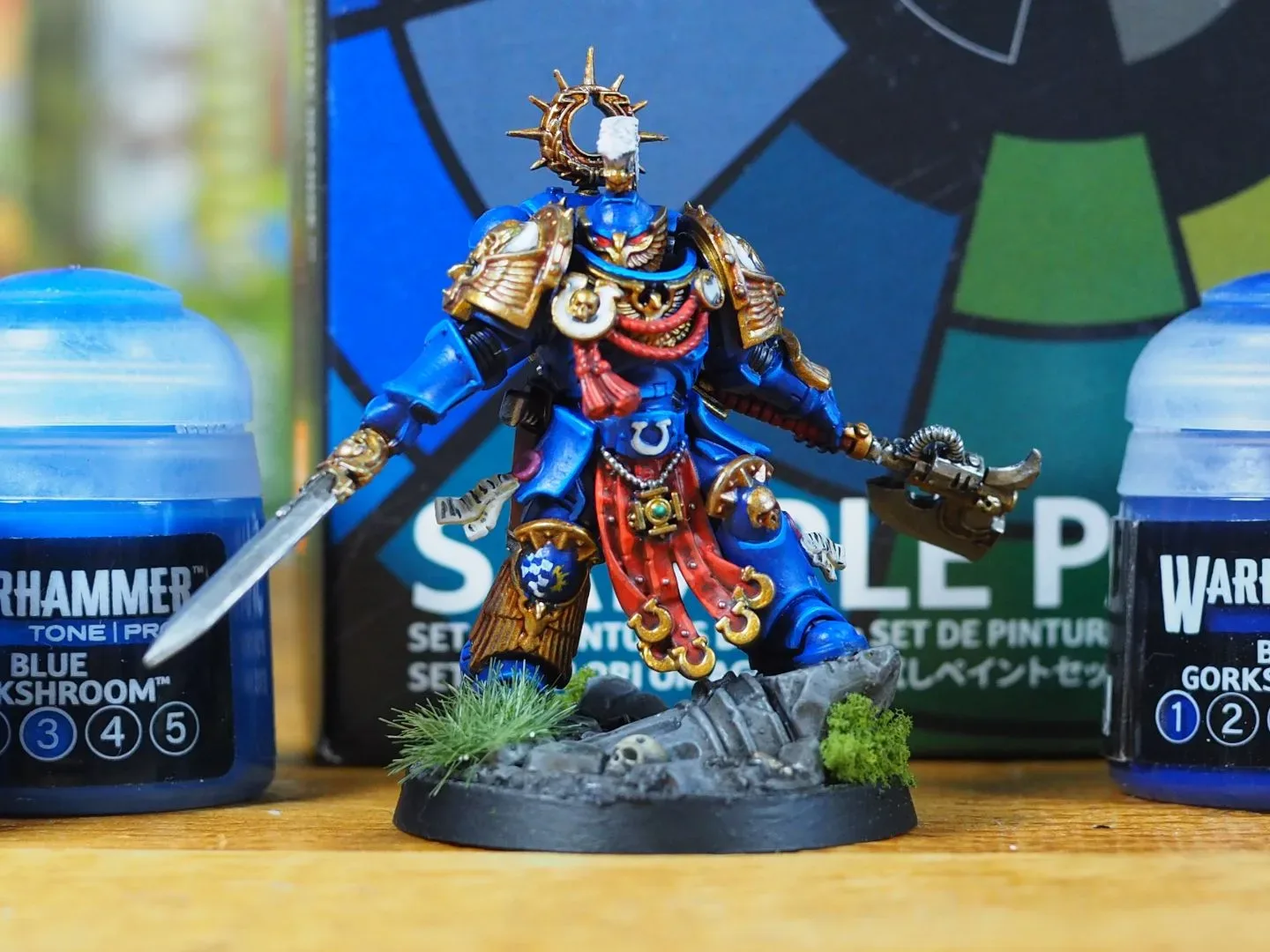
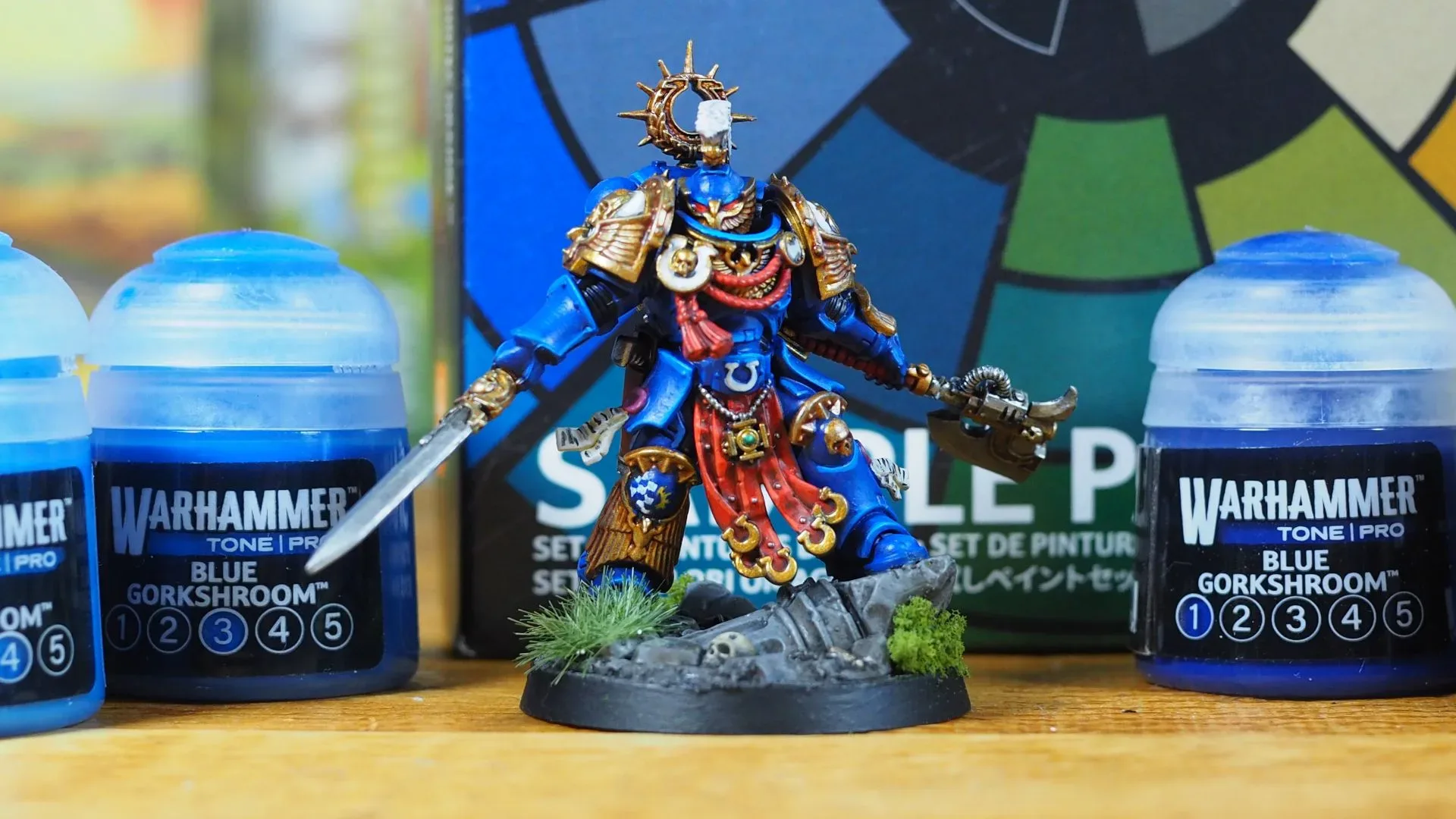
With Tone Pro, the reported 1-to-5 scale provides a built-in map. Someone painting blue power armour can begin with a darker shade and move upward through increasingly light shades without needing to infer a colour hierarchy from the names alone. The Blue Gorkshroom range, numbered from 1 through 5, was used to paint Ultramarine Kais Konorius, with shades 1 to 4 used for the armour’s progression.
That does not automatically teach where to put highlights. Nor does it mean every painter must use every numbered stage. But it gives novices a more legible system for selecting a sequence, while experienced painters can decide how many steps serve a particular model. It is a practical example of design doing some of the organizational work that would otherwise fall on the user.
How Tone Pro fits alongside faster painting approaches
There are already beginner-oriented routes into painting miniatures, including Army Painter Speed Paints and Warhammer Contrast Paint. These are described as paints that, once a miniature has been basecoated with spray paint, stain it with a chosen colour while helping create shadows and highlights. The appeal is speed: a painter can establish a readable result across many models with relatively little manual shading.
Tone Pro seems aimed at a different, though overlapping, need. Rather than emphasizing a shortcut to shadows and highlights, it is presented as a conventional paint approach made smoother and more tolerant. For a hobbyist who wants to learn basecoating, layering and edge highlights, that distinction is useful. The process remains visible, but the material may be less likely to sabotage the result when the painter has not yet mastered dilution or brush loading.
A wet palette remains a relevant tool in this context. It is used to help keep paint workable and is commonly used when painters need to thin or mix paint. Tone Pro’s reported resilience may reduce the risk of an overly thick application producing a lumpy finish, but it does not turn fundamentals into obsolete ritual. Brush care, controlled application, patience between coats and an understanding of where light should fall will still determine much of a model’s final appearance.
The difference is that these fundamentals may be easier to practice when a single application is more likely to look even and when the next intended highlight colour is plainly identified. The paint does not paint the miniature for you; it may simply be more willing to forgive the apprentice while they learn.
Price is the unanswered practical question
The major unknown is cost. No price has been specified in the available details, and there is speculation that Tone Pro could cost more than other paint options because of its stated qualities. That is the factor likely to decide whether its beginner-friendly design becomes broadly useful or remains a selective upgrade.
For a new painter, purchasing a complete colour collection can be intimidating and expensive. The more measured approach suggested by the range’s numbered structure is to buy a focused sequence for a force or faction being painted often. An Ultramarines player, for example, could potentially concentrate on the Blue Gorkshroom progression rather than treating the launch as an obligation to replace every existing pot at once.
A starter set has not been confirmed. Its existence would make a significant difference, because a curated selection could give beginners enough related colours to experiment with base layers and highlights without the burden of choosing an entire system individually. For now, that remains a hope rather than a product detail.
After pre-orders open on October 10, the range is expected to appear at independent retailers, including Miniature Market and Wayland Games in the UK, around the same time. Exact retailer timing and pricing should be treated as unconfirmed until listings are available.
Why the beginner case is stronger than the name suggests
“Pro” branding usually signals specialized tools for people who have already developed confidence. Tone Pro’s reported properties instead make a persuasive case for the reverse reading: a professional-grade paint can be valuable to beginners precisely because it reduces the cost of small errors.
The range’s potential is not that it eliminates the learning curve. Miniature painting still benefits from practice, and ambitious techniques will still require patience. Its potential is that early attempts may retain more sharp detail, gain solid colour with fewer passes, and follow a clearer light-to-dark plan. Those are the kinds of improvements that help a novice finish models they are happy to put on a table—and then paint another one.
For more on the financial pressures shaping the wider hobby and games landscape, see our look at how rising costs are reshaping game development.