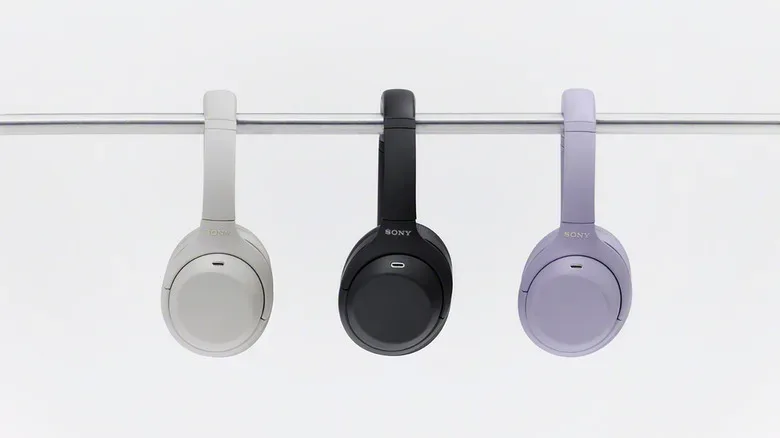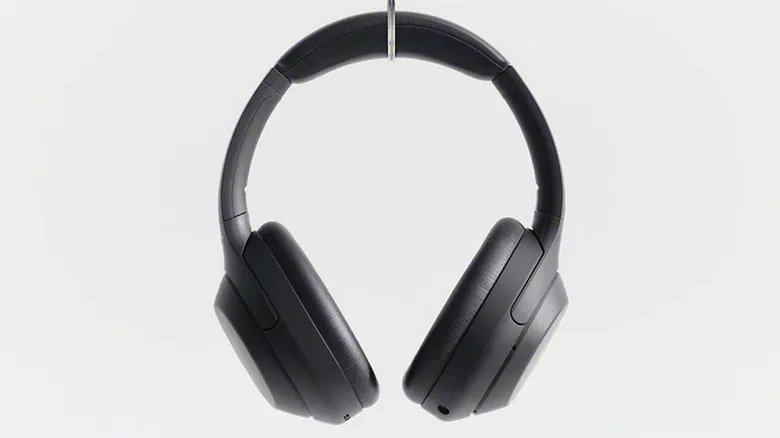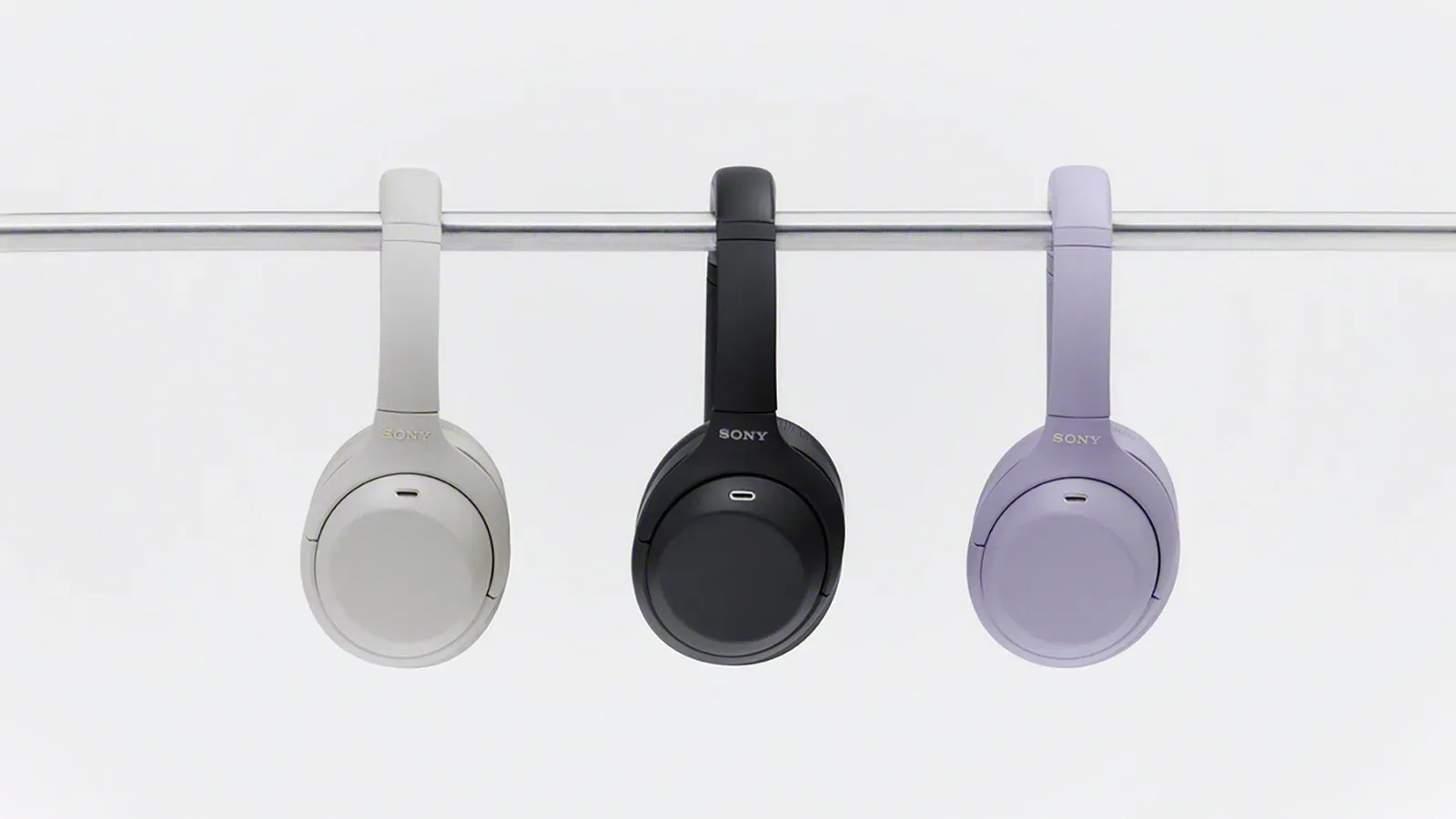
Sony is taking an unusual route with its headphone range in 2026: rather than simply placing a wholly new model between its premium flagships and affordable sets, it is returning to a familiar favorite. The WH-1000XM4C, also described as the WH-1000XM4 second-generation, revives the established WH-1000XM4 design and much of its feature set at a lower entry price.
It is joined by two more straightforward replacements. The WH-CH730N succeeds the WH-CH720N in the middle of the range, while the on-ear WH-CH530 replaces the WH-CH520 at the budget end. Together, the three models cover three very different priorities: flagship-derived noise cancellation and familiar design at $300, long battery endurance and folding portability at $180, and a no-ANC on-ear option for $70.
For gaming audiences, the biggest shared addition is Sony’s gaming-specific equalizer. It appears on all three newly detailed headphones alongside a 10-band EQ, offering more room to tune audio than a handful of vague presets. An EQ will not alter a game’s sound mix at the source, of course, but it can give players a practical way to adjust the balance to their preference, whether that means changing the prominence of dialogue, music, or other parts of a soundtrack.
WH-1000XM4C: a returning 1000X model with a lower price
The WH-1000XM4C carries over the physical design of the original WH-1000XM4. That means Sony is not presenting it as a redesign of the long-running 1000X formula. Instead, it is a refreshed version of a model that first launched in 2020, retaining major hardware and convenience features including active noise cancellation powered by the QN1 chip and multipoint Bluetooth connectivity.
Multipoint support remains particularly useful for anyone splitting time between a console-adjacent PC setup, a phone, and a work machine. It is intended to let the headphones maintain connections with more than one Bluetooth device, reducing the need to repeatedly pair and unpair when a call interrupts a listening session. Exact behavior can vary by device and use case, but its inclusion helps keep the revived model feeling less like a pure nostalgia play.
There are software and tuning updates, too. Sony says the WH-1000XM4C receives its latest sound profile, a 10-band EQ, and a dedicated gaming EQ. It also adds Quick Access, a one-touch feature for launching supported streaming services. That should not be confused with Quick Attention, the separate feature already present on the original M4 that helps users briefly hear or speak to people around them without fully taking the headphones off.
The tradeoff is battery life. Sony rates the WH-1000XM4C for up to 27 hours with ANC enabled, which is three hours below the rating of the earlier WH-1000XM4. With ANC disabled, the difference is four hours. The refreshed version does improve the quick-charge proposition: three minutes of charging is rated to provide up to one hour of listening.
Price is central to the model’s purpose. The WH-1000XM4C is planned for the fall of 2026 at $300. That is $50 below the original WH-1000XM4’s 2020 debut price, and $150 less than the current WH-1000XM6. For buyers who care more about getting Sony’s older 1000X architecture and features than owning the newest top-tier model, that gap is likely to be the point.
The WH-1000XM4C is not a reinvention of the M4; it is a lower-priced return of that design with updated tuning, EQ options, Quick Access, and faster short charging.
WH-CH730N replaces the WH-CH720N in September
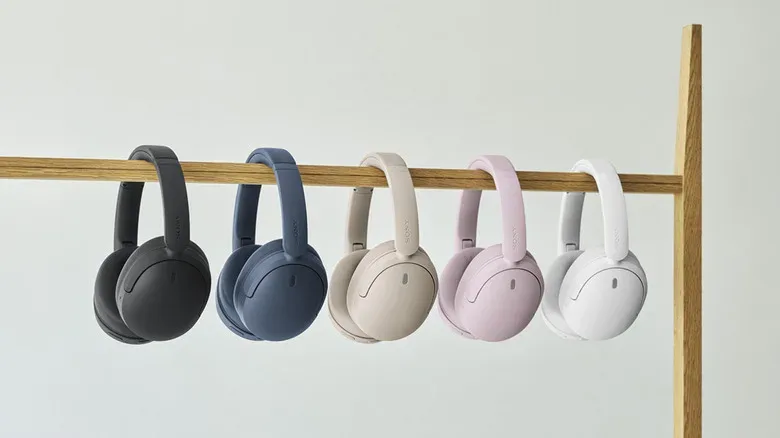
Sony’s middle option is the WH-CH730N, due in September 2026 for $180. It takes over from the WH-CH720N at the same launch price its predecessor carried in 2023. Buyers will have five color choices: black, blue, tan, white, and pink.
Its changes begin with the fit and form factor. Sony has revised the ear cups and moved to a folding headband, a welcome distinction for people who value a more compact shape when their headphones are not in use. The company also says its revised ANC system can reduce noise by up to 10 percent more than before. As with all noise-cancellation claims, real-world results will depend on the type of noise, fit, and environment, but the stated aim is a step up from the outgoing 720N.
Calls are another stated focus. Sony says AI-based noise reduction should improve call quality. This is a feature area where context matters: a quieter room, the wearer’s voice level, wind, and the listener’s equipment all affect the final result. Still, its presence suggests the 730N is designed for more than background music on a commute; Sony is also positioning it for general daily communication.
On the audio side, Sony says the new profile gives vocals a more natural character. The WH-CH730N also gets the same 10-band EQ and gaming EQ found elsewhere in this rollout. Background Music mode moves down from the 1000X family as well. This mode is designed to make audio seem quieter and more room-like, as though it is coming from speakers in the environment rather than playing directly inside headphones.
The major specification change is endurance. Sony rates the WH-CH730N for up to 50 hours with ANC switched on and as much as 75 hours with it off. Those figures represent a 15-hour gain with ANC active and a 25-hour improvement without it compared with the WH-CH720N. Such ratings are manufacturer estimates and actual playback can shift with volume, codec, settings, and connection conditions, but the listed increase is substantial.
It also introduces hearing-health tools to this price tier. Safe Listening mode lets users define a maximum volume as a percentage of the headphones’ potential output. The companion features include a weekly sound-allowance check and usage tracking over time. For players who can lose track of volume during a long RPG grind, competitive session, or late-night music run, a set ceiling may be more useful than a reminder after the fact.
Wireless peripherals can create their own frustrations, but responsible setup matters more than trying reckless workarounds. Readers dealing with Bluetooth conflicts can see why a Bluetooth jammer is not a clever fix for wireless annoyances.
WH-CH530 keeps costs down and skips ANC
The WH-CH530 is the least expensive member of the group, arriving in September 2026 for $70. It replaces Sony’s WH-CH520 and remains an on-ear headphone. Sony is holding the line on pricing: its $70 cost matches the older model’s price.
There is no active noise cancellation on the WH-CH530. That is an important distinction rather than a footnote. Prospective buyers who regularly travel, work in noisy public spaces, or want the strongest possible isolation should look toward the WH-1000XM4C or WH-CH730N instead. The 530’s appeal is a simpler, lower-cost wireless design rather than an attempt to imitate premium ANC hardware.
Even at this level, Sony says sound quality has been improved and includes both the 10-band EQ and gaming EQ. The model is rated for up to 55 hours of battery life, five hours above the WH-CH520. Sony also says AI will help enhance calling performance.
Notably, the Safe Listening tools are here too. That puts the adjustable volume limit, weekly allowance check, and listening-usage tracking within reach of buyers who do not want to spend more for the WH-CH730N. It is one of the clearer common threads in the lineup: Sony is extending customization and listening-management options from pricier gear into a $70 product.
Color variety is another part of the WH-CH530 pitch. It will be offered in black, purple, green, white, pink, and coral. That six-color list is broader than the 730N’s selection and makes sense for an inexpensive on-ear model intended to be as much an everyday accessory as a technical audio purchase.
What separates the three models
There is no single “best” choice in this release, because the models are separated by more than price. The WH-1000XM4C is the pick for people who want Sony’s returning 1000X design, QN1-based ANC, multipoint Bluetooth, and a premium-family feature mix without moving up to the WH-1000XM6. Its compromise is the lower 27-hour ANC-on battery rating.
- WH-1000XM4C: $300 in fall 2026; over-ear 1000X design, QN1 ANC, multipoint Bluetooth, Quick Access, 10-band and gaming EQs, and up to 27 hours with ANC on.
- WH-CH730N: $180 in September 2026; revised ear cups, folding headband, updated ANC, AI-based call noise reduction, Background Music mode, Safe Listening tools, and ratings up to 50 hours with ANC or 75 hours without.
- WH-CH530: $70 in September 2026; on-ear design without ANC, 10-band and gaming EQs, AI-assisted call enhancements, Safe Listening tools, and up to 55 hours of battery life.
For the 730N, the core case is endurance, folding construction, ANC, and a more moderate cost. The CH530 is the uncomplicated value option, leaving out ANC but retaining unusually broad EQ and hearing-management features for its tier. Sony’s 2026 headphone plan therefore leans less on one-size-fits-all upgrades and more on making a recognizable feature set available at clearly separated budgets.