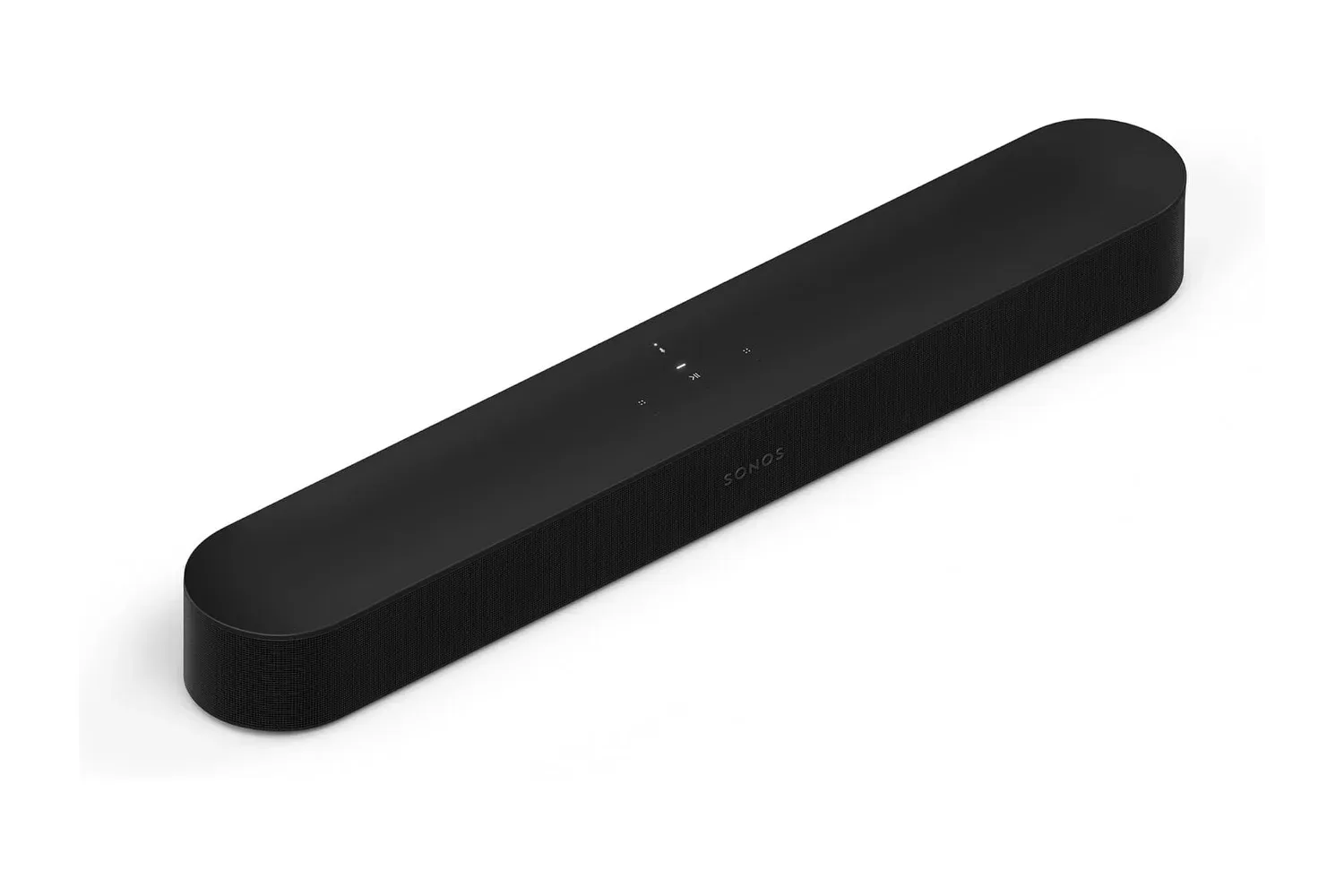
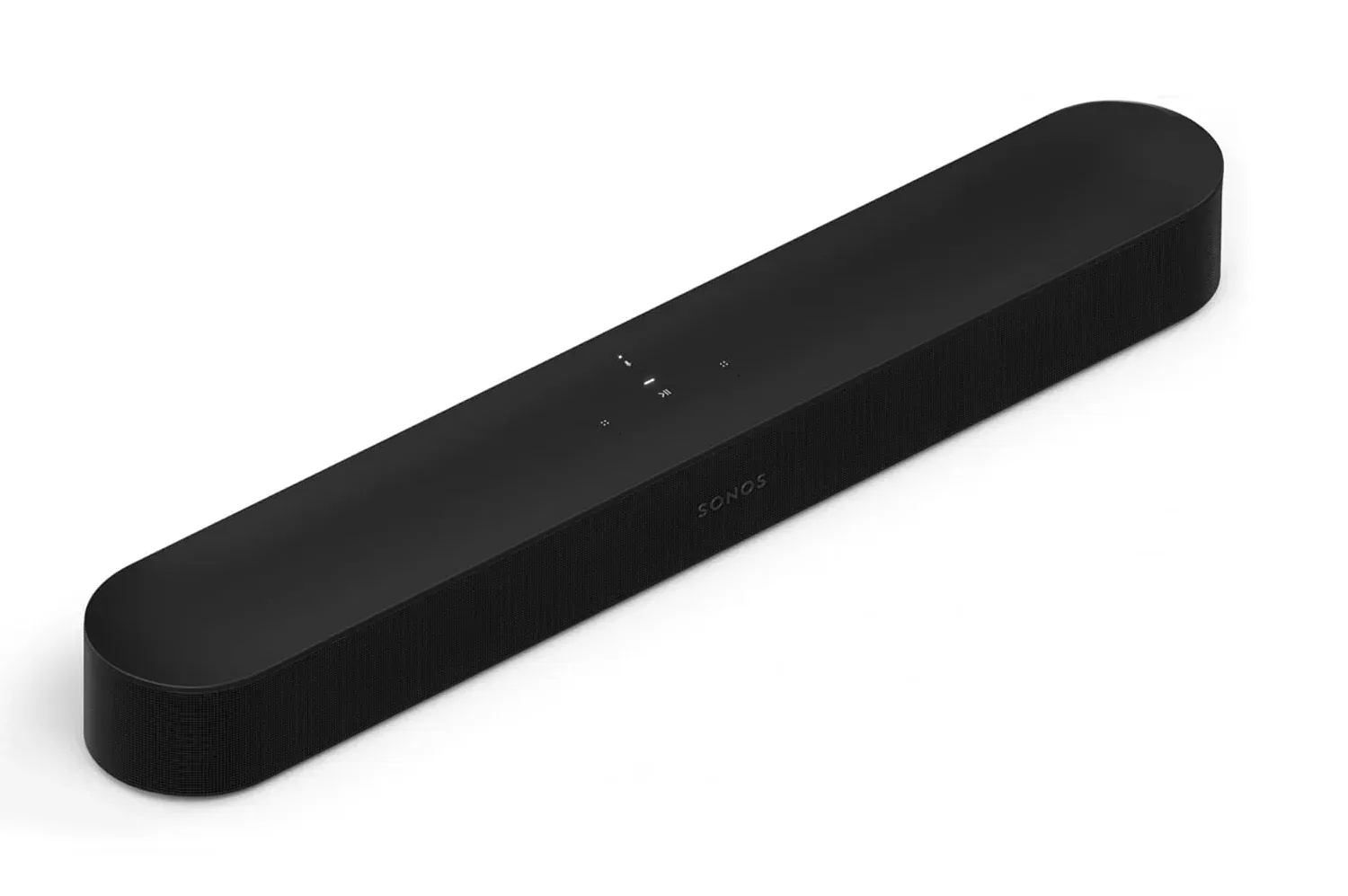
Anyone who has played the familiar living-room game of “turn it up for dialogue, turn it down for explosions” will understand the appeal of a soundbar. Amazon’s Black Friday listing for the Sonos Beam Gen 2 cuts the compact soundbar from $499 to $339, a $160 reduction that works out to roughly 32% off. Both black and white versions are included, and the offer is listed as open to shoppers without a Prime membership.
The Beam Gen 2 is aimed at people who want an appreciable step above television speakers without committing to a large bar, separate receiver, or immediately buying a full speaker package. Its most practical selling point may be that it pulls double duty: it is a TV soundbar while the screen is on, then a Wi-Fi speaker for music, podcasts, radio, and audiobooks when the TV is off.
That makes it potentially relevant for a gaming setup as much as a movie setup. A single compact component beneath a display can improve the presentation of game dialogue, menus, cinematic scenes, streamed shows, and music without adding another controller to the coffee table. The timing also arrives on a packed date for players browsing new software, including the games covered in Games releasing today: November 27, 2026.
A compact bar with a clear role
Sonos positions the Beam as the smaller soundbar in its range. That matters in rooms where the television stand is already competing with a console, streaming box, router, charging dock, and the enduring mystery of several cables no one claims to own. The bar is intended to sit beneath either a mid-sized TV or a 65-inch display without obscuring the bottom of the screen, and it can also fit on a shelf.
Compactness is not just an aesthetic concern. A soundbar is often purchased specifically because a conventional multi-speaker system demands more room, more wire management, and more placement decisions. The Beam’s proposition is less “replace every part of a theater system” than “make the TV setup more capable while keeping it manageable.” That distinction is important for buyers deciding whether the sale price matches their needs.
The supplied specifications describe five internal drivers. In speaker terminology, a driver is the component that converts an electrical audio signal into sound. Multiple drivers can be assigned to different portions of the audio range or directed to help shape a wider presentation. Sonos says the Beam’s drivers are tuned for clear dialogue, a wide soundstage, and solid bass.
A soundstage is the perceived space in which sounds appear to sit. Rather than every voice, musical cue, and effect seeming to originate from one narrow spot below the TV, a wider soundstage can make audio feel as though it extends across the front of the room. That is useful for games and films alike, though it should not be confused with having physical speakers placed all around the listener.
What Dolby Atmos means here—and what it does not
The Beam Gen 2 supports Dolby Atmos, a format designed to create a more three-dimensional sense of sound. In broad terms, Atmos audio can carry positional information intended to make effects feel as though they have location and movement, rather than simply coming from conventional left, center, or right channels.
Related coverage includes Sonos Beam Gen 2 drops to $339 at Amazon for Black Friday.
In the Beam’s case, the relevant promise is an expanded, more immersive presentation from one compact bar rather than a demand that the buyer immediately install additional speakers. That can make movies and games feel larger than they would through built-in TV audio, while keeping voices positioned prominently at the front.
There is still a limit worth stating plainly. A standalone Beam is not presented as a replacement for a complete home-theater layout. Dedicated rear speakers and a subwoofer occupy actual positions in a room, something a single front-mounted bar cannot fully duplicate. Atmos support is a meaningful capability, but it is not a magical exemption from the physics of speaker placement.
For many households, that trade-off is exactly the point. The supplied details emphasize dialogue clarity, which is often the most immediately useful improvement over TV speakers. When speech remains understandable at a comfortable level, there can be less temptation to continually chase the volume during a show or a game’s louder moments. Whether it eliminates every unevenly mixed soundtrack is a different question; no such universal claim is established here.
Connection and room tuning
The setup described for the Beam uses two cables: power and HDMI eARC to the TV. HDMI eARC stands for enhanced Audio Return Channel. It is the HDMI connection that lets the television send audio back to a compatible soundbar, allowing the display and its attached devices to route their sound through the Beam.
The obvious practical benefit is simplified control. The Beam can be operated with the TV remote already in the room, instead of turning routine volume changes into a search for a separate audio remote. For anyone sharing a living-room television, reducing the number of steps required for ordinary use is not a small feature; it is often the difference between a device becoming a daily fixture and becoming an expensive rectangle everyone tolerates.
Sonos also includes Trueplay tuning. Room tuning is the process of adjusting a speaker’s output for the acoustic behavior of its surroundings. Furniture, walls, open floor plans, shelves, and room size can all influence how bass and other frequencies are perceived. Trueplay is intended to tailor the Beam to that room, helping it avoid coming across as overly bass-heavy in a small apartment or too thin in a larger open space.
That does not make every room sound identical, nor does it mean the room itself stops mattering. It does mean the system has a tool intended to account for a basic reality of home audio: a soundbar is heard in a real space, not in the abstract. Buyers who cannot rearrange a living room around speaker placement may find that kind of adjustment more useful than a more complicated setup they will never fully optimize.
TV bar first, household speaker second—or the reverse
When the screen is off, the Beam functions as a regular Sonos speaker. It can play music and podcasts from streaming services, as well as radio and audiobooks. Connectivity is available over Wi-Fi or Ethernet. Ethernet is the wired network option, potentially convenient for a TV stand already located near a router; Wi-Fi offers the simpler wireless route.
The Beam also supports AirPlay 2, allowing music to be sent from an iPhone, while Alexa is built in for voice control. The Sonos app handles additional control and setup functions. Together, these options explain why the Beam is more than a device purchased solely for movie night. A living-room bar that remains silent whenever the TV is idle can feel specialized; one that also takes on everyday listening has a broader use case.
That flexibility is particularly relevant to a console-centered room. The same display area may host games, streaming video, a music queue during a party, podcasts while someone cooks nearby, or a radio station during ordinary chores. The Beam’s value case rests on being part of all of those routines, not just delivering louder action scenes.
An upgrade path, rather than an all-at-once system
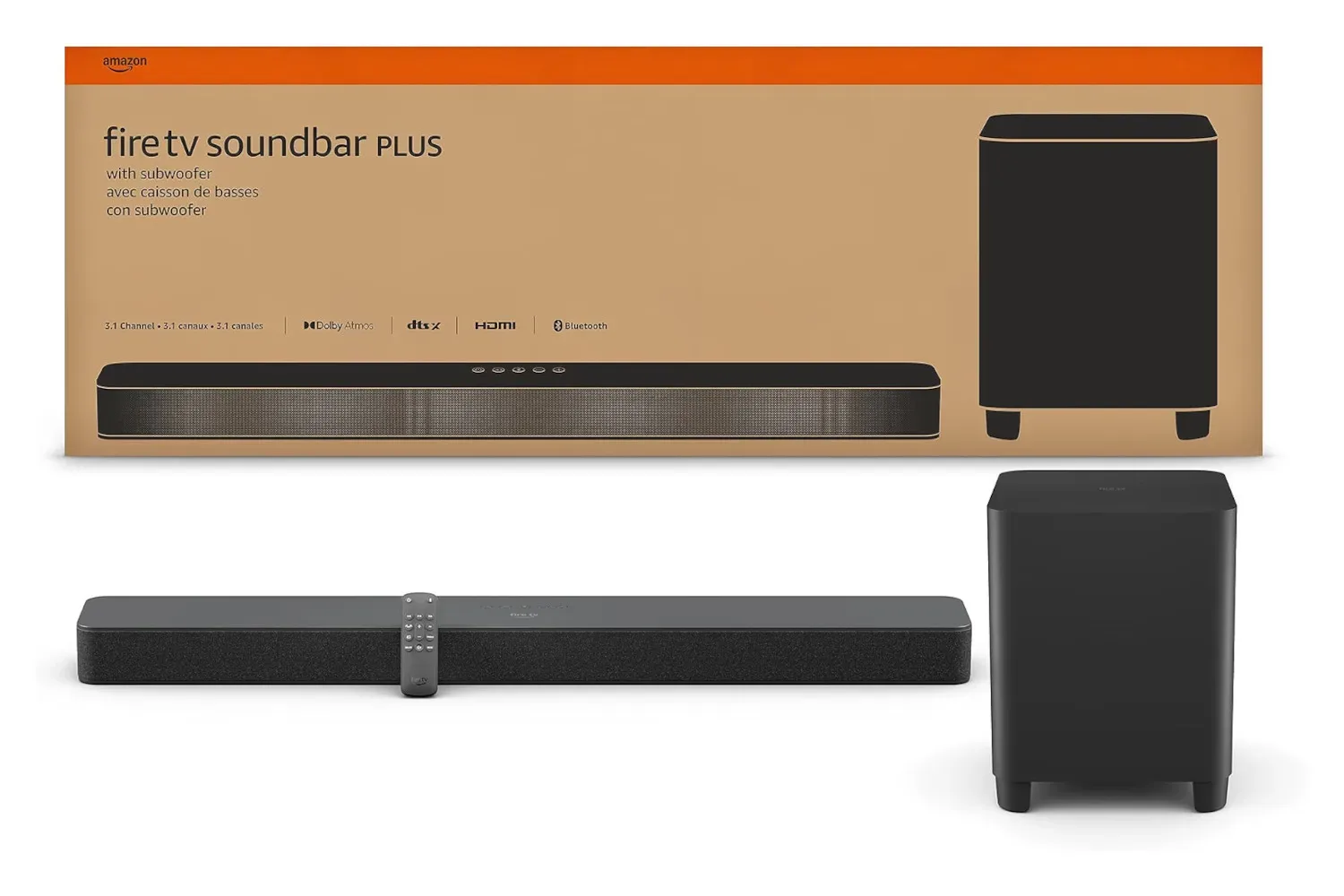
The Beam can be the first part of a larger Sonos arrangement. Sonos offers the Sub Mini for deeper bass and rear speakers for a more traditional surround setup, and the Beam can be grouped with other Sonos speakers around a home. Amazon also lists sets with additional speakers for shoppers who prefer to build a larger system from the beginning.
There are two sensible ways to interpret that expandability. First, it gives a buyer a route to add components later rather than committing to every speaker on day one. Second, it means a $339 Beam should be evaluated as a standalone purchase, not mentally priced as if it already includes a subwoofer or rears. Those additions can change the experience, but they remain separate components.
For someone seeking the cleanest immediate improvement to television audio, the Beam’s compact footprint, HDMI eARC connection, and TV-remote control may be the more decisive features than expansion plans. For someone who already expects to grow into a surround system, compatibility with the Sub Mini and rear speakers supplies a clear route forward.
Who the Black Friday offer best suits
- Good fit: Buyers using underwhelming TV speakers who want clearer dialogue and a larger sense of scale from a compact bar.
- Good fit: Households that will use a soundbar for music, podcasts, radio, or audiobooks as well as TV and games.
- Good fit: Shoppers who prefer a straightforward HDMI eARC setup and control through an existing TV remote.
- Worth considering carefully: Listeners expecting a single small bar to reproduce the physical wraparound effect of a full speaker system.
- Worth considering carefully: Buyers whose main goal is deep bass or true rear-channel surround immediately, since those capabilities can involve adding separate Sonos components.
At $339 rather than $499, the Sonos Beam Gen 2 sale narrows the cost of entry for a compact, connected soundbar that can serve as a music speaker away from the TV. The practical appeal is uncomplicated: better-focused TV sound, one-bar installation, and the option to expand later. Shoppers should still verify the live Amazon listing, color selection, and deal status before purchasing, as promotional availability can change.
Shop the products
Check current price, model and availability at the retailer.