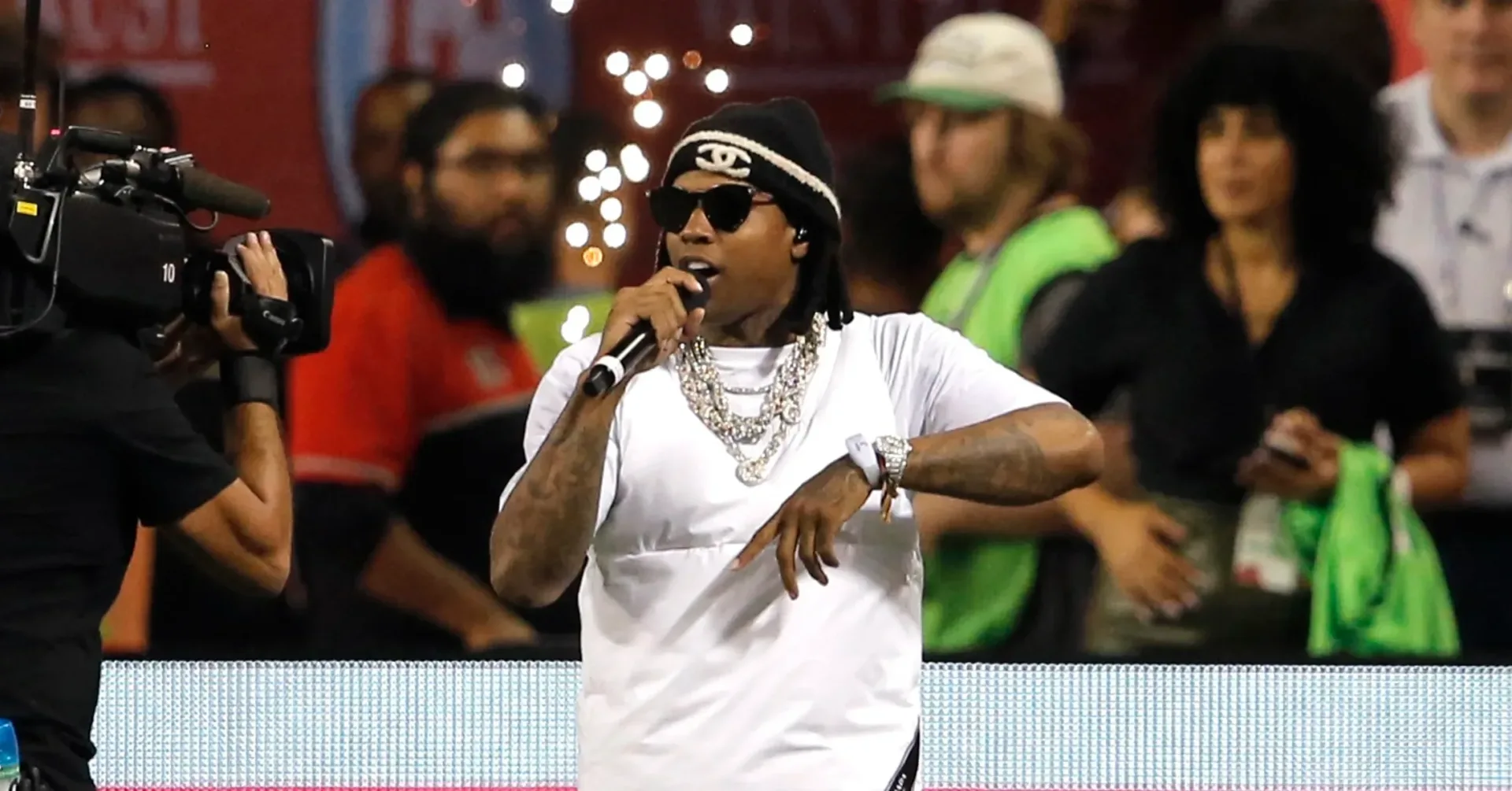
Rod Wave has been indicted in Georgia in connection with a November 2025 traffic stop in Atlanta, moving forward a case his legal team has challenged from the outset.
The reported charges are possession of a Schedule II controlled substance, possession of a firearm during the commission of a felony and reckless driving. An indictment is a formal criminal accusation that advances a prosecution; it is not a finding of guilt. The allegations will have to be addressed through the court process, and Rod Wave’s attorneys have said they intend to contest both the arrest and alleged violations of his rights.
What police alleged happened during the Atlanta stop
The encounter underlying the case occurred on November 7, 2025. An Atlanta officer alleged that Rod Wave, whose legal name is Rodarius Green, drove through a stop sign on Defoor Avenue NW and appeared to be traveling 45 mph in a 30 mph zone.
The officer followed the vehicle to a QuikTrip parking lot on Howell Mill Road. Rod Wave was taken into custody on an allegation of reckless driving, after which police searched the vehicle.
An arrest warrant described suspected oxycodone and promethazine, a handgun in the vehicle and a second firearm allegedly recovered from Rod Wave’s waistband. Those details are allegations recorded in the warrant, rather than established facts determined at trial.
The warrant also described a backpack containing cash. Police said Rod Wave asked for the backpack and vehicle to be turned over to his fiancée. The officer construed that request as an assertion of ownership over the backpack. The warrant further stated that neither occupant claimed the suspected drugs.
What the individual charges mean
Schedule II controlled substance refers to a legal classification used for drugs subject to substantial regulation under controlled-substance laws. The case materials identify the substances as suspected oxycodone and promethazine. At this stage, the reported charge describes the prosecution’s allegation; questions concerning possession, identification of material and the circumstances of the search can be disputed in court.
Possession of a firearm during the commission of a felony is distinct from merely describing the recovery of a weapon. As reported, the count ties a firearm allegation to an alleged felony offense. That connection is a central legal element the prosecution would need to pursue, while the defense can challenge the evidence and the basis for the underlying allegation.
Related coverage includes Rod Wave Indicted in Atlanta Traffic-Stop Case.
Reckless driving stems from the officer’s account of the stop-sign and speed allegations. The alleged driving conduct is therefore both a charge in the case and the stated basis for the traffic stop that led to the later search.
That sequence matters because the defense’s objections focus on the arrest itself. In criminal cases that originate with a stop and search, the legality and scope of those actions can be contested independently of the accusation that evidence was found. The supplied case history does not establish how a court will rule on those arguments.
Defense challenges have been public from the beginning
Rod Wave’s attorneys have accused the Atlanta Police Department’s Crime Suppression Unit of targeting him and prioritizing arrest numbers over public safety. They have characterized the arrest as baseless and said they will vigorously challenge what they describe as violations of Green’s rights.
“We look forward to vigorously challenging this baseless arrest and the clear violations of Mr. Green’s rights in court,” Rod Wave’s attorneys said following the arrest.
That is the defense position, not a judicial determination. The indictment means the allegations have proceeded, but it does not resolve the lawyers’ claims about the stop, search or arrest. Nor does it determine whether the prosecution will ultimately prove any count beyond a reasonable doubt.
Rod Wave posted an $8,000 bond after the November arrest and was released the following day.
A separate 2025 matter should not be conflated with this case
The traffic-stop prosecution is separate from an earlier investigation concerning an April 2025 incident at Rod Wave’s home in Milton. Police responding to a reported disturbance there found vehicles with bullet damage. His attorneys maintained that he was the victim of a burglary and disputed the charges that arose from that event.
He surrendered to the Fulton County Sheriff’s Office in May 2025 on warrants related to the Milton incident. That surrender and the later Atlanta traffic stop involve different events, different underlying allegations and different timelines. Combining them risks obscuring what this new indictment specifically concerns: the November 2025 stop in Atlanta.
What the indictment changes—and what it does not
An indictment marks a procedural escalation from an arrest allegation to a formal criminal case. It does not itself mean a trial has occurred, that evidence has been tested in open court or that the accused person has been convicted. The available information does not provide a court date, a plea, a ruling on the defense’s objections or an outcome.
For audiences following the news, the most important distinction is between the evidence alleged by law enforcement, the legal arguments expected from the defense and eventual court findings. The warrant’s description of the stop, suspected substances, firearms and backpack is part of the prosecution-side account of the incident. Rod Wave’s attorneys dispute the legitimacy of the arrest and intend to litigate their objections.
The case arrives amid continued attention on the intersection of music careers, public image and the legal system. It is also separate from the business-side developments affecting music platforms and artists, including debates over tools and policies covered in this look at SoundCloud’s approach to AI music uploads. In Rod Wave’s situation, however, the immediate issue is not an industry policy question: it is a criminal matter whose facts and legal challenges remain unresolved.
What remains unknown
- How Rod Wave will formally respond to each count.
- Whether his lawyers will seek to exclude evidence connected to the stop or search.
- How a court will assess the competing accounts and legal arguments.
- Whether the case will proceed to trial or be resolved through another process.
For now, the indictment keeps the Atlanta traffic-stop case active while preserving the fundamental point that charges are allegations. The prosecution will seek to support its case, and Rod Wave’s defense has signaled that it will challenge the arrest forcefully in court.