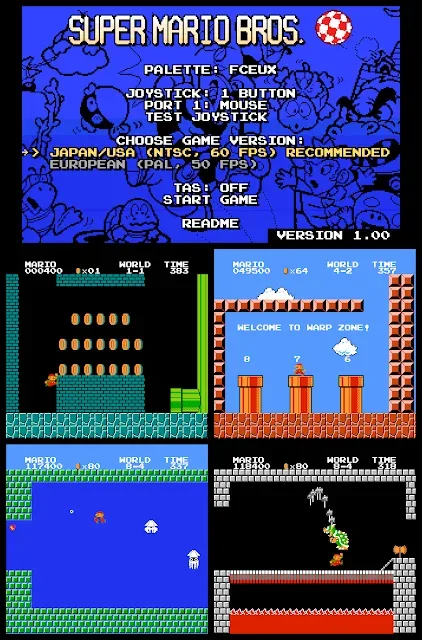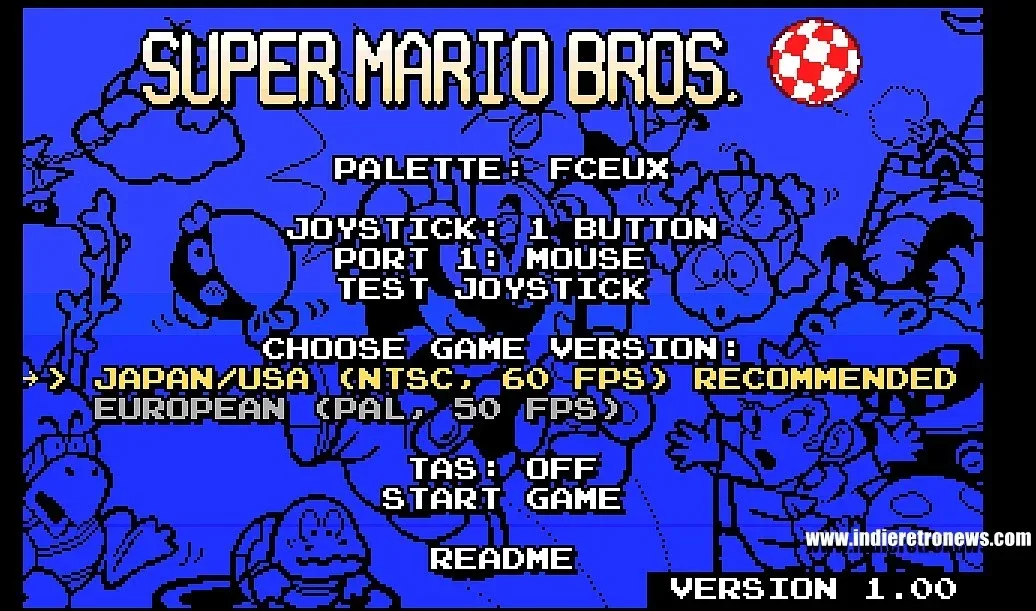
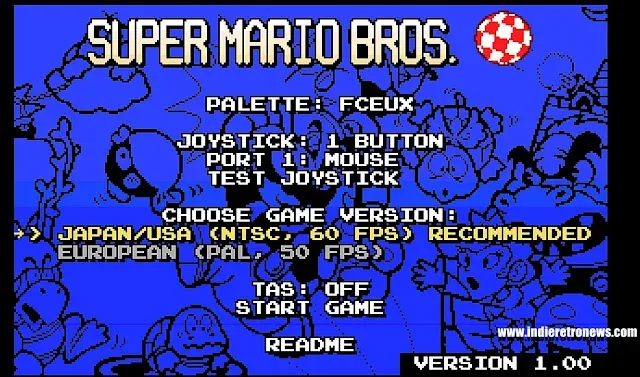
Super Mario Bros. has made an unofficial jump to the Commodore Amiga. A new conversion credited to Agnus Copperfield^SSB aims to bring the original NES game to classic Amiga hardware, with the project described as a native Motorola 68000 assembly-language translation rather than a conventional emulation setup.
The stated goal is unusually exacting: to reproduce the original game’s mechanics, physics and timing on the target machine. The developer reports validating the conversion against 163 recorded gameplay movies, covering 5,249,323 individual frames and execution steps. That is a notably specific claim, and it gives the project a clear technical focus beyond simply making Mario playable on another vintage platform.
A one-floppy conversion for modest Amiga hardware
The port is said to fit on a single floppy disk and to run on an Amiga equipped with 512 KB of chip RAM. Chip RAM is memory shared by the Amiga’s custom hardware, including its graphics and sound systems, so a requirement of 512 KB is important for owners of lower-spec classic systems. It suggests the conversion was designed with the original hardware environment in mind instead of assuming expanded memory.
It also reportedly supports both PAL and NTSC display formats natively. Those standards matter for older systems because they are associated with different regional video timing conventions. Native support for both should make the conversion relevant to a wider range of Amiga setups without presenting one display format as an afterthought.
In practical terms, the claimed hardware profile means the project is aimed at people using authentic Commodore Amiga equipment as well as those interested in the constraints that shaped classic home-computer software. A single-disk game that targets 512 KB of chip RAM is a very different proposition from installing a modern recreation on contemporary hardware: every byte of code, graphics, level data and audio-related work has to fit within a tightly defined technical budget.
What “native Motorola 68000 assembly” means
The Motorola 68000, often shortened to 68000 or 68K, is the processor family associated with the Amiga’s original computing architecture. Assembly language is a low-level programming language that works closely with a processor’s instruction set. In this case, the stated approach means the game code was translated for the Amiga’s processor rather than relying on software to imitate an NES environment while the game runs.
That distinction is central to why the project is interesting to retro-computing enthusiasts. Emulation generally recreates the behavior of one machine on another. A native port instead adapts or rewrites the program so it can operate directly within the destination system’s hardware and software model. The two approaches can both preserve a game, but they pose very different engineering problems.
An NES game and an Amiga game do not share the same processor, graphics architecture or memory arrangement. Matching a familiar platformer’s feel therefore involves more than displaying recognizable stages and sprites. Movement, collision behavior, acceleration, enemy interaction and the pacing of the game all need to behave consistently enough that the result remains faithful to the original design.
That is why the project’s emphasis on mechanics, physics and timing is significant. In a platform game, small timing deviations can materially change how it feels. A jump that begins or ends differently, a character that gathers momentum at a different rate, or a collision that resolves one frame earlier can alter difficult sections even if the visuals look close. The developer’s reported testing approach is therefore directed at the parts of a conversion players may notice immediately once they start moving Mario through a level.
Frame-by-frame verification, explained
A frame is one complete image in a sequence of moving visuals. Comparing play at the frame level is a demanding way to evaluate consistency because it looks beyond broad outcomes such as finishing a stage or reaching a particular screen. It can reveal whether actions unfold at the same moments and whether game-state changes occur in the same sequence.
The reported validation used 163 recorded gameplay movies and more than 5.24 million frames and execution steps. The available details do not describe every tool or procedure behind that process, so it would be premature to treat the figure alone as proof that every possible scenario has been tested. Still, the scale of the stated comparison indicates an effort to check behavior systematically across a substantial body of recorded play.
For a project targeting “frame-for-frame” fidelity, that type of verification is more meaningful than a general claim that the game resembles the NES original. It establishes a measurable standard: the new version should not merely look like Super Mario Bros.; it should aim to respond like it. Whether individual players judge it as identical will ultimately depend on their own hardware, display configuration and experience, but the stated methodology explains the ambition.
Why the Amiga version is a noteworthy retro project
Super Mario Bros. is known for controls that are easy to understand but demanding to master. The basic actions are immediately legible, while accurate movement and timing create the challenge. That makes it a revealing candidate for a conversion: the game does not need layers of menus or complex systems to expose tiny differences in implementation. Players can often sense a mismatch through a run, a jump or an encounter with an enemy.
The Amiga conversion also puts the spotlight on a type of preservation and hobbyist work that is easy to overlook. Classic-game projects are not always about enhancing old titles with new effects or adding modern conveniences. Sometimes the appeal is the opposite: reproducing a specific game as faithfully as possible within another period-appropriate machine’s constraints.
That goal requires choices about performance, memory use, display timing and code structure. The reported single-floppy format and 512 KB chip-RAM requirement make those constraints especially visible. The conversion is presented not as a broad reimagining, but as a compact native implementation built to accommodate classic Amiga systems.
There is a wider retro-gaming appeal here as well. Hardware-specific conversions invite players to think about a familiar game through a different technical lens. The central question is not only whether Mario can appear on an Amiga screen. It is whether the original game’s precise design can survive a translation between substantially different platforms. This project’s reported frame-level checks place that question at the center of its identity.
What prospective players should know
The supplied project details identify the conversion as unofficial. It should therefore be understood as an enthusiast-made release rather than an official Nintendo product. The available information does not establish broader details such as licensing status, distribution terms, supported Amiga models beyond the stated memory baseline, or how the release behaves across every configuration.
Those interested in the technical side should look for the fact sheet included in the downloadable ZIP archive. That documentation is described as containing more detailed information about the conversion. For this particular release, the fact sheet is likely to be more useful than relying on headline claims alone, because it may clarify the developer’s implementation and verification work.
It is also sensible to separate the project’s stated targets from assumptions about an individual setup. PAL and NTSC support is reported, as is compatibility with a classic Amiga carrying 512 KB of chip RAM, but users should consult the supplied documentation for installation and configuration specifics. No performance testing or independent hands-on assessment is established by the available material.
An exacting new route to an old platformer
The most compelling detail in this Amiga release is not simply that another system can run Super Mario Bros.. It is the attempt to preserve the game’s behavior with a native 68000 implementation, a one-floppy footprint and a validation process measured in millions of frames and execution steps.
For Amiga owners, retro developers and players fascinated by the internal logic of classic games, that combination makes Agnus Copperfield^SSB’s conversion worth attention. It frames a beloved NES platformer as both a game and a technical benchmark: one whose apparent simplicity leaves very little room for imprecision.
For more retro-focused coverage, visit our look at Pokémon’s 30th-anniversary Apple promotion in Japan.