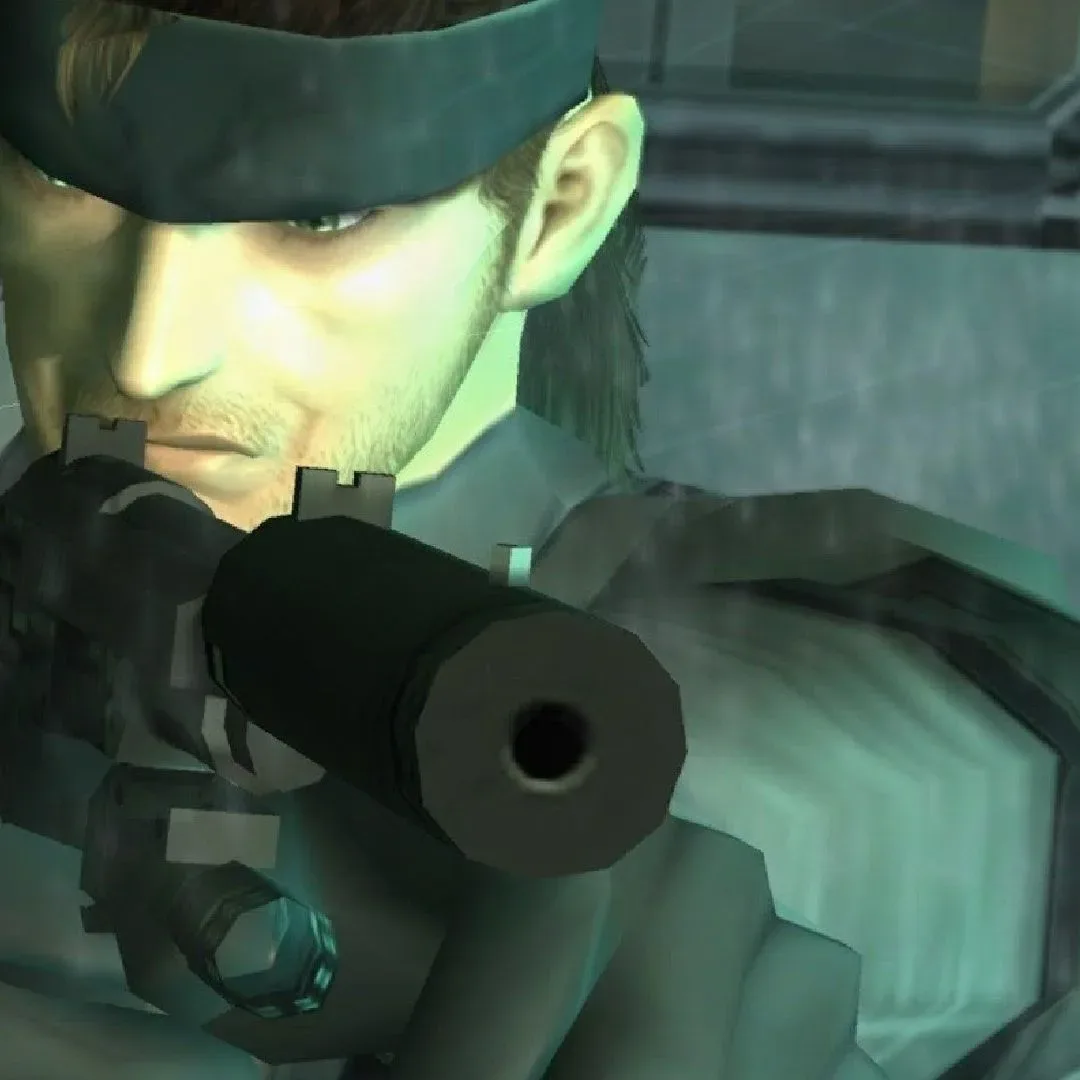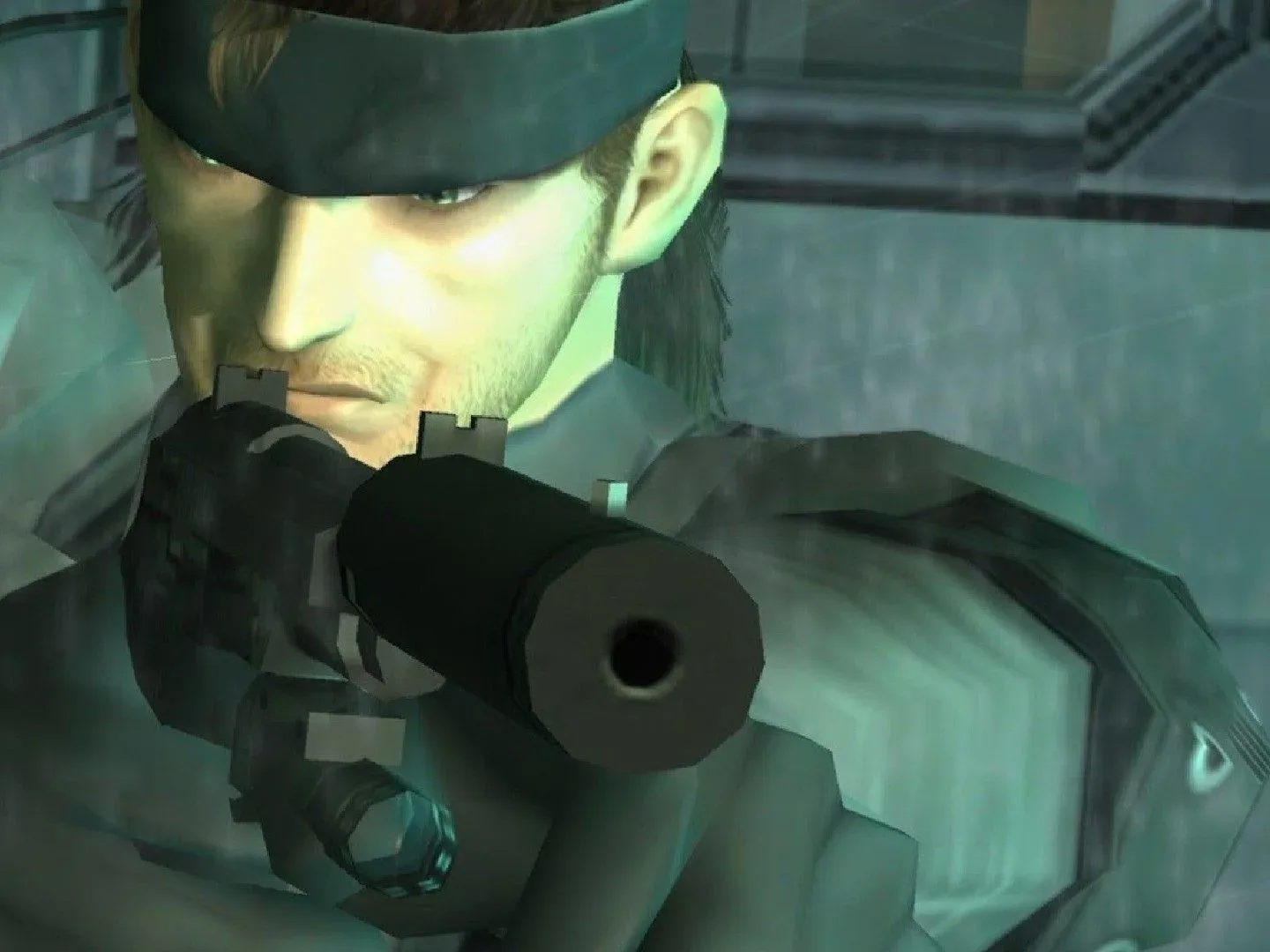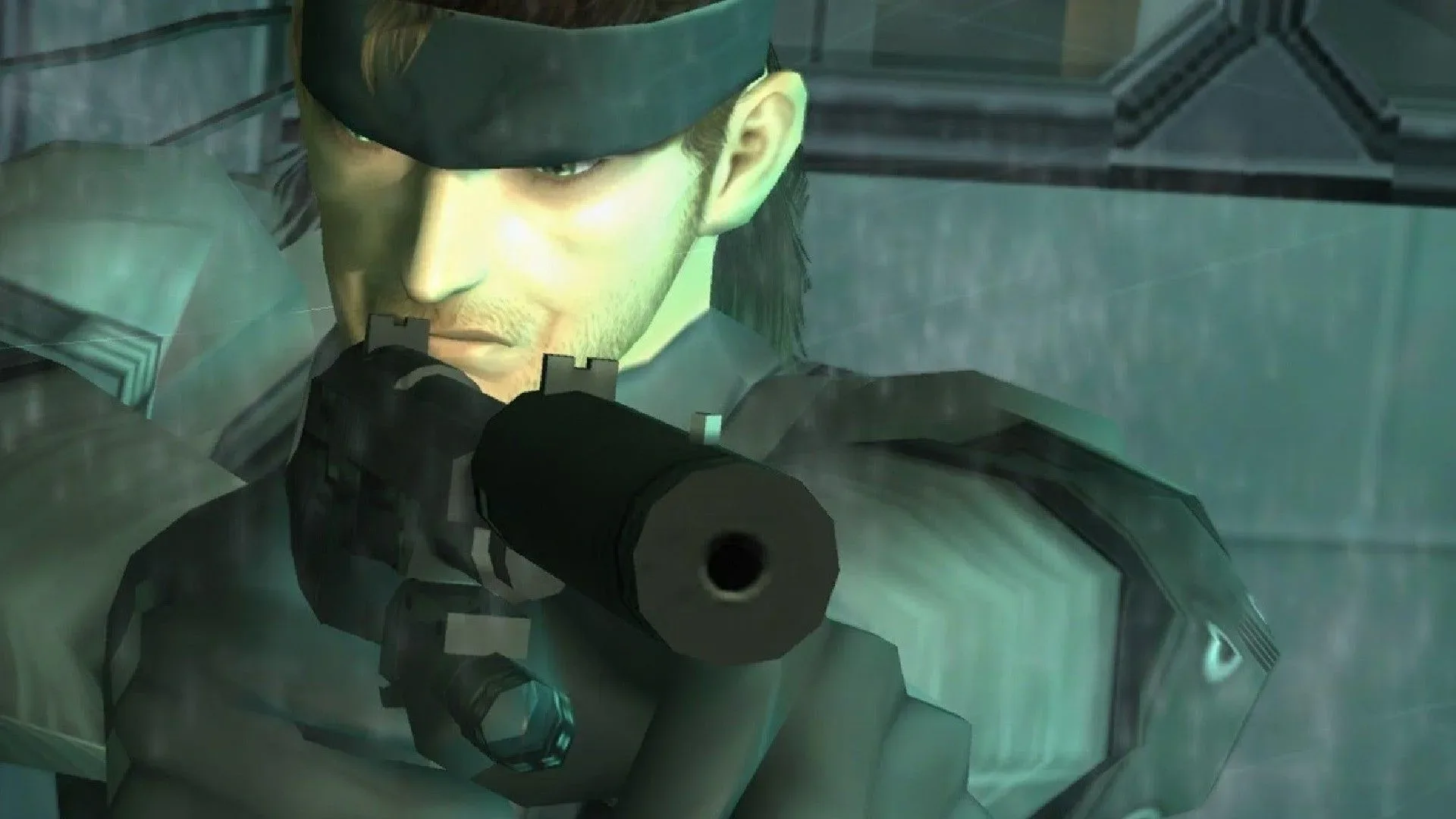
Metal Gear Solid 2 speedrunning has gained a major new route break: a method that bypasses the Tanker chapter’s fight with Olga Gurlukovich altogether. The trick does not simply evade the encounter. It changes the state of the stage so Solid Snake can proceed through the relevant area without taking Olga’s USP pistol.
The discovery was demonstrated in a video by runner apel. Its essential ingredients are wonderfully Metal Gear: an unconscious guard, a laser-protected explosive sequence, a well-timed revival, a game over, and a roll into a checkpoint at exactly the important moment. The guard effectively becomes the person who sets off the blast sequence that normally shapes the route forward.
For a game with an intensely studied speedrunning history, the importance is clear. This is described as the first discovered skip that removes a boss fight entirely, rather than merely making a boss encounter faster or safer. It could therefore reshape runs of the game, particularly those where every required transition and item pickup is scrutinized for lost time.
Why Olga matters in the Tanker route
Metal Gear Solid 2 is divided into the Tanker and Plant chapters. The Tanker is a shorter opening section starring Solid Snake, while Raiden leads the majority of the game afterwards. That structure gives Snake a relatively brief playable stretch, and the Olga fight is his one proper boss battle in it.
Normally, defeating Olga gives Snake access to her USP pistol. That weapon has a narrow but significant role in the Tanker: it is needed to destroy sensors associated with explosives on the ship. The supplied route description notes that this is the only Tanker section in which a lethal weapon is necessary. Outside of that obstacle, a player pursuing a non-lethal approach would generally have reason to avoid using the pistol.
That is why the newly revealed sequence is more consequential than a convenient detour. It removes the need to obtain the weapon in the first place, because it gets the explosives sequence into the needed state by another means. Snake can then leave the section behind and continue toward the point where the game transitions to Raiden.
The guard, the lasers and the stored game state
The technique begins by dragging an unconscious guard to the laser area. When that guard wakes up, the lasers activate and the explosives detonate. On its face, this sounds like an elaborate way to cause a failure, and in ordinary play it is: the blast leads to a game over.
The crucial detail is what the game records around that failure. A flag is a piece of game-state data, often functioning like a yes-or-no marker. Here, the relevant flag determines whether the explosives may be triggered again. After the detonation and a game over, selecting Continue resets that flag to the value it had stored earlier. In other words, the game ordinarily restores an earlier state in which the explosives can still be activated.
Related coverage includes Metal Gear Solid 2 Speedrunners Find a Way to Skip Olga's Boss Fight Entirely.
Apel’s route exploits the timing of a checkpoint save. By rolling toward a checkpoint while the guard triggers the explosives, Snake reaches the checkpoint in the small window that matters. The game then saves the flag value after the explosion has happened. When the player continues, the resulting saved state reflects that the explosives have already gone off rather than returning to a pre-explosion state.
With the obstacle’s logic settled in that post-explosion condition, Snake can pass through and avoid Olga’s encounter. The sequence is less a conventional combat trick than a state-management exploit: the player deliberately makes the game save a specific result during a transition between active play, failure and a retry.
A simple way to read the exploit
- The guard is placed in the laser area while unconscious.
- When the guard wakes, the lasers and explosives are activated.
- The blast causes a game over.
- Snake’s checkpoint timing causes the game to store the post-explosion value of the relevant flag.
- Continuing from that state lets Snake advance without the normal Olga fight and without collecting the USP.
It is important that the trick is not presented as a broad claim that the game’s checkpoints always preserve every condition in the same way. Its significance comes from this particular interaction: the explosion changes a flag, the usual Continue behavior restores an earlier stored value, and checkpoint timing changes which value is stored for the retry.
What “boss skip” means here
Speedrunning terminology can make several different achievements sound similar. A fast boss strategy still completes the battle. A sequence break may reach an area earlier than intended while leaving a fight required. A boss skip, in the meaningful sense used here, removes the battle’s requirement from the route.
This discovery fits the last category. Olga is not merely defeated unusually quickly, and Snake does not receive the USP through the usual victory path. Instead, the route satisfies the game’s environmental progression requirement through the explosives and checkpoint behavior, leaving no need to enter the encounter.
That distinction makes the result unusually valuable for competitive routing. Boss fights can carry execution risk, fixed dialogue or transitions, and item-related steps. Removing one can alter more than a single split. Runners may need to reassess the best setup leading to the laser room, the consistency of moving the guard, the checkpoint approach, and the total effect on the Tanker’s time.
Why the discovery is a big deal even beyond one time save
Speedruns are often treated as solved long before they truly are. Players can repeat known movement techniques and establish highly optimized routes, yet a newly understood interaction between AI behavior, hazards and save-state logic can change the map years later. The guard’s role here is a perfect example: a non-player character normally read as an obstacle becomes the trigger that clears a mandatory progression problem.
The route also highlights why game-over and Continue systems deserve attention in speedrunning research. A retry is usually understood as lost time, but it can be useful if it transfers the player into a more advantageous game state. In this case, failure is not the goal by itself. The goal is to ensure that failure occurs only after the checkpoint has captured the explosion’s outcome.
That makes the roll toward the checkpoint more than flashy movement. It is the bridge between two pieces of logic that would otherwise undo one another. Without the post-explosion save, the explosives would be reset to a triggerable state on Continue; with it, Snake receives a route forward that no longer depends on Olga’s weapon.
The immediate question for the community will be how practical the setup proves in full attempts. A discovery can be theoretically faster but demanding enough that some runners retain older routes until the technique is made consistent. The available description establishes the mechanism and its route-changing potential, but does not establish a new record time, standardized category strategy, or an exact time saving. Those are matters runners will need to test across real runs.
A new reason to revisit the Tanker
The Tanker is a compact prologue, but it now contains a newly important point of technical study. Players interested in the game’s older PlayStation-era stealth design can see how a tightly scripted sequence still leaves room for surprising emergent behavior when NPC placement, environmental triggers and checkpoint data collide. For a broader look at PlayStation games worth revisiting, see our ranking of PlayStation platformers.
For Metal Gear Solid 2 runners, though, the practical headline is much sharper: Snake’s only proper Tanker boss no longer appears to be mandatory. A guard can wake up in the wrong place, set off the explosives, and—when the checkpoint is timed correctly—do the dirty work for a route that once had to end with Olga’s defeat.