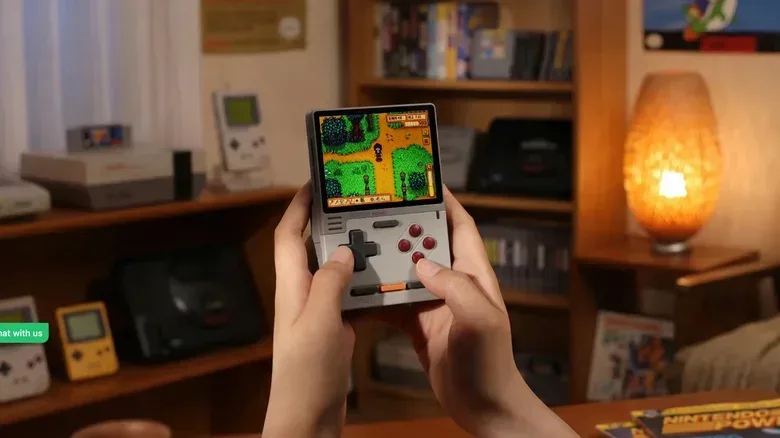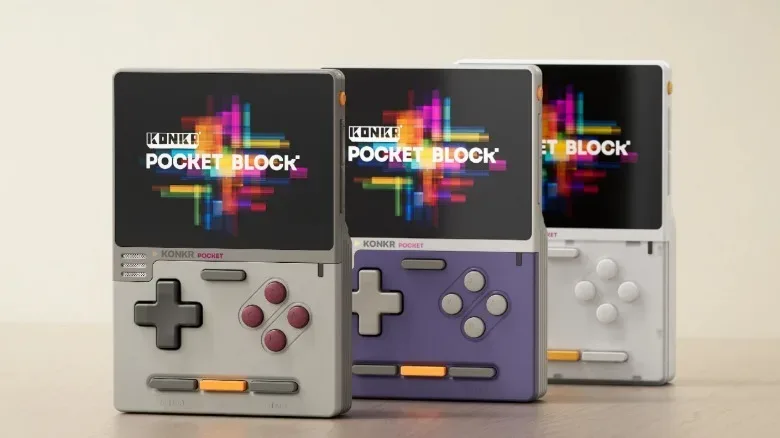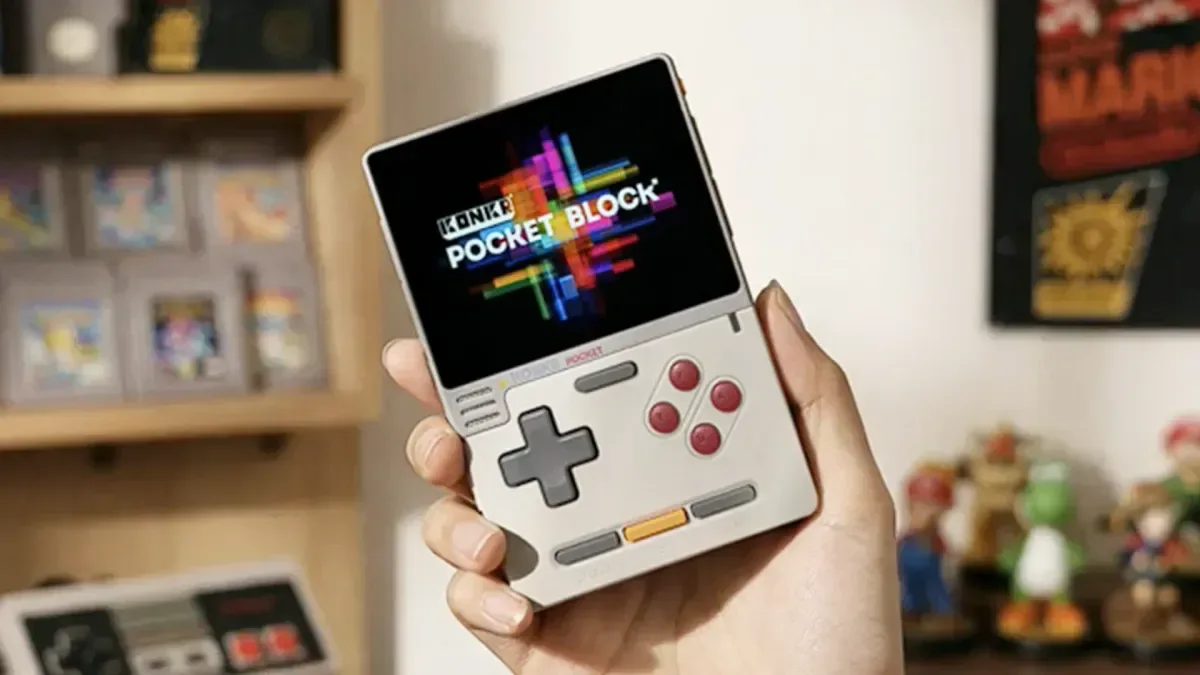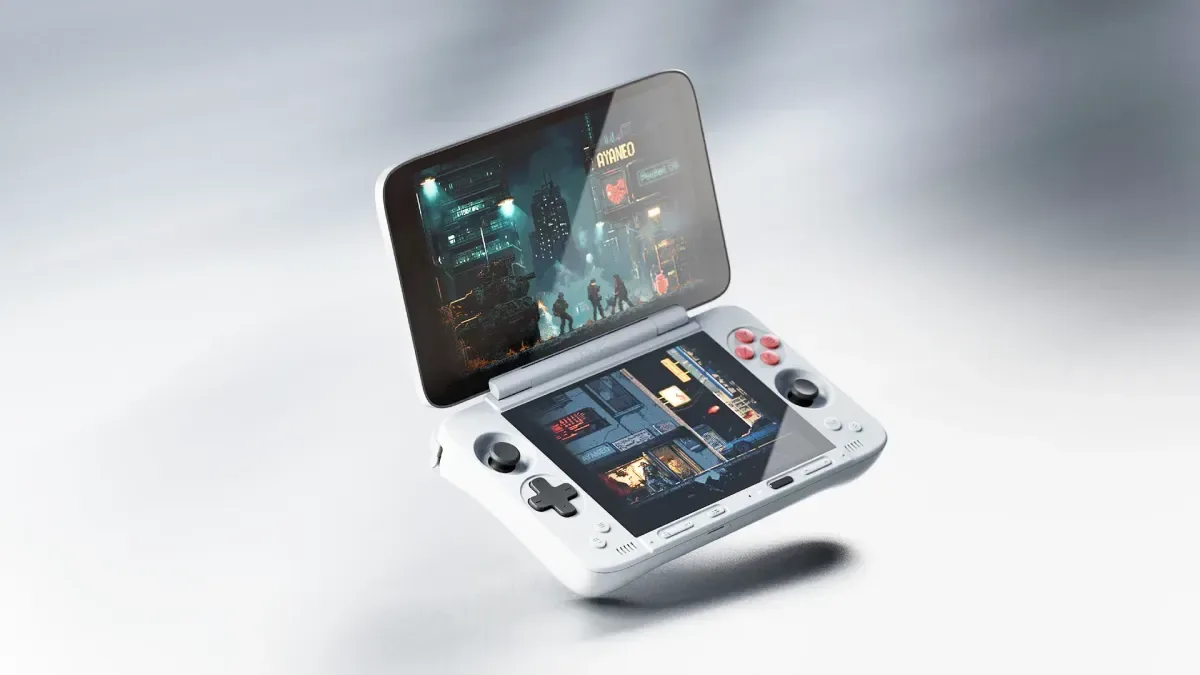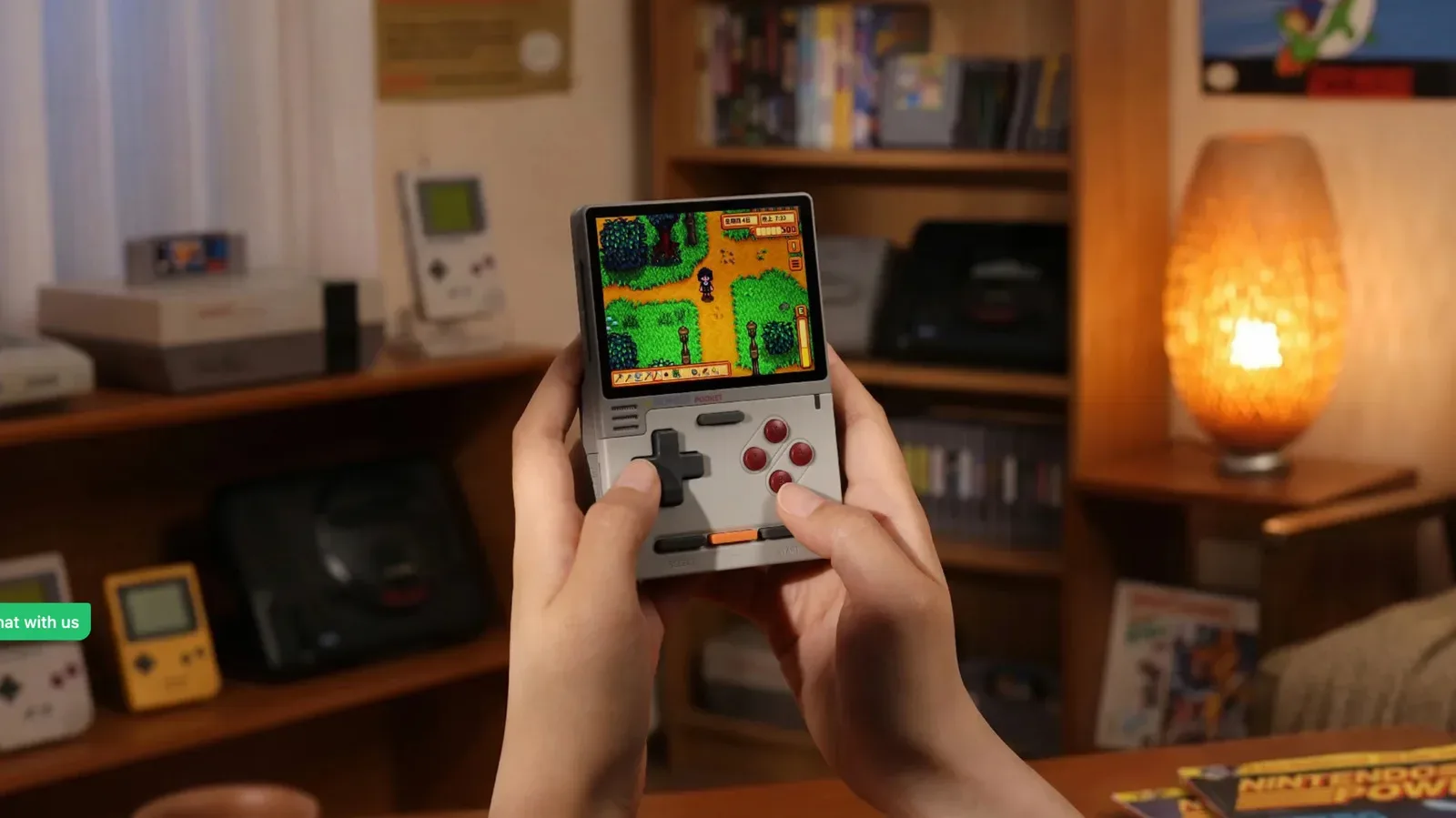
Ayaneo is taking a notably lower-cost route into the vertical retro-handheld market with the Konkr Pocket Block, a compact device styled around the broad idea of a Game Boy-era portable. The system is now available to preorder, with a regular starting price of $89 and a preorder price of $79. Ayaneo says shipping will begin by the end of October.
The Pocket Block arrives under Konkr, a sub-brand that appears designed to offer a more accessible alternative to Ayaneo’s usual handheld lineup. Its proposition is direct: a small vertical machine, a 4:3 display suited to older game presentations, expandable storage and a processor intended for a defined range of emulation rather than every console generation at once.
That clarity matters more than the nostalgic shape alone. Retro handhelds often look similar in product photos, but the practical experience comes down to screen proportions, chipset expectations, available storage and the ports that make a device easy to use day to day. On the supplied specifications, the Pocket Block is positioned as an entry-level option for earlier 3D and 2D libraries—not as a compact answer to every demanding system.
A 4:3 screen for older games
The Konkr Pocket Block has a 3.3-inch LCD with a 960 x 720 resolution. Its 4:3 aspect ratio is particularly relevant to the kind of games Ayaneo is targeting.
Aspect ratio describes the proportional relationship between a display’s width and height. A 4:3 panel is closer to the shape used by many older televisions, monitors and handheld-era game presentations than today’s common widescreen formats. For retro software created around that squarer image area, a 4:3 display can present the game without the wide empty bars or image stretching associated with fitting it to a widescreen panel.
The 960 x 720 resolution also preserves that 4:3 relationship. Resolution alone does not guarantee an ideal picture—how an emulator scales each game is still important—but it gives the device a display format that is fundamentally aligned with its retro-focused premise. The Pocket Block is not trying to make old games fill a modern phone-shaped screen; it is choosing a screen geometry that reflects their original visual framing.
Vertical layout is another intentional part of that pitch. It recalls a classic handheld silhouette and may be especially appealing to players who prefer a smaller, pocket-oriented format for games built around a directional pad and face buttons. The specifications provided do not detail the control hardware, build materials or battery capacity, so those remain major unanswered practical points for prospective buyers.
What the Helio G85 is expected to handle
Inside is a MediaTek Helio G85 chip. Ayaneo’s expected performance range reaches through PlayStation and Nintendo 64 titles, while PlayStation 2 and GameCube software may prove difficult.
Emulation is software-based recreation of another system’s hardware environment, allowing compatible software to run on a different device. It is not a single uniform workload. Performance can differ significantly from game to game, even within one console’s catalog, because individual titles demand different things from a processor and emulator. A handheld that is suitable for many PlayStation or Nintendo 64 games should not automatically be read as a promise that every title on those platforms will behave identically.
The same caveat becomes more important at the Pocket Block’s stated upper boundary. PlayStation 2 and GameCube represent a higher bar in this description, and the available information explicitly frames them as systems where the device could struggle. Buyers interested primarily in those libraries should treat that limitation as central rather than incidental. A low price is less helpful if the intended games sit outside the hardware’s comfortable range.
Conversely, the stated PlayStation and Nintendo 64 target makes the Pocket Block’s combination of a 4:3 screen and small vertical body easier to understand. The hardware is being aimed at a specific retro tier rather than advertised as a premium portable computer in miniature. That can be a more useful promise when it is communicated plainly.
There is also plenty of life in older game design beyond the most technically demanding platforms. A recent look at Rollerball CPC’s move from MSX to Amstrad CPC is a reminder that retro interest is not confined to chasing later 3D consoles. Hardware that handles earlier generations well can still support a wide range of styles, genres and design eras.
Storage, connectivity and the everyday essentials
Ayaneo lists a microSD card slot, USB-C port, 3.5mm audio jack, Wi-Fi and Bluetooth support. Those details may not be as eye-catching as a processor name, but they shape whether a handheld feels flexible or restrictive after setup.
The microSD slot is especially valuable on a device with modest built-in storage. Two configurations are planned: 2GB of memory with 32GB of storage, and 3GB of memory with 64GB of storage. Storage capacity refers to the space available for the operating system, applications and files, while memory—often called RAM—helps the system keep active software running. The supplied information does not establish how much performance difference the extra 1GB of memory will make in particular apps or games, so it would be premature to present the 3GB model as a guaranteed performance upgrade. Its larger internal storage is, however, a straightforward distinction.
Expandable storage gives users an option beyond the internal capacity. The source material does not state supported card sizes, bundled storage or software configuration, so shoppers should not assume details that have not been specified.
A 3.5mm jack remains a practical inclusion for wired headphones. USB-C is the device’s listed physical connection, though the available details do not specify charging speeds, data behavior or whether video output is supported. Wi-Fi and Bluetooth provide wireless connectivity, but no further feature list has been detailed for either. In short, the Pocket Block has the expected basics, but several important implementation details remain unknown.
Prices, colors and the value split
The base configuration, with 2GB of memory and 32GB of storage, carries the $89 starting price and is offered only in gray. During the preorder period, that entry price is reduced to $79.
The 3GB/64GB configuration starts at $99. It is offered in gray, purple and white. The price gap between the listed starting prices is $10, which makes the larger-capacity version a potentially meaningful alternative for buyers who value extra built-in storage or prefer one of the additional colors. It does not, based on the information available, establish a different processor, display or promised emulation tier.
The color split is worth spelling out because it is attached to the hardware configurations. Anyone specifically after purple or white will need the 3GB/64GB version; those finishes are not listed for the 2GB/32GB model. Gray is the only color shared by both configurations.
The unresolved “AI handheld” label
When the Pocket Block was first revealed, Ayaneo described it as the “world’s first AI handheld.” That is a bold label, but the company has not explained what AI-powered functions will actually be available.
At present, it is best understood as branding without a defined feature set. AI-powered features can describe many very different tools, from system assistance to media processing or other software functions. Without specifics about what the Pocket Block does, how those functions operate, whether they are local or network-dependent, or how they affect games and usability, the term is not a useful basis for assessing the product.
That does not make the handheld’s core proposition unclear. Its screen, storage options, listed connections, form factor and stated performance targets are tangible details. The AI claim simply belongs in the unresolved column until Ayaneo provides a concrete explanation.
Who the Pocket Block is for
The Konkr Pocket Block looks most persuasive for someone who wants a small vertical retro device and has realistic expectations about its chipset. Its $89 list price, or $79 preorder price, separates it from the assumption that an Ayaneo-associated handheld must be premium-priced. The 4:3 3.3-inch screen, microSD expansion and headphone jack form a practical foundation for the earlier systems in its stated scope.
It is less clearly suited to a buyer whose priority is PlayStation 2 or GameCube. The supplied performance outlook cautions that those platforms may be a struggle, and the device should be judged accordingly rather than by the broader nostalgia around its shape.
Ayaneo also sells the Pocket Vert as a more premium vertical option. That gives the Pocket Block a defined role: it is the entry-level vertical model, built around a smaller price and a more limited but clearly described performance ceiling. Before ordering, the most sensible approach is to match the planned game library to that ceiling, decide whether 32GB or 64GB internal storage better fits the intended use, and avoid assigning value to the undefined AI label.