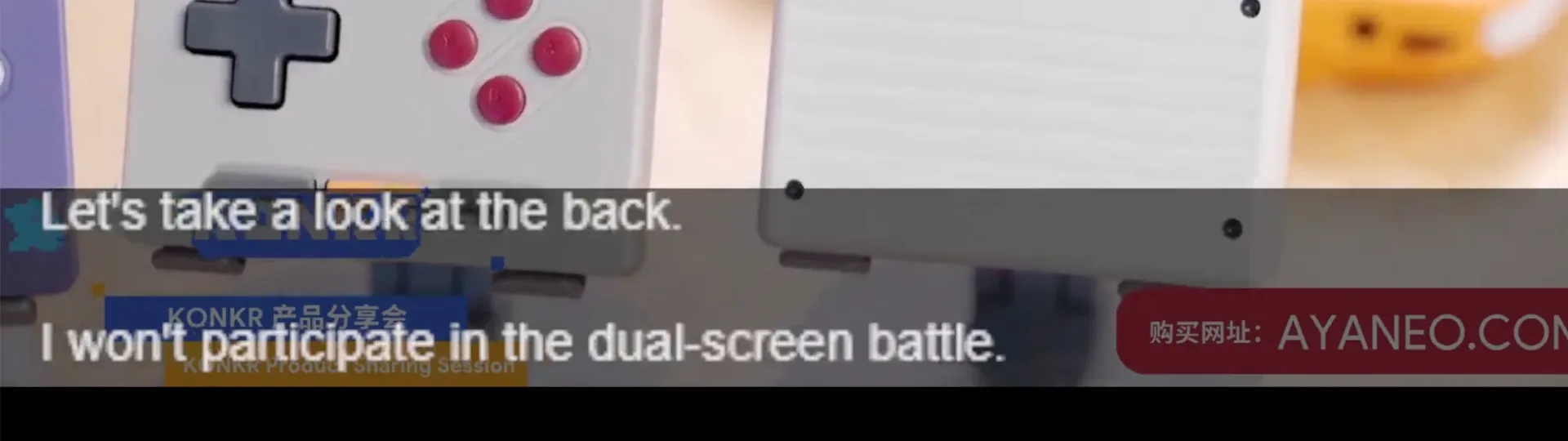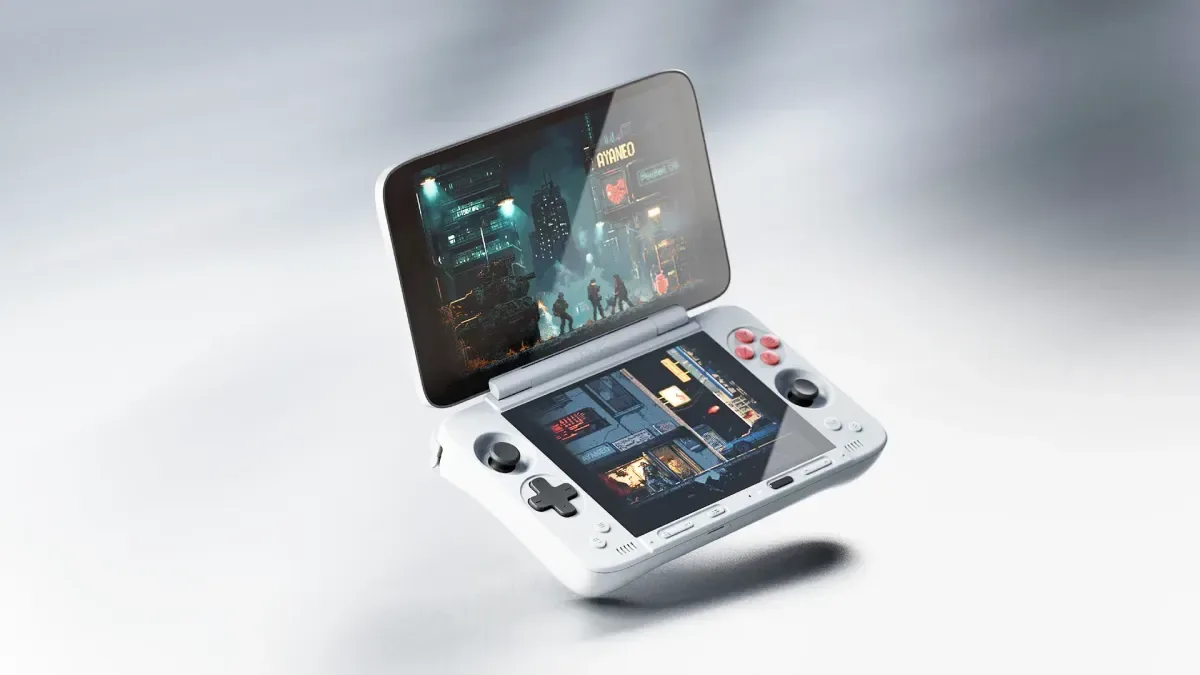
AYANEO appears unlikely to add a new dual-screen handheld to its near-term plans. During a product-sharing livestream centered on the newly released KONKR Pocket Block, AYANEO CEO Arthur answered a viewer question about a dual-screen device with a blunt line: “I won’t participate in the dual-screen battle.”
It is a short answer, rather than a detailed product roadmap, and it should be treated that way. Arthur did not lay out a long-term strategy, identify a cancelled device, or put a permanent end date on the idea of AYANEO returning to the format. But the comment is the clearest available indication that a new AYANEO dual-screen machine is not something buyers should expect imminently.
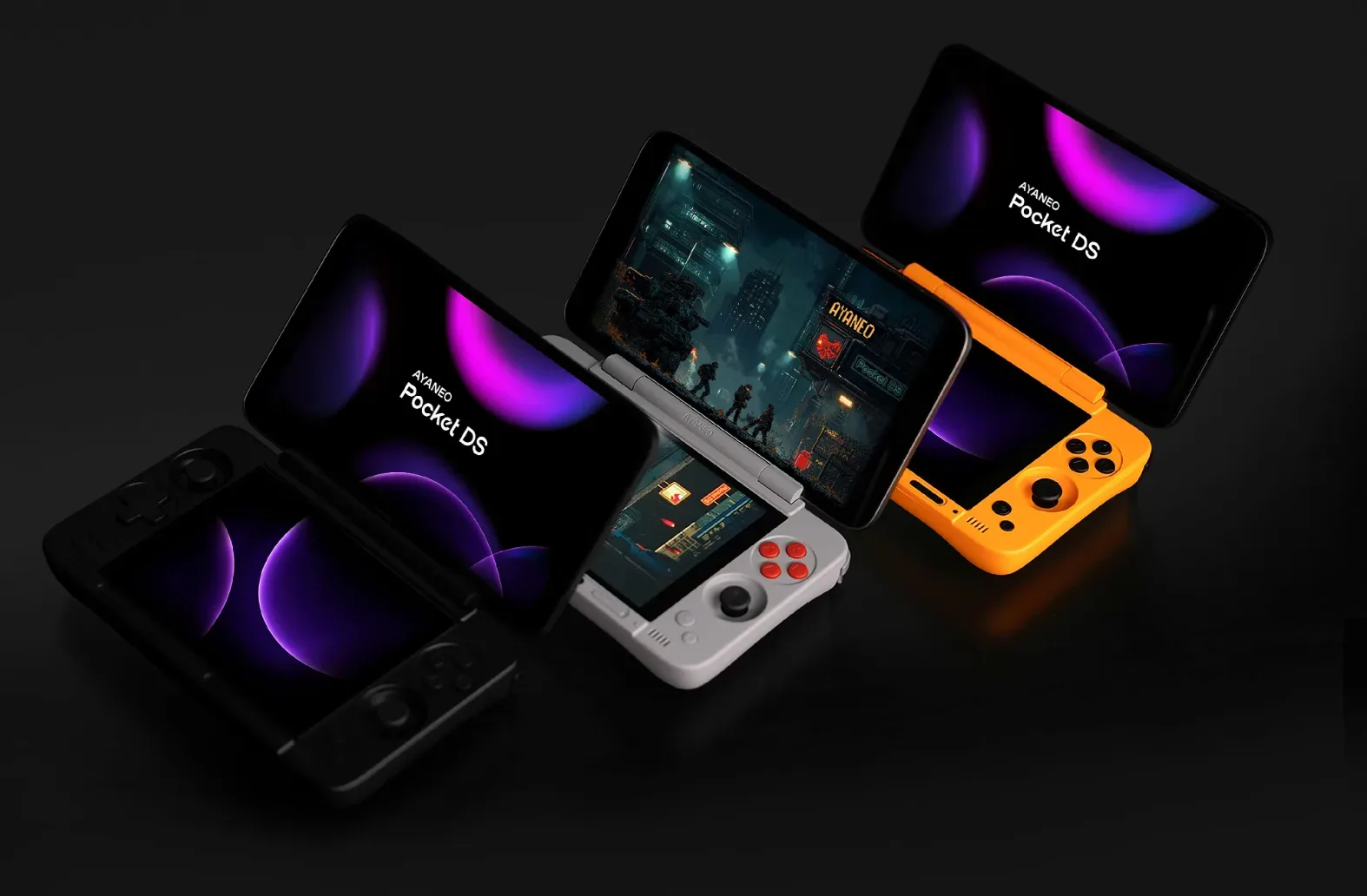
That matters because AYANEO has previously produced a dual-screen handheld at the premium end of its catalogue, with configurations reported to start at $550 and extend beyond $1,700. The company’s latest reveal, meanwhile, points in a very different direction: a lower-cost, single-screen Android portable called the KONKR Pocket Block.
A small comment with a fairly large implication
The dual-screen question came up during discussion around the Pocket Block, and Arthur quickly moved on to the device’s processor selection after responding. There was no accompanying explanation of whether the decision is driven by component costs, engineering complexity, demand, software support, supply constraints, or something else.
That lack of detail is important. It would be easy to turn one sentence into a declaration that AYANEO will never make a dual-screen product again. The available information does not support that. The more defensible reading is narrower: AYANEO’s leadership is not looking to compete in the current round of dual-screen handheld releases.
For consumers, the practical takeaway is simple. Anyone holding off on another purchase specifically in anticipation of a more affordable AYANEO dual-screen unit may want to avoid treating that device as a near-term certainty. There is no announced budget or mid-range AYANEO dual-screen successor attached to the livestream remark.
The Pocket Block takes AYANEO toward the lower end of the market
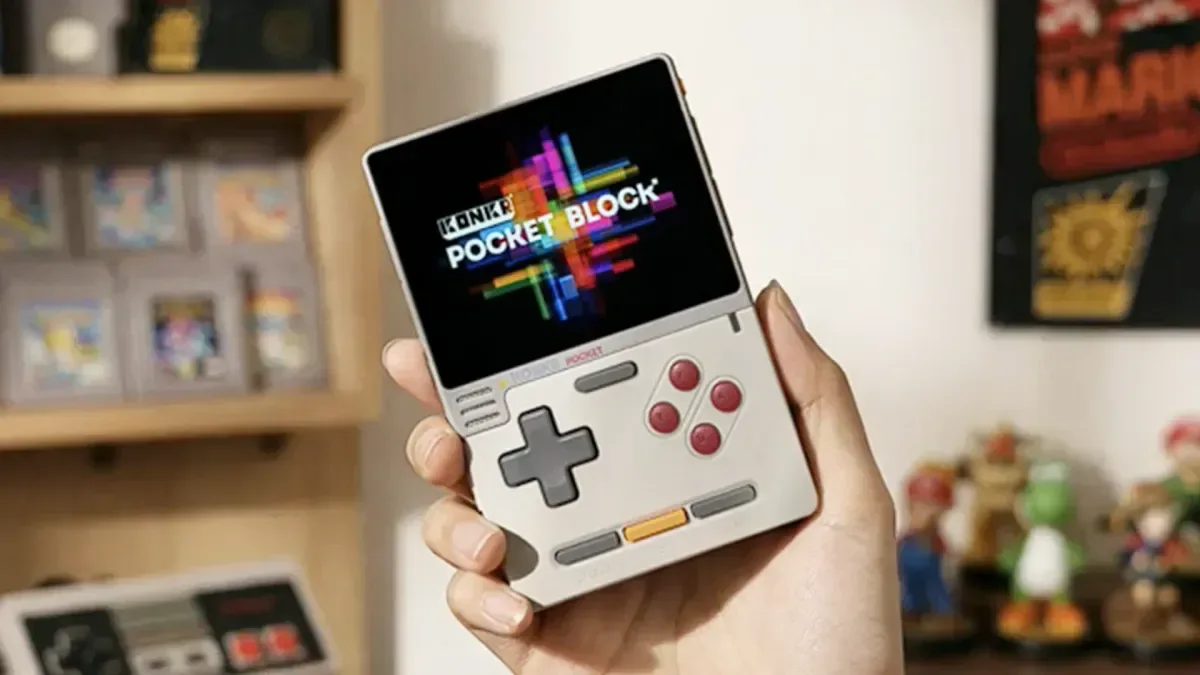
Instead, the day’s concrete product news was the KONKR Pocket Block. It is a vertical Android handheld positioned as a portable emulation device, with an early-bird price of $79. AYANEO said it is available to purchase and gave an end-of-October shipping target.
The company also characterized its emulation capability as handling PSP “no problem.” That is a performance claim from AYANEO, not a broad guarantee for every title, configuration, emulator build, resolution setting, or user setup. Emulation results can differ because games make different demands of a device and because the software used to run them is continually developed. Readers following emulator progress can see that cycle in projects such as the latest experimental Vita3K build packages, where software updates remain a material part of the experience.
In this context, “vertical” describes a handheld shaped more like a traditional portrait-oriented portable than a wide controller with a display in the middle. It is a design commonly associated with compact retro-game setups, although the supplied details do not establish the Pocket Block’s exact screen specifications, controls, chipset model, battery capacity, or the range of systems beyond AYANEO’s PSP statement.
Android is relevant because it gives handheld makers access to an operating system with established emulator applications and touch-friendly setup tools. That does not automatically make configuration effortless, nor does it settle questions around game-file ownership and lawful use. The hardware announcement itself concerns the device; users remain responsible for how they acquire and use software.
Why two screens are a tougher proposition
A dual-screen handheld is not just a conventional portable with an additional panel attached. The format asks a manufacturer to make several competing priorities work together: two displays, hinges or a folding structure, more internal cabling, heat management, battery space, input placement, and software that can sensibly assign content across both screens.
For retro-focused players, the attraction is obvious. Systems and software designed around two simultaneous displays are more naturally represented by hardware that physically has two of them. A second screen can reduce the need for toggling views, squeezing two images onto one panel, or relying on touchscreen overlays.
Yet that same second display creates trade-offs. It can increase cost and physical complexity, while a foldable design introduces questions about durability, thickness, and how comfortably the unit travels. Buyers may also care about the quality and size of each individual screen, not merely the presence of two. A lower price is especially difficult to balance when a manufacturer must source multiple panels and additional memory.
Those pressures help explain why AYANEO may prefer to focus elsewhere, though the company did not specify its reasoning. The Pocket Block’s $79 early-bird positioning suggests a pursuit of a more accessible entry point than the prior premium dual-screen product. A device designed around a single display can be a more straightforward route to that target, even if it cannot replicate every use case a clamshell or dual-panel handheld serves.
A crowded field does not mean an easy market
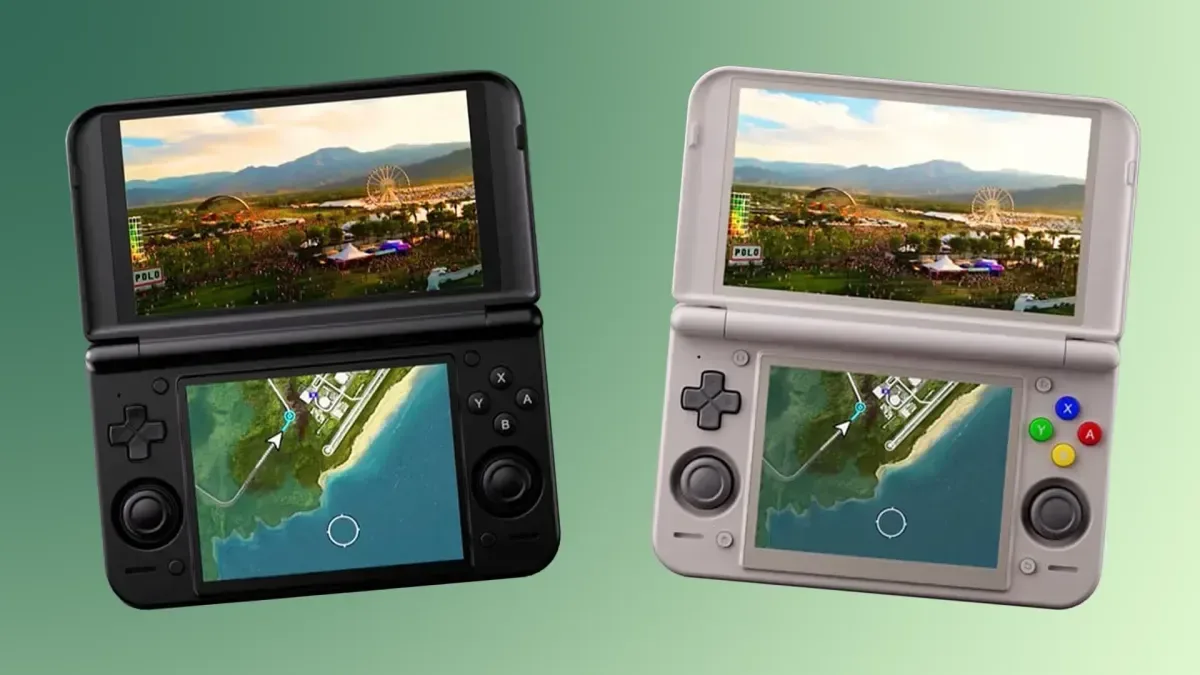
The current dual-screen segment already includes several distinct approaches. AYN’s Thor has been presented as a strong presence in the category. Retroid’s Pocket Duo Lite has faced concerns about performance. ANBERNIC’s RG DS Plus uses Linux and has drawn criticism over build quality. Yoniq is also planning a Duo for next year, with its crowdfunding route leaving some prospective buyers cautious.
Those examples underline why a company may choose not to join a “battle” simply because interest exists. A niche can be crowded without being easy to serve. Manufacturers need to distinguish their hardware on price, build, performance, operating system, ergonomics, support, or some combination of all of them. Entering only to match a rival’s basic concept is unlikely to be enough.
AYANEO’s previous dual-screen effort also establishes that it is not unfamiliar with the format. The issue is not whether the company has ever attempted it; it is whether it sees a compelling opportunity to do so now at a price that reaches beyond the high-end market. Arthur’s answer indicates that, at least for the moment, the answer is no.
What buyers should and should not infer
- Reasonable inference: AYANEO is not publicly positioning a new dual-screen handheld as an immediate priority.
- Not established: AYANEO has permanently abandoned all future dual-screen designs.
- Confirmed product direction: the KONKR Pocket Block is a lower-cost Android vertical handheld, offered at a $79 early-bird price with end-of-October shipping stated.
- Performance caveat: AYANEO’s PSP claim is a manufacturer statement, not a title-by-title compatibility list.
For now, the Pocket Block is the tangible announcement and the dual-screen line is a signal of restraint. It may disappoint buyers hoping AYANEO would bring its design approach to a more attainable two-screen handheld. At the same time, it clarifies that the company’s present emphasis is on a compact Android device built around a single screen rather than escalating a complex, increasingly competitive format war.