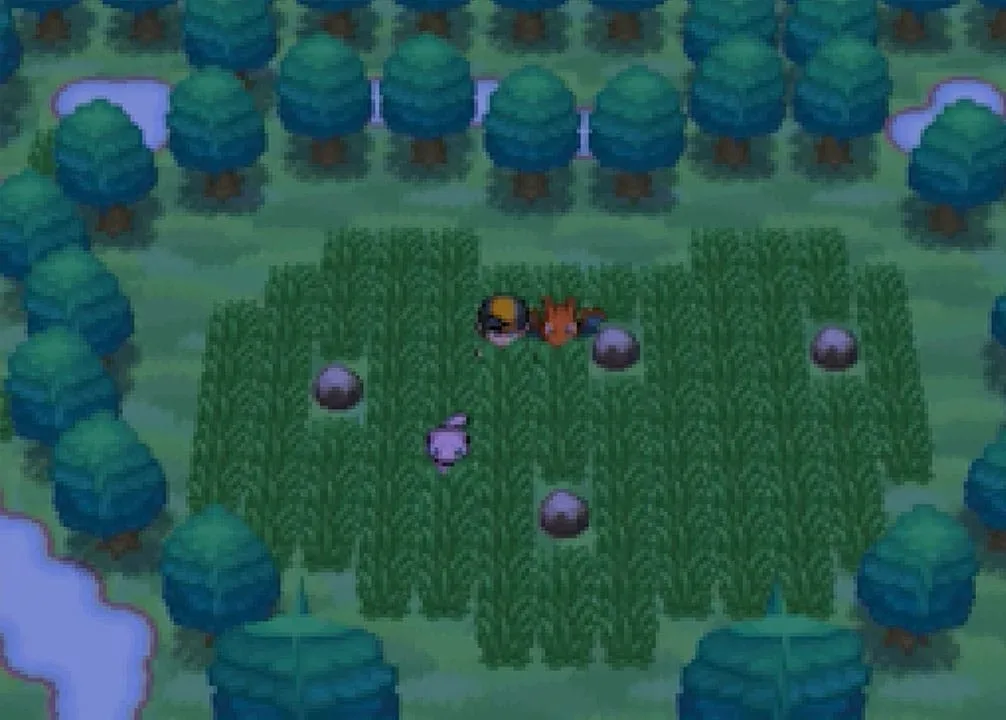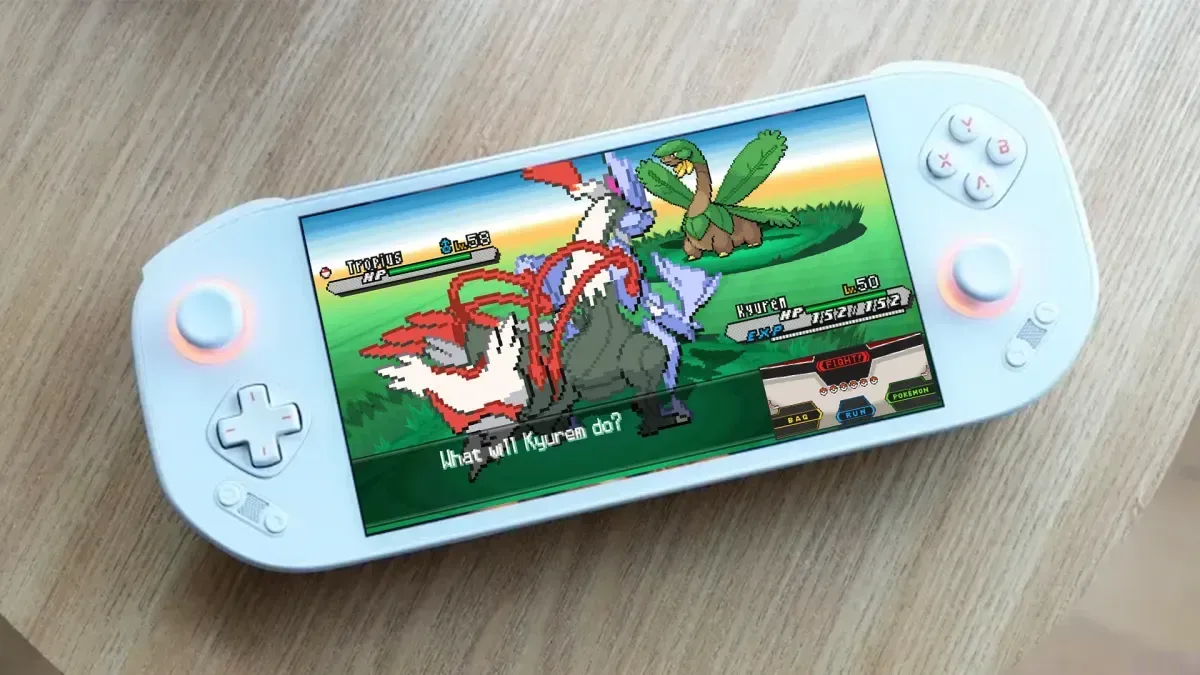

Pokémon Heartfelt Gold is a fan-made reworking of Pokémon HeartGold that aims to make a familiar journey through Johto and Kanto feel dramatically less familiar. The project redesigns both regions and the game’s caves, expands the available Pokédex to 1,000 Pokémon spanning Generations 1 through 9, and introduces additional moves, items and Mega Evolutions.
It is not simply a larger creature list dropped into the original adventure. Its creator, trinsic72, describes the project as a compilation and redesign of separately mapped Johto, Kanto and cave areas, followed by further development and event scripting. The practical result is a version of HeartGold built around revisiting its two-region structure with a much broader pool of team options and a more demanding battle curve.
That combination matters. A Pokémon game with more species can create variety, but revised maps, harder Trainers, optional level caps and special Legendary encounters suggest that Heartfelt Gold is also trying to give that variety reasons to matter during a full playthrough.
A rebuilt trip through Johto, Kanto and the caves
The headline feature is the redesigned world. Johto, Kanto and the caves have been compiled and reworked rather than left as untouched backdrops for a new roster. In a game structured around travel, routes and dungeon spaces determine far more than scenery: they influence what players encounter, how they plan a party, when they can access a destination and how much a return visit differs from the first pass.
Trinsic72 credits goonspoons with mapping Kanto and DevHam88 with mapping the HeartGold caves, while taking responsibility for mapping Johto. Those pieces were brought together in a prior form called Pokémon HeartGold Retiled. The project then expanded into Pokémon Heartfelt Gold through work on hg-engine and event creation for Legendary Pokémon encounters using DSPRE.
“With and only with goonspoons mapping the entire Region of Kanto and DevHam88 mapping the entirety of HeartGold's Caves and myself mapping the entire Region of Johto, I was able to compile all 3 and redesign them into what became Pokémon HeartGold Retiled.”
For players, “retiled” is a useful term to understand. In this context, it refers to reworking the map tiles and layouts that construct the game world. A route or cave can therefore be meaningfully changed without ceasing to be part of the same broader region. The supplied project details do not specify every altered route, connection or dungeon layout, so prospective players should treat the redesign as a core premise rather than assume any individual original area has been changed in a particular way.
The same caution applies to the project’s “new locations.” The available information establishes that locations have been added alongside rebuilt regional and cave maps, but does not identify each new place or explain its role. That is still a notable expansion for a game already associated with the unusual prospect of visiting Johto and then Kanto, but it is best understood as a discovery element rather than a published checklist.
Related coverage includes Pokémon Heartfelt Gold Reworks HeartGold With 1,000 Pokémon and Expanded Regions.
One thousand Pokémon changes the team-building question
Heartfelt Gold includes 1,000 Pokémon from Generations 1 to 9. Its starter selection includes every starter Pokémon from those generations, replacing the traditional early choice between three candidates with a far wider decision.
That immediately shifts the early-game question from “which of the three works best for this run?” to “what role do I want my first team member to fill?” A player might still choose with type coverage in mind, but they may also prioritize a favorite species, a preferred evolution line or a plan for later team composition. The value of such a huge selection is not merely collecting quantity; it is the potential to construct a party that would not normally be possible within the boundaries of a Johto-focused adventure.
More broadly, a roster this large may change how players evaluate encounters and replacements. A conventional run often asks players to make do with what is available nearby. Here, the premise is broader availability across generations, new moves and new items. That does not automatically reveal exactly where every Pokémon can be obtained or how every mechanic is implemented, but it makes experimentation a central part of the project’s appeal.
What Mega Evolution means here
Mega Evolution is listed among the additions. In Pokémon terms, it is a battle transformation associated with certain Pokémon rather than an ordinary permanent evolution. Its presence signals that Heartfelt Gold draws mechanics from beyond the original HeartGold framework.
The project information does not provide a complete list of compatible Pokémon, requirements or item locations, so those details should not be presumed. Still, Mega Evolution alongside added moves and items points to an overhaul that is widening both the roster and the battle toolkit, not simply changing map visuals.
A harder route, with player-controlled pressure
Trainers have increased difficulty in Pokémon Heartfelt Gold, and the game offers optional level caps. These two elements are closely related.
A level cap is a restriction that prevents a Pokémon from gaining levels beyond a set threshold. In a role-playing game, that can limit the common strategy of out-leveling a difficult fight through repeated battles. When a cap is optional, it gives players a way to choose how tightly they want their progression managed. Those looking for a more exacting run can use the restriction; others can leave it off and retain more freedom to train.
The project also includes an option for infinite Rare Candies. Rare Candies are items used to raise a Pokémon’s level, so unlimited access provides a counterweight to a tougher Trainer roster and the sheer scale of the available Pokédex. A player who wants to try an unfamiliar species does not necessarily have to commit to a long conventional training process before seeing whether it suits the team.
That is an especially practical fit for a fan project offering 1,000 Pokémon. Without a way to accelerate leveling, experimentation can become a substantial time commitment. Infinite Rare Candies create a route for quick party adjustment, while optional level caps allow players who value restricted progression to retain that constraint. The two options serve different preferences rather than cancel each other out.
There is an important distinction, though: an accessibility or experimentation tool is not the same thing as a statement that every battle will be trivial. The project specifically raises Trainer difficulty, and it includes optional bonus fights against Gym Leaders, the Elite Four and the Champion. The available details do not list their teams, levels or conditions, but their designation as bonus battles makes clear that they are separate challenges for players who want to push beyond the main path.
Legendary Pokémon are tied to dedicated events
Legendary Pokémon encounters have their own in-game events in Heartfelt Gold. This is a meaningful design choice because it frames those Pokémon as objectives with dedicated scripting rather than generic additions to the encounter pool.
Event scripting is the work of defining the triggers and sequences that cause something to happen in-game. For Legendary encounters, that could encompass the conditions and presentation surrounding an encounter, although the project details do not spell out each event’s requirements. What is clear is that players seeking these Pokémon will face content designed specifically around them.
The project description also emphasizes that a strong party will be needed for the Legendary content, just as it will for the optional rematches or bonus battles involving Gym Leaders, the Elite Four and the Champion. That makes team-building relevant well past the initial starter pick. A large roster encourages choice, while the tougher optional content supplies a reason to refine those choices.
What this project is—and what players should not assume
Pokémon Heartfelt Gold is a fan-made modification built on Pokémon HeartGold, not a new official Pokémon release. Its stated additions include redesigned Johto, Kanto and cave environments; new locations; Pokémon from Generations 1 through 9; Mega Evolutions; added moves and items; tougher Trainers; optional level caps; infinite Rare Candies; bonus battles; and Legendary-specific events.
Beyond those confirmed elements, there are limits to what can be safely inferred. The provided project description does not detail a full encounter table, comprehensive change log, exact Mega Evolution rules, precise level-cap settings or every new location. Players interested in a particular Pokémon or mechanic should check the project’s own documentation before planning an entire run around a specific assumption.
For those following fan-made Pokémon projects more broadly, the interesting part is the way the overhaul combines three separate ambitions: world redesign, roster expansion and difficulty customization. Any one of those could define a mod. Bringing them together makes Heartfelt Gold a version intended for players who know the original journey and want a reason to approach it with fresh plans.
It also arrives at a time when major Pokémon projects can place a premium on player expression through systems and party choice. That broader design conversation is visible elsewhere in RPG news, including this look at how party choice and player freedom are being positioned in Final Fantasy 7 Revelation. Heartfelt Gold approaches the idea from a different direction: not through a new commercial release, but by substantially reshaping an existing adventure’s map and mechanical possibilities.
Patch requirements and a sensible starting plan
The patch is available through Hackdex, and it requires a legally acquired Pokémon HeartGold ROM to apply it. The project information does not provide step-by-step patching instructions, so players should follow the guidance supplied with the download and ensure they are using a legal copy of the base game.
Once set up, a useful first decision is whether to play with an optional level cap. Players wanting a more traditional freedom to train can leave it disabled; those seeking more pressure from difficult Trainers can enable it. The next meaningful choice is the starter, where every Generation 1–9 starter is in contention.
- Choose a starter for a role, not just familiarity: with every generation represented, consider the kind of party member you want to build around.
- Use EXP Share for steady party development: the project identifies it as a way to level the team while progressing.
- Use infinite Rare Candies intentionally: they can reduce the friction of testing new Pokémon, particularly when rebuilding a party for optional content.
- Prepare before bonus battles and Legendary events: both are presented as challenges where a strong party matters.
- Keep expectations tied to confirmed details: consult project documentation for exact encounter, map and mechanic information not outlined in the overview.
For returning HeartGold players, the biggest draw is likely the tension between recognition and surprise. Johto, Kanto and the caves remain the foundation, but the redesigned geography, enormous roster and optional challenge settings promise a journey where old route knowledge alone may no longer be enough.