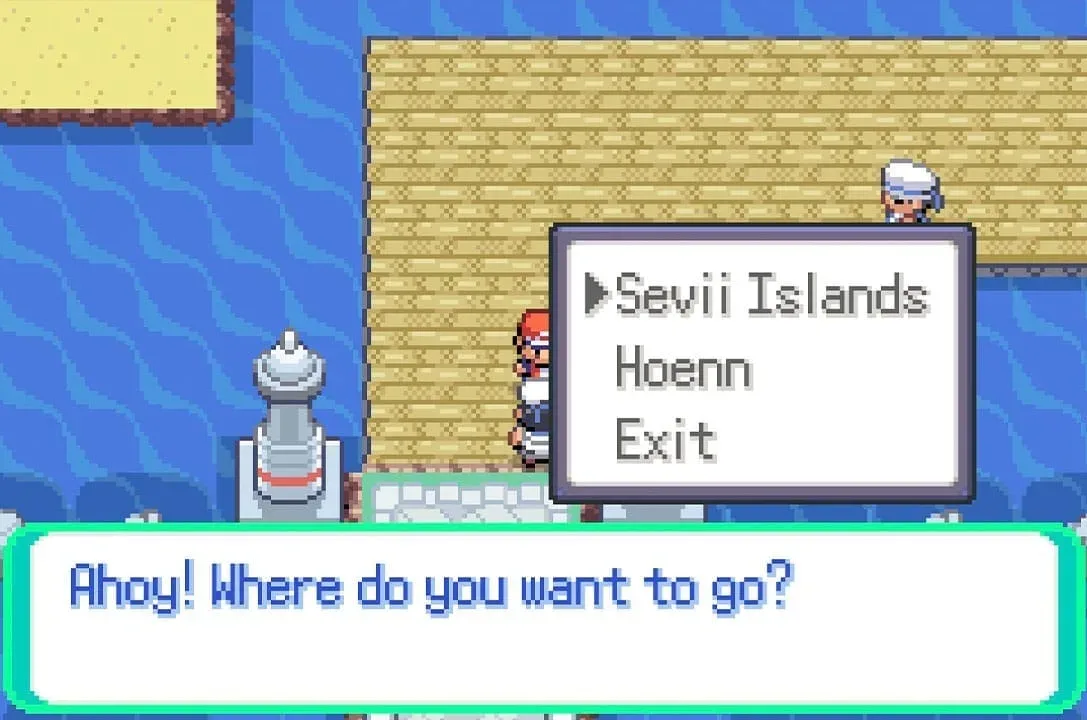
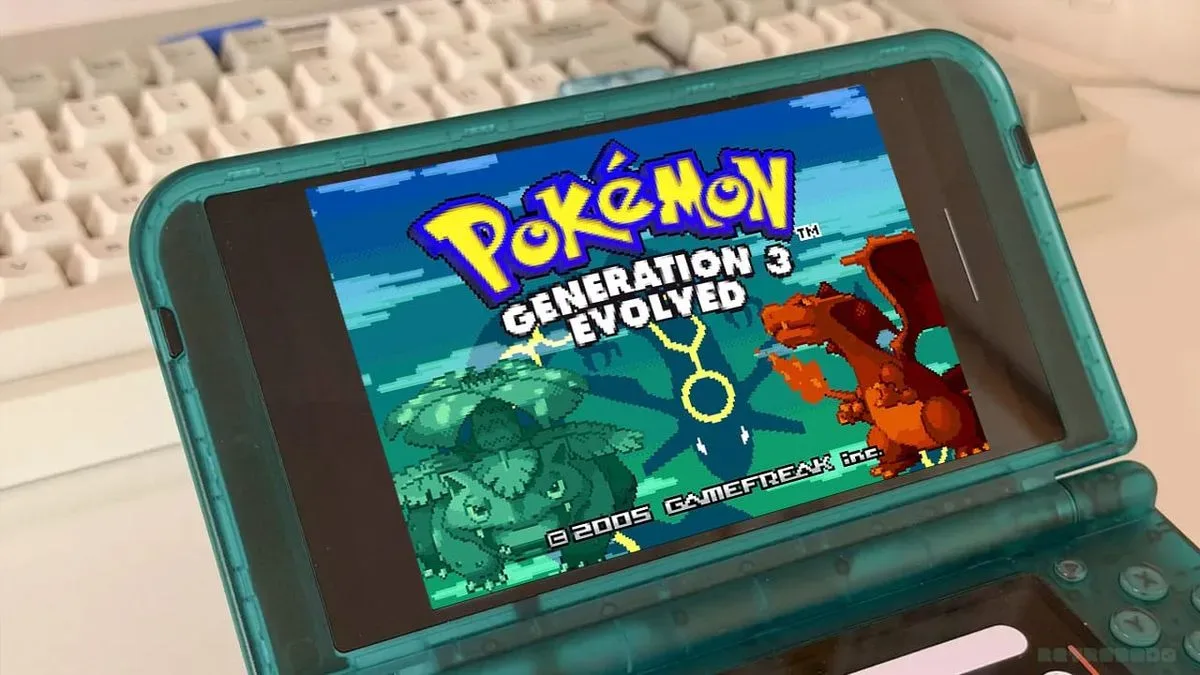
Pokémon Gen 3 Evolved is a FireRed-based ROM hack with an extraordinarily broad pitch: bring all 1,025 Pokémon into a single adventure spanning Kanto, the Sevii Islands and Hoenn, while adding mechanics associated with much later entries in the series. Its scope is not merely a larger regional Pokédex. The project also reworks encounters, trainer battles, post-game progression, weather, moves, abilities, items and several major battle transformations.
That makes it a particularly interesting project for players who enjoy the visual and exploratory foundation of the Game Boy Advance era but want a campaign built around the size and systems of the modern franchise. It is also a fan-made patch rather than a standalone official release. Players need a legally acquired Pokémon FireRed USA Version 1.0 ROM in order to apply the patch.
Three regions, one unusually large Pokédex goal
The headline feature is the chance to find every Pokémon created so far during one connected game. Kanto, the Sevii Islands and Hoenn form the stated core of the journey, with additional areas beyond them. Since a Pokédex of that size cannot simply rely on the original FireRed encounter table, the project places Pokémon in new locations throughout the adventure and makes exploration a central part of completion.
For a completion-minded player, the most consequential design decision may be its approach to missable encounters. Regular Pokémon are designed to be repeatedly obtainable. Legendary Pokémon also return the following day if an encounter ends without a capture. In practical terms, that means accidentally defeating, fleeing from, or failing to catch a legendary should not permanently stop a save file from completing the Pokédex.
That is a major quality-of-life rule in a game that asks players to pursue more than a thousand species. A traditional one-shot encounter creates pressure to save first and use a carefully prepared team. Here, preparation still matters, but a failed attempt is not intended to become an irreversible mistake. It also makes the enormous collection target feel more like a long-term exploration project than a checklist held hostage by a single battle.
The game’s expanded Pokédex is meant to support that process with information on learnsets, abilities and evolutions. The enhanced DexNav, meanwhile, displays possible held items for each Pokémon. Those are small-sounding changes with large practical value: players can make better decisions about where to search, what a catch may be carrying and how a species develops without constantly stepping outside the game for reference material.
A post-game built for rematches rather than a hard stop
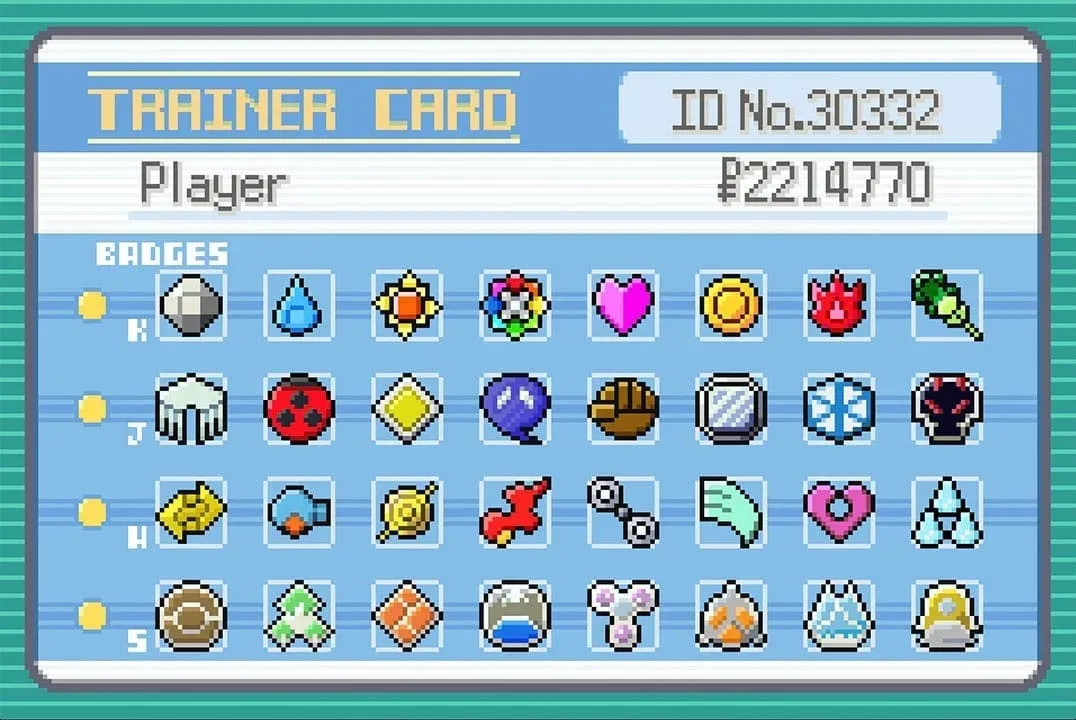
Pokémon Gen 3 Evolved does not treat becoming Champion as the end of the campaign. It includes a large post-game segment after the leagues in its regions are cleared, then adds repeatable battles intended to keep teams under pressure. Every trainer can be rematched, and all 32 Gym Leaders are available once per day.
Its scaling system is the more unusual piece of that plan. After becoming Hoenn Champion, trainer battles and wild encounters scale to the player’s team. Level scaling means opponents adjust their strength in response to the party rather than remaining fixed at the levels first assigned to an area. The intended result is that returning with a much stronger team should not automatically turn every route and rematch into a formality.
Related coverage includes Pokémon Gen 3 Evolved Brings 1,025 Pokémon Across Kanto, Sevii and Hoenn.
There is an important trade-off. Scaled content can make an overpowered roster less of an instant solution, but it can also change how players perceive progression. In a conventional RPG, outlevelling older content is often the reward for training. Here, the stated emphasis is on ongoing challenge and replayability. Players who like rotating newly caught Pokémon into the party may find that especially useful, because the world is built to remain active after the credits-equivalent milestones.
The experience system supports the same philosophy. Underlevelled Pokémon are said to catch up more quickly, while excessive overlevelling is discouraged without imposing hard level caps. This should reduce the friction of trying a newly obtained Pokémon late in an adventure. Instead of treating a fresh catch as dead weight for dozens of battles, the formula aims to help it join the team sooner while still resisting runaway grinding.
Every major battle transformation has to compete for one turn
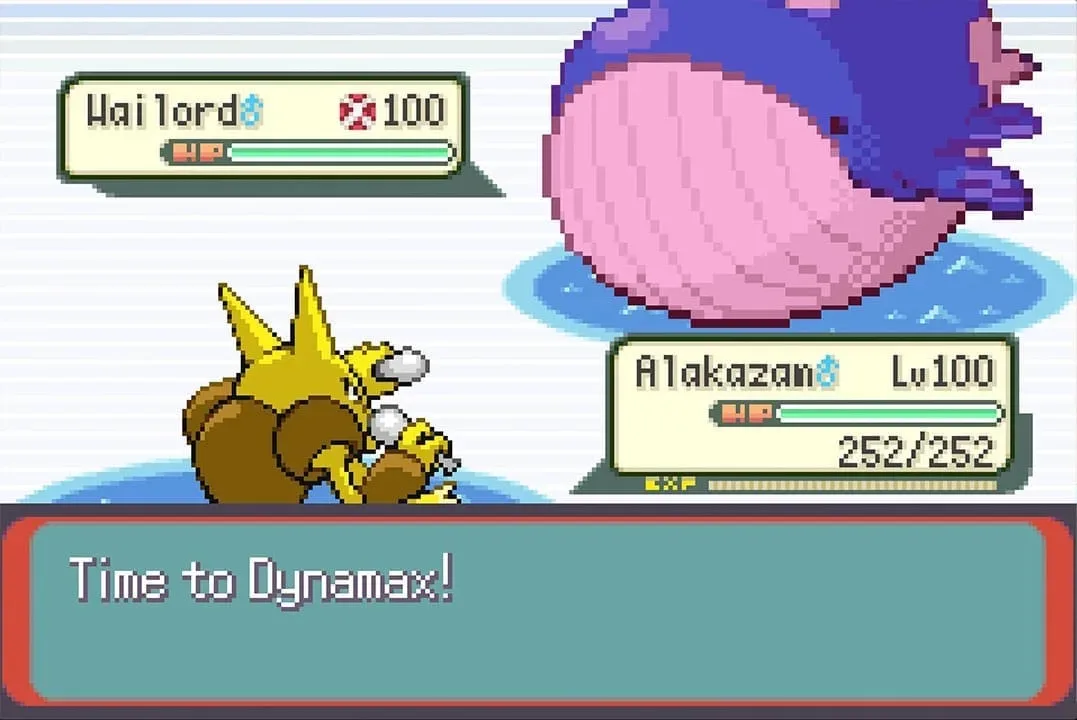
One of the hack’s boldest mechanical choices is its effort to place Mega Evolution, Dynamax, Z-Moves and Terastallization in the same battle ruleset. Normally, these systems come from different generations and are associated with their own games. Here, they can all exist, but each requires its corresponding held item and they share a strict once-per-battle limit.
That shared restriction is crucial. It means these are competing tactical decisions rather than four separate power buttons. A player cannot stack a Mega Evolution with a Dynamax or spend a Z-Move and then Terastallize in the same match. Choosing one means forgoing the others until the battle ends.
- Mega Evolution keeps its established function. Fully evolved Pokémon with G-Max forms have been converted into Mega Evolutions.
- Dynamax doubles the user’s HP, preserves access to unique G-Max moves and requires a Dynamax Core.
- Z-Moves use a single universal Z-Crystal rather than separate crystals. They upgrade one of the holder’s moves, consume five PP from that move, and always score a critical hit.
- Terastallization requires a Tera Shard that matches the desired Tera type.
PP, or Power Points, is the number of times a move can be used before it needs restoration. Making a Z-Move consume five PP gives that option a meaningful resource cost even before its once-per-battle restriction is considered. Guaranteed critical hits also make it a very direct burst-damage choice. By comparison, Dynamax’s doubled HP suggests a survival and momentum role, while Terastallization introduces a type-focused decision tied to the equipped shard.
The system will demand attention to held items. A held item is the piece of equipment a Pokémon carries in battle, and here it is not simply an optional stat booster. It is the prerequisite for a transformation mechanic. That creates an opportunity cost: a Pokémon carrying a Dynamax Core, Z-Crystal or Tera Shard is not carrying a different useful item.
Fog becomes a fully fledged battle condition
The weather overhaul gives fog much more purpose than a visual flourish. Under fog, move accuracy is reduced to 80%, rather than 60%. Dark-type Pokémon and Pokémon with the new Prowler Ability ignore that accuracy penalty. Prowler also doubles Speed in fog, turning the condition into both disruption and a potential team-building engine.
Abilities are passive traits that affect battle behavior. The project adds Ominous Veil, which creates fog when its user enters battle, and Enshroud, a move that summons it. Murky Rock extends fog created by Enshroud. Together, those elements mean fog can be actively planned around instead of merely endured when it appears.
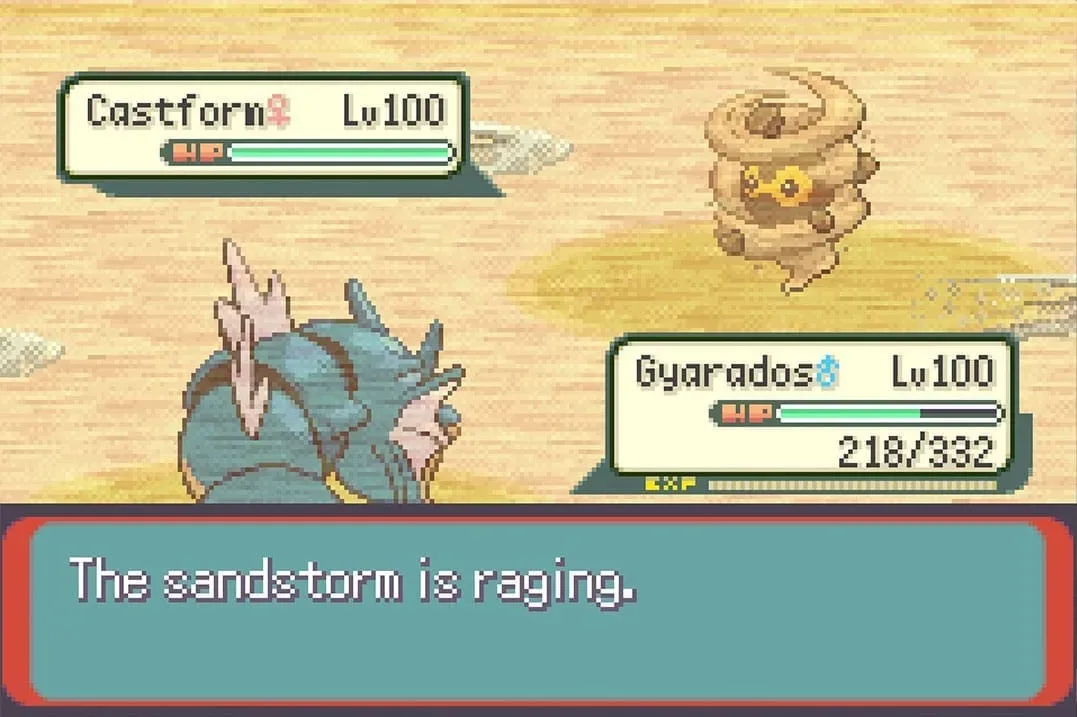
Its type interactions are equally important. Ghost-type moves become stronger in fog, Fairy-type moves become weaker, and Moonblast is specifically exempt from that Fairy reduction. Moonlight considers fog its favorable weather condition. Weather Ball and Castform also receive fog support, including a corresponding Castform form. The result is a defined weather package with offensive, defensive and speed implications rather than an isolated accuracy debuff.
Fairy-types are included across the project, which matters because the type did not exist in the original Generation III framework. Its interaction with fog is therefore one example of the hack’s broader goal: combine elements from later Pokémon games with a FireRed foundation, then alter their rules to fit a single shared system.
Support abilities could make team composition matter beyond the active Pokémon
Several new abilities are described as party-wide support effects. Unlike normal self-focused abilities, these help eligible teammates without applying the bonus to the Pokémon that has the ability. Serenity increases teammates’ chances of triggering secondary effects by 50%; Rally raises teammates’ physical-attack damage by 10%; Spotter boosts teammates’ move accuracy by 20%; and Field Medic restores 5% of maximum HP to active teammates each turn.
A secondary effect is an additional result attached to a move beyond its direct damage or primary purpose, such as an added effect that may activate after use. The key strategic wrinkle is the ability holder’s exclusion from its own bonus. Players may have to weigh an individual Pokémon’s battle value against the team benefit it provides from the party. That is a different kind of roster-building question from simply selecting six independently powerful creatures.
Other changes encourage experimentation. TMs and Move Tutors can teach Pokémon directly from storage Boxes instead of requiring them to be in the active party. Nature Mints can be grown like berries, making them renewable. Eviolite also prevents the holder from evolving, in addition to its usual purpose within this project. NPC-traded Pokémon are customizable like other Pokémon and always come with a Lucky Egg, while the Safari Zone’s Pokéblock Feeders can attract Pokémon with Hidden Abilities.
More to do away from standard trainer battles
The broader world retains activities such as Pokémon Contests, NPC trades and the Safari Zone, but adjusts their rewards and restrictions. Pokémon can eat unlimited Pokéblocks, avoiding limits tied to berry types and the number of NPCs available. Winning a Contest for the first time with a Pokémon pays a cash prize. The Trick House has improved rewards, and both Altering Caves have been redesigned into distinct locations.
Secret Bases have been replaced by Secret Dens. Pokémon found there may have Hidden Abilities, an alternate ability category that can meaningfully change what a species can do in battle. Dynamic time-of-day and weather systems further suggest that revisiting places, rather than moving through them once, is part of the intended rhythm.
Every trainer team has been handcrafted or retouched, and the project describes extensive revisions to Pokémon, movesets, items, abilities and evolution methods. That makes a simple feature checklist only part of the story. A game can include every transformation mechanic imaginable, but its lasting challenge comes down to how opponents use the available tools and whether the revised encounters make the player reconsider familiar strategies.
What players should know before patching
Pokémon Gen 3 Evolved is a patch that requires a legally acquired copy of the USA Version 1.0 FireRed ROM; it is not presented as a downloadable replacement for the original game. Anyone interested should also remember that a project of this scale changes many interconnected systems at once. A familiar FireRed route can play very differently when it is populated by a vastly expanded roster, revised trainers, modern types, weather interactions and scaling encounters.
It also sits apart from official Pokémon releases and current retail promotions. Readers tracking Nintendo’s conventional console catalogue can see the separate Switch and Switch 2 game discount plans here, but Gen 3 Evolved is built around fan-made modification of a Game Boy Advance-era title.
For players drawn to a giant all-in-one Pokémon campaign, the appeal is clear: one game that connects multiple familiar regions, makes every Pokémon obtainable, gives missed legendary catches another chance, and preserves a reason to keep battling after becoming Champion. The question is not whether it is trying to do a lot. It plainly is. The more interesting question is whether its unified restrictions—especially the single-use transformation rule and scaling post-game—can make that huge toolbox feel like a coherent adventure rather than a pile of mechanics. On paper, those constraints are precisely what give the project its strongest chance of doing so.