Pokémon deal hunting is rarely as simple as spotting the biggest percentage badge and hitting checkout. A snapshot of current offers shows why: several broadly available items have meaningful reductions, including the LEGO Eevee model, Pokémon Violet, a Gengar Funko Pop and a large-format character guide. Meanwhile, some Pokémon Trading Card Game products—particularly highly demanded anniversary stock and marketplace listings—are sitting far above the reference prices shoppers may expect.
The sensible approach is to separate a genuine discount on a finished product from a high-demand card product whose price has been driven up by limited stock and third-party sellers. Those are very different purchases, and the price tag alone does not tell the entire story.
The clearest price cuts are outside sealed TCG product
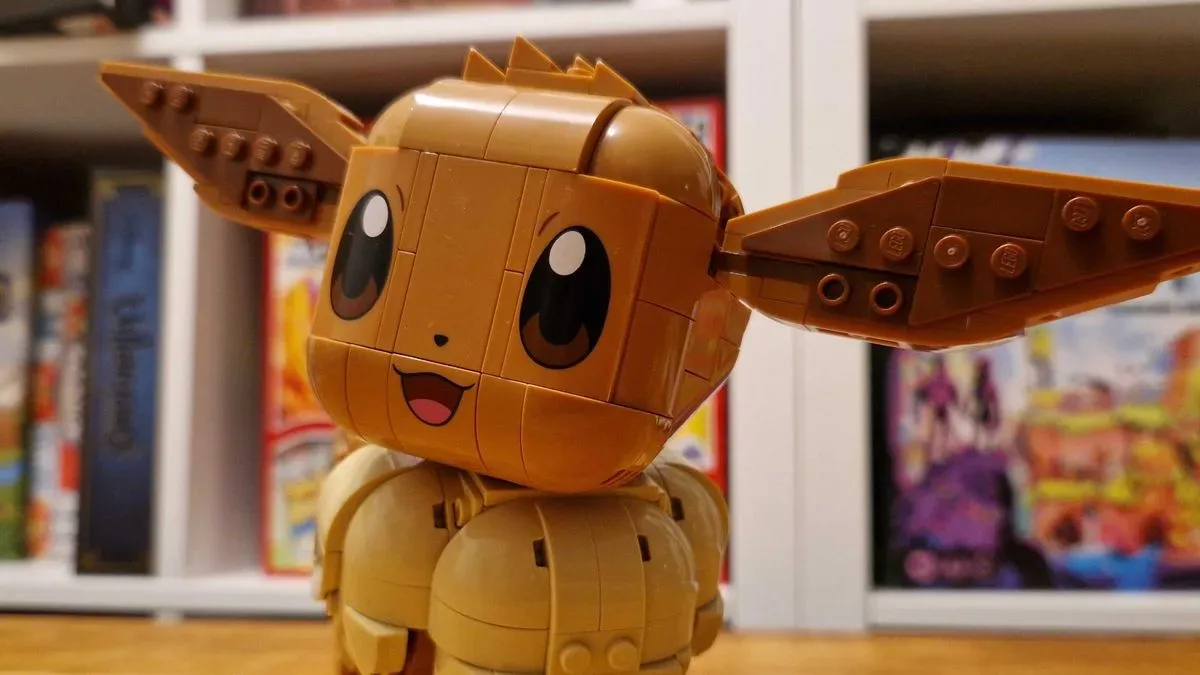
The standout offer is LEGO Pokémon Eevee at $47.95, reduced from $59.99. That is presented as its lowest recorded price. For someone who wants a display piece rather than another sealed box to store, the appeal is straightforward: Eevee is a single known item with a defined build, and the lower price is easy to compare against its regular $59.99 figure.
There is also a smaller entry-point deal on the Gengar Funko Pop. The figure is listed at $11.19, down from $14.99, likewise described as a record low. It is not a transformative saving in dollar terms, but it is a much lower-risk purchase than a speculative trading-card listing. Buyers know exactly which character figure they are getting, and the outlay remains modest.
For readers looking for a game rather than shelf décor, Pokémon Violet is listed for $46.99 at Woot, against a stated $59.99 price. That $13 reduction is notable for an older Nintendo Switch release that does not frequently receive a price cut. Woot is owned by Amazon, but it is a separate storefront, so shoppers should still check the product listing and its sale conditions before ordering.
Anyone adding a Switch title to a broader hardware purchase can also consult Joking Joystick’s coverage of the latest Switch accessory deals. The practical point is to budget for the complete purchase: a lower game price can be useful, but only if it fits the player’s existing system and accessory needs.
A character guide has a much wider price gap between editions
The Pokémon Deluxe Character Guide is listed at $39.84, reduced from $59.99. It is positioned as a substantial reference-style book covering every known Pokémon through more than one medium, including the games, animation and the trading card game. That broad scope makes it a potentially useful pick for fans who want a visual catalogue rather than a product tied to a single game or card release.
There is a far more expensive Limited Edition Box Set, listed at $186.39. Its extras include a collector’s box, playmat, additional prints and a certificate of authenticity. The difference matters because the standard book is around $40, while the higher edition remains close to $200 even after its discount. The premium package is therefore not simply an upgraded reading copy; it is a collector-oriented version where presentation and included extras account for much of the extra spend.
Related coverage includes Prime Day Pokémon Deals: Eevee LEGO Set Hits New Low as Violet and Collectibles Drop.
That does not make either edition inherently better for every buyer. The standard guide is the practical choice for someone interested in the book itself. The box set is a niche choice for buyers who specifically value the additional physical items and collector packaging. Treating them as separate products avoids letting the word “sale” obscure a very large difference in cost.
Why Pokémon TCG prices need a separate rulebook
The most important warning in this group of deals concerns sealed Pokémon TCG products. Marketplace listings on Amazon can be fulfilled by third-party sellers, and the reported pricing can be substantially higher than the usual reference points. A booster bundle may have a stricter MSRP around $26; an Elite Trainer Box, often shortened to ETB, is cited at $59.99; and a Booster Display Box is around $160. In practice, the observed market can be higher—around $50 for a booster bundle and about $100 for an ETB—but even those inflated figures give shoppers a benchmark.
An Elite Trainer Box is a sealed TCG product format, while a booster bundle packages booster packs together. A Booster Display Box is a larger sealed box of boosters. These terms matter because one listing can sound like another while containing very different quantities and products. Comparing only the headline price, without checking the format, can lead to a bad comparison.
Current Amazon listings are said to approach double those already elevated real-world prices in some cases. The reported 30th Anniversary prices are especially stark: an ETB is near $200 and a booster bundle is listed at $99. Those prices reflect substantial demand, but demand alone is not evidence that an offer is good value. Shoppers should decide whether they are paying for the cards, sealed ownership, or scarcity before treating a high price as unavoidable.
MSRP is a reference point, not a guarantee
MSRP means manufacturer’s suggested retail price. It is useful as a baseline for identifying a steep markup, but it does not guarantee that current stock will be obtainable at that number. The same is true of the more realistic market estimates noted above: they provide context, not a promise that every retailer will have inventory.
That distinction is especially relevant for anniversary products. Stock can be difficult to find, and a retailer such as Miniature Market may sometimes offer fairer pricing, but availability can be limited. The practical takeaway is not that every above-MSRP listing is automatically fraudulent. It is that high-demand sealed product needs patient comparison shopping, while a readily available figure, game or book can be judged much more directly against its normal retail price.
Loose card bundles require more scrutiny than sealed products
Loose card bundles deserve extra caution. Listings may promise particular foil counts or rarity totals, and some can be legitimate options for binder filling or for younger fans who want a stack of cards rather than a sealed product. But third-party listings also create an opening for scams and misleading presentation.
A careful buyer should read the listing rather than relying on the main image or title. Confirm who is selling the item, whether it is supplied by an official Pokémon storefront, what quantity is actually included, and whether the listing describes loose cards, sealed packs or a complete official product. “Loose” means cards are sold outside their original sealed retail packaging. That does not automatically mean they are poor cards or an improper purchase, but it does mean the buyer has less of the reassurance that comes from an intact, clearly identified sealed product.
It is also wise to be skeptical of language focused on guaranteed rarity and foil totals without equally clear details about the exact contents. For a collector pursuing specific cards, a loose-card assortment and a booster product solve different problems. The former may fill spaces in a binder; the latter is a sealed product with its own format and expectations. Neither should be bought as though it were the other.
Storage is a practical part of buying cards
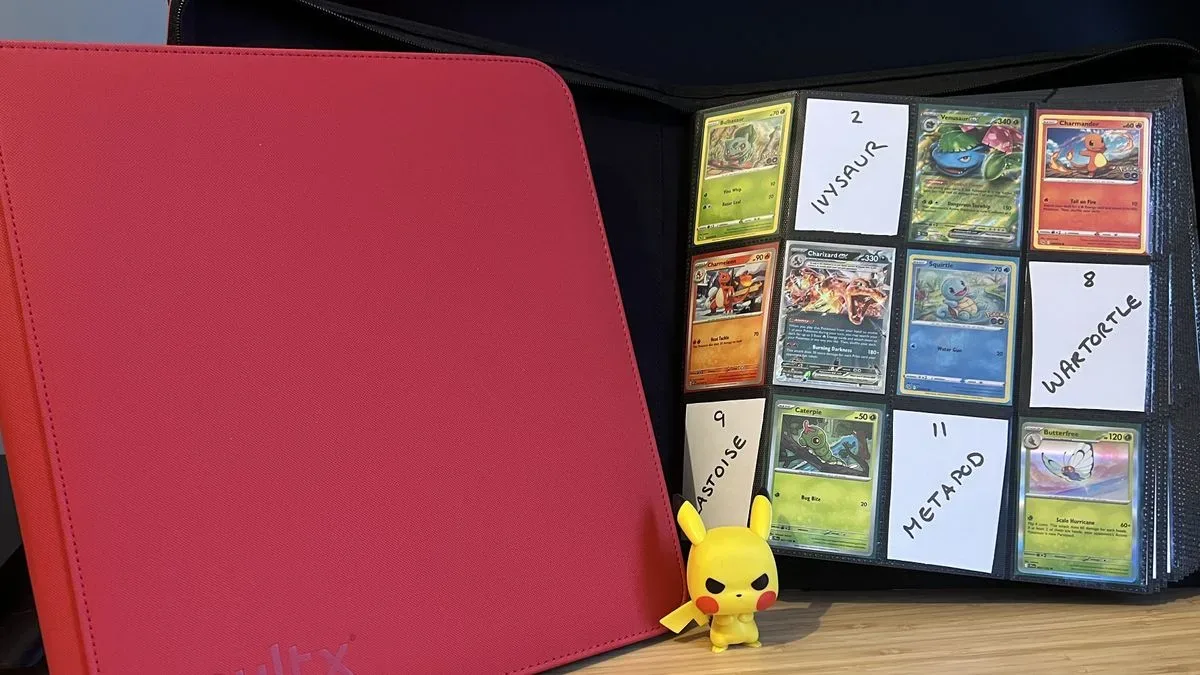
For collectors whose goal is organizing a Pokédex-style binder rather than accumulating sealed stock, a quality binder can be a more durable purchase than another expensive card box. Vault X binders are highlighted for side-loading pockets, sturdy pages and zip closures, with both larger 12 XL books and smaller designs available.
Side-loading pockets hold cards from the side instead of the top. Along with a zip-close binder, that design is intended to reduce the chance that cards fall out while the binder is being moved. The size decision should follow the collection’s purpose: larger books suit a long-running project with many cards, while smaller binders can make sense for a focused set, favorite characters or a collection that does not need a huge page count.
Some Vault X colors and designs are available through Amazon, and further reductions may appear during the promotion period. Still, a sale is only useful if the binder’s capacity and closure fit the cards a buyer already owns. Buying a cheaper small binder only to outgrow it immediately can erase the saving.
What to check before purchasing
- Compare like with like: Verify whether a TCG listing is a booster bundle, ETB, display box, loose-card lot or something else.
- Check the seller: Marketplace listings can be supplied by third parties. For loose cards in particular, favor official Pokémon storefronts and inspect the listing details closely.
- Use reference pricing: MSRP is not always available in a high-demand market, but it reveals when a listing is far beyond the usual starting point.
- Prioritize the actual goal: A discounted game, display model, character book and sealed card box serve very different kinds of Pokémon fan.
- Consider storage early: If cards are intended for a binder collection, budget for safe organization rather than putting every dollar into more packs.
The immediate value leaders are the $47.95 LEGO Eevee set, the $46.99 listing for Pokémon Violet, the $11.19 Gengar Funko Pop and the $39.84 Deluxe Character Guide. The card market is the more complicated side of the picture. Shoppers should be particularly cautious about anniversary TCG listings and loose-card bundles, where a striking price may be a scarcity premium—or where the product details need much closer verification.
Shop the products
Check current price, model and availability at the retailer.