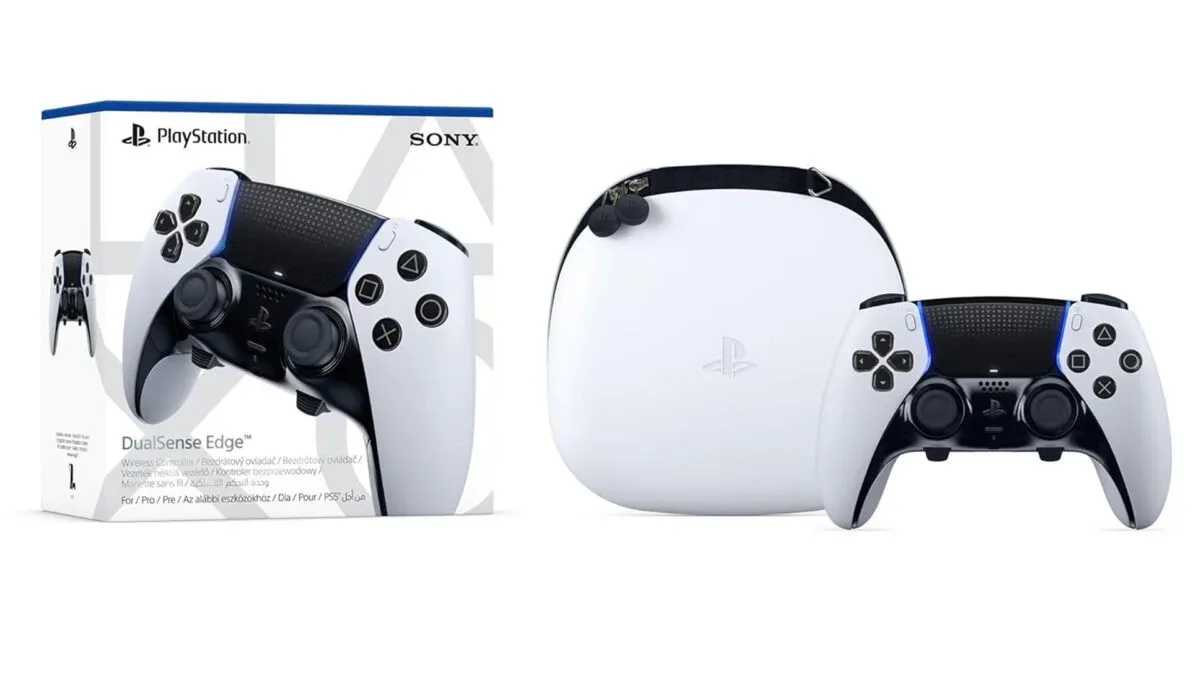
Amazon listed Sony’s Midnight Black DualSense Edge at $169, down from $199, ahead of the Black Friday weekend. That is a $30 reduction on PlayStation’s premium PS5 controller—a product aimed less at replacing the ordinary DualSense experience than at giving players more control over how its inputs feel and where they sit.
For PS5 owners considering the jump, the useful question is not whether the Edge has more buttons for the sake of it. It is whether its customization solves a real friction point in the games they play. The controller retains the core DualSense features: haptic feedback, adaptive triggers and an integrated microphone. Its distinction is that it adds remappable rear controls, adjustable trigger travel, stick tuning, stored profiles and replaceable analog-stick modules.
The Midnight Black model also comes with a hard carrying case, a braided USB-C cable with a locking connector, interchangeable stick caps and two styles of rear button. For a controller that costs substantially more than a standard pad even at this reduced listing, those inclusions matter. They turn the package into a configurable input device rather than simply a color variation.
The two rear buttons are the practical upgrade
The most immediately meaningful feature is a pair of mappable back buttons positioned for the middle fingers. Mapping means assigning an existing controller command to a different physical control. It does not inherently create new in-game actions; instead, it can move a frequently needed command to a location that better suits a player’s hands.
In a shooter, for example, jump, crouch, reload or weapon swap can be placed on a rear button. The benefit is simple: a thumb can remain on the right analog stick while that command is activated. That can be particularly helpful in moments where looking, aiming and moving all happen at once. The same basic principle applies beyond competitive play. Players who dislike taking a thumb off a stick to reach a face button may find the layout more comfortable in any game with busy controls.
Sony includes two rear-button shapes: a half-dome option and a lever option. This is a small but sensible part of the Edge’s design. A control is only useful if it can be found confidently without a player squeezing it by accident. The alternative shapes give owners some latitude to choose between a lower-profile contact point and a more pronounced lever.
That flexibility does not make the Edge automatically necessary for every PS5 library. Games with sparse inputs or a relaxed pace may offer little reason to remap anything. But for players who consistently wish an action were available without moving a thumb away from a stick, the rear buttons are the feature most likely to change everyday use.
Trigger stops trade travel for speed
The Edge also has three-step trigger stops. A trigger stop limits how far a trigger can be pulled. Less travel means a shorter physical movement before an input is registered, which can make repeated trigger actions feel quicker. The source material specifically positions that setting as useful for shooting in competitive games.
Related coverage includes Sony’s Midnight Black DualSense Edge drops to $169 at Amazon.
There is a trade-off. Full trigger travel can be desirable where gradual input matters, such as driving games. The Edge lets players return to the full range rather than forcing one response style across every genre. This is an important distinction between adjustability and a blanket performance claim: a shorter trigger pull is not universally better. It is a choice that suits certain actions and games more than others.
Adaptive triggers remain part of the package. In broad terms, adaptive triggers vary the resistance a player feels while pressing them, while haptic feedback provides tactile vibration effects. The Edge preserves those foundational DualSense elements while adding the ability to adjust trigger response and travel. That means buyers are not choosing between the standard controller’s signature PS5 features and more customization; the Edge is built on that same base.
Profiles and stick settings are for repeatable setups
Customization is handled through PS5 settings. The Edge can adjust stick sensitivity, dead zones and trigger response, and it can save several profiles. A profile is a stored set of controller choices, allowing different button assignments and response settings to be kept for different needs instead of rebuilt from scratch.
Dead zone is one of the more technical but useful settings here. It refers to the portion of a stick’s movement around its center that does not produce an input. Adjusting it can change how readily a small stick movement registers. Stick sensitivity, meanwhile, changes how the controller responds as the stick moves. Neither setting has one ideal value for everyone; a player’s preference, grip and the demands of a game will influence what feels right.
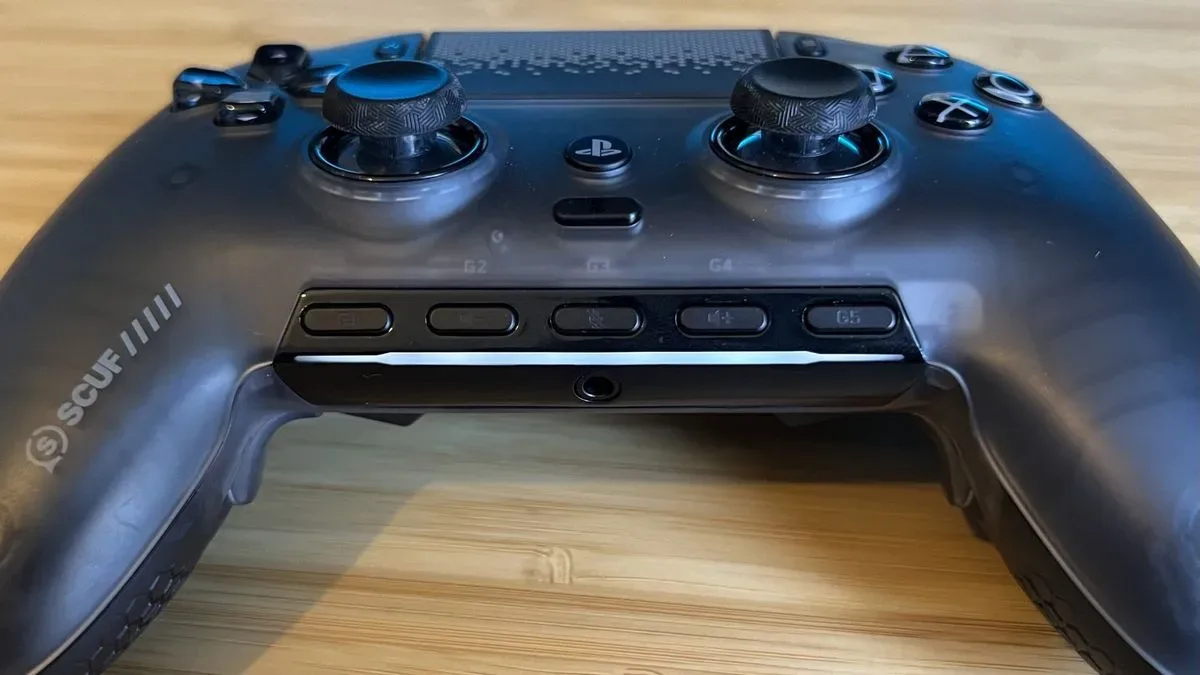
Function buttons beneath the analog sticks allow profile switching and setting adjustments during play, without opening the console menus. That makes profiles more than an administrative feature. A player can keep one arrangement for a game that benefits from back-button actions and another that favors full trigger travel, then move between them from the controller itself.
The practical value is strongest for someone willing to spend a little time setting the controller up. Players who want a pad that works exactly as it comes out of the box may never use much of this flexibility. Conversely, for somebody who already knows they prefer a different stick response or button arrangement from game to game, the ability to save and recall settings is central to the Edge proposition.
Replaceable stick modules address a costly controller problem
One of the Edge’s most consequential hardware choices is its replaceable analog-stick modules. If a stick begins drifting after heavy use, the affected module can be swapped rather than requiring the entire controller to be replaced. Stick drift describes unwanted input from an analog stick when it is meant to be at rest. Since analog sticks are among the most heavily used moving parts on a controller, a modular approach directly addresses a concern that can be especially significant on premium hardware.
The controller also includes three pairs of stick caps: standard, high-dome and low-dome. Changing cap height and shape changes the physical feel of the thumb contact point. This is not a guarantee of better performance, but it offers a way to prioritize familiarity or a different leverage and reach without buying a separate accessory.
There is a broader ownership implication in the replaceable-module design. A lower upfront price is welcome, but the Edge still asks buyers to view a controller as a long-term device. The ability to replace a worn stick module supports that idea more directly than simply adding cosmetic extras. It is the feature most clearly tied to keeping the controller in service after heavy use.
What is included, and who the $169 listing suits
Alongside the controller, the package includes a hard carrying case and a braided USB-C cable with a locking connector intended to help keep the cable attached during play. The Midnight Black finish is designed to match black PS5 console covers and, as a practical cosmetic point, is less likely to show fingerprints than white.
At the listed $169 price, the Edge makes the clearest case for PS5 players who can identify at least one of these needs:
- They want jump, reload, crouch or another common command on a rear button.
- They move between games that benefit from different trigger travel or controller profiles.
- They want to tune stick sensitivity, dead zones or trigger response.
- They place value on replaceable analog-stick modules as part of long-term ownership.
- They want the standard DualSense haptics and adaptive triggers while adding a more configurable layout.
For players who are happy with a standard DualSense layout and do not expect to use profiles, rear mappings or stick adjustments, the discount alone does not change what the Edge is. It remains a premium controller whose value is rooted in customization. The sale reduces the upfront gap; it does not make those specialized features essential for every player.
It is also worth treating retail listings as time-sensitive. The $169 figure and $199 comparison describe the cited Black Friday-period listing, not a guaranteed continuing price or stock position. Anyone considering it should verify the current listing before buying.
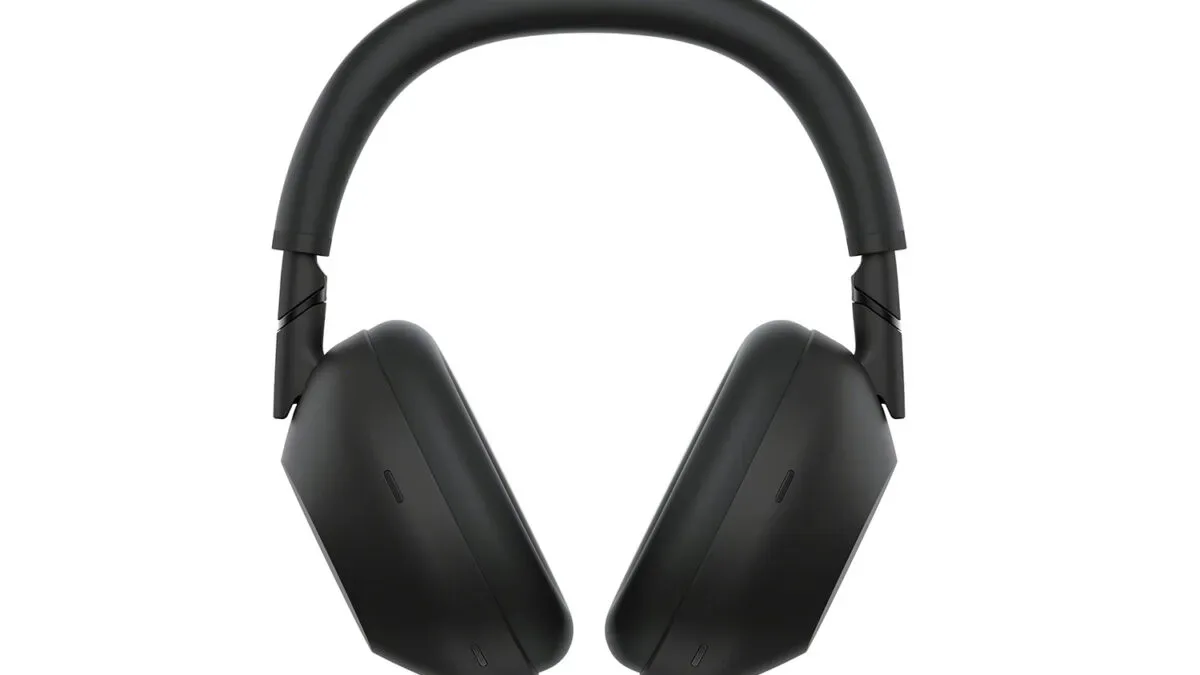
The Edge is part of a wider seasonal wave of PlayStation-adjacent discounts; Sony’s WH-1000XM6 headphones were also listed at a reduced early Black Friday price. But the controller stands apart because its argument is not merely visual or audio convenience. It is about reducing the distance between a player’s preferred controls and their hands.
Shop the products
Check current price, model and availability at the retailer.