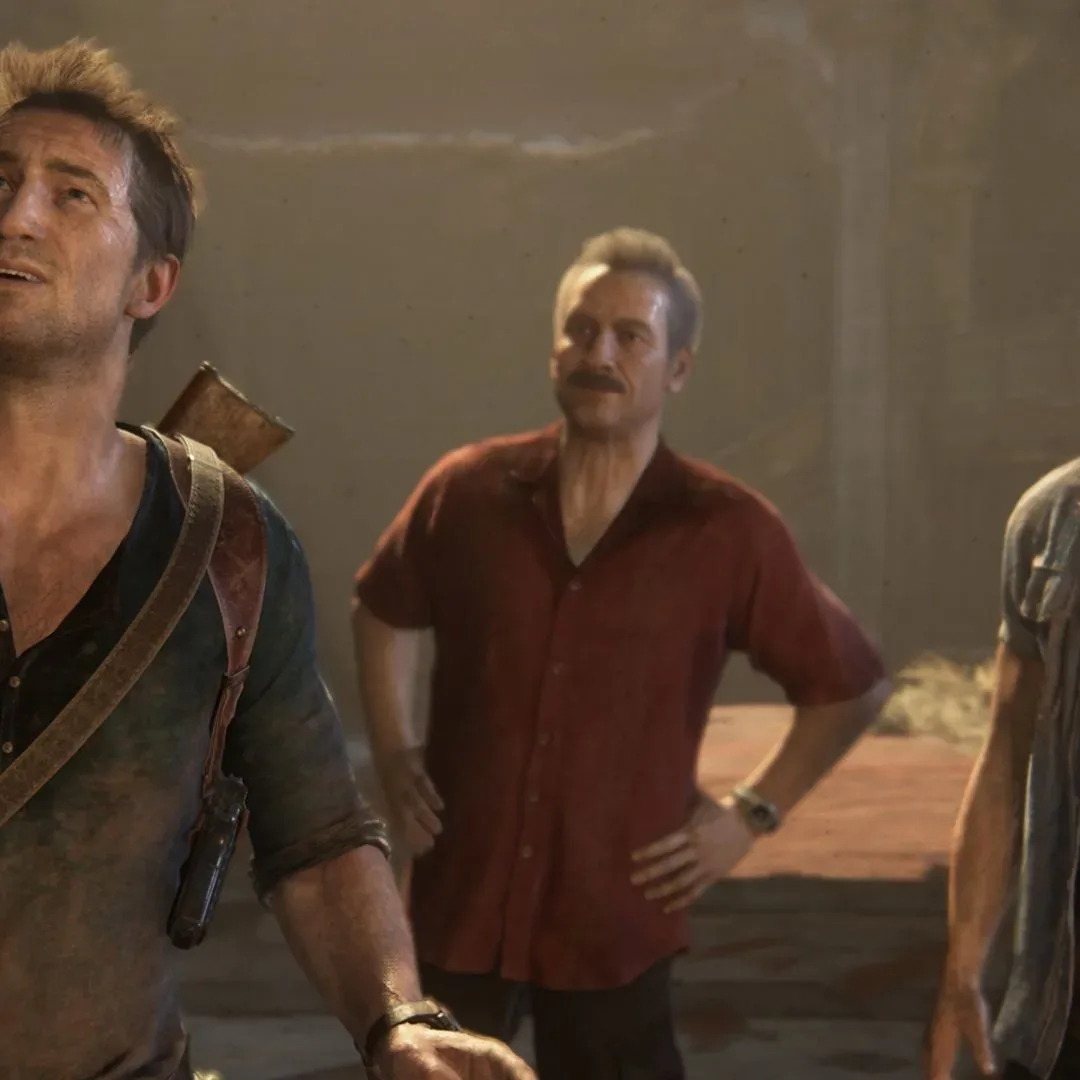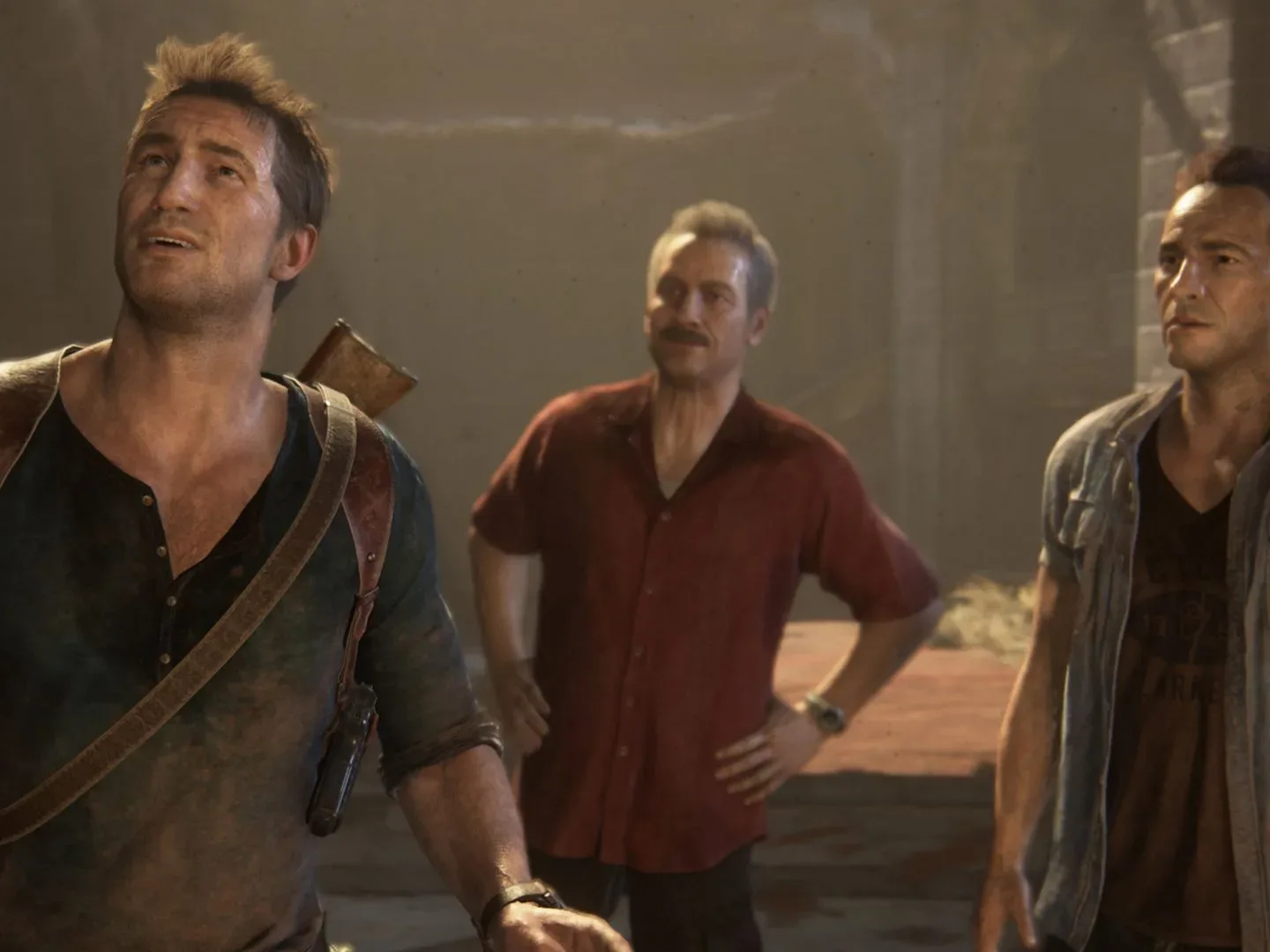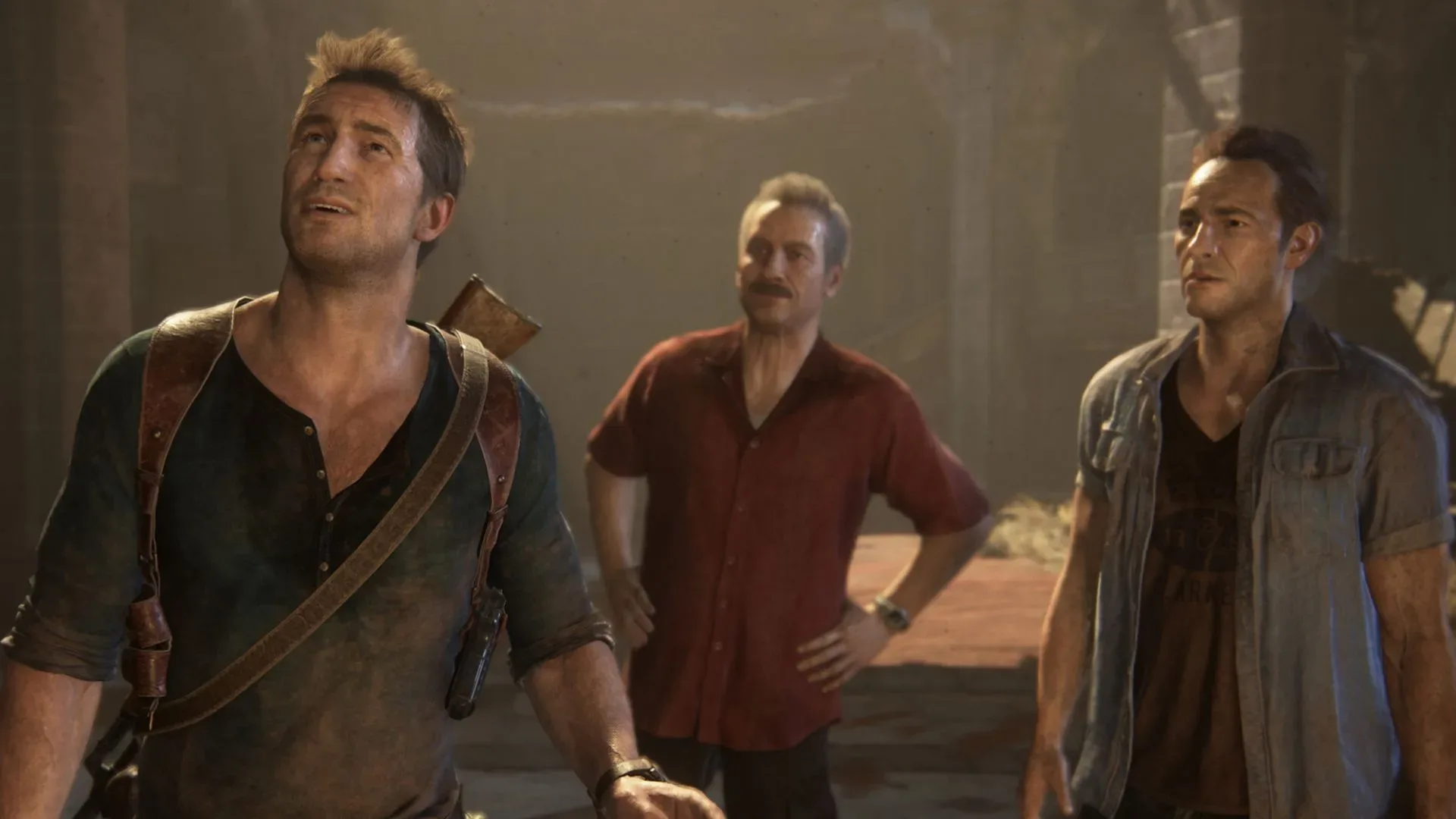
A newly surfaced recollection from former Naughty Dog visual effects artist Matt Radford has added another fragment to the long-running picture of Amy Hennig’s earlier Uncharted 4: A Thief’s End concept. Radford described the version he encountered as “very different” from the game released in 2016, most notably in its treatment of Nathan Drake’s brother, Sam.
Radford said Sam was the villain in the early concept he saw. That does not necessarily mean Sam was designed as a conventional mustache-twirling antagonist, but it does support an important distinction: the brother’s role in Nathan’s story appears to have begun from a far more hostile place than the final game’s uneasy reunion and eventual cooperation.
It is a striking detail because Sam is central to the released Uncharted 4. His return from Nathan’s past is the force that pulls the retired treasure hunter back toward danger, placing strain on Nathan’s marriage with Elena and setting the adventure’s emotional stakes. Making Sam an overt villain—or an antagonist whose relationship with Nathan took longer to repair—would have substantially changed the shape of that story.
What Radford’s recollection adds
Radford joined Naughty Dog during the project’s early, difficult development period and recalled that the team’s green-light demo was extremely rough. He said it ran at roughly one frame per second on a PC, a memorable illustration of how provisional an early vertical slice can be.
For more context, explore Vesna Could Be Genshin Impact’s Most Important Explorer Yet, Not Just a Top DPS.
A green-light demo is a prototype or presentation build intended to demonstrate whether a game’s concept, technology and direction are worth committing further resources to. It is not a finished game in miniature. Teams often use such builds to establish a visual target, test an idea, communicate an intended experience and make a case for full production. Rough performance at that stage says little by itself about what a shipping release would eventually run like.
That context matters for interpreting Radford’s account. His comments are valuable firsthand testimony about a version in development, but they are not a comprehensive plot outline, nor proof that every early element was locked in. Creative projects change constantly, particularly when a large, technically ambitious game is still being assembled from prototypes, art tests and early narrative plans.
Still, Radford’s description aligns with comments Hennig made in 2019. She said the broad DNA and core premise were present in her version, including the introduction of Sam as Nathan’s brother. The major difference, she explained, was that Sam began as a more antagonistic presence: a ghost from Nathan’s past whose relationship with him needed to move toward reconciliation and reunification.
Put together, those remarks make the clearest responsible reading fairly simple. The early concept was not necessarily an entirely unrelated game with a different foundation. Rather, it seems to have had a notably different character arc and possibly a different route through the same core idea: Nathan confronts the pull of his past, but Sam is initially more of a threat or destabilizing force than a troubled ally.
Sam as villain versus Sam as an antagonistic force
The language here is worth separating carefully. “Villain” and “antagonist” are often used interchangeably in fan conversation, but they need not mean the same thing in storytelling.
A villain is usually a character whose aims directly oppose the protagonist’s and whose actions are framed as the central threat. An antagonistic force is broader: it can be a person, relationship, institution, internal conflict or circumstance that obstructs what the protagonist wants. Hennig’s own description of Sam emphasized the latter term. He may not have been conceived as a classic final-boss-style enemy, but he appears to have represented a much sharper conflict in Nathan’s life.
That distinction has practical narrative consequences. In the finished game, Sam is an unreliable catalyst who draws Nathan back to the treasure-hunting life, but the story ultimately makes room for kinship and reconciliation. A version where Sam was more directly opposed to Nathan could have tilted the adventure toward suspicion, betrayal and the question of whether Nathan could or should trust his own brother.
It also could have changed Elena’s place in the story. Nathan’s relationship with Elena is one of the final game’s major emotional anchors. When Sam arrives with a plea for help, Nathan’s old instincts collide with the life he has built. If Sam were more clearly an adversary, Nathan’s choice would not only be about resisting one last adventure; it would more directly involve dealing with a dangerous piece of family history.
None of that establishes specific missing scenes or a completed alternate script. It does, however, explain why the difference is meaningful even if the “core story” remained recognizable. Character motivation and relationship dynamics can reshape the tone of an entire game without changing its protagonist, genre or broad treasure-hunting premise.
Unused material offers clues, not a finished lost game
Other evidence has fueled interest in the abandoned direction. Dataminer Michael Kemp, also known as Thekempy, examined recovered material connected to Uncharted 4 and identified scenes and references that did not appear to match the released game. The material reportedly suggested levels that were not included in the final build, story events that never occurred, more shipwreck-focused exploration involving Elena, and less gun violence.
Datamining can be illuminating, but it has limits that are especially important in stories about game development. A datamine involves examining game files or technical remnants for content that may be hidden, unused or inaccessible through ordinary play. Such material can reveal assets, dialogue, level references or internal labels. It cannot always tell observers exactly when something was made, how close it came to completion, whether it was part of Hennig’s version specifically, or why it was cut.
Unused content is often evidence of exploration rather than a promise that was broken. Developers create sequences that later become redundant, fail to fit the pacing, conflict with a rewritten plot or simply prove too costly to complete. That is particularly true when a project goes through a major creative transition.
For fans, the productive way to view these discoveries is as a set of clues. They support the idea that Uncharted 4 evolved considerably. They do not make it possible to reconstruct a definitive “Hennig cut,” because the available record is incomplete and because game production is not a clean sequence of one finished version being swapped for another.
Why the unreleased version has such staying power
Lost or changed versions of high-profile games naturally invite fascination. They sit in a peculiar space between history and imagination. A few artifacts can reveal that a project once had a different direction, while the absence of a finished playable build leaves enormous room for audiences to fill in the blanks.
That is why it is easy to turn an early concept into an idealized alternate release. Radford himself said Hennig’s vision seemed cool, while also saying he was happy with the game that ultimately shipped. Both reactions can coexist. Appreciation for an unreleased direction does not require treating the released Uncharted 4 as a failure, and satisfaction with the final game does not erase the creative interest of the path that was abandoned.
The distinction is important because development anecdotes can rapidly harden into fandom mythology. “Sam was the villain” is a concrete and intriguing statement, but it is not a complete account of plot structure, gameplay systems, final levels or the exact state of the project at any one moment. The more useful question is not whether the early version would have been categorically better. It is what the detail tells us about the themes the team was considering.
On that front, it suggests a more confrontational family drama at the heart of Nathan Drake’s last major adventure. The final game asks whether Nathan can honestly reconcile his hunger for adventure with the commitments he has made. The earlier concept appears to have made the personification of that past more threatening: not merely a brother asking for help, but a brother whose presence could be read as a force Nathan needed to overcome before they could reconcile.
A reminder that development is iterative
Radford’s recollection of a scrappy, low-performing early demo is also a useful corrective to the assumption that major games emerge fully formed. Large productions are iterative: artists, designers, writers and engineers test approaches, discard approaches and revise them as the project’s needs become clearer.
Visual effects work is part of that process. Effects artists help create and refine things such as environmental atmosphere, explosions, debris, weather-like elements and other screen effects that support an action game’s visual communication. In an early build, those systems can be among many pieces still being solved alongside performance, level structure and narrative direction.
For players, the practical implication is that behind-the-scenes material can deepen appreciation for a game without providing a reliable blueprint for a hypothetical remake. There is no indication here that an alternate Uncharted 4 is being rebuilt or released. The evidence instead offers a clearer view of a production that took multiple routes before arriving at the version audiences know.
Radford’s full remarks, as described in a report on the interview, also carry a personal note: he hopes to see more games from Hennig, whom he called highly talented. Hennig is working on the delayed Marvel 1943: Rise of Hydra and previously developed the story concept for Forspoken.
For now, the early Uncharted 4 remains an unfinished chapter rather than a recoverable companion game. But the accounts from Hennig and Radford, combined with unused-material discoveries, provide a grounded outline of what changed: Sam Drake was once envisioned as a considerably more antagonistic presence, early production was rough and experimental, and the final release grew out of a concept that was related to—but meaningfully different from—the one that came before it.