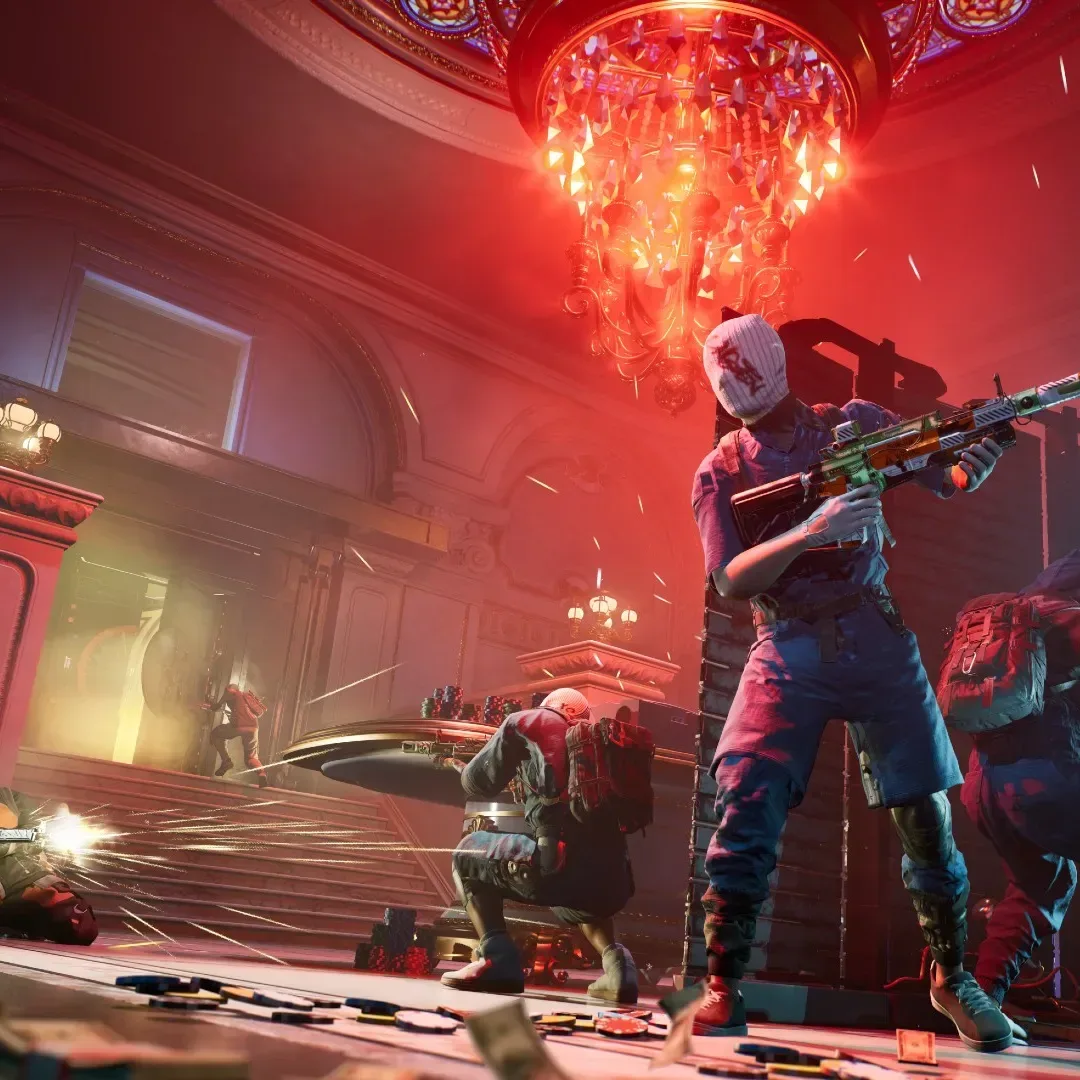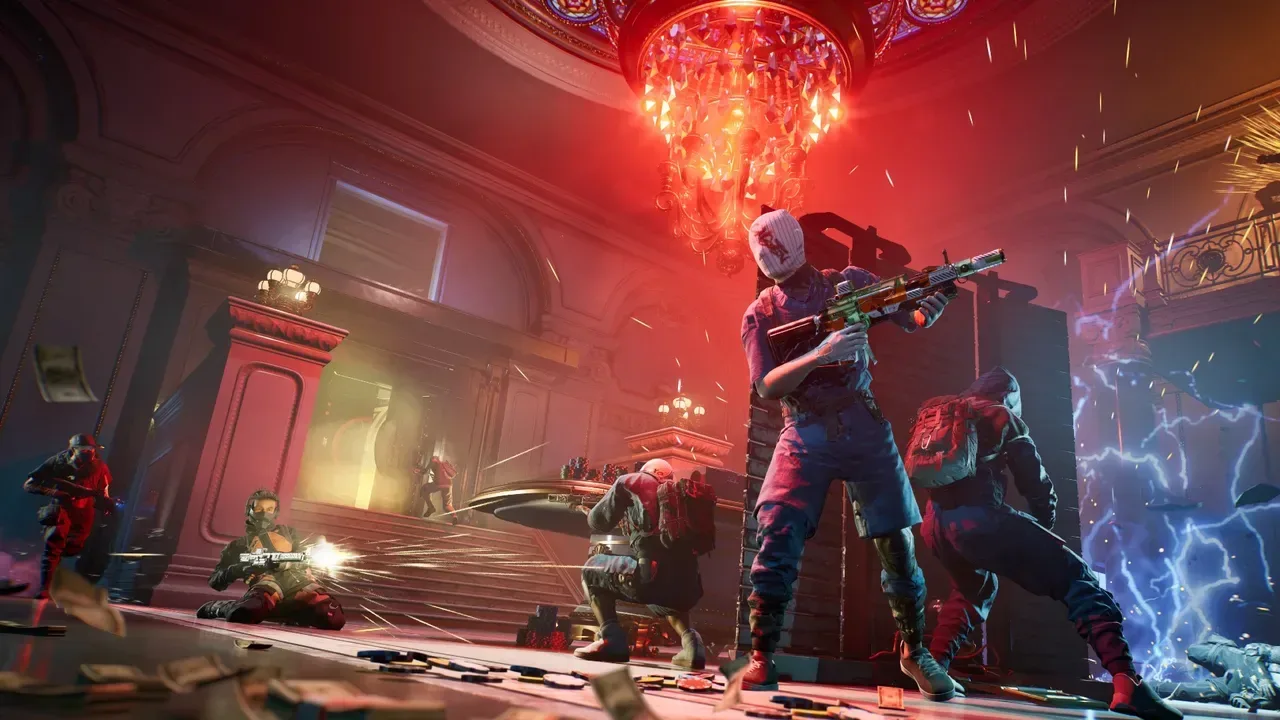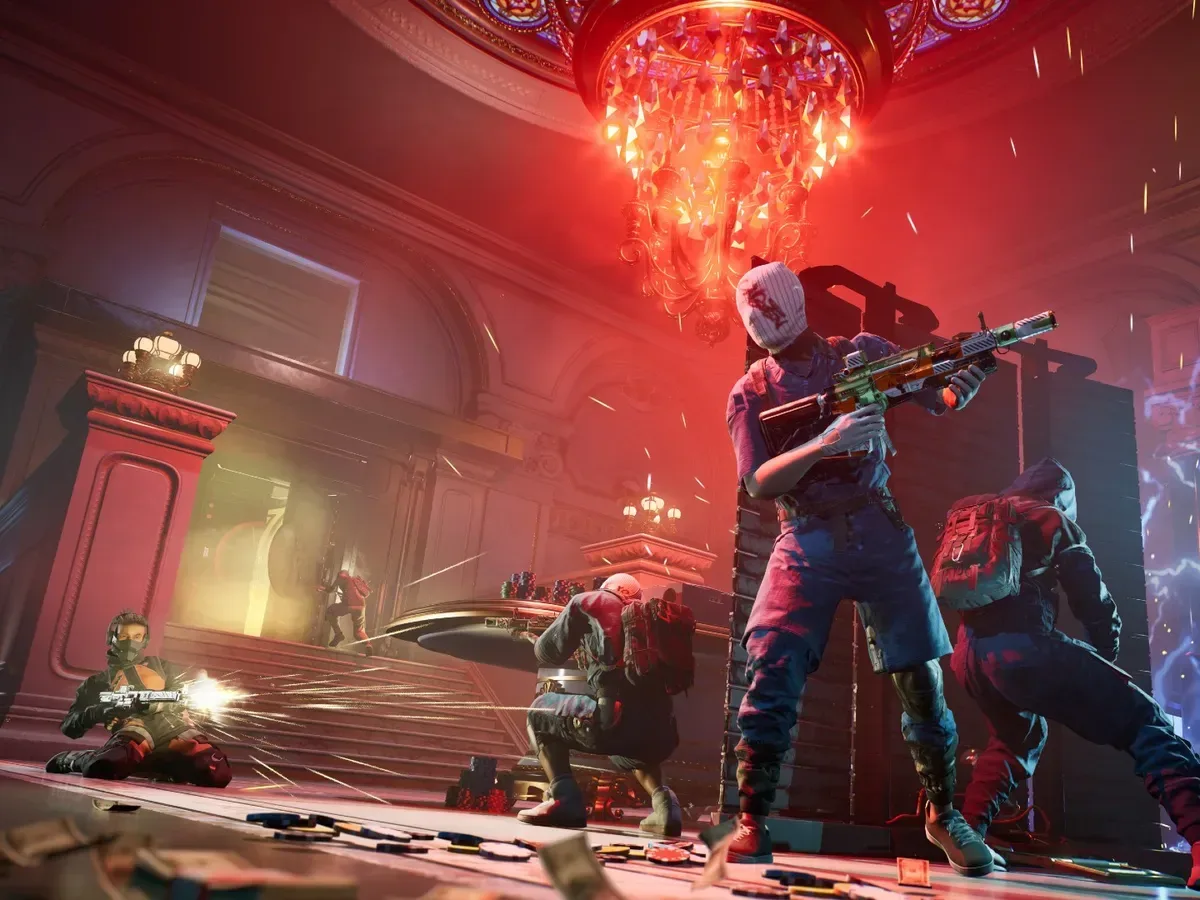
PlayStation’s elusive competitive-heist project Fairgames may have resurfaced in a rather stealthy fashion. A playtest listing under the name Project Espresso has appeared on Player.gg, accompanied by gameplay footage and language indicating that the game is in development for PlayStation 5 and PC.
Nothing in the available material publicly confirms that Project Espresso is Fairgames. The listing uses a codename and does not identify the developer. Still, the combination of its apparent premise, visual direction, platforms, and a PlayStation-account requirement makes the connection look highly plausible. For a game that has spent years in the shadows following its original reveal, even a likely sighting is enough to get the getaway car idling.
What Project Espresso appears to be
Project Espresso is listed through Player.gg, a service used by developers to recruit participants for game tests. The page includes a substantial piece of gameplay footage rather than a simple logo or questionnaire, giving prospective players a much clearer idea of the project than PlayStation has offered publicly in some time.
The footage and accompanying setup appear to line up with what was previously presented for Fairgames: a stylish multiplayer experience built around heists and competition. Fairgames was introduced as an online shooter with a theft-focused hook, positioning players in conflict over high-value targets rather than simply asking teams to capture a point or rack up eliminations.
That is a useful distinction. Plenty of multiplayer games borrow the language of robberies, extraction, raids, or loot. A competitive heist game needs its own identity in the moment-to-moment structure: who gets to the prize first, how a team secures it, when opponents can intervene, and whether escaping with the goods matters as much as acquiring them. The Project Espresso material seems to occupy that same design neighborhood as Fairgames, though detailed rules and final modes remain unknown.
The listing also says the game is being developed for PS5 and PC. That platform pairing matches the direction PlayStation has taken with several modern multiplayer releases, where reaching a PC audience is a major part of building a sustainable player population. Players interested in the test can register through the Player.gg listing, but registration is not a promise of access or a release-window announcement.
The PlayStation account clue
One of the more notable details is the reported requirement for a PlayStation account. A login requirement by itself does not establish ownership or publishing arrangements, but it is a meaningful piece of the puzzle when placed next to the PS5-and-PC development notice and the project’s strong resemblance to Fairgames.
Codename listings are normal during game development, particularly when a studio wants feedback before marketing, names, and public messaging are locked down. They let teams gather impressions while keeping a project’s branding at arm’s length. In this case, that layer of secrecy also makes sense given Fairgames’ unusual public silence.
Related coverage includes Fairgames May Have Returned as Project Espresso, With Playtest Sign-Ups and Apparent Gameplay Footage.
It is important not to treat “Project Espresso” as confirmed final branding. It may be an internal codename used specifically for testing, a temporary public-facing label, or something else entirely. Until PlayStation or the relevant studio publicly joins the dots, Fairgames remains the most likely identification rather than an official one.
Why Fairgames has been so closely watched
Fairgames was announced three years ago and immediately stood apart from the usual first-party PlayStation conversation. Rather than another single-player blockbuster, it represented part of a larger interest in online service games. The original concept was intriguing: heist fiction naturally brings tension, valuable objectives, team coordination, alarms, double-cross potential, and an excuse for players to dress like they are attending the world’s most expensive costume party.
But the road since then has reportedly been complicated. Studio founder Jade Raymond and creative director Daniel Drapeau both departed. Reports have also described staff concerns that followed negative internal playtests. Such reports do not reveal the final state of the project, and development can change substantially after internal feedback. They do, however, help explain why observers have treated every small Fairgames-related signal with particular scrutiny.
A closed playtest can mean many things. It can be an early effort to validate a core loop, a targeted attempt to measure balance and technical performance, or a later-stage check on whether changes are landing with outside players. Without details on the test’s size, build, schedule, or feedback goals, it would be premature to label Project Espresso as near release—or to assume the opposite.
Could Break In be the final name instead?
Another wrinkle is a PlayStation trademark filing earlier this year for the name Break In. That title sparked speculation that it could be Fairgames’ eventual rebrand. It is an understandable theory: the phrase fits a heist premise neatly, and game projects often change titles between reveal and launch.
Yet a trademark is not confirmation of a game’s identity, much less of its release plans. Companies file trademarks for names that may be used later, altered, or never publicly attached to a finished product. Project Espresso adds another name to the board, but it does not settle whether Break In is connected, whether Fairgames will retain its original title, or whether a different name awaits.
For now, the most careful reading is straightforward: there is evidence of an active PS5-and-PC project called Project Espresso seeking private testers, and it bears a conspicuous resemblance to Fairgames. The exact relationship, developer attribution, and commercial title remain unconfirmed.
A crucial test for PlayStation’s multiplayer ambitions
The attention around this apparent reappearance is not just about one mysterious game. It reflects the larger pressure around PlayStation’s live-service strategy. Concord became a high-profile failure, while The Last of Us Online was canceled. The broader market has also become far less forgiving of games that expect players to devote months or years to a new ongoing ecosystem.
That does not mean a competitive heist game cannot find an audience. In fact, the premise may be an advantage if its objectives are legible, its matches create memorable reversals, and its social play has enough personality to distinguish it from standard squad shooters. But it will need to make its case quickly. The live-service field is crowded, players have limited time, and a slick concept alone will not crack the safe.
Private tests are precisely where a team can discover whether the fundamentals hold up. Do players understand the goal? Does defending loot feel as engaging as stealing it? Can newcomers contribute without being flattened by veteran squads? Is the risk-reward system exciting rather than exhausting? Those are the sorts of questions a trailer cannot answer, no matter how many neon-lit valuables it points a camera at.
For PlayStation, a successful return for Fairgames—if Project Espresso is indeed Fairgames—would offer a welcome sign that an online project can evolve through difficult development rather than vanish into a vault. A weaker showing would intensify the skepticism already surrounding large-scale multiplayer bets.
What players should take from the listing
- Project Espresso is not officially confirmed as Fairgames. The similarities are compelling, but the available information stops short of a formal announcement.
- The project is listed for PS5 and PC development. That is not the same thing as a final launch platform confirmation or release date.
- Private playtest sign-ups are available through Player.gg. Signing up does not guarantee an invitation.
- A PlayStation account is reportedly required. It is a notable indicator, but it is not a public statement identifying the game.
- Break In remains an unresolved possibility. The trademark filing has fueled naming speculation but does not confirm a rebrand.
Until a formal reveal arrives, Project Espresso is best viewed as a strong lead rather than a solved case. Still, it is the clearest apparent evidence in quite some time that the Fairgames-shaped heist operation has not been abandoned. If the listing proves to be the real thing, the next phase will be less about decoding codenames and more about whether the game’s competitive robbery fantasy can persuade players to make room for one more crew-based online commitment.
For more on an upcoming PS5 release with a confirmed platform plan, see The Apothecary Diaries: The False Imperial Brother coming to PS5, Switch 2, and Steam.