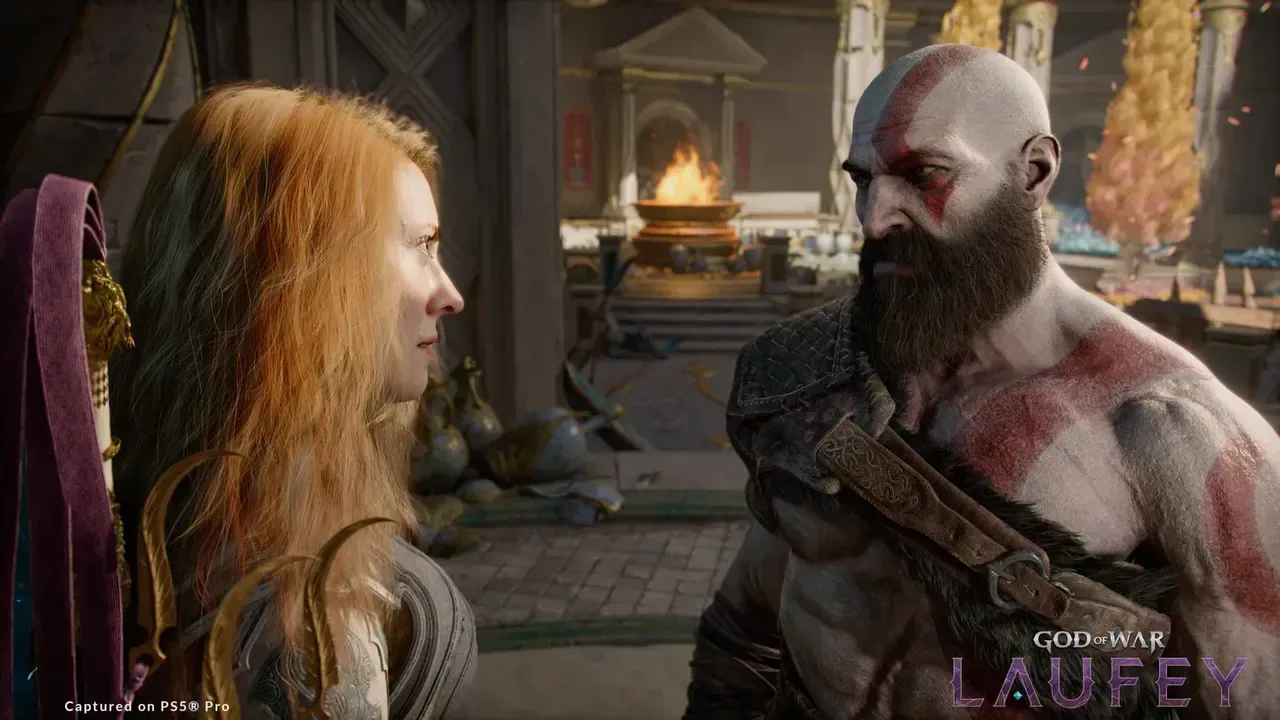
David Jaffe, the original God of War creator, co-writer and director, has publicly pushed back against harassment directed at Ariel Lawrence, creative director of God of War Laufey. The intervention follows a livestream in which Jaffe spoke harshly about their working relationship during the first game’s development and dismissed the forthcoming project as a bad idea.
Jaffe’s later message does not retract his stated opinion of Lawrence or the project. Instead, it draws a needed boundary between a former colleague discussing an old professional clash and online users turning that account into personal abuse aimed at a real person.
God of War Laufey is scheduled for release on February 16, 2027, exclusively for PlayStation 5. Lawrence has worked on the franchise since the original game, while Jaffe left the series in 2007 to form his own studio. That shared history is central to why his comments traveled so widely—and why the clarification matters.
What Jaffe said about Lawrence and Laufey
During a September 2026 livestream reacting to footage from God of War Laufey, Jaffe described his past relationship with Lawrence as openly contentious. He said they clashed personally, characterizing himself as obnoxious and Lawrence as pretentious. He also said he felt she did not share his own priorities around making games for the audience.
Those are Jaffe’s interpretations of a workplace dynamic from his time on the original game, not an independent account of Lawrence’s work or intentions. That distinction is especially important when a veteran creator’s remarks are detached from their original setting, clipped, reposted and converted into ammunition for a broader online argument.
Jaffe framed his criticism around an apparent divide he perceived between people who pursued advancement within a corporate environment and people who fought forcefully for a creative vision. He said he believed Lawrence lacked passion and used insulting language to describe her. He also criticized Cory Barlog and called the decision to make Laufey “stupid,” arguing that the game was not ready.
The comments put several different issues into one volatile package: an old professional disagreement, an assessment of a new game based on footage, and a highly visible franchise’s leadership. Each can be debated. None gives a public audience license to attack Lawrence personally.
The follow-up: disagreement is not a harassment campaign
After the clip spread, Jaffe addressed the reaction in a post on X. He acknowledged that he personally did not like Lawrence and said he did not think she liked him either, comparing their personalities to oil and water. He also added an unusually self-critical note: Lawrence was probably better liked by the team than he was, and he can be “a lot.”
Related coverage includes David Jaffe Condemns Harassment of God of War Laufey Creative Director Ariel Lawrence.
More importantly, he explicitly objected to people using his recollection as a launch point for attacks on her. Jaffe said that speaking honestly about good or bad experiences with former colleagues is one thing, but turning that into personal hostility toward Lawrence is “low” and cruel.
His point is straightforward: criticism of a game, a creative decision or even a public statement does not erase the humanity of the people making the work. Lawrence has a life, relationships and people who care about her. The fact that a discussion involves a famous studio and a globally recognized series does not make that basic standard optional.
There is an uncomfortable irony in the episode. Jaffe’s original remarks criticized Lawrence’s professional character and passion in unusually personal terms. His later post recognizes the line that should not be crossed when audiences repeat or escalate those remarks. That does not make the initial language disappear, but it does establish that he does not want it used to organize or justify harassment.
Why the distinction matters in a major game franchise
A creative director is generally a senior leadership role responsible for guiding a project’s creative direction. The supplied information identifies Lawrence as Laufey’s creative director, but it does not detail the game’s systems, story, production process or the exact scope of her authority. It would be a mistake to fill those gaps with assumptions—or to treat one person as the sole author of a large-scale game.
Likewise, AAA is industry shorthand for a large, high-budget game production. It is commonly used in arguments about corporate decision-making, artistic risk and franchise strategy. But the term is descriptive, not a verdict on quality. Calling a game AAA does not establish whether it is inspired, cautious, ready, unfinished, good or bad.
That is why broad criticism needs specificity. Players can reasonably ask whether a trailer makes a compelling case for a new direction, whether a protagonist fits their expectations for the series, or whether a project appears technically and creatively polished. Those are questions about the work that has been shown. Claims about a developer’s motives, competence or worth as a person demand far more care, particularly when they rest on an old colleague’s personal account.
Jaffe’s personal history gives his opinion attention, but it does not settle the questions around Laufey. He is linked to the earliest God of War game, while Lawrence has been part of the franchise since that era. Their conflicting recollections and personalities may explain the intensity of the discussion, but they are not a substitute for judging the new game on what it eventually delivers.
Laufey has already become a target of bad-faith discourse
The conversation around Laufey has not occurred in a neutral environment. When the game was revealed in June, social-media discussion was reportedly flooded by disparaging comments about Deborah Ann Woll’s appearance and outrage that a woman is leading a God of War game. That backlash is not meaningful analysis of a trailer, design decision or narrative premise. It is a familiar kind of grievance hunting, where a visible target is selected before the work itself can be fairly evaluated.
Jaffe’s original comments landed amid that existing hostility. Even if he intended to describe a genuine personal conflict and voice his own creative objections, prominent criticism can be seized upon by people whose interest is not discussion at all. The follow-up message matters because it rejects that appropriation directly.
It also underlines a responsibility shared by communities, creators and platforms. Viral discourse tends to flatten context. A long career becomes a single quote. A nuanced disagreement becomes a team sport. A named developer becomes an abstract symbol in a fight about corporate games, gender or franchise ownership. Once that happens, the human being at the center can receive the consequences while the loudest participants move on to the next topic.
Harassment is not simply negative feedback or disagreement. In this context, it means personal attacks directed at an individual rather than criticism focused on publicly presented work or ideas. Criticism can be blunt and still remain about the game. Harassment shifts toward the person—her appearance, identity, private life or perceived right to hold a role.
That distinction is neither complicated nor a demand that audiences pretend to like everything. It is the minimum needed for criticism to remain criticism. Fans can dislike the premise of Laufey, question its readiness, or reject Jaffe’s assessment entirely. They can also debate whether a long-running series should take a particular creative direction. What they should not do is treat an individual developer as a target because she is visible in the project’s leadership.
Separate reactions from evidence
At present, the available facts are limited. God of War Laufey has been revealed, Lawrence is its creative director, Jaffe has criticized it, and it is set to launch for PS5 on February 16, 2027. There is no supplied evidence here establishing whether Jaffe’s view that the game is not ready is correct. Nor is there evidence supporting the online attacks directed at Lawrence.
That limitation is not a problem; it is a reason to avoid pretending a social-media dispute is a review or a production postmortem. The practical response for interested players is simple: keep an eye on official footage and future information, distinguish confirmed details from speculation, and judge the finished game on its own merits when it arrives.
The wider games industry is also full of debates that become overly personalized, whether they concern franchise stewardship, technology, storefronts or creative leadership. For a separate example of how business changes can reshape player conversations, see our report on Steam’s planned algorithmic storefront changes. The subject differs, but the underlying lesson is similar: systems and decisions deserve scrutiny without turning every discussion into a campaign against an individual.
A former colleague’s criticism should not define Lawrence
Jaffe is entitled to describe his own experience and to dislike a direction taken by a franchise he helped establish. Lawrence is equally not reducible to that description. The fact that Jaffe himself says the two were simply very different people—and that she may have been more popular with the team—adds needed perspective to a story that initially spread through inflammatory excerpts.
There is still room for a serious discussion about God of War Laufey: what it is trying to do, how it relates to the wider series, and whether its eventual execution earns players’ confidence. But the game’s pre-release conversation is better served by evidence than by insults, and by attention to the work rather than attacks on the person responsible for helping lead it.
Jaffe’s clarification does not erase the dispute. It does, however, state an important limit clearly: personal disagreement is not permission for a crowd to be cruel.