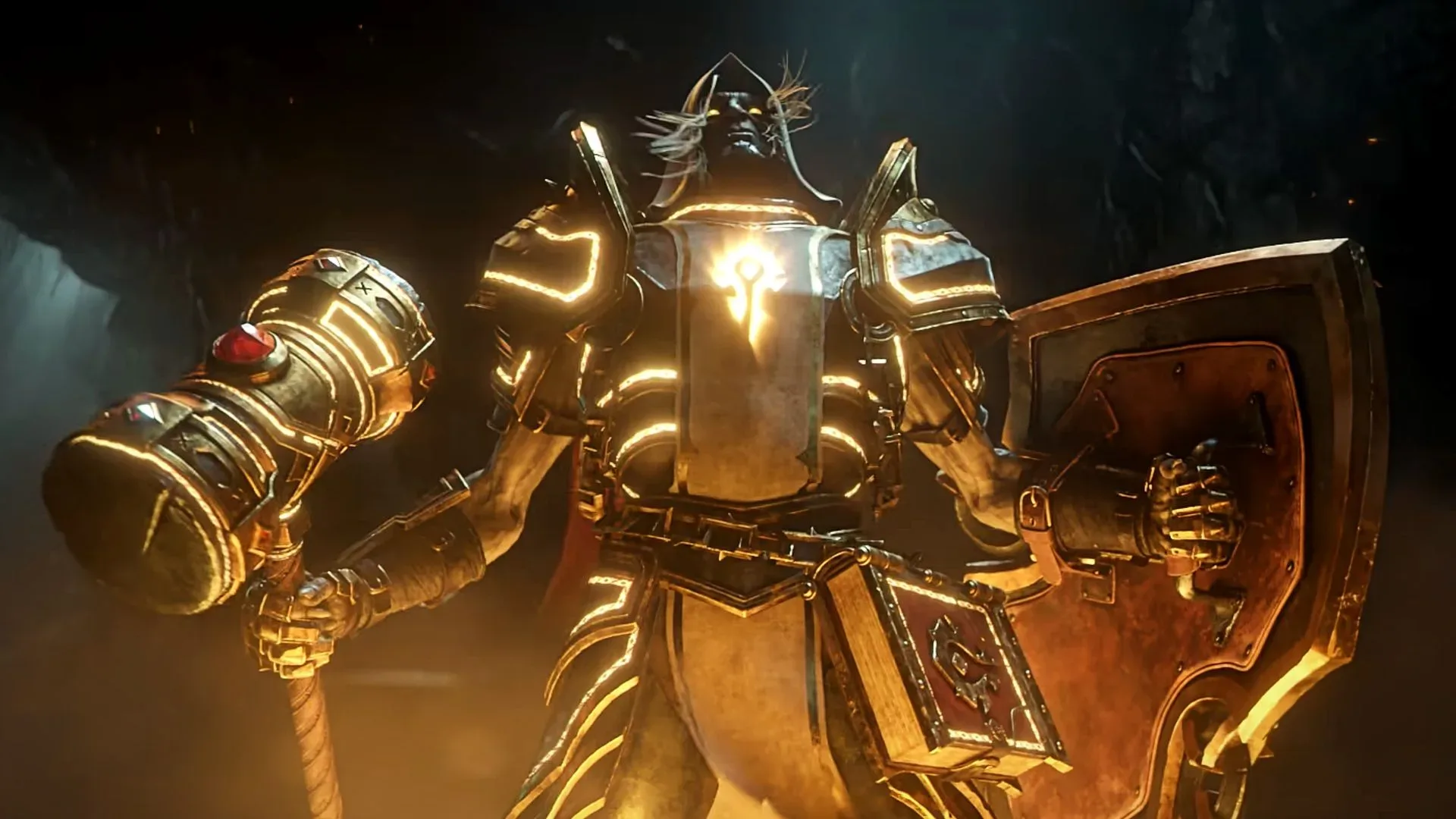
World of Warcraft: Forever has changed how Alterac Valley rewards players after the battleground became a fast reputation-farming route rather than a contest over its objectives. The November 25 adjustments substantially reduce both reputation and Honor for killing the opposing faction’s general, while increasing reputation tied to objectives and enemy non-player characters.
The change addresses a player-created strategy that prioritized ending a match as rapidly as possible. Groups could bypass much of Alterac Valley’s intended structure, charge toward the enemy general and, in some cases, regard a quick defeat as an efficient reputation outcome compared with taking part in a longer, closely fought match.
That incentive matters because reputation can unlock desirable equipment, including pre-raid gear. When a battleground’s fastest reward path is disconnected from winning competitive encounters or securing map objectives, players motivated by progression have a reason to follow the shortcut—even if it produces uncompetitive matches for everyone else in the queue.
What has changed in Alterac Valley
The developer’s stated aim is to move Alterac Valley participation back toward its objectives rather than a single rush to the opposing general. The revised reward structure makes that intent fairly clear:
- Reputation and Honor from killing the enemy faction general have been significantly reduced.
- Reputation from objectives, including graveyards and towers, has been increased.
- Reputation from killing enemy NPCs has also increased.
- Enemy creatures inside the battleground have received increases to health and damage.
- Warmasters, Marshals and faction generals have been adjusted to be sturdier.
The broader target is not simply less reputation. The developer said it expects Honor gains to remain relatively similar, while total reputation per match should rise. In other words, the system is being redirected: a team that participates in the map and its fights should have more reason to value a full Alterac Valley match than a fast general kill.
That distinction is important. A reduction to the general’s reward alone could make the battleground feel less worthwhile across the board. Increasing the value of graveyards, towers and NPC activity instead seeks to reward the pieces of Alterac Valley that rushing groups were leaving behind.
Why the rush strategy was a problem
Alterac Valley is built as a large Alliance-versus-Horde battleground. Its ultimate victory condition is the death of the opposing general, but it contains intermediary objectives that are supposed to shape the route to that finish. Graveyards affect where players return after being defeated, while towers and related defensive structures create objectives for teams to attack or protect.
“Reputation” in this context is a progression currency linked to a faction. Raising it can provide access to gear. “Honor” is a separate PvP reward measure. The old balance apparently made a narrow approach—the general rush—attractive enough that players could treat the battleground chiefly as a reputation pipeline.
Related coverage includes Blizzard cuts Alterac Valley rush rewards, but PvP players say it’s late.
That is a classic incentive problem in multiplayer design. Players often optimize the reward system as it exists, not necessarily the activity as designers imagine it. If a quick loss gives better reputation per unit of time than participating in a hard-fought match, a player focused on unlocks may rationally choose the quicker route. The result is a clash between individual efficiency and the communal experience expected from a PvP battleground.
The creature and boss durability adjustments tackle the same issue from another angle. Stronger NPCs, along with sturdier generals and their Warmaster or Marshal defenders, should make an unprepared direct rush more difficult. That does not remove the possibility of attacking the general—nor should it, given the battleground’s win condition—but it makes the surrounding objectives more relevant to successfully doing so.
The practical implication: more reasons to play the map
For players entering Alterac Valley after the update, the most valuable activities should be less concentrated at the match’s final target. Capturing and contesting objectives, fighting NPCs and working through the battleground should provide a stronger reputation return than before. A team hoping for efficient progression now has more reason to engage with the same actions that create friction, decisions and counterplay between the two factions.
There is also a likely quality-of-match benefit. A battleground becomes much less satisfying when one side immediately pursues a single scripted endpoint and the other side has little opportunity to contest the route. Incentivizing graveyards and towers creates more places where a team can defend, attack or regroup. It cannot guarantee every match will be evenly contested, but it gives players more meaningful reasons to be present across the battlefield.
For PvP-focused players, the update is a recognition that rewards cannot be treated as separate from competition. In a mode where the best progression is earned by minimizing player-versus-player engagement, the mode’s identity gets diluted. The new rewards are designed to make successful objective play and reputation acquisition point in the same direction.
This kind of rebalance is also a reminder that live multiplayer games are systems, not isolated loot tables. A modest-looking reward difference can change player behavior at scale when thousands of players are trying to earn the same equipment efficiently. Designers then have to consider not only whether a reward is generous, but what behavior it makes the most sensible choice.
Community frustration centers on timing
While many PvP players wanted action against the rush strategy, not everyone sees the update as a complete resolution. The central complaint is timing: players who used the previous approach may already have reached Exalted reputation and collected the associated advantages, while players arriving afterward face a different route.
Exalted is the top end of a reputation progression track, so the concern is not merely that a method has been altered. It is that the earlier method may have allowed a substantial head start in gear and character progression before the incentives were changed.
Some community responses framed the episode as another case of players benefiting by discovering and using a powerful strategy before it is fixed. Others argued that players who rushed to higher levels had already built an advantage through multiple bugs or exploits, only to see the most efficient options closed after the fact.
Those reactions underline why speed matters in live-service balancing. A correction can still improve future matches and prevent further imbalance, but it cannot fully recreate the competitive conditions that existed before the fix. The longer an unusually lucrative route remains available, the more permanent its effects can become in a progression-driven MMO.
At the same time, the update does not appear to be an attempt to punish ordinary participation or reduce Alterac Valley to a slower grind. The stated direction is to keep Honor roughly in line while improving reputation earned over a match. The controversial part is therefore less about whether objectives deserve rewards and more about whether the adjustment arrived after the most committed early users had already benefited.
A rewards fix, not a removal of the win condition
It would be inaccurate to interpret the update as eliminating general kills from Alterac Valley. Killing the opposing general remains the route to victory. The changes instead reduce the disproportionate rewards associated with treating that kill as the only event worth pursuing.
That is a meaningful design difference. A battleground needs a clear win condition, and the general is central to Alterac Valley’s structure. But victory conditions can be supported by a network of smaller objectives. By raising the rewards for those smaller objectives and making defenders tougher, the new balance encourages teams to establish a better position before closing out the match.
Whether the changes are sufficient will depend on player behavior over time. If reputation per match is genuinely higher through objective participation and direct rushes are materially harder, the economic argument for rapid losses should weaken. If players find another route that produces better progression for less risk, the conversation will move there instead.
That ongoing push and pull is familiar territory for multiplayer balance work. A recent Space Marine 2 balance patch likewise illustrates how changes to player incentives and power can reshape the way a multiplayer role is approached. In Alterac Valley, however, the adjustment is aimed less at a class or build and more at the behavior rewarded by the battleground itself.
What players should watch next
The immediate takeaway is straightforward: Alterac Valley progression should now favor teams that take part in its wider objective game rather than simply charging the enemy general. Players working toward reputation rewards can expect graveyards, towers and NPC encounters to matter more to their returns, while direct general-rush payouts matter less.
The unresolved question is fairness between those who used the prior strategy and those who did not. The changes can stop the incentive from driving future queues, but they do not erase the progress already gained under the earlier rules. That is why the update can be both a constructive competitive fix and a source of lingering frustration.
For now, World of Warcraft: Forever has made its preferred version of Alterac Valley unmistakable: a battleground where map control, NPC pressure and faction conflict are worth doing in their own right, not obstacles on the way to the quickest possible reputation reward.