Only two weeks into World of Warcraft: Forever, an unusually lucrative dungeon farming route has put the game’s fledgling gold economy under pressure. The issue centers on Blackmaw Hold, where players found a room containing roughly 30 easily defeated enemies that awarded substantial currency and vendor-worthy drops.
The route was simple enough to repeat: enter the dungeon, rush to the room, clear the enemies, leave, and return after the instance reset about an hour later. Blizzard has since hotfixed the encounter so those enemies no longer provide the relevant rewards. But the fix came after some participants had reportedly accumulated hundreds or even thousands of gold.
That scale matters particularly in a new or progression-focused economy, where gold is not yet a background resource most players possess in enormous quantities. The reported costs of mount riding underline the gap: training to ride at level 40 costs 90 gold, while faster riding at level 60 costs 900 gold. Players who built up large reserves through a short-lived route therefore gained purchasing power that ordinary questing, selling, and dungeon play may not match for some time.
What happened in Blackmaw Hold
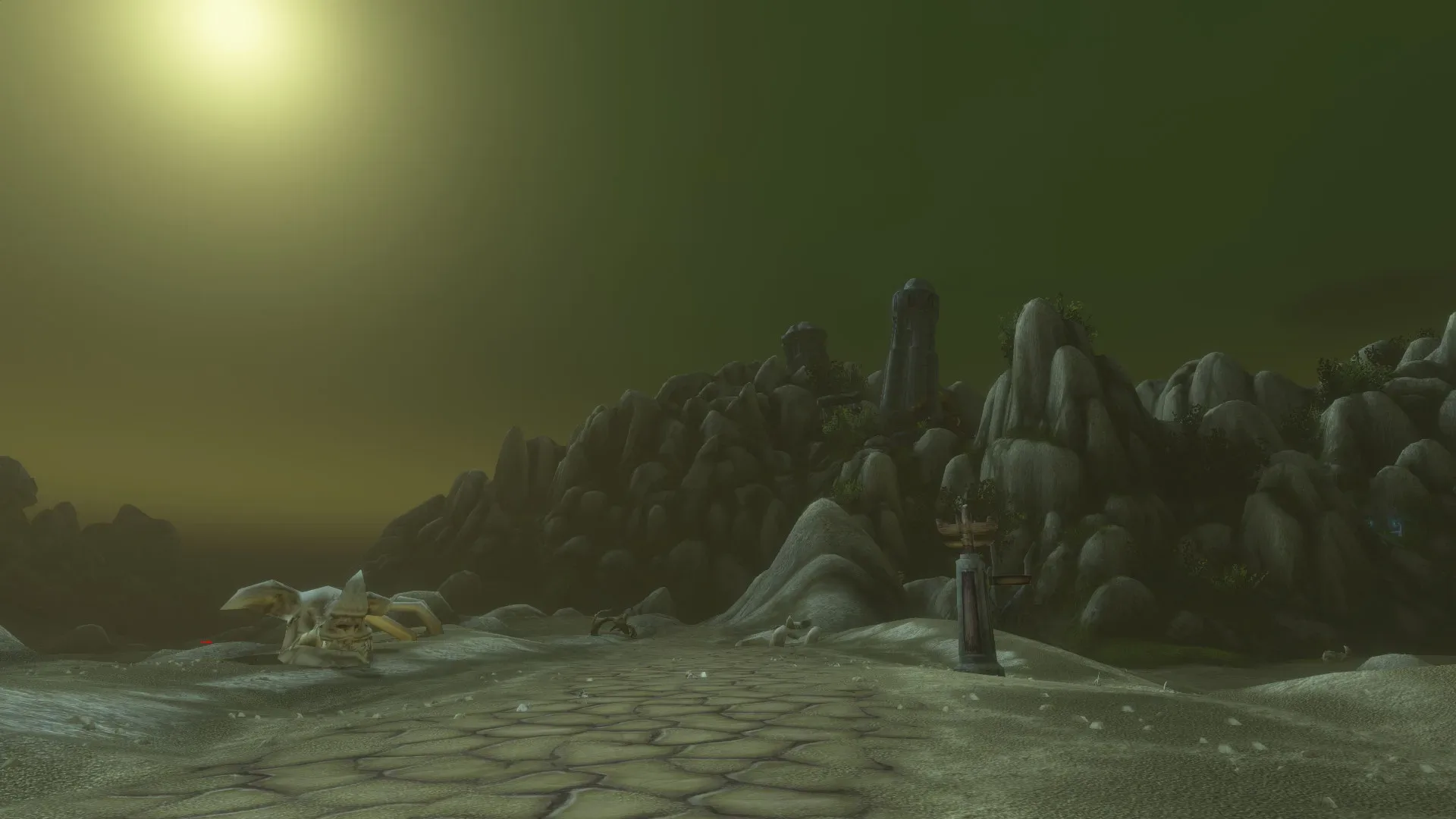
Blackmaw Hold is a dungeon new to World of Warcraft: Forever. As more characters approached the level cap and began running it, attention settled on a specific pack of enemies that combined low difficulty with unusually generous returns. The value did not depend solely on coin drops: items looted from the group could also be sold for more currency.
In MMO terms, this is commonly described as a farm: a repeatable activity performed primarily to generate currency or materials. Farming itself is an ordinary part of the genre. The controversy arises when one activity pays far more efficiently than intended, especially when it can be repeated on a predictable reset timer. At that point, the activity can function less like normal progression and more like a loophole in the economy’s currency supply.
The important distinction is that the reported method did not require claims of hacking or automated botting. Some players have argued that participants merely used enemies and rewards placed in the game. Others see deliberate, repeated use of a clearly disproportionate reward structure as exploit abuse, whether or not third-party tools were involved. Blizzard’s decision to remove the loot through a hotfix establishes that the reward behavior was changed, though it does not by itself publicly define the disciplinary standard for every account that used it.
Why a pile of gold can affect everyone else
An MMO economy is a player-driven market layered on top of game-designed sources of money and items. Gold enters the world through activities such as enemy drops and sales to non-player vendors; it exits through costs such as training. If a large amount of currency enters circulation quickly while the available supply of useful goods remains limited, prices can rise. This is the basic concern behind claims that the Blackmaw Hold route damaged the economy.
Not every high gold balance automatically causes inflation. The effect depends on what those players do next. If gold simply sits unused, it has less immediate impact. If it is used aggressively to buy scarce crafting ingredients, equipment, or other desirable items, sellers may raise prices because buyers with unusually deep funds can absorb the increases.
That is why the Auction House has become a focal point. An Auction House is the game’s player marketplace, where listings can be purchased by other players. One highly visible example involved streamer Ziqo buying the available supply of Arcane Crystals. Acquiring an entire available stock can reduce immediate supply and give the buyer more influence over the next asking prices, assuming demand remains present.
It is worth separating the confirmed example from broader assumptions. Buying a material is not automatically proof that every later price change came from the dungeon farm, and one player cannot single-handedly explain an entire market. Still, in a young economy, sudden wealth concentrated among a small number of participants can make even ordinary market behavior feel profoundly uneven to players who are still counting gold toward foundational expenses.
Influencer scrutiny and claims that need care
The story has become more contentious because some prominent streamers are part of the public discussion. Ziqo has publicly acknowledged using the exploit and shared video evidence. He also named Sodapoppin and Brucewayner in connection with the matter. Community accusations have additionally been directed at Jokerd, Liz, and Ahmpy.
Those allegations should not be treated as established wrongdoing merely because they circulate in community discussion. Beyond Ziqo’s public admission, the available information does not establish the scope of each named person’s participation or any penalties they may face. That distinction matters, especially when the proposed consequences range from removing ill-gotten gold to temporary or permanent account bans.
Nevertheless, player frustration is not solely about the gold total. It is also about perceived consistency. Ziqo had previously been connected to real-money transaction, or RMT, concerns during the game’s beta. In that earlier matter, his gold was wiped, but no account suspension was reported. Some players now worry that popular creators, including people with past business relationships or partnerships with Blizzard, could receive gentler treatment than less-visible players.
There is no public evidence here that status has actually determined enforcement. The concern is one of trust: when a creator can openly show conduct that many viewers believe should be punished, every unclear outcome becomes a test of whether rules apply equally.
RMT concerns complicate the enforcement debate
RMT means exchanging real-world money for in-game currency, items, or services outside the game’s permitted systems. It is a separate issue from a dungeon reward exploit, but it overlaps with the present controversy because both can distort the relationship between ordinary play and in-game wealth.
Some players have reported bans in the main game for alleged RMT activity while denying that they engaged in it. Their accounts describe comparatively routine actions, such as giving a friend a small amount of gold or selling enchantments for normal prices. These reports are claims from affected players, not verified findings about individual bans. Automated or large-scale enforcement systems can be difficult for outsiders to evaluate because the underlying transaction data and account histories are generally not public.
Still, the contrast is politically potent inside a game community. A player who believes they were punished for a harmless transaction will naturally react badly if a well-known figure appears to exploit a high-value loophole publicly and receives no visible consequence. Even when moderation decisions are correct, a lack of transparent explanation can leave players unable to tell whether enforcement reflects evidence, scale, intent, or simply visibility.
What players are asking Blizzard to do
Many community responses call first for the removal of gold earned through the Blackmaw Hold route. This is a targeted remedy: it aims to reduce the abnormal currency advantage without necessarily deleting unrelated progress. Its effectiveness would depend on whether the relevant gains can be accurately tracked, whether the gold was spent or moved to other characters, and how Blizzard treats profits made from items bought with that currency.
Others want account bans, though opinion varies on whether suspensions should be temporary or permanent. The harder line rests on deterrence. If an exploit is highly profitable and the only cost is eventually losing the proceeds, players may conclude there is little downside to exploiting first and dealing with repercussions later.
There are also demands for public disclosure of action taken against major figures. That could reassure players that high-profile accounts are not exempt, but it also raises questions about how much account-specific punishment a publisher should publicize. A consistent policy, applied in a way players can understand, may matter more than turning enforcement into a spectacle.
Reports indicate that some temporary bans have begun reaching accounts connected to the farming activity. It remains unclear whether all participants will be handled the same way, whether improperly gained currency will be removed in every case, or whether high-profile streamers will receive the same sanctions as other players.
The practical stakes for ordinary players
For players who did not use the route, the immediate concern is not merely a headline-worthy number on someone else’s character sheet. It is whether daily activities continue to feel worthwhile. If materials needed for professions or progression become harder to afford, then a dungeon exploit has translated into friction for people who never entered that particular room.
The hotfix stops the route from adding more currency, but it cannot by itself rewind gold already earned or market choices already made. The next steps therefore carry more weight than the fix alone: a response that removes gains and communicates its standards could limit the perception of a permanent two-tier economy; an unclear one risks leaving the impression that early exploiters bought an advantage ordinary players cannot reasonably catch.
This is an especially sharp reminder that virtual money is not trivial simply because it is fictional. In a shared online world, gold is time, access, bargaining power, and sometimes the difference between meeting a major progression cost and postponing it. When a loophole changes who has it and how quickly, the argument is never only about one room in one dungeon.
For more PC gaming news beyond MMO market drama, see Calame’s newly announced release window and tactical showcase.