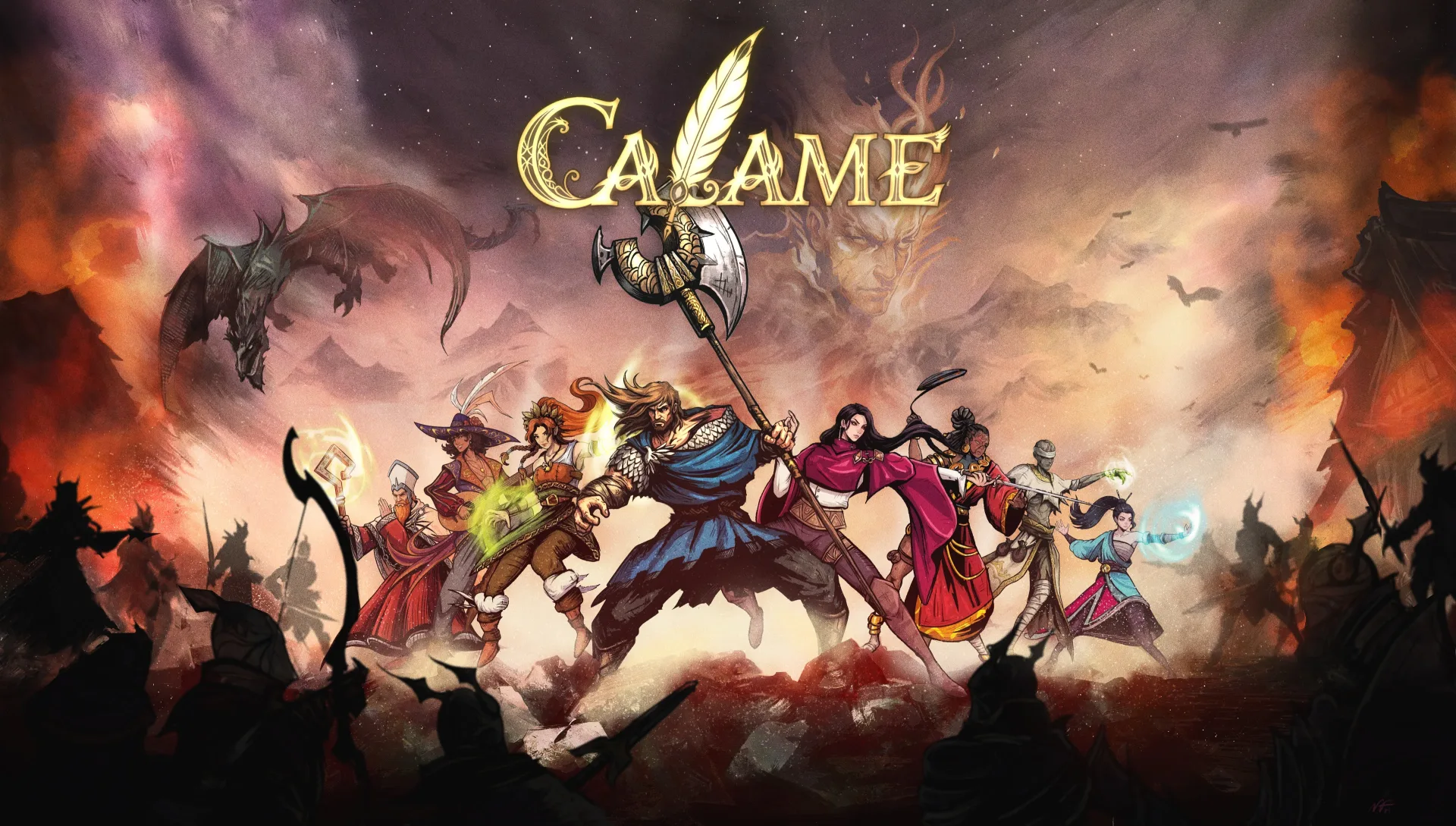
Radical Theory has put a date-shaped marker on the map for Calame: the single-player tactical RPG is planned for February 2027 on PC and consoles. The studio has also released a gameplay trailer, while a playable demo is currently available through Steam.
The fresh footage frames Calame around a familiar but demanding tactical foundation: careful positioning, turn-by-turn choices and powerful abilities. Its notable wrinkle is a system described as reality-shifting gameplay, including the capacity to reshape the battlefield. In a genre where a single blocked route, elevated tile or altered line of approach can determine whether a squad survives an encounter, that promise could be more than visual flair.
Players can watch the official Calame gameplay trailer for the newly shared overview. It introduces the game’s two rival rebel factions, the Kenmare Column and the Panthers, which are presented as groups with different philosophies, strengths and playstyles.
What Calame has confirmed so far
- Developer: Radical Theory
- Release window: February 2027
- Platforms: PC and consoles
- Format: Single-player, isometric, turn-based tactical RPG
- Core emphasis: Positioning, abilities and battlefield reshaping
- Factions shown: Kenmare Column and Panthers
- Demo: Available on Steam
That is a concise set of confirmed details, and it leaves important questions open. The announcement does not identify which consoles will receive the game, nor does it specify the full scope of the campaign, progression systems, faction selection or the precise rules governing its reality-altering mechanics. Those are meaningful unknowns for a tactics game, where the difference between a limited encounter tool and a central system can radically change how every mission is approached.
Why “isometric turn-based tactical RPG” matters
Calame’s genre description does a good deal of useful work. Isometric generally refers to an elevated, angled camera view that presents terrain and units across a map-like play space. This perspective is well suited to tactical games because it makes spatial information legible: players can assess routes, cover-like obstacles, bottlenecks and the distance between units before committing to an action.
Turn-based means decisions are made in discrete turns rather than through uninterrupted real-time control. The practical consequence is that pressure comes less from reflexes and more from evaluation. A player can weigh where to move, when to use a limited ability and whether to secure a safer position now or take a risk for a stronger attack. The trailer’s focus on strategic positioning suggests Calame wants those choices to remain central.
The tactical RPG label further indicates an experience where combat encounters and role-playing progression meet. The details of Calame’s progression have not been outlined here, so it would be premature to assume particular systems such as character classes, equipment or relationship mechanics. What is established is the game’s interest in tactical decision-making supported by abilities, rather than in pure action combat.
For players evaluating the demo, the most useful early question may be simple: do positioning and abilities create multiple credible answers to a problem? A strong tactical encounter does not necessarily require a huge map or a towering list of systems. It does need choices that meaningfully interact—moving to safety may cost an offensive opening, while using a powerful ability early may leave fewer options later.
Battlefield reshaping could be Calame’s key distinction
Calame’s stated ability to reshape the battlefield is the detail most likely to separate it from a more conventional grid-and-cover tactics game. The available information does not say exactly what can be altered, how often it can happen or whether enemies can manipulate the same systems. Still, the basic idea has significant tactical potential.
At its most consequential, changing a battlefield affects the value of a decision after that decision has already been made. A narrow route can become a trap or an escape; an enemy’s strong defensive position can lose its protection; a promising attack lane can vanish. That shifts tactical play away from merely identifying the current best square and toward anticipating how the board itself might change.
There is an important distinction here between a battlefield mechanic and a presentation effect. A destructible-looking object is only strategically meaningful if its alteration changes movement, targeting, safety or the abilities available to either side. Radical Theory’s trailer description explicitly ties reshaping the battlefield to changing encounter outcomes, which points toward gameplay relevance. The extent and consistency of that relevance will be one of the most important things for the Steam demo to communicate.
It is also worth separating Calame’s apparent “reality-shifting” concept from a technical performance term that sometimes gets mixed into game discussion. Altering combat terrain is a gameplay rule; loading parts of a game world in the background is usually called streaming. The latter can be crucial to open-world design, as explored in this look at the technical balancing act behind GTA 5’s character switches, but it is not the same as a mechanic that changes the tactical board. Calame’s announcement is about the latter.
Two rebel factions, and a likely strategic contrast
The Kenmare Column and the Panthers are the named rival rebel factions featured in the trailer. Radical Theory characterizes them as having distinct philosophies, strengths and playstyles. That phrasing indicates that the factions are meant to be more than cosmetic labels, although the current information does not detail their units, missions, leaders or the player’s relationship to either side.
In a tactics-focused RPG, faction differences can matter on several levels. They can shape narrative perspective, but they can also inform the kind of combat problems players face. A faction’s philosophy might influence whether it favors direct confrontation, mobility, control of space or another strategic approach. Calame has not confirmed any of those specific examples, so they should be treated as possible ways the announced distinction could take form rather than as declared features.
The stronger implication from the trailer summary is that faction identity and combat identity are linked. If the Kenmare Column and Panthers genuinely play differently, players may need to adapt not just to map layouts but to contrasting tactical pressures. That would pair naturally with a game built around reshaping terrain: a flexible battlefield is more interesting when opposing sides want different things from it.
What the Steam demo can clarify
A demo is especially valuable for a tactical RPG because feel is not captured by genre labels alone. Two games may both be isometric and turn-based yet ask completely different things of their players. Calame’s demo offers a route to assess the rhythm of turns, the usefulness of positioning and whether its abilities create satisfying trade-offs.
Potential players may want to focus on a few practical points:
- Readability: Is it clear why a position is advantageous or dangerous before an action is taken?
- Terrain impact: When the battlefield changes, does that alteration noticeably affect movement, routes or combat options?
- Ability decisions: Do abilities solve problems in different ways, or do they mainly produce larger numbers?
- Enemy response: Do opponents make players reconsider a plan, particularly after terrain has been altered?
- Faction identity: Does the available slice give any meaningful sense of the Kenmare Column and Panthers beyond their names?
None of those questions requires the demo to reveal the full game. They are simply the qualities that would demonstrate whether Calame’s central pitch—classic strategy complicated by a mutable reality—has a distinct tactical voice.
A February 2027 target, with details still to come
Calame now has a defined release month rather than an unspecified future launch, and PC players have a Steam demo to examine in the meantime. The trailer establishes the project’s essential pitch: a single-player isometric tactical RPG where placement, abilities and a changeable battlefield can all redirect an encounter.
For now, the most notable unanswered details concern the exact nature of the reality-shifting system, the gameplay roles of the Kenmare Column and Panthers, and the console platforms included in the release plan. Radical Theory has supplied the outline. The demo is the immediate opportunity to see whether the game’s tactical consequences are as sharp as its premise.