World of Warcraft Forever has made an enormous opening-weekend claim: Blizzard says it is the biggest launch in the history of World of Warcraft, measured by both peak concurrent players and returning players. The company also says Forever has drawn the most new players for a WoW launch in 15 years, making this more than a simple nostalgia-driven return trip for veteran subscribers.
The scale matters because “biggest launch” can mean several different things in games. Here, Blizzard has identified two specific measures: peak concurrent players, meaning the highest number of people playing at the same time, and the number of returning players, meaning people coming back to the game. Those are meaningful indicators of launch-day demand, though the announcement does not provide the underlying player totals or a detailed methodology for comparison.
Forever’s opening is notable against a franchise history that includes major releases such as Wrath of the Lich King and Warlords of Draenor. Blizzard’s statement places Forever ahead of those launches on its chosen measures. It is a substantial claim, but it is still a launch snapshot rather than proof of where the game’s population will settle after the initial rush.
A record driven by more than returning veterans
The returning-player figure is exactly the kind of result a project called “Forever” might hope to produce. Long-running online games often carry enormous communities of former players: people who remember old zones, leveling routes, faction cities and group adventures, but who may no longer be active. Convincing that audience to reinstall and subscribe is one challenge. Bringing in people with no prior WoW history is another.
That is why the new-player statistic may be the more revealing detail. Holly Longdale, Blizzard’s executive producer and vice president for World of Warcraft, said Forever is seeing the most new players for a WoW launch in 15 years. The comparison points back to Cataclysm, which launched in 2010. Put plainly, Blizzard is saying no WoW expansion launch since then has brought in as many newcomers as Forever.
There is an important distinction between that statement and a claim that Forever has the most new players in all of WoW history. Blizzard’s wording is limited to the last 15 years. Even so, the result suggests the game’s appeal is not confined to people revisiting memories. New players are arriving in numbers the company considers exceptional for the modern era of the franchise.
For an online role-playing game, that mix can be especially valuable. Returning players bring familiarity and enthusiasm, while new players expand the pool of people experiencing the world without pre-existing habits or expectations. A launch populated entirely by veterans can feel like a reunion; a launch that also has a meaningful incoming audience has a stronger chance of producing a living, changing community. That is analysis rather than a guarantee, but it helps explain why Blizzard highlighted both figures separately.
What “peak concurrent” actually tells us
Peak concurrency is not the same as total accounts, copies sold, subscriptions, or long-term retention. It records the highest number of players active simultaneously during a given period. It is useful because online games must handle those players in real time: characters traveling through shared spaces, forming groups, using services and entering the same starting areas.
Related coverage includes World of Warcraft Forever Becomes the Biggest Launch in WoW History.
That makes a high concurrent-player peak both a popularity signal and an infrastructure challenge. A game can have a large overall audience whose playtimes are spread across days and time zones. It can also have a smaller total audience that all attempts to log in together. The latter can create a sharper technical problem. Forever apparently faced the first kind of moment: a very large number of people wanted to be present right away.
Despite that demand, the launch was described as extremely smooth. Blizzard attributed that outcome to operating on a massive amount of hardware. The wording does not spell out the company’s exact systems or capacity plan, so it would be a mistake to infer specific server technology. The practical takeaway is simpler: Blizzard had enough computing capacity in place to accommodate the initial load without the launch turbulence players often fear when a heavily anticipated online game opens its doors.
For PC players, that kind of preparation is part of the experience even though it is largely invisible when it works. It means more time making characters, questing and grouping, and less time confronting queues, failed logins or a world struggling under a crowd. Stability can be just as important as promotional momentum on a first weekend. An ambitious launch can earn attention quickly; a smooth one gives people fewer reasons to leave before they establish a routine.
PC play can also be disrupted by issues unrelated to a game’s servers. Players dealing with operating-system interruptions may want to keep an eye on Windows 11’s test of a simpler Sticky Keys pop-up setting for PC games, a separate usability change with obvious relevance to long play sessions.
A launch built after Season of Discovery’s response
Forever was not rushed from idea to release. Blizzard had kept the project in the background for some time, then moved into full development after seeing the success of Season of Discovery in 2023. That timeline is useful context for the current result. The company had an earlier signal that players were receptive to this corner of the World of Warcraft ecosystem before committing fully to Forever.
That does not mean success was automatic. An encouraging response to one project does not ensure a record-setting audience for another. But it does suggest a practical development path: observe player interest, then make a larger commitment once there is evidence of demand. Forever’s reported beta participation had already looked unprecedented, and its launch results now appear to have carried that momentum forward.
It is also worth separating a game’s creative appeal from its operational readiness. The evidence available points to both being important here. Season of Discovery’s performance helped shape the decision to fully develop Forever, while the substantial hardware deployment helped the launch handle its unusually large crowd. One addresses why people may want to arrive; the other addresses whether they can actually play when they do.
From packed zeppelins to level 60
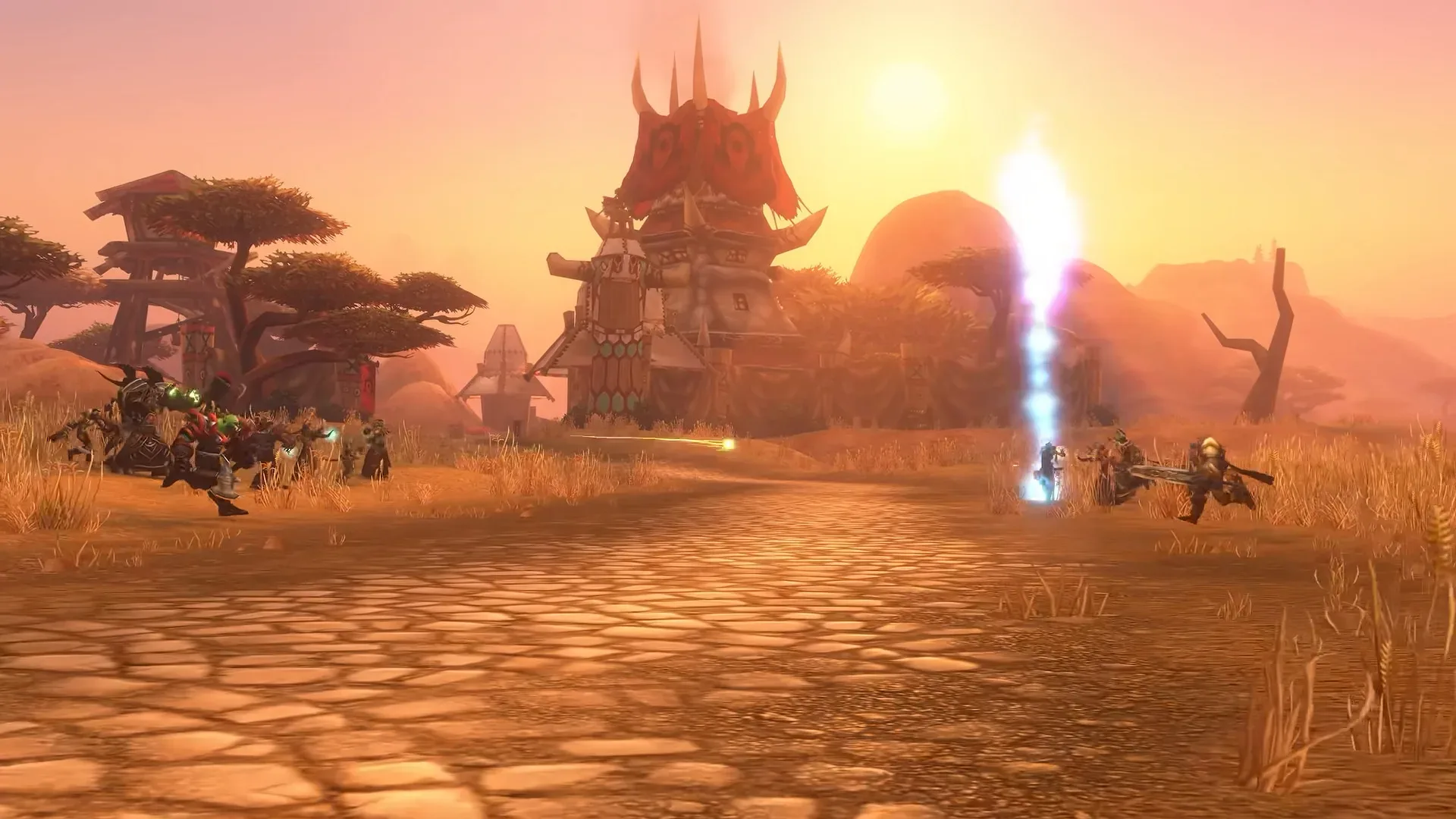
Early player reaction has centered on the social texture of a packed online world. Joey Haeck, a senior game designer for Dungeons & Dragons, shared an image from a Zeppelin leaving Orgrimmar and congratulated the Forever team, describing enjoyment in the crowded transport and open vistas. It is a small anecdote, not a population study, but it captures why high concurrency can be more than an abstract record.
In a massively multiplayer game, other people are part of the scenery. A busy Zeppelin, a populated route and players moving across a wide outdoor space reinforce the feeling that many people have begun a journey at once. That is different from merely seeing an impressive number in a corporate post. The launch crowd becomes visible in the ordinary moments between major objectives.
There was also a race to the level cap of 60. It took three days for someone to reach that cap. A level cap is the maximum character level available at launch; reaching it first becomes a community competition, especially when many players begin at the same time. The three-day result supplies one more illustration of how intensely some players approached the opening period.
At the same time, the race does not define the whole experience. A player reaching level 60 in three days and a player lingering in early zones are engaging with different rhythms, both of which can exist in the same game. Early impressions from the beta highlighted the latter possibility. One player who stopped at level 13 in Westfall specifically did so to avoid learning too much before release, while expressing optimism about the early experience and the prospect of new discoveries across the remaining levels.
The retention question is still unanswered
Forever’s reported record is a clear win for its launch period, but launch success and sustained success are not interchangeable. The franchise’s own history provides a reason to keep that distinction in mind: Warlords of Draenor is remembered as having a major launch that did not maintain the same momentum. Blizzard’s peak-concurrency and returner records establish that Forever made an exceptional first impression; they do not answer how many players will remain active weeks or months later.
That is not a knock on the launch. It is simply the standard by which an ongoing online game is ultimately judged. Long-term health depends on whether players find reasons to continue: characters to build, places to revisit, people to play alongside and surprises that justify more time in the world. The early beta response suggested confidence in that foundation, but the fuller answer will come only after the opening rush is over.
For now, Blizzard has two unusually encouraging pieces of evidence. Forever is reportedly bringing back a record number of players, and it is also reaching new players at a level not seen for a WoW launch in 15 years. Combined with a smooth high-demand launch and a three-day sprint to level 60, the result is a powerful opening for a project whose full development followed the response to Season of Discovery.
The next test is quieter and harder to measure than a record-breaking weekend: whether packed Zeppelins, crowded routes and fresh characters keep feeling like the beginning of a durable new chapter rather than a brief, successful reunion.