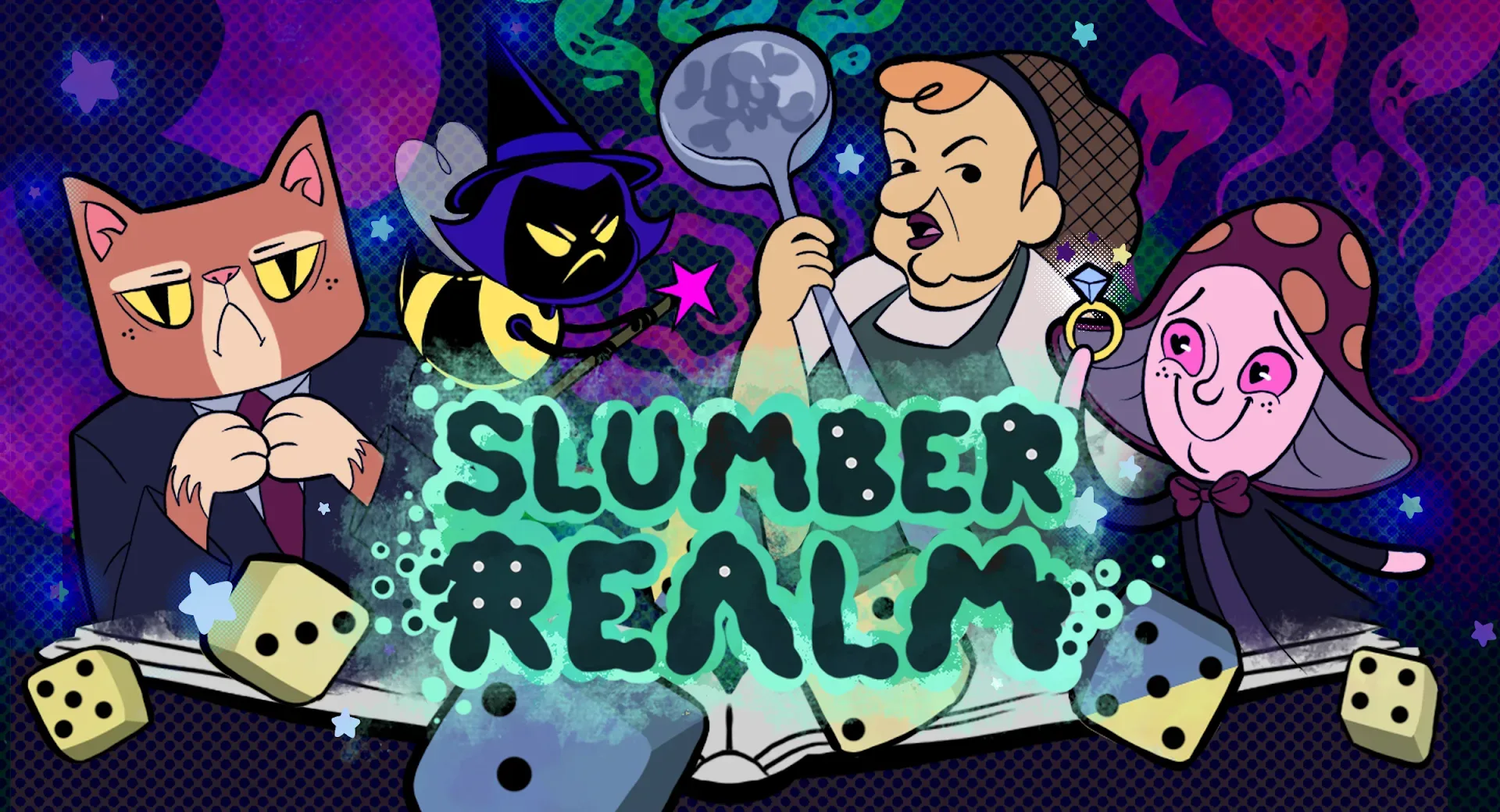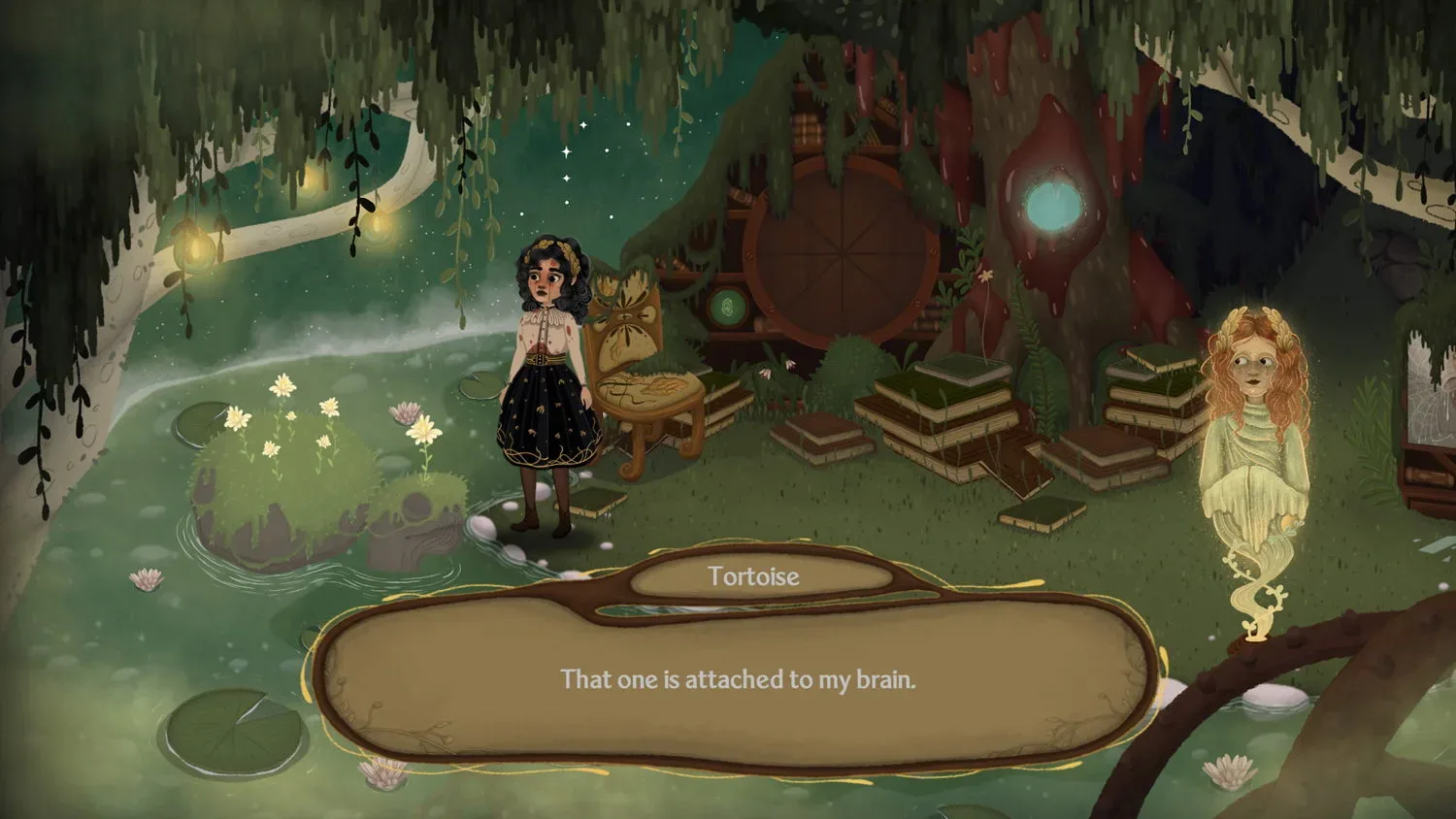
Slumber Realm is making fan art part of its launch presentation. Chugga Games has opened a contest that will select four community-created pieces for an in-game fan-art section when the dice roguelike arrives on November 4, 2026.
Artists can enter from October 1 through October 31, 2026, with the deadline listed as 11:59 p.m. ET. The brief points toward the hand-drawn reader submissions associated with gaming magazines in the 1990s, while leaving the choice of medium open: both traditional and digital art are accepted. The important restriction is equally clear: entries must be entirely human-made. AI-generated and AI-assisted artwork is ineligible.
There are four places available. Three will be chosen by judges, while one Audience Favorite will be selected through social channels. Every winner receives a Steam key for Slumber Realm and, more unusually, a place for their art within the finished game.
How the contest works
Entrants need to create a piece inspired by Slumber Realm, publish it publicly using #SlumberRealmContest, and submit it through the contest’s email process. The supplied contest information does not specify a required subject, dimensions, file format, or a limit on the number of entries, so participants should consult the official contest materials and announcement video for any rules beyond the core steps.
The judges will assess entries on creativity, originality, artistic execution, personality, and their connection to the game. Those criteria are useful guidance rather than merely a checklist. A technically polished image matters, but the contest is explicitly looking for a sense of individual character and for ideas that meaningfully draw from Slumber Realm.
That means an entrant’s strongest approach is likely to begin with what is actually known about the game, then translate those details into an image with a clear point of view. The art does not need to imitate an old magazine page to meet the stated inspiration; the invitation covers traditional and digital work, and the judging criteria reward personality as well as execution.
What artists have to work with
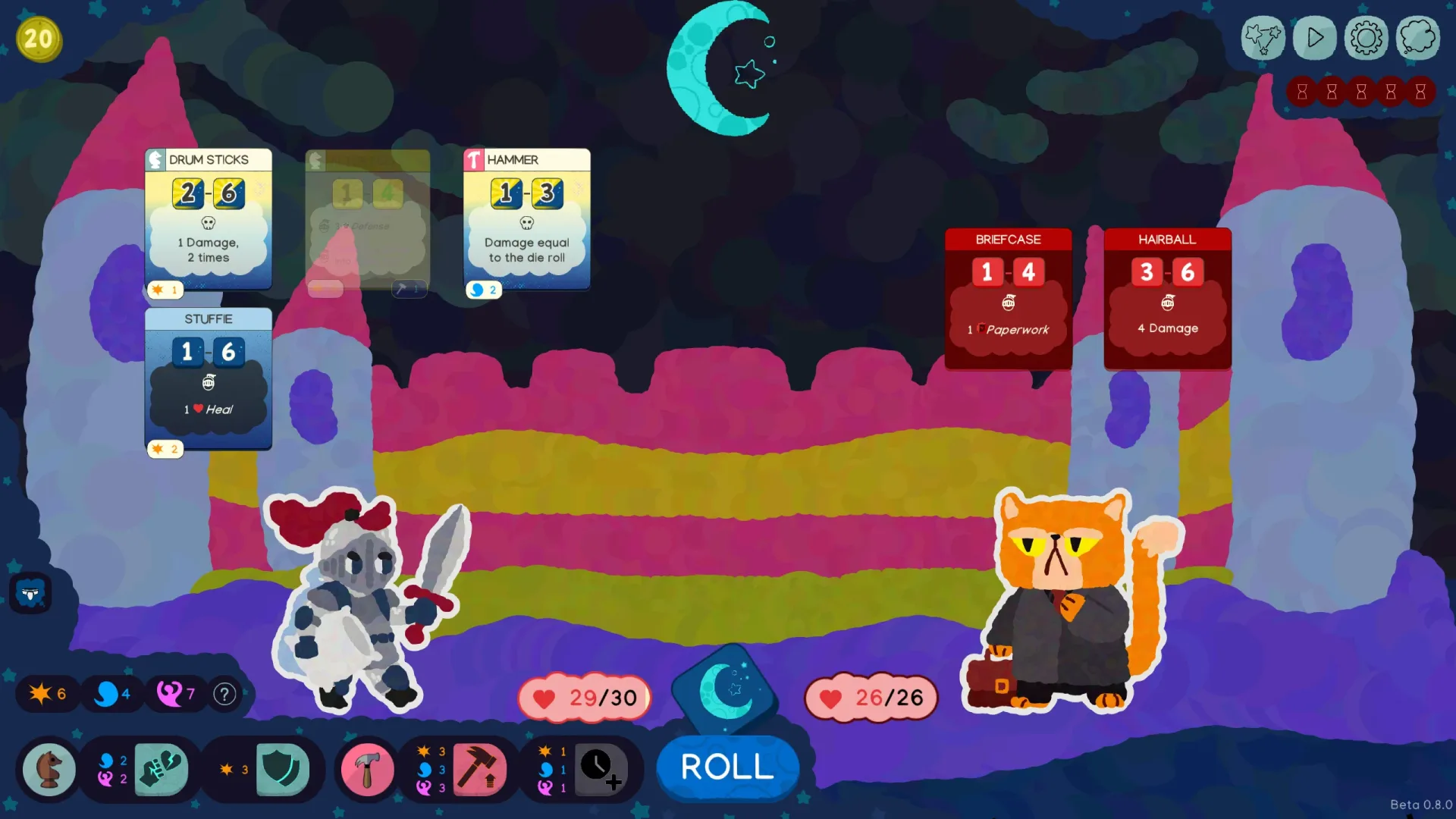
Slumber Realm is described as a 1990s-soaked dice roguelike. In a roguelike, a run is generally a self-contained attempt built around changing choices and combinations rather than a single fixed route. Here, the central systems give artists several concrete visual hooks without requiring them to invent details beyond the game’s premise.
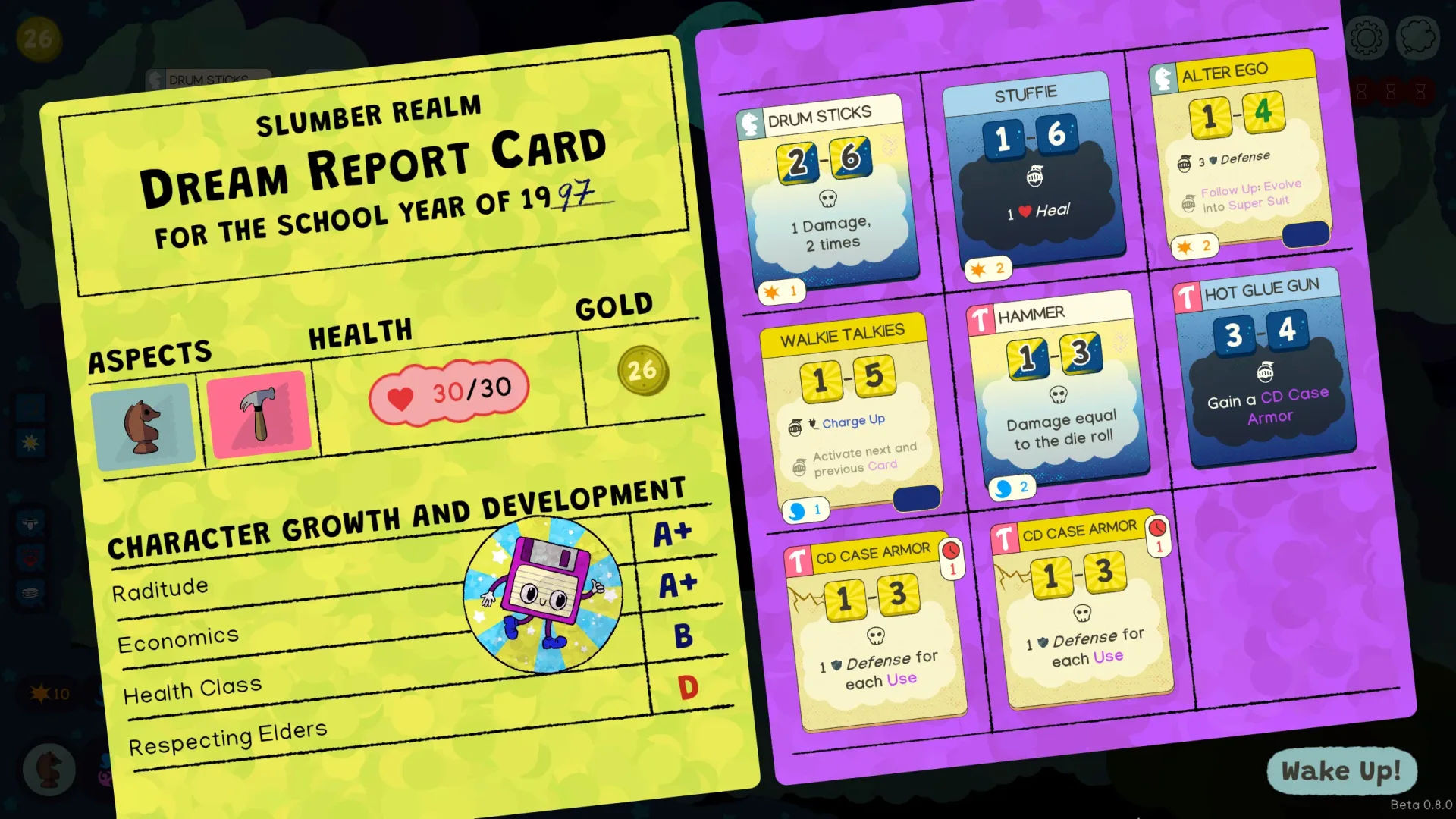
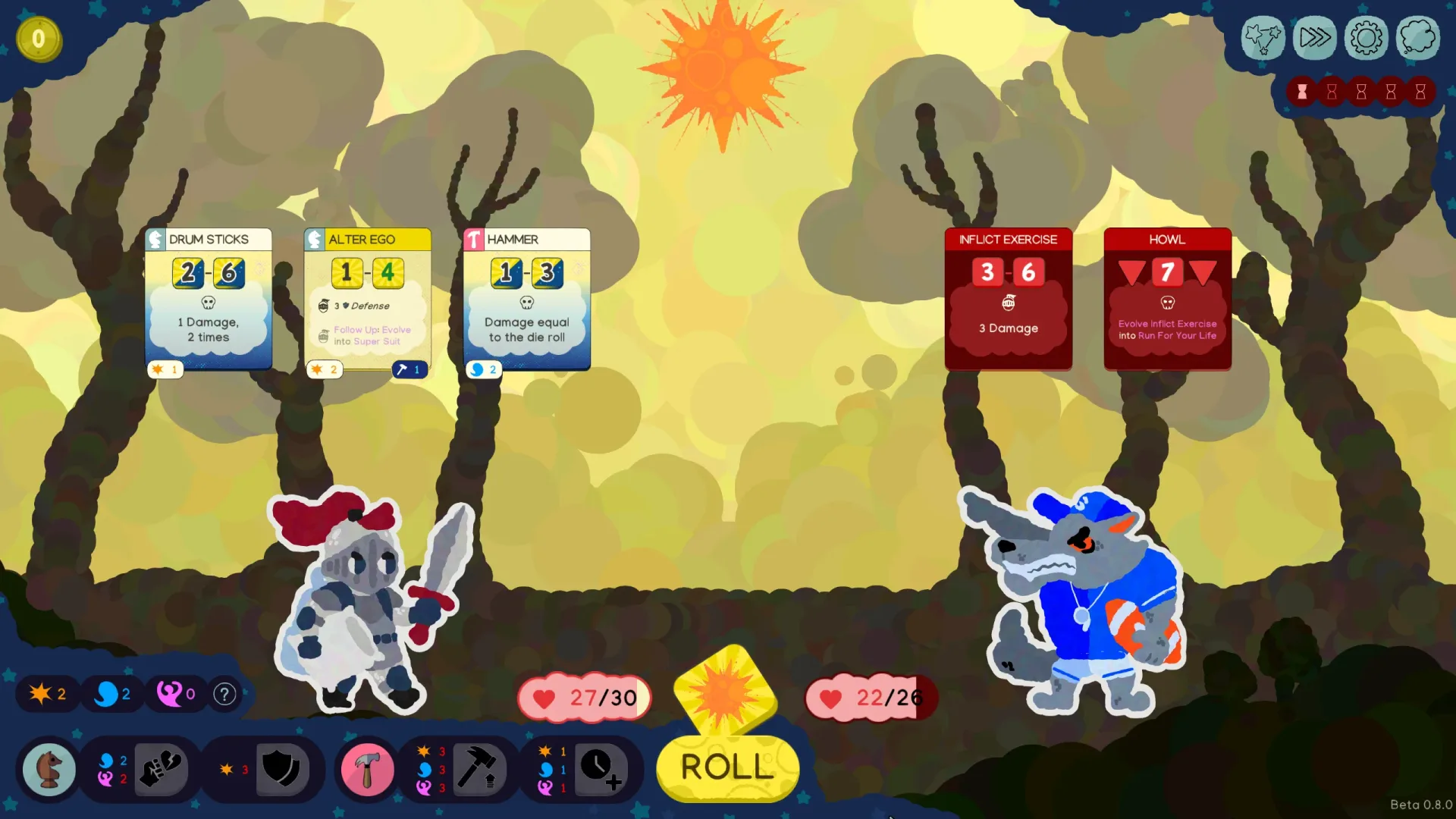
Players draft Cards into a backpack and roll a six-sided die, commonly called a d6. Cards activate when their ranges match the result of that roll. The resulting play pattern is not simply about a lucky number: players sequence activations to chain turns together. In practical terms, that makes dice faces, card ranges, backpacks, linked effects, and deliberately busy combinations natural thematic material for an entry.
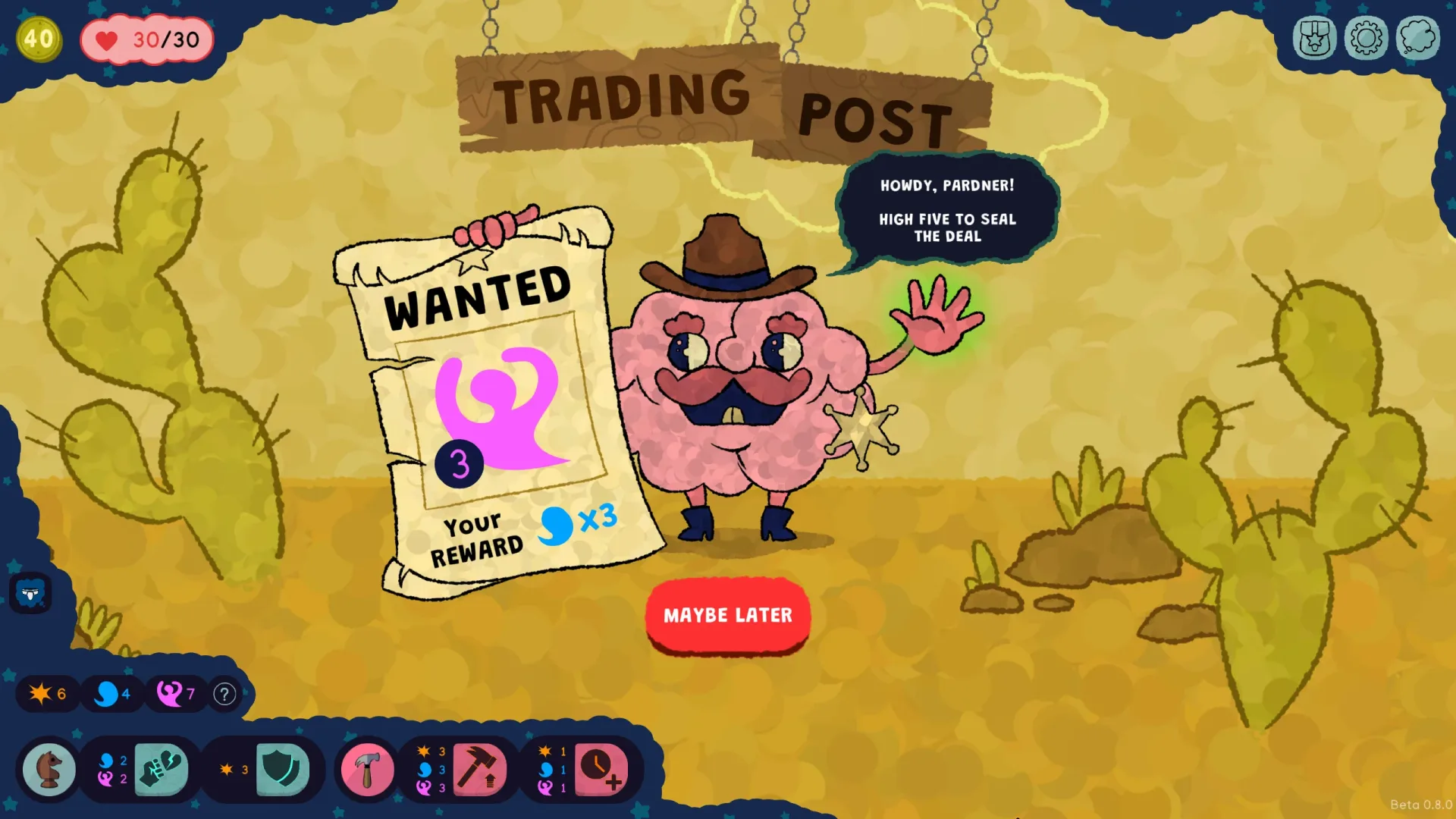
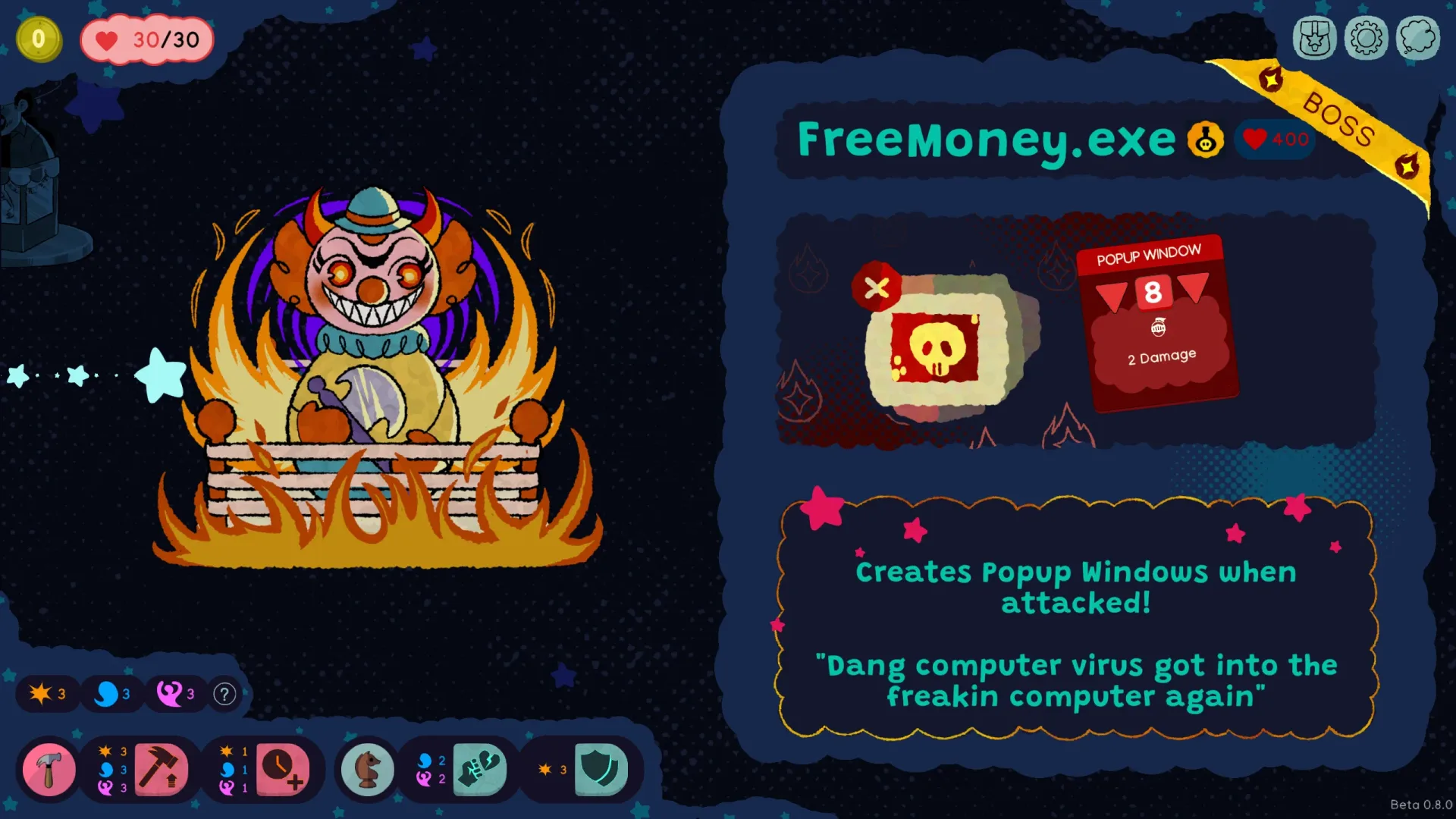
The game’s stated scope also provides a sense of its build variety. It includes more than 150 Cards, more than 40 Memories, and more than 35 Snacks. Those names establish distinct pools of game elements, though no further details about what individual Memories or Snacks do have been provided. Artists who want their work to feel grounded should avoid presenting unsupported mechanics as though they are confirmed game content.
Its class structure is based on four Aspects: Tactical, Tinker, Gamer, and Sk8er. Players choose two Aspects, mixing their card pools and building synergies. “Synergy” here means that selected elements complement one another, producing a stronger or more effective sequence together than they would separately. That combination system is especially suited to fan art because it can be shown as a pairing or contrast: two identities sharing a composition, a deck-building scene, or a chain of effects tied together by a die roll.
The intended runs are around 30 minutes, pointing to a fast, replayable structure rather than a lengthy campaign session. For a visual concept, that supports the feeling of an energetic moment-in-progress: a roll has landed, a set of cards is ready to trigger, and a compact build is about to produce a turn-changing sequence.
The rules around human-made work matter
The no-AI rule is one of the contest’s most consequential conditions. It applies to both AI-generated and AI-assisted art, and the requirement is for 100% human-created submissions. This is not a vague preference for a certain look. It is an eligibility rule.
For prospective entrants, the practical implication is straightforward: do not use generative-image tools or AI assistance at any point in the submitted artwork. Traditional media is eligible, as is digital art made by a human artist, but the supplied terms do not create an exception for AI-generated drafts, backgrounds, cleanup, or other assisted elements.
That policy also fits the contest’s stated magazine-submission spirit. The emphasis is on the artist’s own linework, design decisions, and personality—qualities the judges will directly consider. A piece can be stylized, polished, rough-edged, playful, surreal, or restrained, but it needs to be the entrant’s work from start to finish.
Four winners, two selection paths
The contest divides recognition between a judges’ panel and an audience vote. Three Judges’ Selection winners will be picked against the published creative criteria. The fourth winner will be the Audience Favorite, chosen via socials.
This distinction is worth understanding. A judging-based selection can reward a well-resolved interpretation of the brief even if it is not the most broadly circulated image. An audience selection, meanwhile, makes public sharing especially central. Posting with the required hashtag is part of entry, but it also gives the work a visible path to the audience-facing category.
Neither route changes the reward: all four winning artists get a Steam key and an in-game placement in the dedicated fan-art section. The in-game feature is the standout prize. Rather than existing only as a contest post or promotional gallery, the selected work is intended to be encountered by people playing the released game.
For a new independent PC game, this kind of inclusion makes the contest feel less like a detached marketing exercise and more like a small community artifact built into the launch version. It also matches the game’s explicitly nostalgic framing. Hand-drawn magazine contributions were often part of how players saw other fans participating in games; here, the same broad idea is being adapted into a digital space inside the game itself.
Important dates
- October 1, 2026: Entries open.
- October 31, 2026, at 11:59 p.m. ET: Entry deadline.
- November 3, 2026: Winners will be revealed in a special announcement hosted by Slumber Realm creator Brian Cronin.
- November 4, 2026: Slumber Realm launches, with the winning artwork planned for its dedicated fan-art section.
The reveal lands one day before launch, giving the four selected works a direct connection to the game’s debut. An announcement video accompanies the contest, and the game’s trailer is available at https://www.youtube.com/watch?v=HpJfGc3j9go.
A focused brief for a particular kind of roguelike
The contest is narrow in the useful sense: it asks for artwork inspired by one game, uses a defined public hashtag, establishes a hard closing time, and spells out how the four winners are divided. Its creative target is also more specific than “make fan art.” Slumber Realm supplies a recognizable set of ingredients—cards, a d6, backpack drafting, chained activations, Aspects, and a distinctly 1990s-inflected identity.
Artists have until the end of October to turn those ideas into a submission. With only four works slated for inclusion, a clear connection to the game and a distinctive personal approach appear to be the key priorities—alongside following the human-created rule without exception. For players watching the game’s approach to launch, the November 3 reveal should provide an early look at the fan art that will sit alongside the card-and-dice action on November 4.
For more on other independent PC releases and their post-launch modes, see Sous Raccoon’s move out of Early Access.