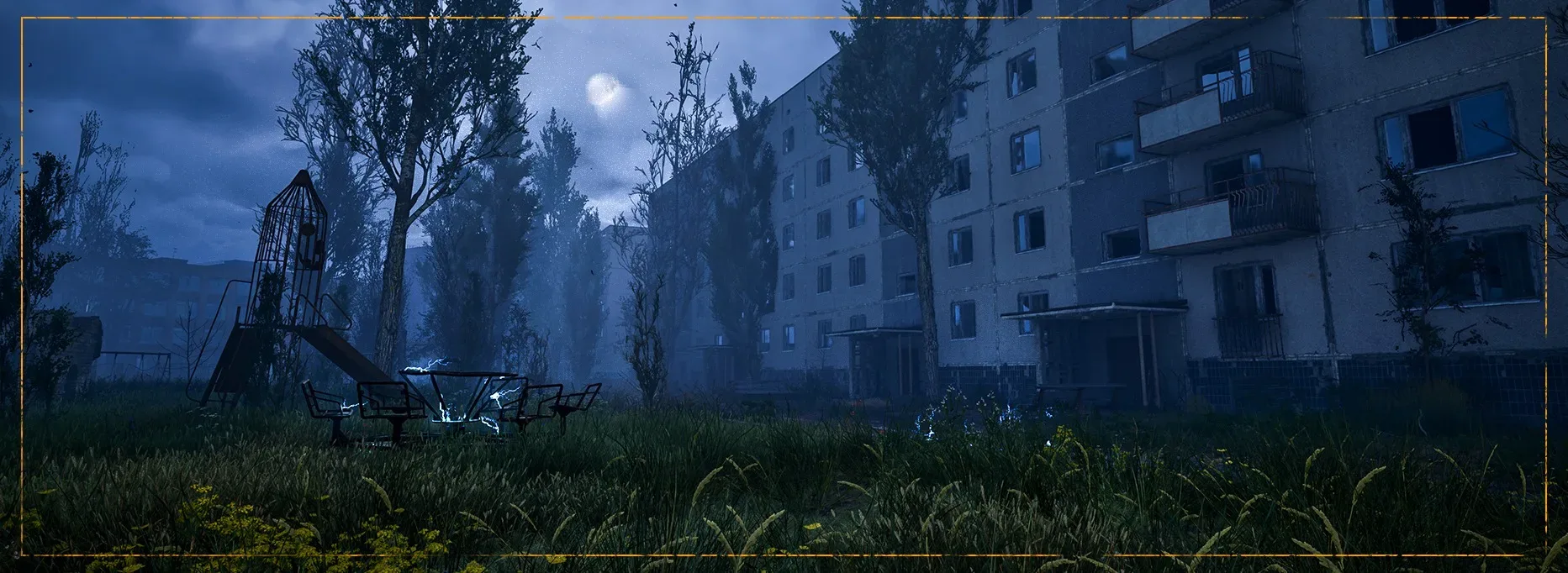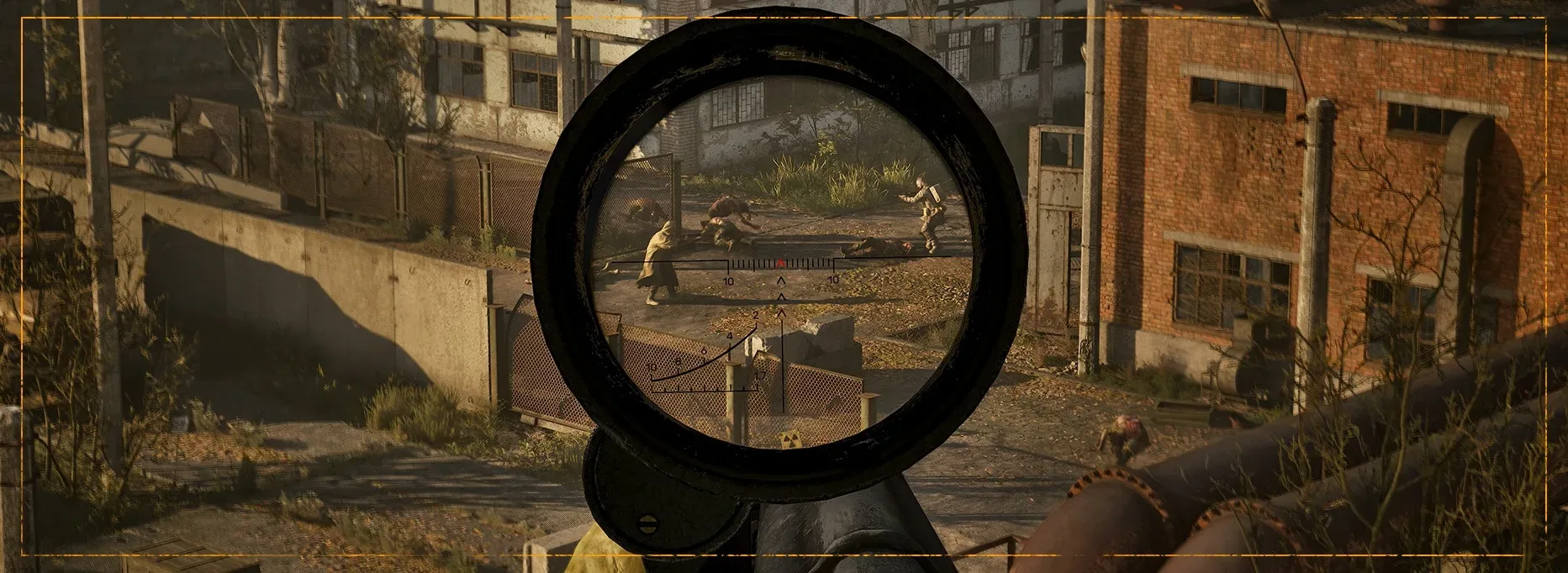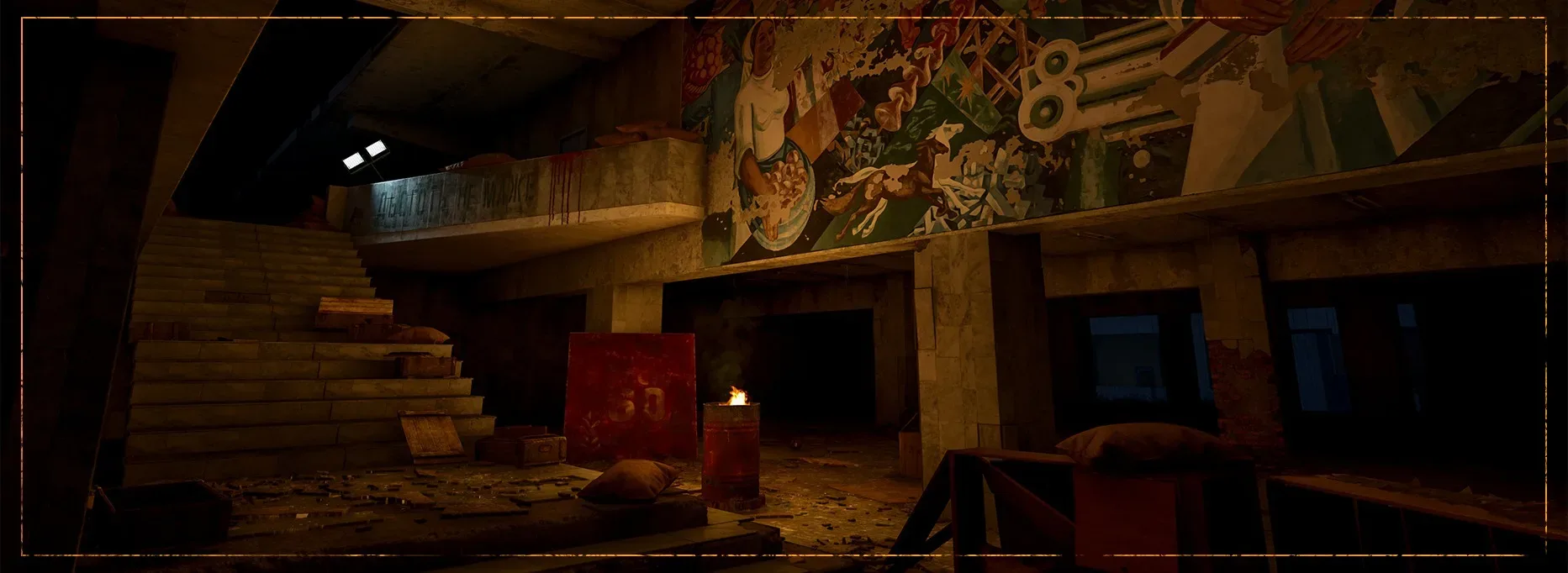
S.T.A.L.K.E.R. 2: Heart of Chornobyl has received Update 2.1 on PC and consoles. The patch brings several requested quality-of-life and simulation-facing changes, led by a manual control for A-Life NPC visualisation distance and a new way to travel with squad leaders to nearby places already discovered on the map.
The update also adjusts the feel of combat at range. Firefights can now be heard from farther away, while weapon ballistics have been revised alongside that expanded audio reach. It is a focused set of changes, but one aimed at a fundamental part of a Zone excursion: deciding what activity should be visible or audible in the distance, and how much time players should spend crossing familiar ground.
A-Life visualisation distance is now a player setting
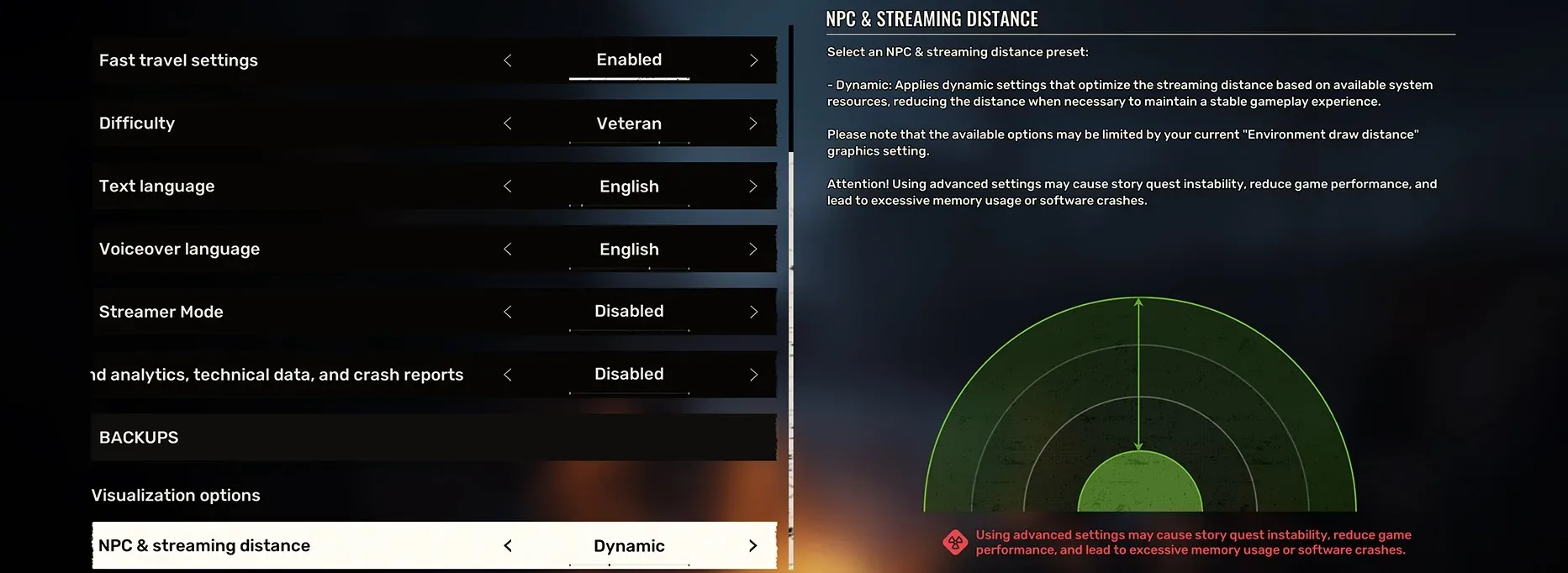
Update 2.1 adds adjustable A-Life visualisation distance under Settings — Game — Visualisation. Players can select from multiple presets, including a Dynamic option that adjusts the range in response to the hardware in use.
In straightforward terms, visualisation distance is the range at which parts of the world’s AI-driven population can be shown around the player. Increasing it may allow A-Life NPC activity to be represented at a greater distance, but that comes with a clear caveat: a higher setting can affect both performance and stability. The default preset remains the recommended choice for balancing those concerns against immersion.
The new slider is not a blanket switch for every character in the game. A-Life NPCs are treated separately from quest and scripted NPCs. That distinction matters for expectations around story encounters: the increased range chiefly applies to A-Life NPCs, rather than guaranteeing that every mission character or scripted event will appear farther away. Available presets may also differ by platform.
What the Dynamic preset is intended to do
Dynamic is the less hands-on alternative to choosing a fixed range. Rather than locking the game to one selected distance, it automatically adapts the visualisation range to match the player’s hardware. It should therefore be the sensible starting point for players who want the game to manage the trade-off itself.
Players who prefer a predictable configuration can use one of the manual presets, but the practical decision is not simply that a larger range is always better. A greater range may make the wider environment feel more active, yet it places more demand on the system. The recommended default is the safest baseline for anyone prioritising stability, while a higher manual option is a choice to make with its possible performance cost in mind.
- Default: the recommended balance of performance, stability and immersion.
- Higher manual ranges: potentially extend A-Life NPC visualisation, with possible performance and stability effects.
- Dynamic: automatically adjusts the range to suit the hardware.
Long-distance combat gets connected adjustments
The update’s A-Life changes are accompanied by behind-the-scenes improvements and balance work intended to make firefights over long distances feel more natural. Gunfire can be heard from farther away, and weapon ballistics have been adjusted accordingly.
Ballistics refers to the behaviour of projectiles in flight. In this context, the change is tied to making distant combat work more coherently with the updated sound range. If shots carry across a broader stretch of the world, their weapon behaviour needs to support an encounter that is read from farther away rather than only at close quarters.
The patch notes do not specify individual weapon values, ranges or a detailed breakdown of the underlying changes. What is clear is the design direction: distant combat should register more naturally through the combination of audible gunfights and revised projectile behaviour. Players should avoid assuming that the update is a universal boost to every weapon or every NPC encounter, because the supplied patch details describe the goal and the paired systems, not a weapon-by-weapon overhaul.
That restraint is especially relevant in a game where distant sounds can affect navigation and decision-making. Hearing a fight farther out may provide more information about activity in the surrounding area, but it does not automatically explain who is involved or make the encounter safe to approach. Update 2.1 expands the reach of those cues while maintaining the game’s separation between A-Life activity and scripted or quest-related characters.
Squad leaders can guide travel to explored locations
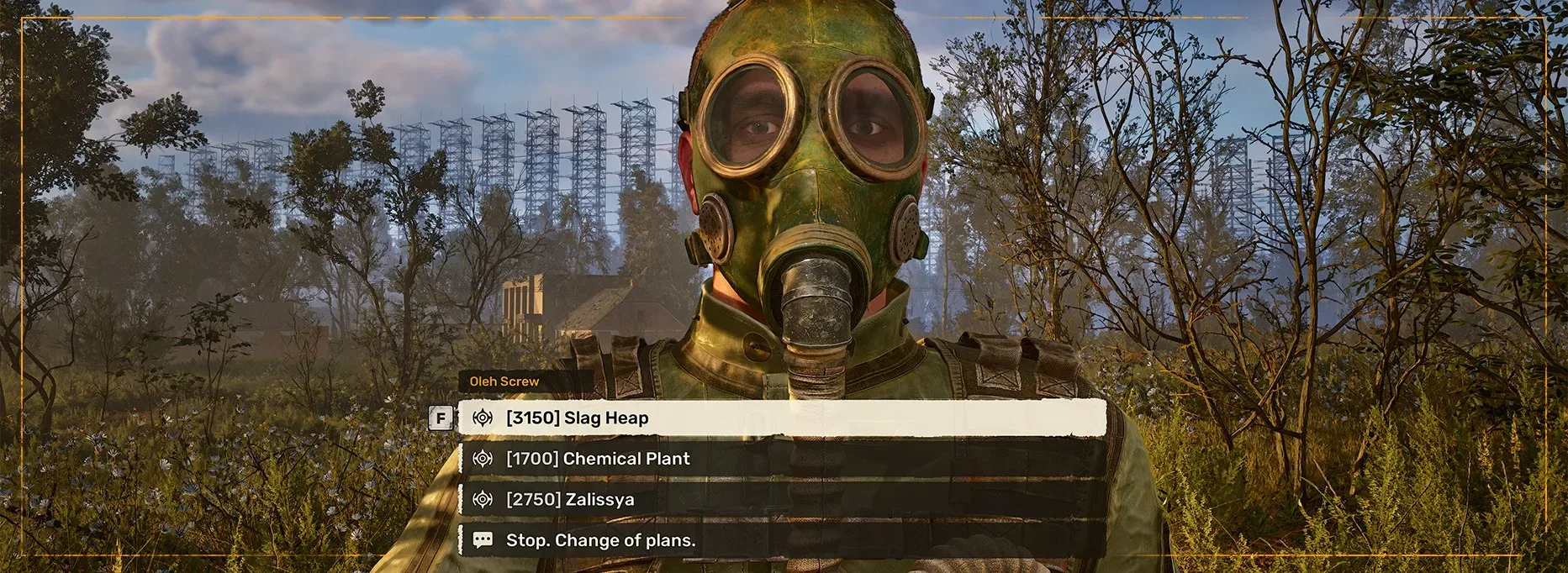
The other major addition is travel with squad leaders. Squad leaders are now marked on the compass, and players can ask one to guide them to nearby destinations along that leader’s route.
There are several important restrictions:
- The destination must have been explored previously.
- The destination must be nearby.
- The destination must lie along the squad leader’s route.
- The service costs in-game currency.
- The guide will not carry the player’s backpack.
This is therefore not unrestricted map travel. It is a limited, route-based service tied to an NPC leader and existing exploration progress. It cannot be used to skip initial discovery of a location, and it is not a solution for moving stored gear. The backpack limitation is particularly worth noting before paying: the player can be guided, but their backpack does not go with them.
The compass marker should make the feature easier to find in the field, while the route and proximity requirements keep the mechanic grounded in local movement rather than turning squad leaders into an all-purpose transport menu. For players returning to a recently visited nearby destination, it offers a potentially useful alternative to retracing the entire path on foot. For distant travel, unvisited territory or backpack management, its stated restrictions still apply.
A practical way to use the new travel option
- Check the compass for a squad leader.
- Confirm that the desired location has already been explored.
- Make sure it is nearby and falls along the leader’s route.
- Be prepared to pay the in-game fee.
- Account for the fact that the backpack will not be transported.
Those conditions make the feature best understood as guided local travel, not conventional fast travel in the broadest sense. Players planning around equipment should treat it as personal movement and plan their backpack situation before committing.
Bug fixes and visual changes round out the patch
Update 2.1 also includes a range of bug fixes and visual tweaks. Specific fixes are not detailed in the supplied release information, so it is not possible to draw reliable conclusions about which quests, locations, visual effects or technical issues are affected. Still, the inclusion of fixes alongside the more visible new settings makes this more than a single-feature patch.
The changes were shaped largely by community feedback, with continued player feedback encouraged. That is most apparent in the adjustable A-Life setting: rather than imposing a single expanded visualisation range, the update offers presets, preserves a recommended default and provides Dynamic adjustment for hardware-aware behaviour.
For more recent PC-focused coverage, see this look at a psychological-horror demo heading to Steam Scream V Fest.
For now, S.T.A.L.K.E.R. 2 players on PC and consoles can find the key new control in the Game visualisation settings, listen for firefights at a longer distance, and look to squad leaders for paid trips to eligible nearby locations they have already visited.