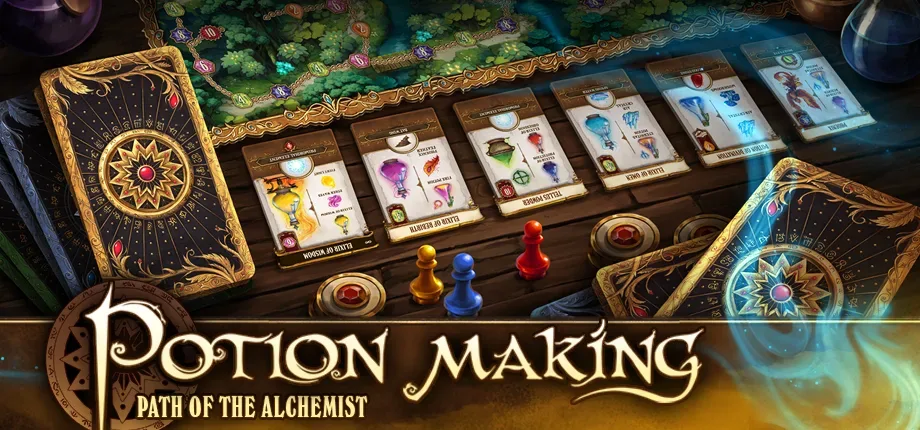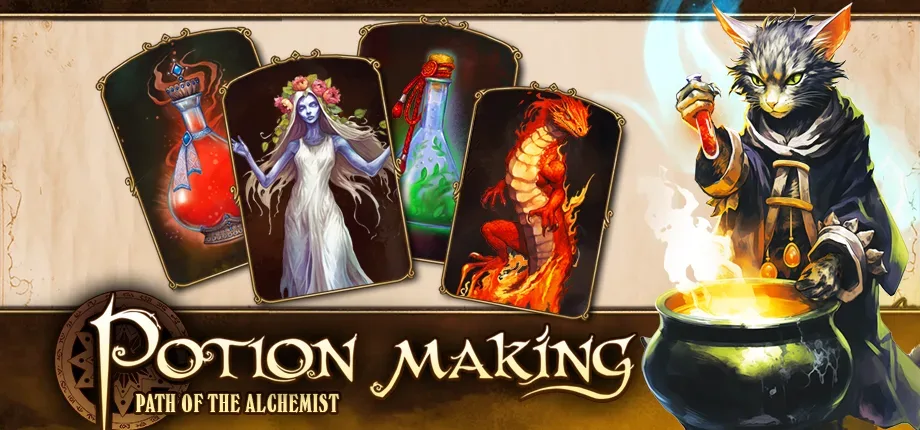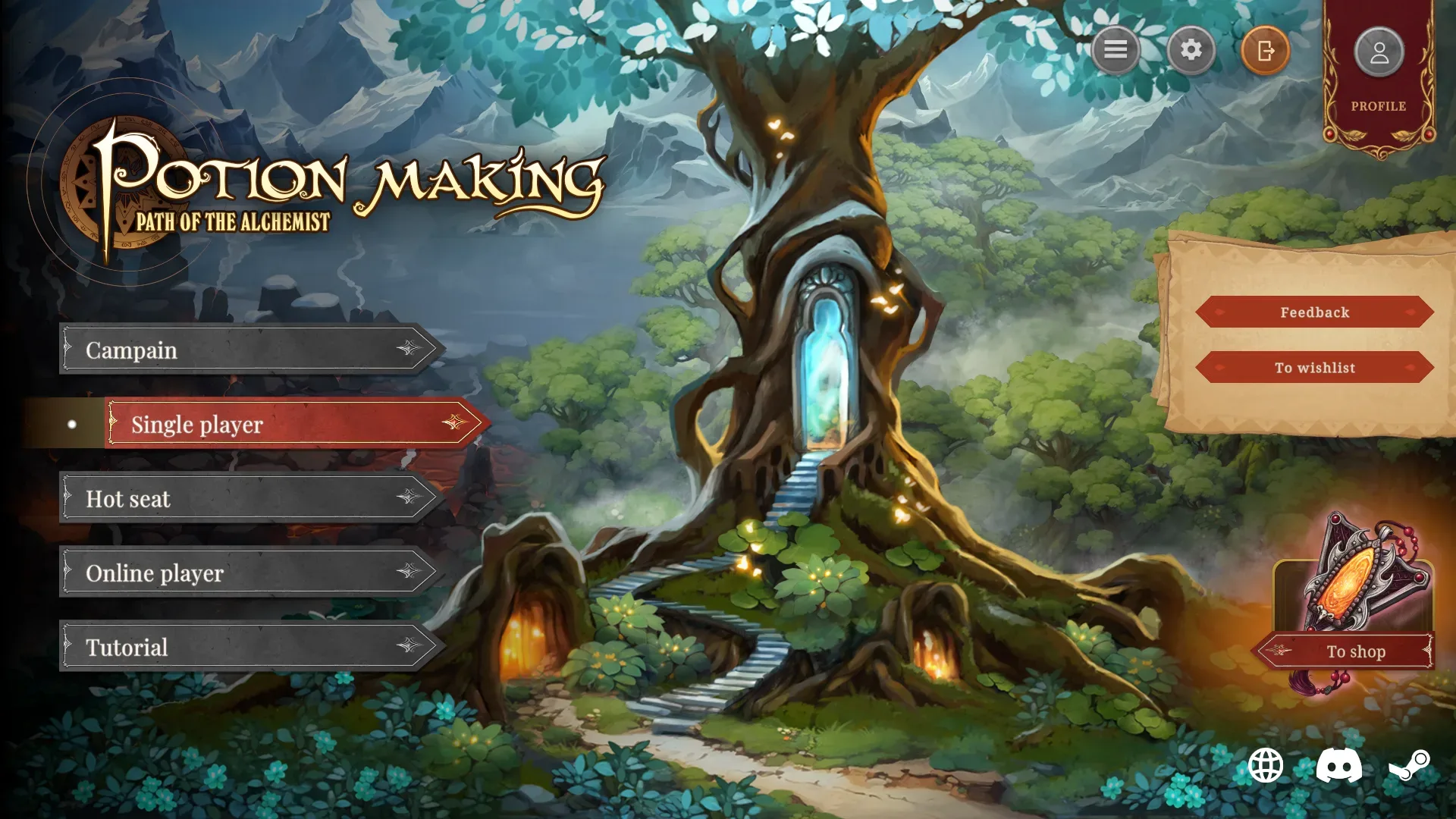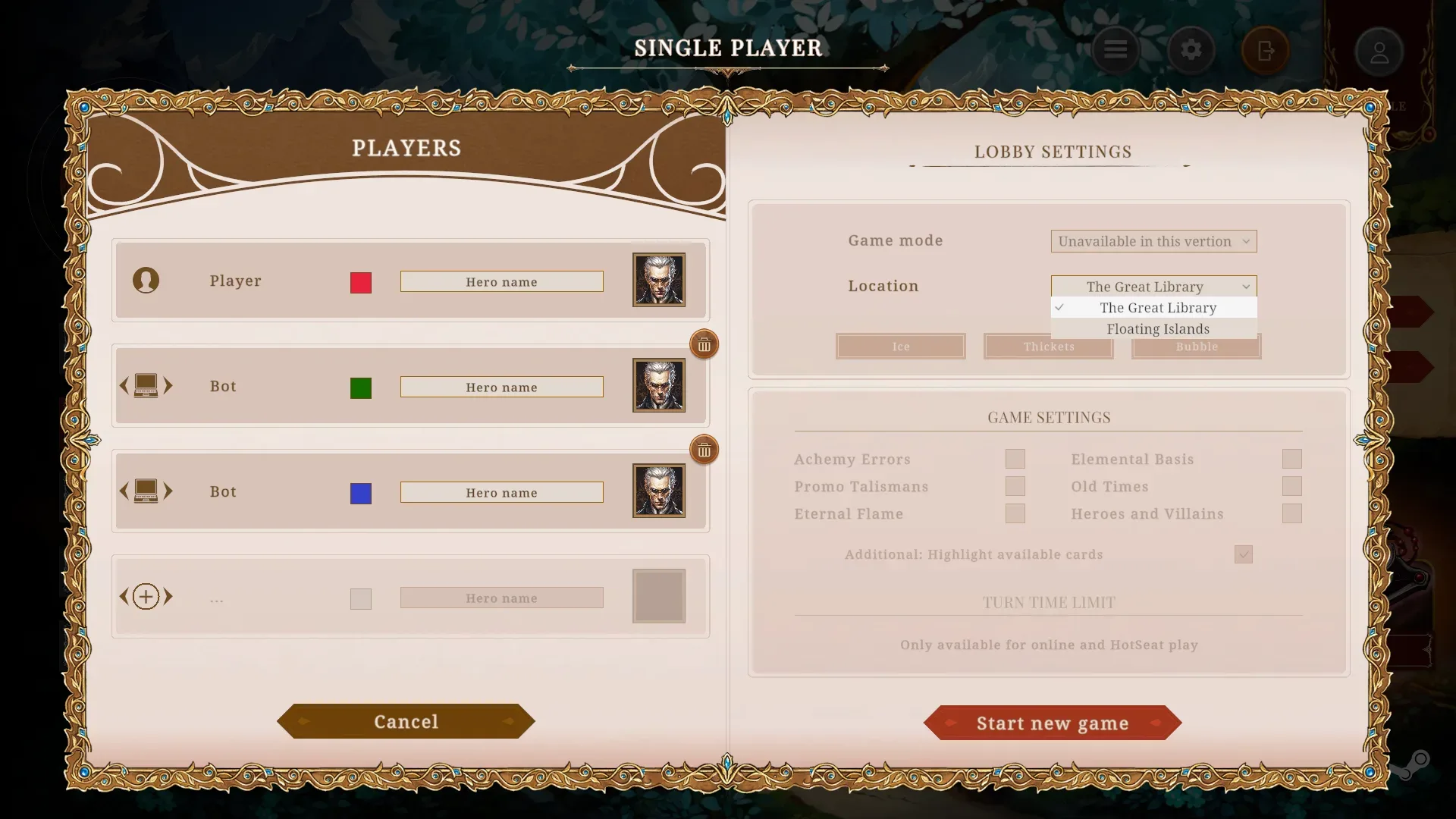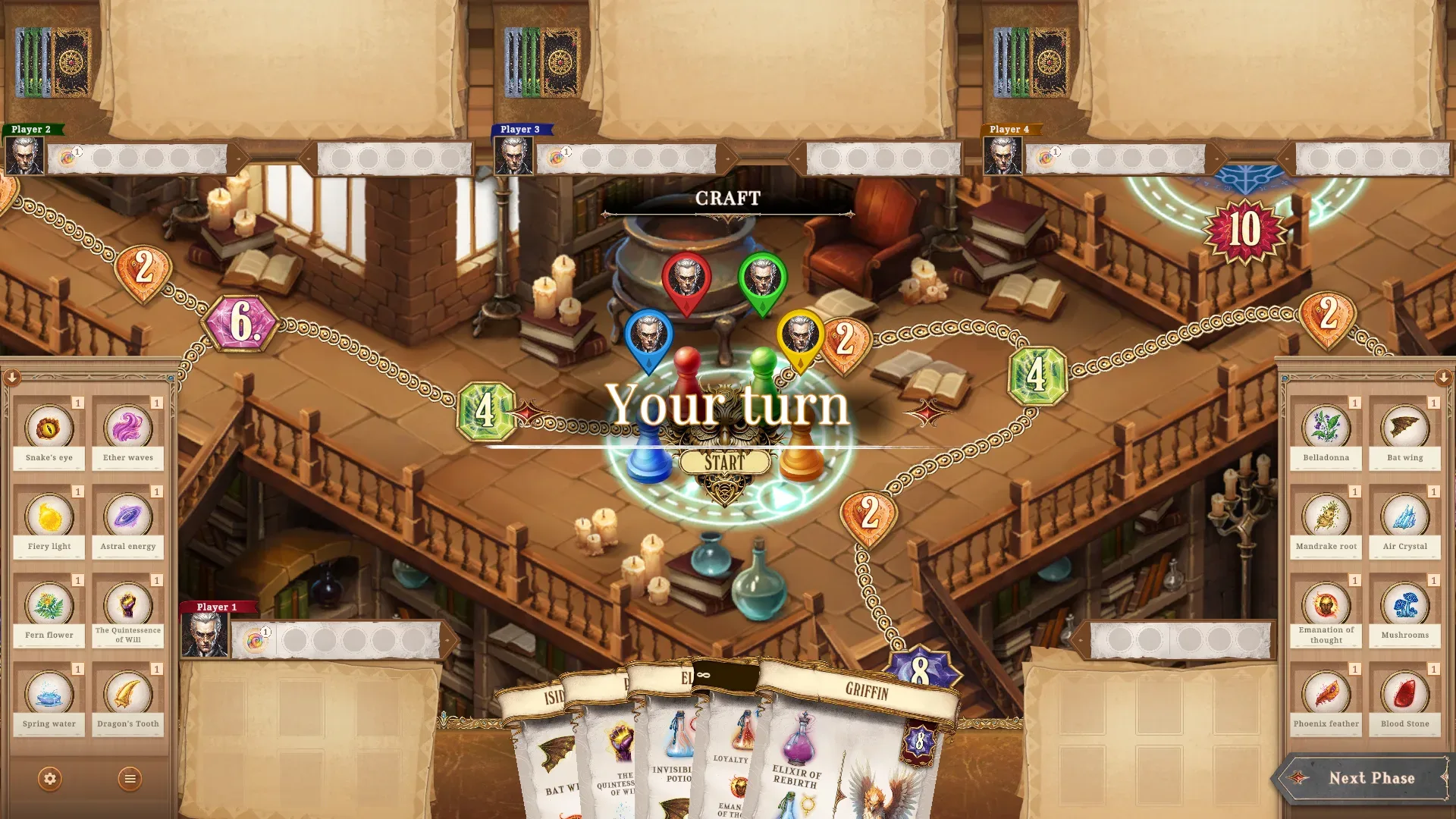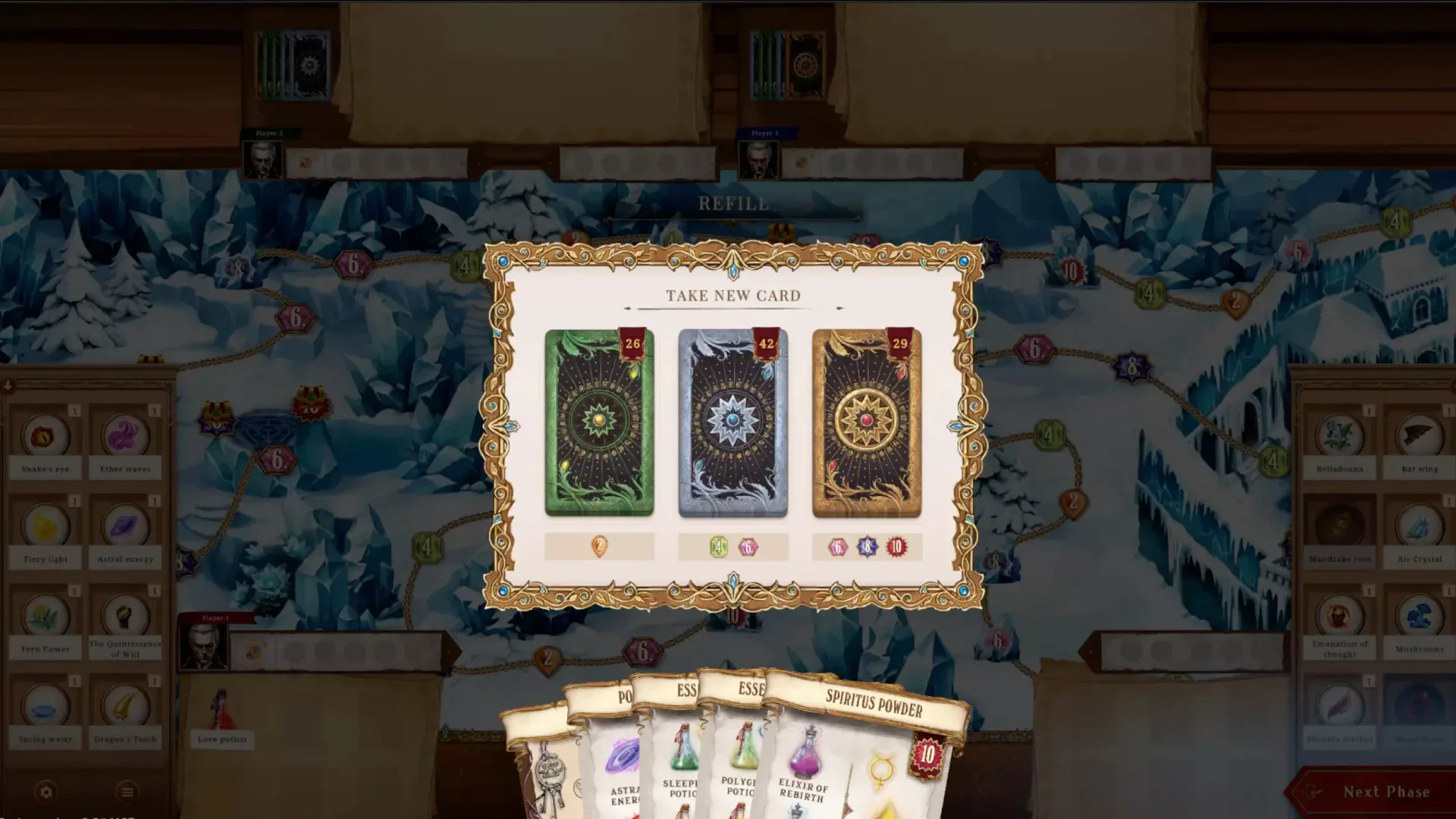
Potion-making: Path of the Alchemist, Oduvan Games’ official digital adaptation of Sergey Machin’s board game, will receive a multiplayer demo on Steam on September 30. The playable preview is designed for groups of friends to sample a game in which every shiny new potion can become either the first step in a masterful alchemical chain or an extremely generous donation to the player sitting across the virtual table.
The central objective is straightforward: be the first alchemist to reach three Places of Power. The route is considerably less tidy. Players combine ingredients into recipes, use Potions and progressively advanced creations, cast Spells, deploy Talismans, and may steal Recipes other players have completed. It is a competitive game built around a conspicuously shared workspace, so success is not merely about recognizing the best combination. It is about deciding when a combination is safe to make, when to convert it into something larger, and when another player is close enough to make leaving it exposed a regrettable lifestyle choice.
A board-game recipe chain translated to a shared digital table
The digital game is based on the rules of the 2024 edition of Potion-making: Path of the Alchemist. Its tabletop predecessor was originally released in 2005 and has sold more than 300,000 copies. That history matters because this is not presented as a game merely borrowing an alchemy theme: it is an official conversion of a system whose appeal comes from physical-style components, combination logic and players watching each other’s growing plans unfold.
Oduvan Games’ adaptation handles the bookkeeping. In practical terms, that means the digital format should take care of the administrative side of checking and tracking recipe relationships, leaving players to concentrate on choices and social interaction. For a game with multiple stages of crafting, that is more significant than it sounds. Bookkeeping is the process of recording what ingredients and completed creations are available, who owns them, and which recipes can lead into further work. Removing that manual burden can keep a multiplayer session moving while retaining the strategic tension of the shared table.
That focus makes the upcoming demo a useful chance to evaluate the game’s intended rhythm rather than simply its presentation. A digital board-game adaptation lives or dies on whether players can quickly understand what is available, what is vulnerable and what their opponents are preparing. The supplied details establish that all of those questions are core to Path of the Alchemist, particularly because tabled Recipes are accessible to everyone.
From Bloodstone to bigger discoveries
At the base of the system are ingredients such as Bloodstone and Snake’s Eye. These are combined to make simple Potions, including Slumber and Fire Potions. Those Potions are not only endpoints; they are materials for the next tier of recipes.
- Ingredients are the starting materials, including Bloodstone and Snake’s Eye.
- Potions are simple recipes made from ingredients, such as Slumber or Fire Potions.
- Elixirs can be created using Potions alongside other ingredients.
- Essences are more powerful creations made by combining Elixirs.
- Creatures can be summoned by mixing an Elixir with a Potion; a Unicorn is one named example.
This is a recipe chain: earlier creations can become components in later creations. The strategic result is that an item’s value is not limited to its immediate effect. A basic Potion may be useful in its own right, but it may also be a critical piece of an Elixir or a Creature-producing combination. An Elixir, likewise, can represent both a substantial achievement and a stepping stone toward an even more valuable result.
Creatures have a special place in that hierarchy because they provide more valuable Power Tokens. While the exact effects and values of individual Tokens are not detailed here, their position in the described economy is clear: summoning a Creature is a route to higher-value rewards. That makes the decision to spend an Elixir and Potion to call one more consequential than making an isolated low-tier recipe.
Players also have Spells and Talismans available as part of the broader contest. The supplied information does not specify their individual functions, so it would be premature to treat them as known counters, boosts or defensive tools. What can be said is that they sit alongside brewing and stealing as part of the available toolkit, suggesting the competition has several avenues beyond simply assembling ingredients as efficiently as possible.
The exposed-recipe dilemma is the game’s main source of mischief
The defining rule is that anything placed on the table becomes available to every player. Completing a Recipe therefore creates a decision point: use it yourself as part of a larger construction, or leave it exposed and risk someone else taking it. The game is not only asking, “What can I make?” It is asking, “What can I afford to let everyone see?”
That makes recipe theft a structural feature rather than an incidental annoyance. In many crafting games, producing a needed component is private progress. Here, completing the wrong thing at the wrong time can give an opponent the ingredient they were missing. Conversely, spotting a completed Recipe that fits into your own plan may let you leap forward without doing all the setup work yourself.
The tension should be especially sharp in multiplayer because players are encouraged to scheme together while still pursuing individual victory. Cooperation may emerge when players’ short-term needs align, but the race to three Places of Power means the partnership has a built-in expiration date. Helping another alchemist create a useful item may make sense until that item puts them within reach of the win condition.
Analysis: Based on the rules described, timing appears likely to matter as much as recipe knowledge. A player holding the pieces for an advanced result may wish to wait until they can complete consecutive steps before opponents can exploit an intermediate Recipe. A rival may instead watch the table for an opportunity to use a newly available Potion or Elixir before its original maker can turn it into something bigger. The demo should reveal how visible these opportunities are and how readily players can act on them.
Only one Creature gets to hold the table
The Creature rule adds another competitive layer. Only one Creature can exist on the table at a time. When a player summons a new one, the Creature already in play is dismantled, and the owner of the outgoing Creature receives a bonus.
This means replacing a Creature is not a simple case of erasing an opponent’s achievement. The former owner gets something for losing their creation, so a new summon changes the state of the table while also compensating the displaced player. It creates a recurring contest over who can produce the biggest beast, but it also makes the timing of that contest less obvious than a standard “replace the old card with the new one” system.
A Unicorn is cited as an example of a summonable Creature, but no specific traits beyond its place in the Creature system are given. The larger point is the turnover rule: the table has room for one active Creature, and every new one forces a transition. Because Creatures yield valuable Power Tokens, their arrival is likely to attract immediate attention from every alchemist in the game.
Explanation: A replacement mechanic is a rule under which a new game element displaces an existing one. Here, it prevents Creature ownership from becoming permanently settled. The bonus for the removed Creature’s owner complicates the decision to replace it, because the player making the new Creature must weigh the value of their own summon against the benefit they are granting to a rival. That kind of trade-off can make even a seemingly powerful play politically awkward in a multiplayer game.
What to watch for in the September 30 demo
The Steam demo is explicitly multiplayer-focused and is meant to be played with friends. Players considering it may want to approach the session as a chance to learn the game’s flow together, not as a measure of who can immediately memorize every combination. The supplied recipe examples establish the broad progression, but the game’s interesting decisions arise once players are evaluating the same shared supply of completed work.
Three questions stand out for anyone planning a group session:
- How quickly do recipe chains become visible? If players can readily identify an opponent’s next likely need, then leaving a Potion or Elixir on the table may be a major invitation to interfere.
- How often does theft change the race? The ability to take a completed Recipe is a central rule, but its practical impact depends on how frequently players can turn stolen work into meaningful progress.
- When is replacing a Creature worthwhile? Since the previous owner receives a bonus, players will need to judge whether a new Creature and its Power Tokens justify rewarding an opponent on the way out.
Those are not confirmed answers; they are the strategic pressure points implied by the announced rules. The demo period should offer a clearer look at how the adaptation communicates them. Since the digital version handles bookkeeping, it may also be easier for a new group to test bold sequences, learn from an ill-timed exposed recipe, and immediately get back to the fun part: politely accusing a friend of alchemical grand larceny.
The demo arrives on Steam September 30, ahead of the full game’s launch. Interested players can wishlist it and organize a group for the demo period. For more PC-focused coverage, see our report on the GOG Autumn Sale’s PC game discounts.