Penguin Colony, the Antarctic horror-leaning game from Origame Digital, is not available to buy in Israel after its developer asked for sales in that region to be blocked. The move is accompanied by political material placed inside the game itself, including a land acknowledgement before play and a statement at the end credits.
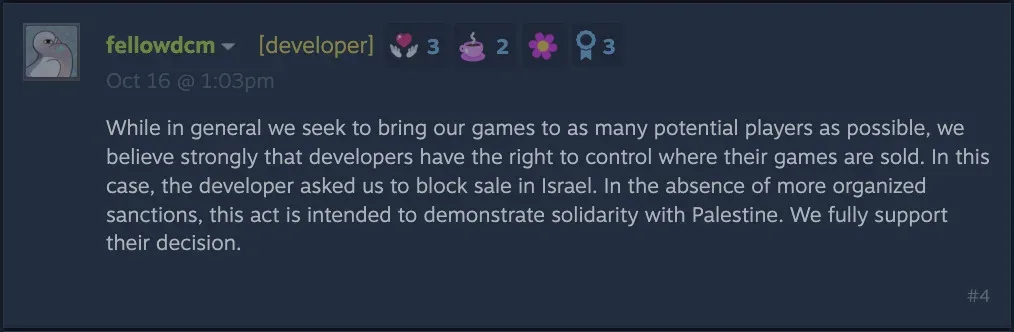
A publisher representative addressed the decision in Penguin Colony’s Steam forum after a player asked why the title was unavailable in Israel. The response said the developer had requested the restriction as an act of solidarity with Palestine, adding that the publisher supported that choice. It also framed the action as occurring in the absence of broader organized sanctions.
That is a notable use of a distribution control that is usually invisible to most players. Regional storefront availability determines where a game can be purchased, and it can be set differently by territory. In this case, the restriction is not presented as a technical limitation, age-rating issue, or a conventional licensing gap. It is an explicitly political decision requested by the game’s developer.
A political statement built into the game
The available information describes Penguin Colony as a game with an Antarctic premise, drawing comparisons to At the Mountains of Madness and March of the Penguins. Its political positioning, however, is not confined to a product page or an external social-media post.
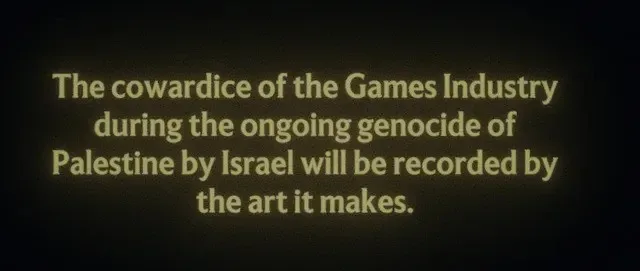
Before the game begins, Origame Digital presents a land acknowledgement. The game’s credits also contain a direct statement concerning Palestine and the wider games industry’s response to the conflict. Those placements matter because they put the studio’s perspective in front of players who enter the game and those who stay through its credits.
Credits are often treated as a final roll call: a place to recognize the people and partners behind a project, sometimes followed by a teaser or joke. Penguin Colony uses that familiar space for a values-based message instead. The effect is different from a standalone developer post, which a player may never encounter. A statement embedded in a game becomes part of the work’s presentation.
It also makes the studio’s decisions easier to connect. The pre-game acknowledgement, the end-credit message, and the regional sales block point in the same direction. Players can disagree with the position or question the practical impact of a storefront restriction, but the intent described by the publisher is not ambiguous.
What the Steam restriction does—and does not—establish
A regional sale block means the game cannot be purchased through that storefront in the affected territory. It is a meaningful limitation for prospective customers there, but it should not be overstated beyond what is known. The information available establishes that Penguin Colony is unavailable for purchase in Israel through Steam and that the developer requested that status. It does not establish details about every possible store, every platform, or access methods beyond the sale restriction discussed in the forum response.
Related coverage includes Penguin Colony Developer Blocks Sales in Israel in Support of Palestine.
The publisher’s wording is also important. It said it generally aims to bring games to as many players as possible while affirming that developers should be able to decide where their work is sold. That expresses a tension common to independent publishing: a desire for broad reach alongside a developer’s authority over a title’s distribution and public stance.
In practical terms, digital storefronts are not merely neutral shelves. Territory settings can determine whether a listing appears, whether a purchase can be completed, and which audiences can directly support a release. When a developer elects to exclude a country, it turns a normally back-end commercial setting into a public-facing part of the project’s message.
What “BDS” means in this context
BDS is shorthand for boycott, divestment, and sanctions. In the context raised around Penguin Colony, the term refers to economic and cultural pressure intended to show support for Palestine. A regional sales restriction is a boycott-oriented gesture: it declines sales within a particular market rather than trying to persuade platform holders or governments to impose a wider policy.
That distinction explains the publisher’s reference to the lack of more organized sanctions. The restriction is a developer-directed action at the level of one game’s availability. It is not evidence of a platform-wide sanction policy, and it should not be read as one.
Why this approach stands out in games
Political speech in games frequently appears outside the game client—in studio statements, interviews, social posts, fundraising pages, or community threads. Each form can reach an audience, but each can also be separated from the game itself. Penguin Colony’s use of its opening and credits removes that separation. Anyone who launches the game or remains to the end is confronted with the developer’s stated values in the product’s own space.
The approach is particularly direct because it pairs speech with a commercial decision. The land acknowledgement and end-credit material articulate a position; the Israeli sales block changes where the game can be purchased. Neither one proves the other’s effectiveness, but together they make the studio’s stance legible in both editorial and business terms.
That visibility can alter how players think about seemingly routine parts of digital games. A territory setting is often noticed only when something is missing from a store. Credit sequences are often skipped. A land acknowledgement may be treated as introductory text rather than a statement connected to the work. Penguin Colony brings all three into the same discussion about who makes games, what they choose to say, and how those views shape distribution.
The limits of the available record
The Steam forum explanation attributes the Israel restriction to the developer’s request and says the publisher backs it. Beyond that, there is no supplied information about how long the restriction will remain in place, whether the studio has announced additional measures, or whether other versions of the game are subject to identical terms.
There is likewise no basis here to measure the decision’s commercial impact, player response at scale, or effect on wider industry policy. Those are separate questions from the central confirmed fact: Penguin Colony’s developer requested that sales be blocked in Israel, and the publisher characterized the decision as solidarity with Palestine.
For players following independent PC releases, Penguin Colony’s situation is also a reminder to check where a game is sold and how a developer frames that choice. Distribution decisions can reflect contracts, ratings, technical constraints, or deliberate political commitments. This case falls squarely into the final category based on the publisher’s own explanation.
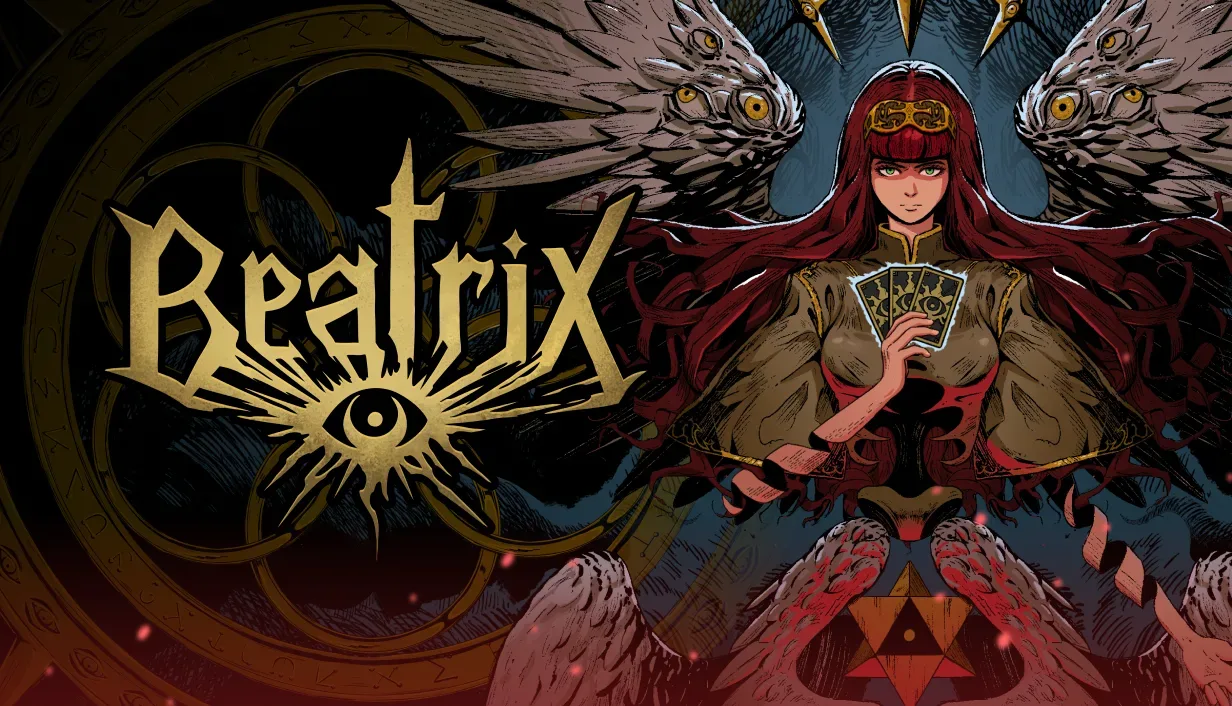
Players interested in other smaller PC projects moving through Steam’s event cycle can also see how developers use the platform for very different kinds of visibility, from demos to community-facing updates, in this look at Beatrix’s Steam Next Fest demo update. Penguin Colony, by contrast, shows how the storefront’s regional controls can become part of a game’s declared political position.
Origame Digital’s choice will likely draw attention precisely because it does not rely on implication. The studio’s in-game material, as described, speaks openly; its publisher’s Steam response explains the sales restriction plainly; and the territory block puts that stance into practice. Whatever players make of the action, Penguin Colony has made the developer’s position inseparable from the way the game is presented and sold.