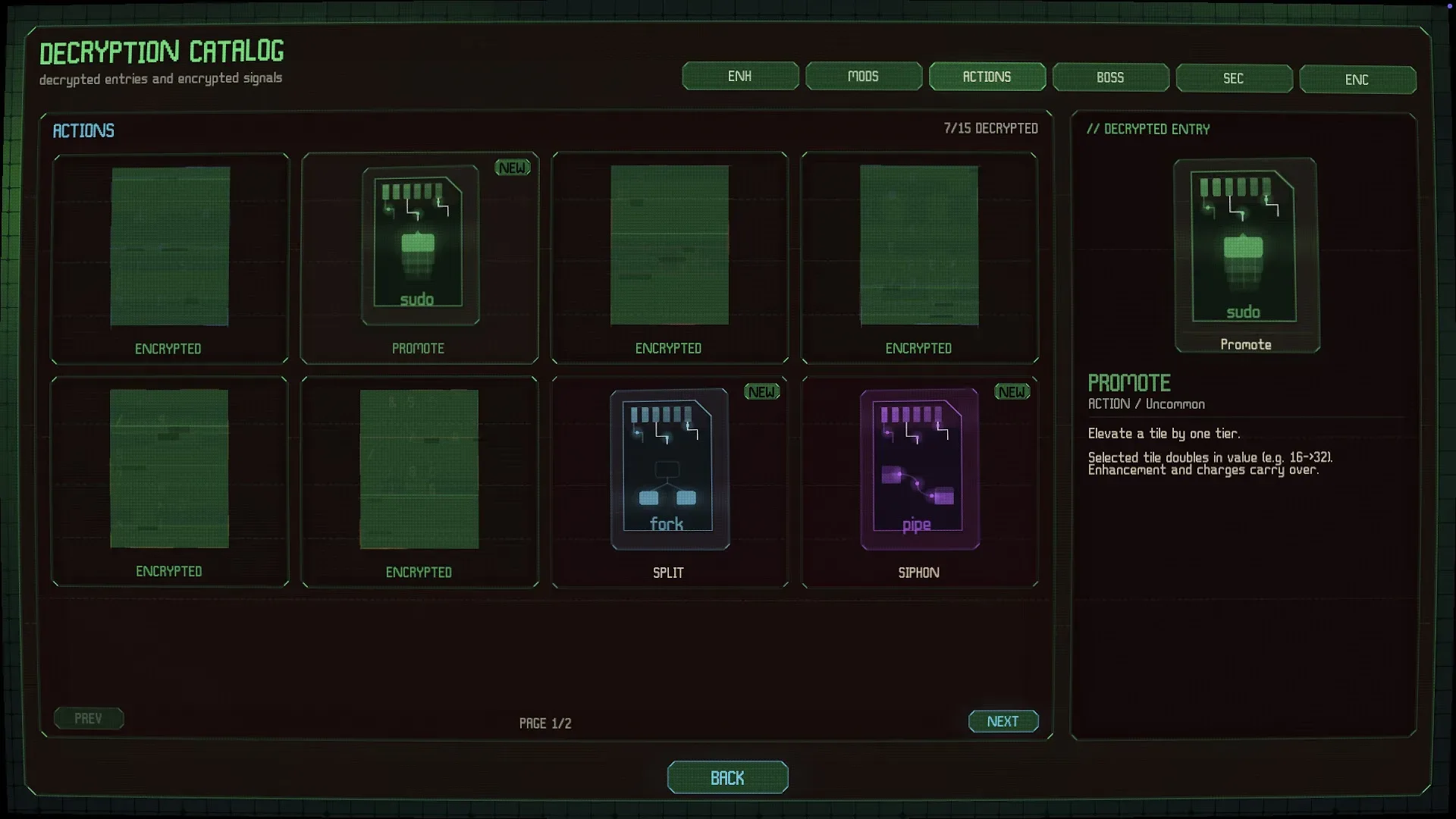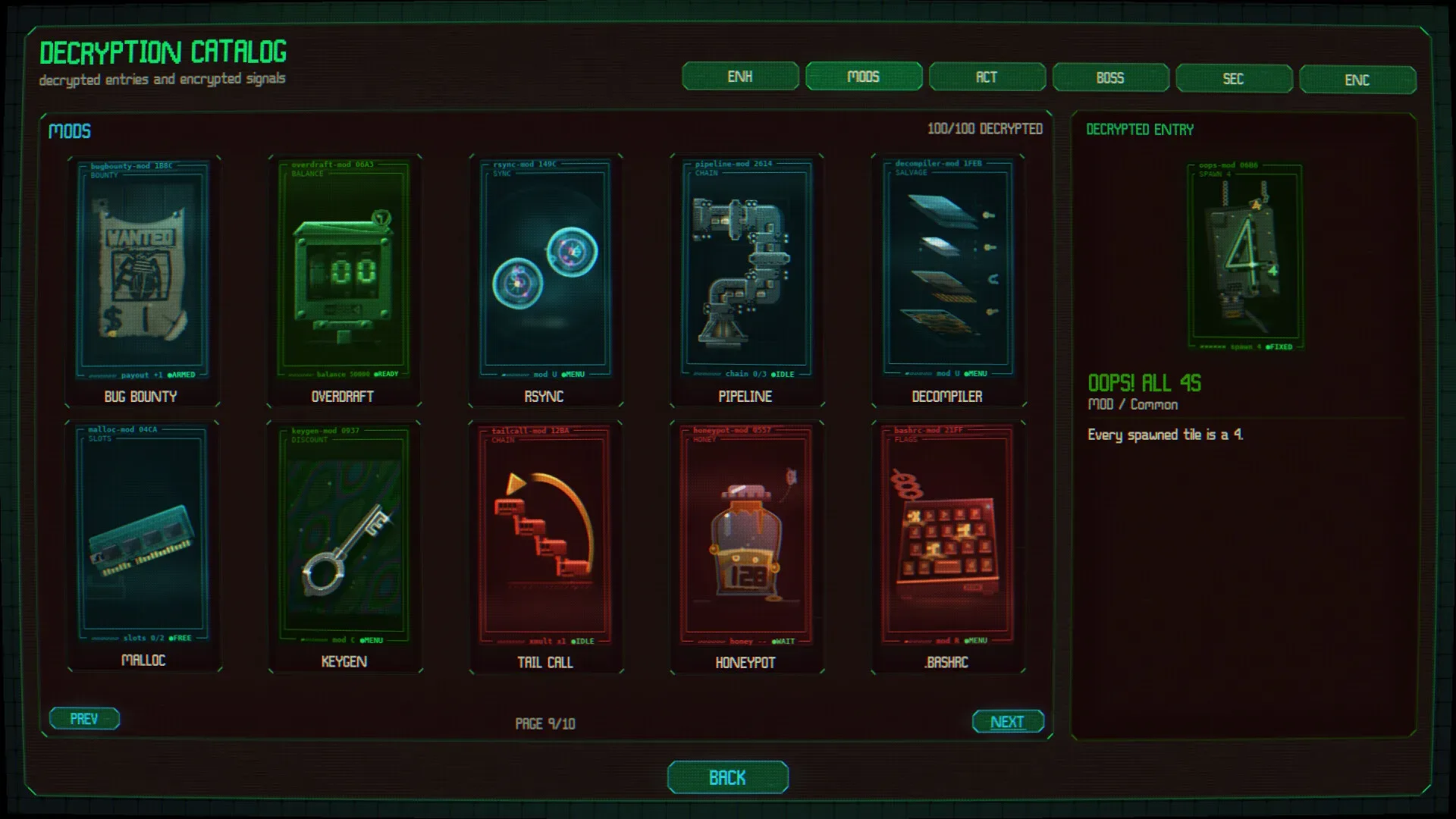
Deev Interactive has released the first public Steam demo for Numbers Go Up, its 2048-inspired roguelike deckbuilder. The free demo arrived on September 25, 2026, alongside a new trailer connected with Game Devs of Color Expo 2026. It has no stated time limit and no cap on the number of runs, giving curious players room to learn a game whose premise is deliberately compact but whose systems are built to compound.
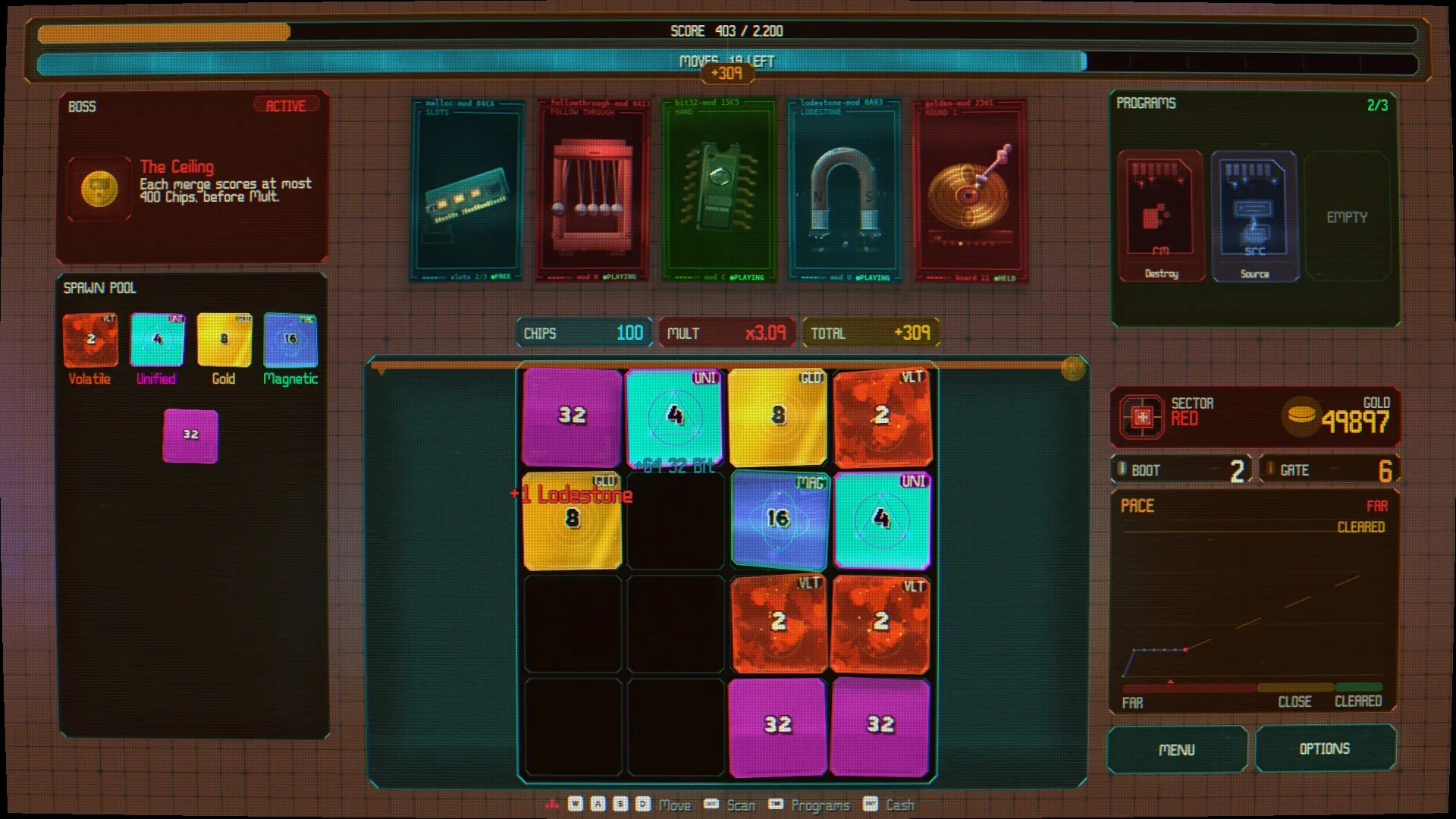
At its core, Numbers Go Up uses a 4×4 grid in the familiar sliding-tile format: move tiles, bring matching values together, and form increasingly valuable merges. The roguelike layer comes from “black-market mods,” programs, enhanced tile types, bosses, sectors, and unlocks. The stated aim is not simply to reach a tidy target number. It is to build a run powerful enough that a single move can, in the game’s own framing, break the system.
That makes the demo more than a short tutorial. It offers a meaningful, repeatable portion of a planned game that combines a puzzle-board foundation with buildcrafting and direct player-versus-player competition. A release date for the full Steam game has not yet been announced.
What the Numbers Go Up demo includes
The demo’s most consequential restriction is content breadth rather than play time. Players can make as many attempts as they like, but the selection of systems is a subset of the intended full release.
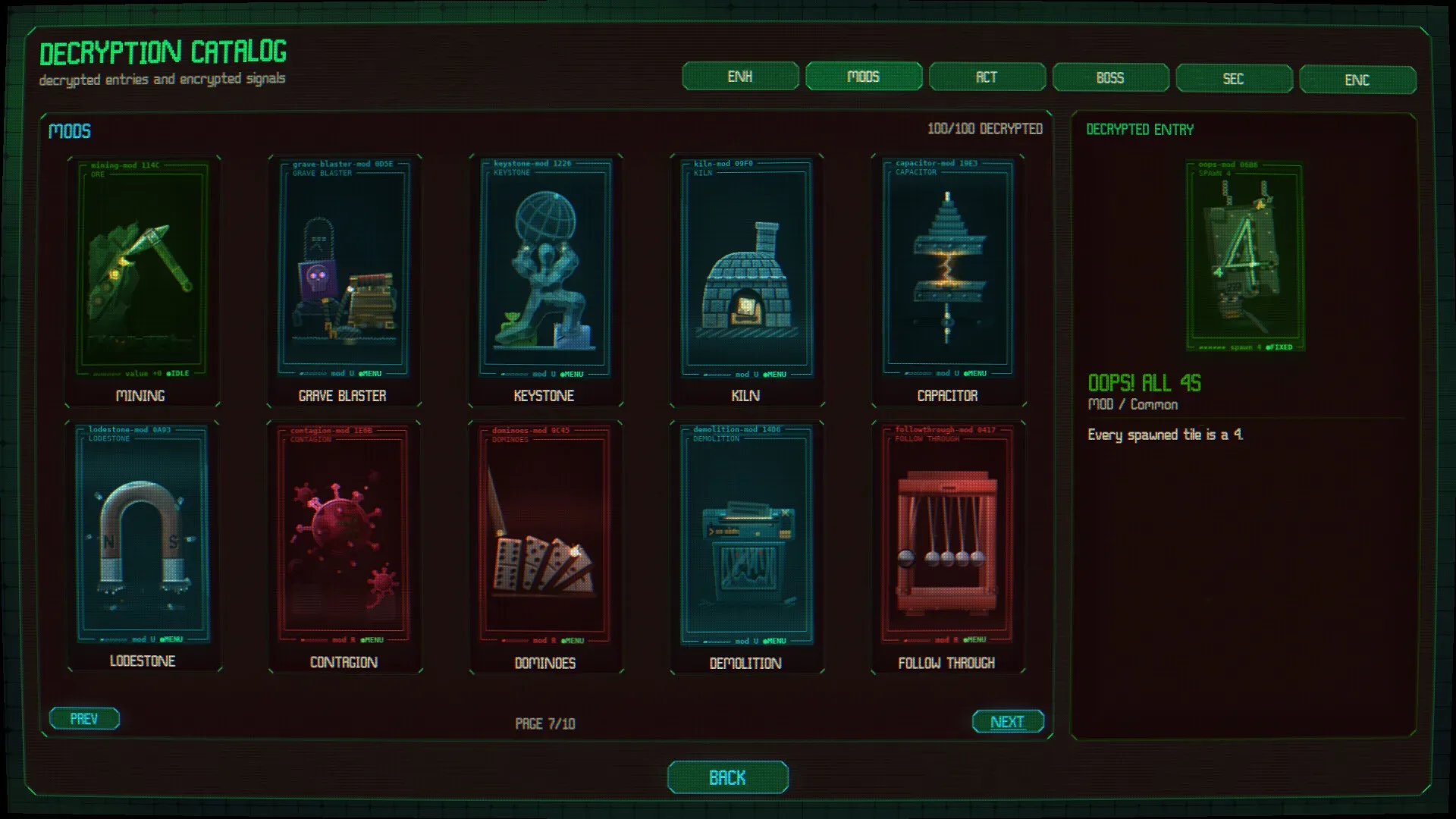
- 40 mods: 29 are available from the beginning, while 11 are unlocked through play.
- 8 programs: from a planned total of more than 25.
- 6 enhanced tile types: from a planned total of more than 20, as listed for the demo.
- Two sectors: the game’s term for its modes, out of seven planned sectors.
- Encryption levels E1 through E3: with their own progression ladders in those demo sectors.
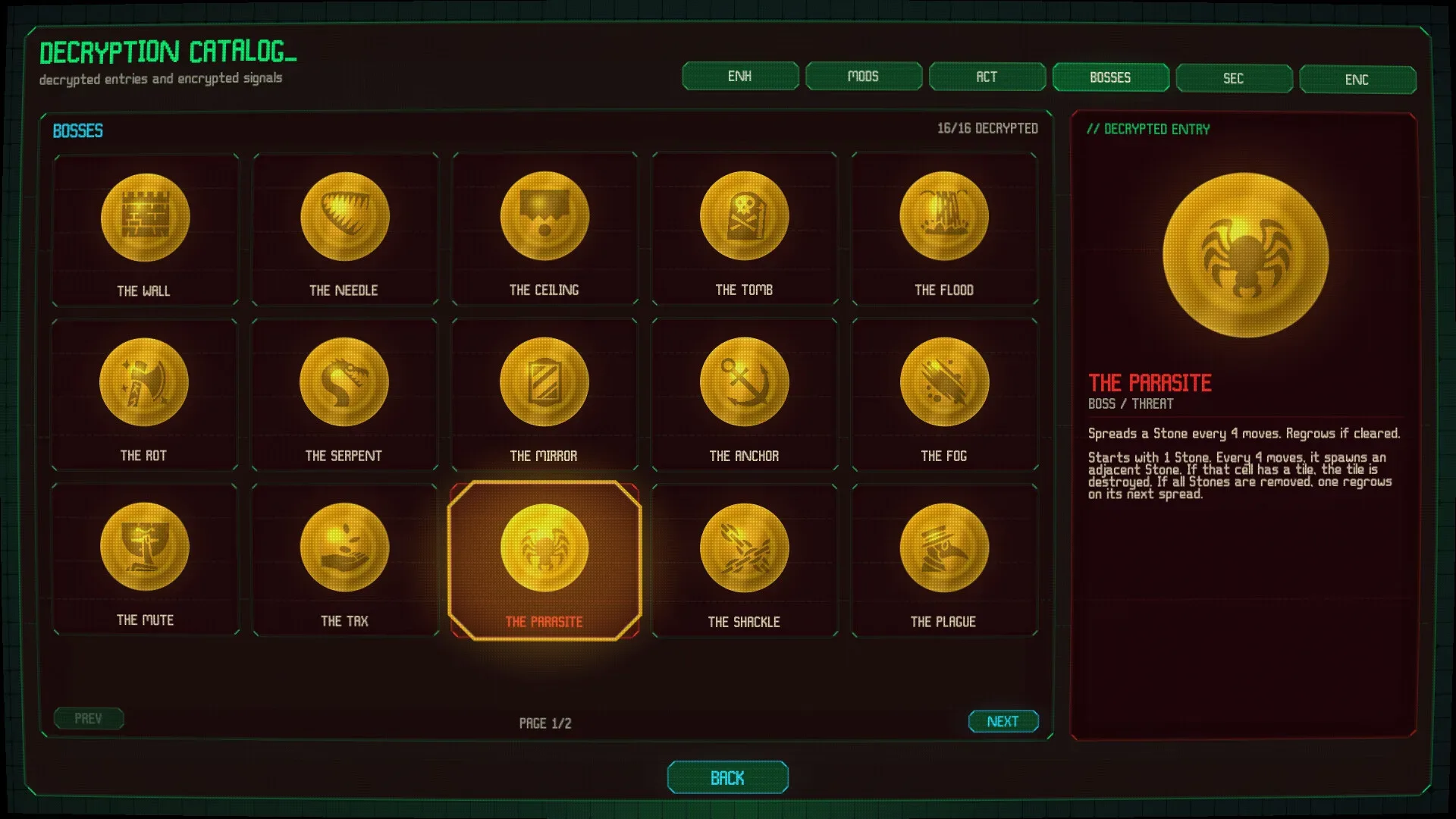
- Boss encounters: seven rotating bosses and a fixed final boss, The Mirror, at boot 6.
- Online multiplayer: casual matchmaking and private rooms are included.
That structure suggests a demo intended to teach both immediate decision-making and longer-term progression. An unlimited-run demo matters especially in a roguelike deckbuilder because players need repeated attempts to understand not just which option looks strongest in isolation, but which options continue to work once the board becomes crowded, the modifiers stack, and the boss requirements arrive.
There is one important terminology point here: a “deckbuilder” does not necessarily mean cards are the only or even primary play surface. In Numbers Go Up, the 4×4 grid is the active puzzle board, while mods and programs appear to supply the changing rules, effects, and build directions that make one run different from another. The game’s challenge is therefore likely to sit at the intersection of spatial planning—keeping viable slides and merges available—and build planning—choosing effects that improve a particular strategy.
A 2048 board, but with roguelike pressure
Traditional 2048-style play is easy to describe and hard to maintain: every slide affects the entire board, matches merge, and poor positioning can leave no legal move. Numbers Go Up uses that recognizable language, then adds several sources of variability. Mods can be stacked; enhanced tiles provide another category of board-changing element; programs and hacks expand the player’s toolkit; and bosses act as gates on the way through a run.
The announcement describes a complete run as six boots followed by Endless. “Boots” appears to be the game’s run-stage terminology, with The Mirror positioned as the fixed boss at boot 6 in the demo. Endless, meanwhile, indicates play can continue past that initial six-stage structure in the full feature outline. The standard run length is listed as about 30 minutes, placing the intended experience in a space where a player can pursue a complete build in one sitting rather than committing to a particularly long campaign.
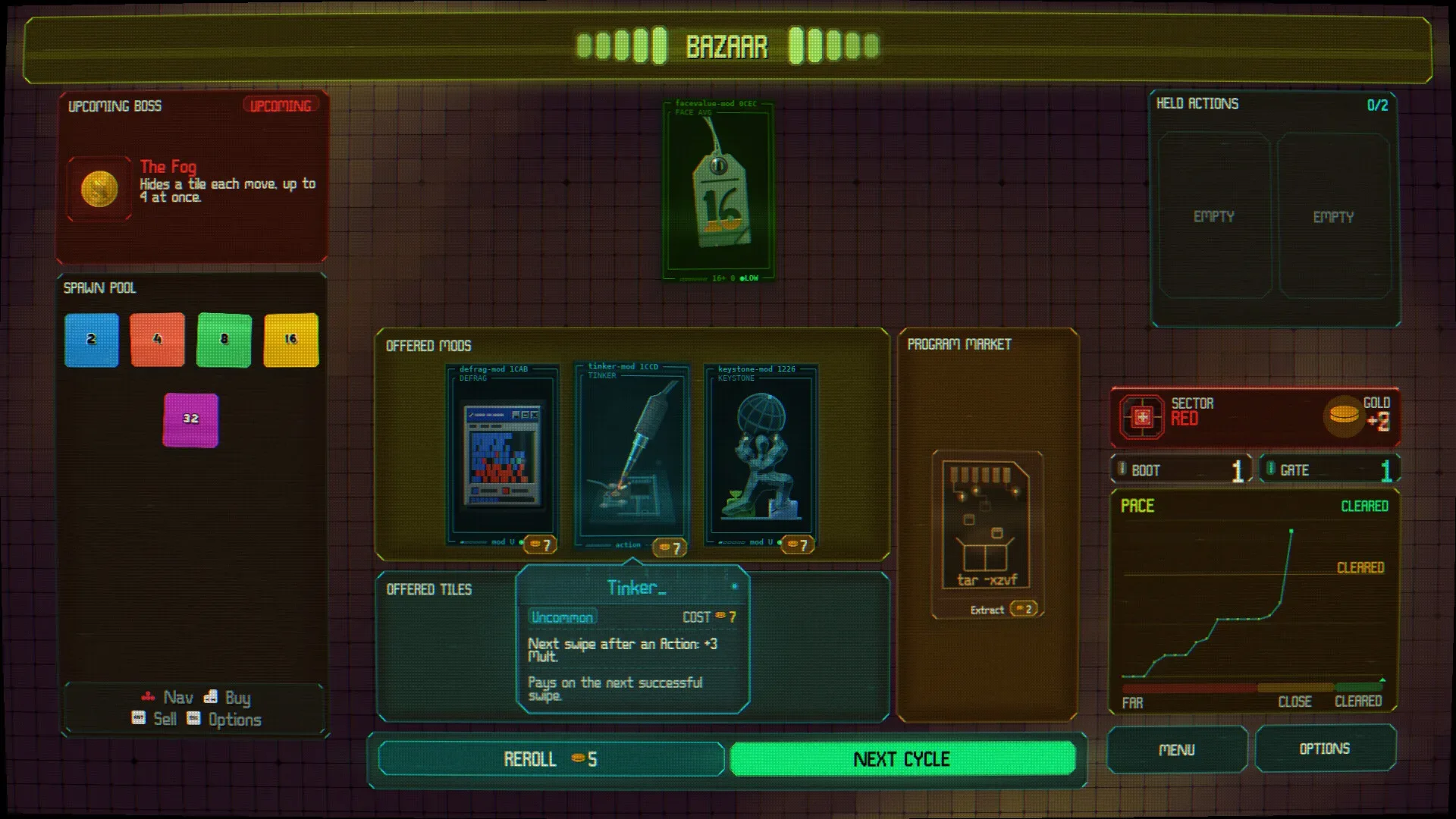
The phrase “stack black-market mods” is particularly revealing of the intended rhythm. A mod is generally a rule-altering upgrade: it might affect scoring, merging, tiles, shops, or another part of the run. The supplied details do not define individual mod effects, so it would be premature to assume exactly how they function. But the large mod counts make clear that variety and combinations are central to the project. The full game is described as having 125 mods in the demo-content breakdown, while its broader feature list says 120 mods. That discrepancy has not been clarified, so the safest reading is that the game is planned to have roughly 120-plus mods rather than treating either number as final.
A similar difference appears around enhanced tiles. The demo list says six are drawn from “20+” planned types, whereas the general feature summary lists 16 enhanced tile types. Those figures may reflect different scopes or an evolving plan, but no explanation is provided. The concrete demo number—six enhanced tile types—is the clearest expectation for players downloading the current build.
Seeded multiplayer makes the contest about choices
Numbers Go Up is not limiting its format to solo runs. The demo includes online PvP through a casual queue and private rooms, while the full game is planned to add ranked play and dedicated matchmaking. Its competitive structure uses seeded runs: both players receive the same tile spawns, mods, and shop offerings. The difference is what each player does with those shared conditions.
A seed is a reproducible setup for a run. Rather than generating a wholly new sequence for every participant, the game can use a specific seed to recreate the same underlying sequence of events. In a puzzle game with random elements, that is a meaningful design choice. It reduces disputes over one player receiving inherently luckier spawns or stronger shop choices and puts attention on routes, timing, risk management, and execution.
The planned game also supports shareable six-character seed codes. That should make it possible for players to compare attempts under matching conditions even outside formal matchmaking. If a particular seed produces a difficult boss setup or a powerful combination of mods, a short code offers a straightforward way for others to take on the same challenge.
Casual queue and private rooms are available in the demo, while ranked play is reserved for the full release. The feature list specifically names ELO-ranked play. ELO is a rating system commonly used to estimate comparative competitive strength: winning against stronger opposition generally helps more than winning against lower-rated opposition, while losses have the reverse effect. No specific ranking rules, resets, or matchmaking thresholds have been detailed, but its inclusion establishes that the full game is intended to support sustained competitive play rather than only informal races.
Seed parity does not eliminate every competitive variable. It deliberately preserves the most interesting one: decision-making. On a tight 4×4 board, a move chosen for a short-term merge can change the next several turns, and a mod selected for one phase of a run may become a liability later. Two players can see the same inputs yet create sharply different boards. That is the practical appeal of the format, particularly for players who enjoy studying routes and iterating on their choices.
Progression in the demo and the wider plan
The demo has its own unlock structure. Eleven of its 40 mods become available through play, and the two included sectors have encryption levels E1–E3 behind separate unlock ladders. In practical terms, this means new runs should not be entirely identical even before considering different shops, tile sequences, or player decisions. It also makes the demo suitable for players who want goals beyond a single successful clear.
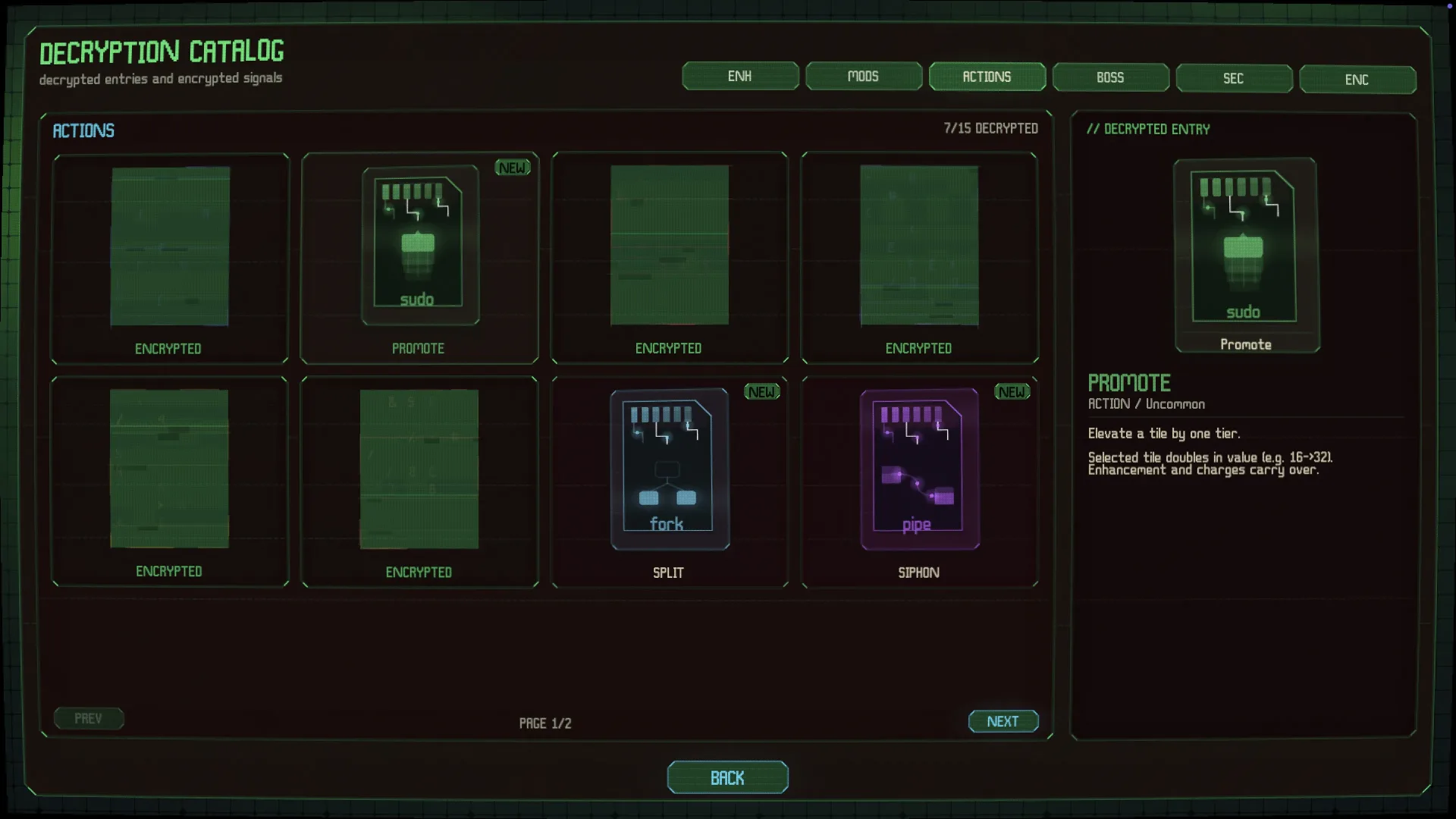
The full-game outline is substantially broader: seven sectors, each with six encryption levels; 20 hacks; 16 boss gates; six boots and Endless; multiplayer in casual, private, and ranked formats; and the larger pools of mods, programs, and tile types. A “sector” is explicitly identified as a game mode, although the supplied information does not explain how the sectors differ. Likewise, hacks are listed as a system but their effects have not been described. They should be treated as planned mechanics rather than promises of a specific playstyle.
For people seeking more Steam demos with unusual multiplayer hooks, Potion-making: Path of the Alchemist’s Steam demo is another recently covered PC project, though its brewing-and-recipe focus is very different from Numbers Go Up’s tile-merging competition.
Steam Deck and controller considerations
Deev Interactive lists full controller support and says Numbers Go Up is designed for Steam Deck. For a grid-based game, controller support can be more important than it first appears. Inputs need to make directional movement immediate and unambiguous, while menus for mods, shops, programs, and other choices need to remain readable and manageable away from a mouse. The available information does not provide performance details or a formal compatibility designation, but the stated design goal indicates handheld play is part of the intended use case.
Numbers Go Up is currently announced for Steam only, with its release date still marked TBD. The demo is the available way to assess the game’s board movement, progression, PvP structure, and controller implementation. Players interested primarily in competition can try casual matches or arrange private rooms now; players looking for a ladder will need to wait for the full version’s ranked mode.
What the demo can tell players now
The key draw is the pairing of a highly legible puzzle format with systems designed for experimentation. The board rules are recognizable at a glance, but the roguelike framework promises builds that change how those rules are approached. Unlimited runs provide time to probe that interaction, and seeded PvP gives the game a clear answer to the usual question of fairness in randomised competitive modes: both sides begin with the same opportunities.
The demo does not settle the scale of every final-game feature, and the differing mod and enhanced-tile totals mean prospective players should regard the larger content figures as provisional. What is firm is the playable slice: a free Steam demo with 40 mods, two sectors, E1–E3 progression, a boot-6 encounter with The Mirror, and casual or private online PvP. For a game about making numbers climb until the rules wobble, that is a substantial amount of system pressure to put under the microscope before launch.