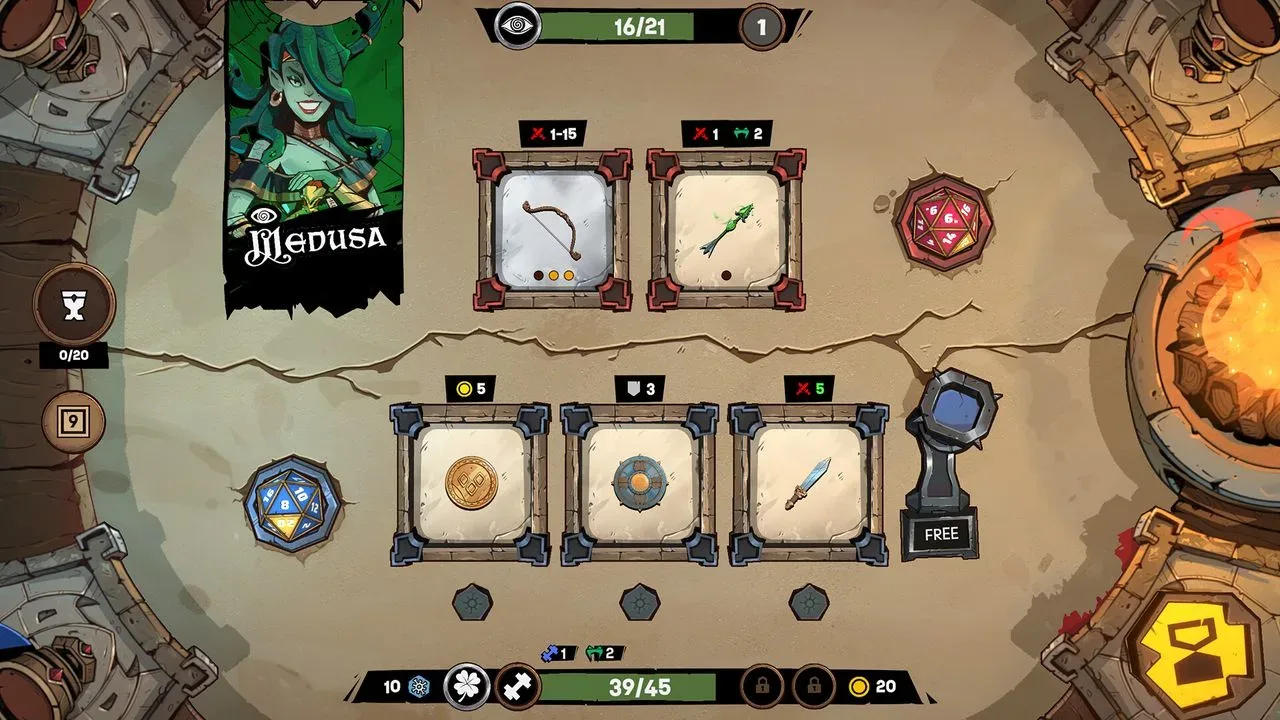
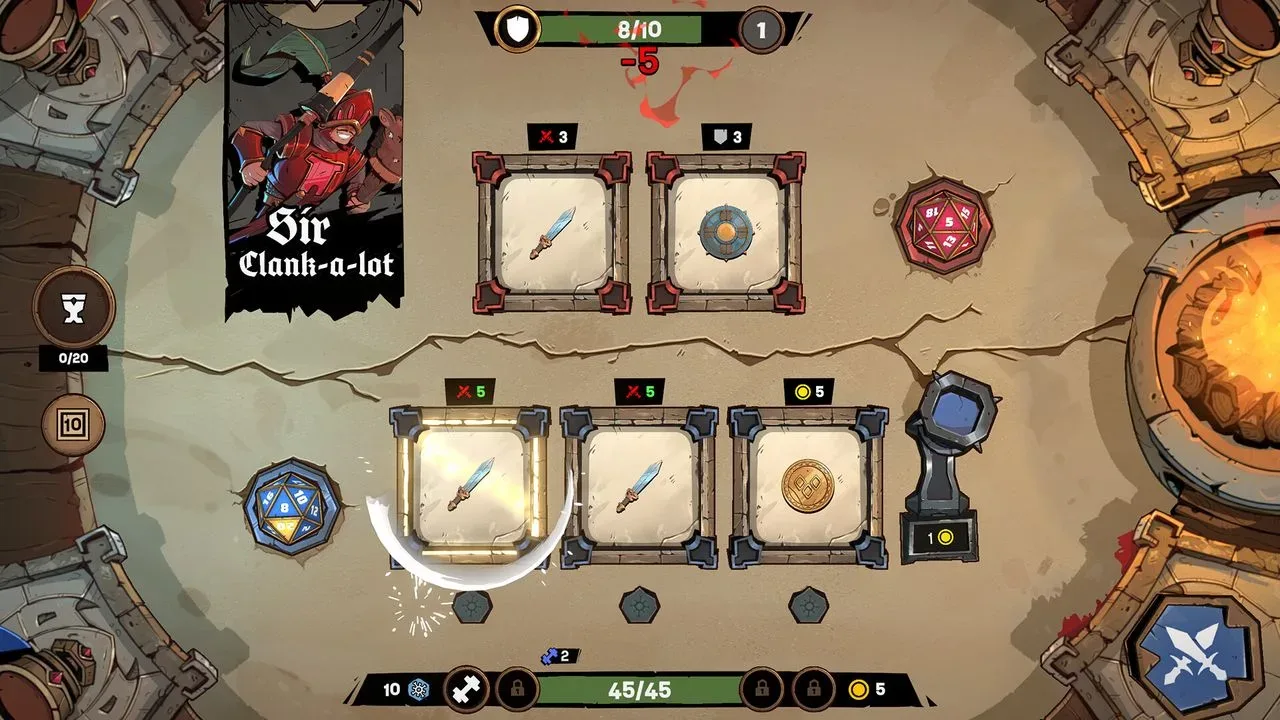
Slots & Slaughter, the roguelike deckbuilder from developer Laser Castle and publisher Indieformer, now has a demo available for PC through Steam. Its central twist is unusually direct: a broke gladiator does not simply pick equipment before combat. They use a slot machine to acquire it.
The setup puts chance, spending pressure and combat preparation at the centre of every run. The first spin is free, but every reroll after that costs twice as much as the one before it. That rising price means the decision is not only whether a newly rolled piece of gear is useful. It is also whether it is useful enough to stop gambling and enter the next fight with what is already on hand.
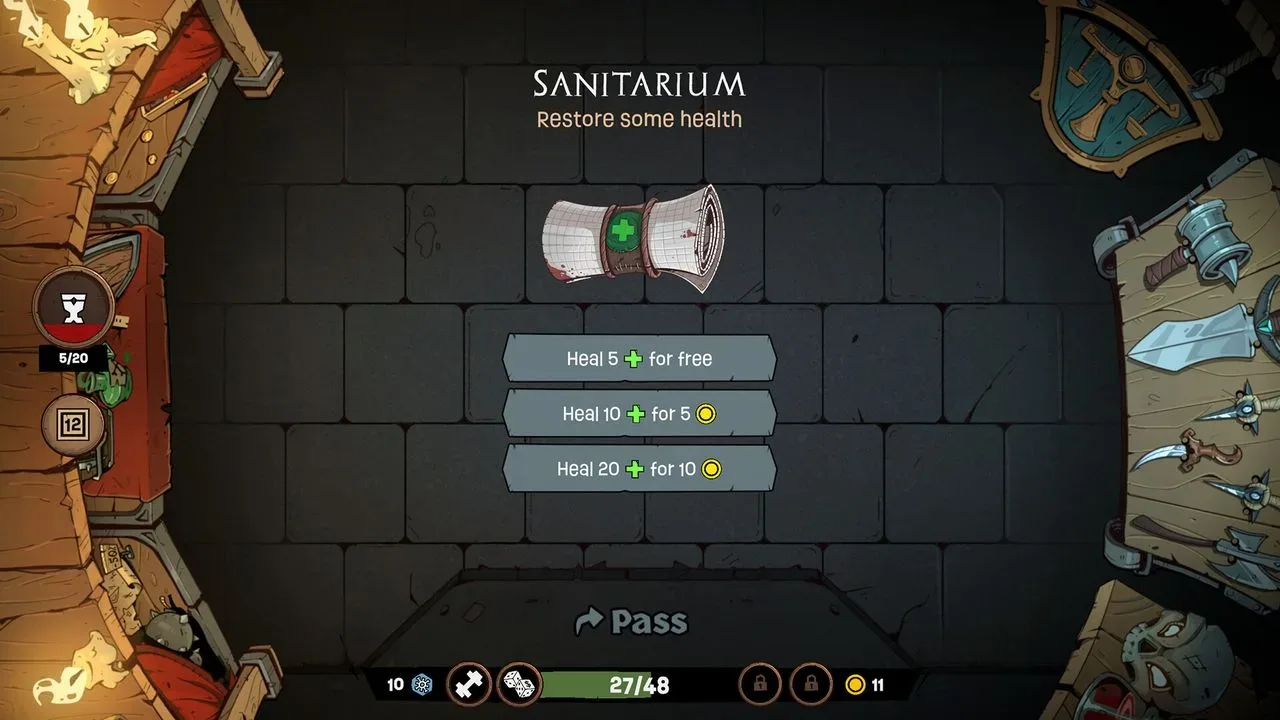
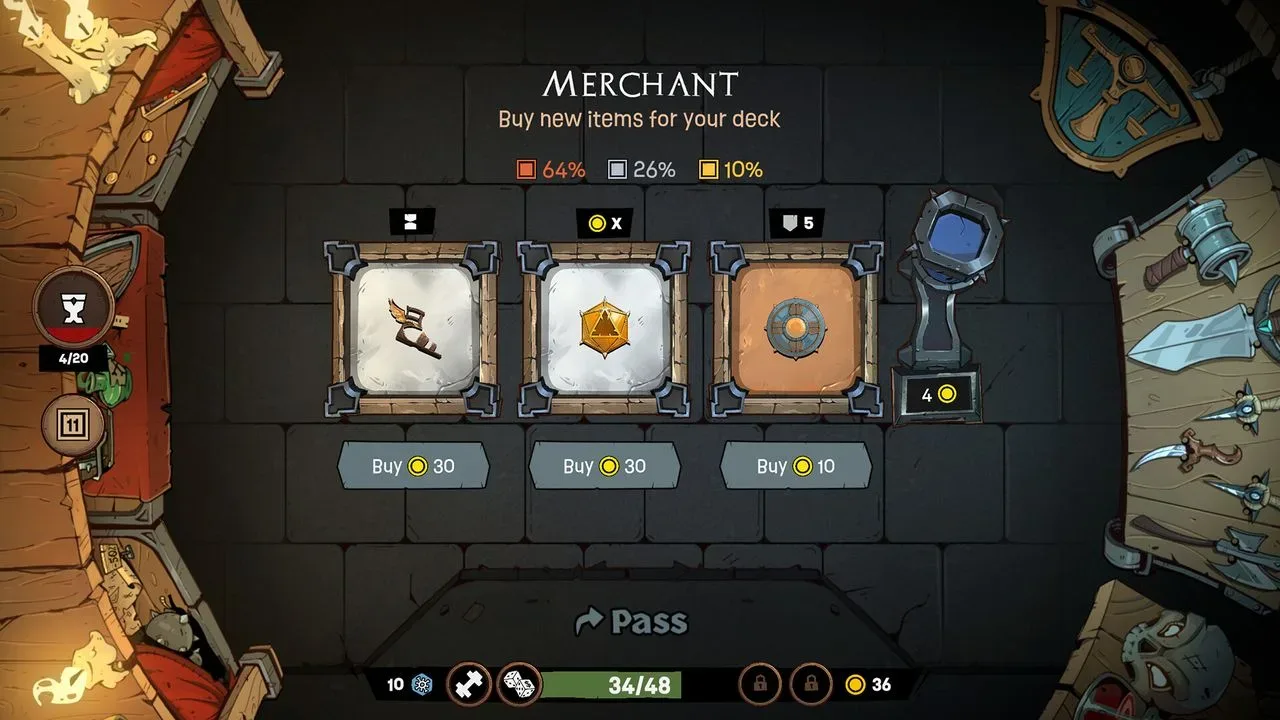
The demo covers a nine-week season of bouts and leads into boss fights. Named opponents include Dopaminotaur, Cactus Maximus and Sir Clank-a-lot. Between matches, players can visit the Sanitarium to recover and the Merchant to replenish supplies. The full game is planned to add more than 50 items, including legendary gear, more than eight boss types, further difficulty settings and an endless mode.
A deckbuilder where the deck is equipment
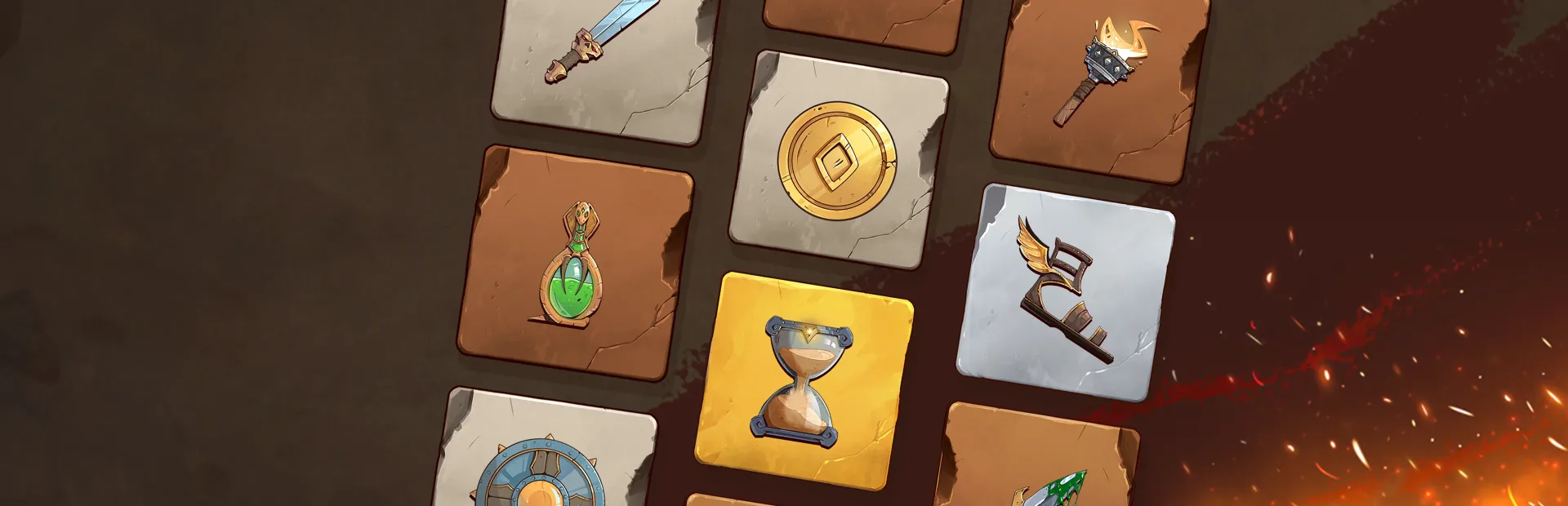
In a conventional deckbuilder, a player generally builds a set of cards and draws from that set during battles. Slots & Slaughter describes its gear as the deck instead. The items won from the slot machine are the resources that define the gladiator’s fighting prospects.
That distinction matters because it frames every spin as an act of deck construction. A player is not only chasing a single powerful reward; they are shaping the collection of equipment that will carry them through a season. The game’s announced structure suggests the key tension lies in making a viable setup from uncertain rewards before the escalating reroll cost makes further searching an expensive risk.
Deckbuilding here refers to the strategic assembly of the tools available in a run. It does not necessarily mean the game uses a traditional hand of cards. The essential idea is that the player’s available items create possibilities, constraints and combinations. In Slots & Slaughter, those tools arrive through a slot-machine mechanic rather than a predictable shop selection or a fixed reward track.
That is why the free opening spin is significant. It offers a starting point without immediate cost, while the doubling cost for later rerolls creates a sharp economic curve. A second chance might feel manageable; repeated attempts become progressively harder to justify. Since the announcement does not detail the game’s currencies or exact item effects, the specific calculation remains unknown. But the basic design intention is clear: holding out for a better result has a mounting price.
What the automated combat structure changes
Once equipment is set, fights in Slots & Slaughter play out automatically. Before the action begins, a d20 roll decides who attacks first.
Related coverage includes Slots & Slaughter Demo Brings Slot-Machine Deckbuilding to Steam.
A d20 is a twenty-sided die, commonly used as shorthand for a roll with 20 possible outcomes. In this case, it determines initiative: which combatant gets the opening swing. Initiative is a technical term for turn order, and it can matter greatly in any battle where an early action can alter the rest of an encounter.
The announcement describes the battles themselves as automatic, meaning the player’s direct, moment-to-moment control is focused before the combat resolution rather than during it. The meaningful choices therefore appear to be concentrated around acquiring gear, deciding whether to reroll, preparing between bouts, and entering the next confrontation with an accepted build.
Automated combat does not inherently mean a lack of strategy. It shifts strategy toward preparation and probability. The player evaluates the equipment assembled so far, weighs the cost of changing it, then sees whether that preparation survives the fight. With a random roll deciding who swings first, there is also a stated layer of uncertainty once a bout starts.
For players considering the demo, that is the clearest expectation to bring in: Slots & Slaughter is presented as a game about setting the conditions for combat, not manually executing every strike. The gladiator’s fate rests on loadout decisions and the game’s chance-driven systems.
Nine weeks, bosses and stops between bouts
The demo’s season format gives those equipment choices a defined frame. Players attempt to survive nine weeks of automated gladiatorial bouts, culminating in boss encounters. A season structure can make each stage feel consequential because short-term decisions must support progress across multiple fights, rather than only the next match.
Between those bouts, the Sanitarium and Merchant offer two distinct forms of support. The Sanitarium is where the gladiator can patch up, while the Merchant serves as a place to restock. The announcement does not specify all services, resources or limits associated with either location, so it would be premature to treat them as a detailed upgrade system. Still, their inclusion establishes that the run is not limited to spins and battles: there are recovery and supply-management intervals between arena appearances.
The boss names reinforce the game’s deliberately playful gladiatorial tone. Dopaminotaur riffs on the Minotaur and the reward-chasing language associated with gambling systems. Cactus Maximus combines Roman styling with a prickly image, while Sir Clank-a-lot suggests a heavily armored foe. Beyond the names, no mechanics for these bosses have been specified, so players will need the demo to reveal how differently they test a build.
The stated objective is to win freedom. That gives the seasonal run a simple narrative purpose: the gladiator is broke, forced into a system of spins and fights, and trying to escape it by surviving the arena.
Why the reroll cost is the game’s clearest pressure point
The slot machine is more than a visual theme. It is the source of gear and the game’s clearest risk-management mechanic. Each reroll costs double, so the cost grows geometrically rather than increasing by a flat amount.
Geometric growth means a value is repeatedly multiplied. In practical terms, a doubling cost can make later rerolls dramatically more expensive than early ones. The exact starting cost is not provided, but the consequence does not depend on that number: repeated dissatisfaction becomes costlier at an accelerating rate.
This gives each player a recognizable question after a spin: is the current result good enough for the upcoming fight, or is it worth paying a larger price for another chance? The decision is especially interesting in a roguelike framework, where players generally adapt to the situation produced by a particular run instead of relying on one permanent, guaranteed setup.
Roguelike is a broad term, but in this context it signals a run-based structure driven by changing circumstances and repeatable attempts. The confirmed details support that reading: gear is won through chance, the fights progress through a nine-week season, and the full game is planned to have additional difficulty settings and an endless mode. The announcement does not explain progression beyond those points, so there is no basis to assume specific permanent upgrades, resets or unlock systems.
There is a potential appeal in that clarity. Players who enjoy optimizing a build under pressure may find the reroll equation compelling, while those who dislike systems based on uncertain rewards can use the demo to see whether the preparation layer offers enough agency. The demo’s value is precisely that it lets the slot-machine-and-combat loop speak for itself before the full release.
What is confirmed for the full game
The demo is available now on PC via Steam. It features the nine-week season, automated bouts, slot-machine equipment acquisition, the d20 opening-order roll, boss fights, the Sanitarium and the Merchant.
For the full version, Laser Castle and Indieformer have said players can expect:
- More than 50 items, including legendary items.
- More than eight boss types.
- Additional difficulty settings.
- An endless mode.
The item count indicates that the finished version is intended to offer more room for varied equipment setups than the demo alone. Legendary items are identified as part of that planned pool, though their abilities, rarity rules and acquisition requirements have not been described. Likewise, the announcement confirms expanded difficulty and an endless mode without laying out the exact rules for either.
For a wider look at software that is also being built for desktop platforms, see this update on KytyPS5 builds for Windows, Linux and macOS. Slots & Slaughter, by contrast, is specifically confirmed here for PC through Steam.
Ultimately, the demo’s proposition is compact: accept the role of an indebted gladiator, spin for the equipment that becomes a build, decide when to stop chasing a better result, and see whether that preparation can outlast a season of arena combat. The game’s strongest stated hook is not merely that it has randomness, but that it makes the cost of pursuing a better outcome rise with every reroll.