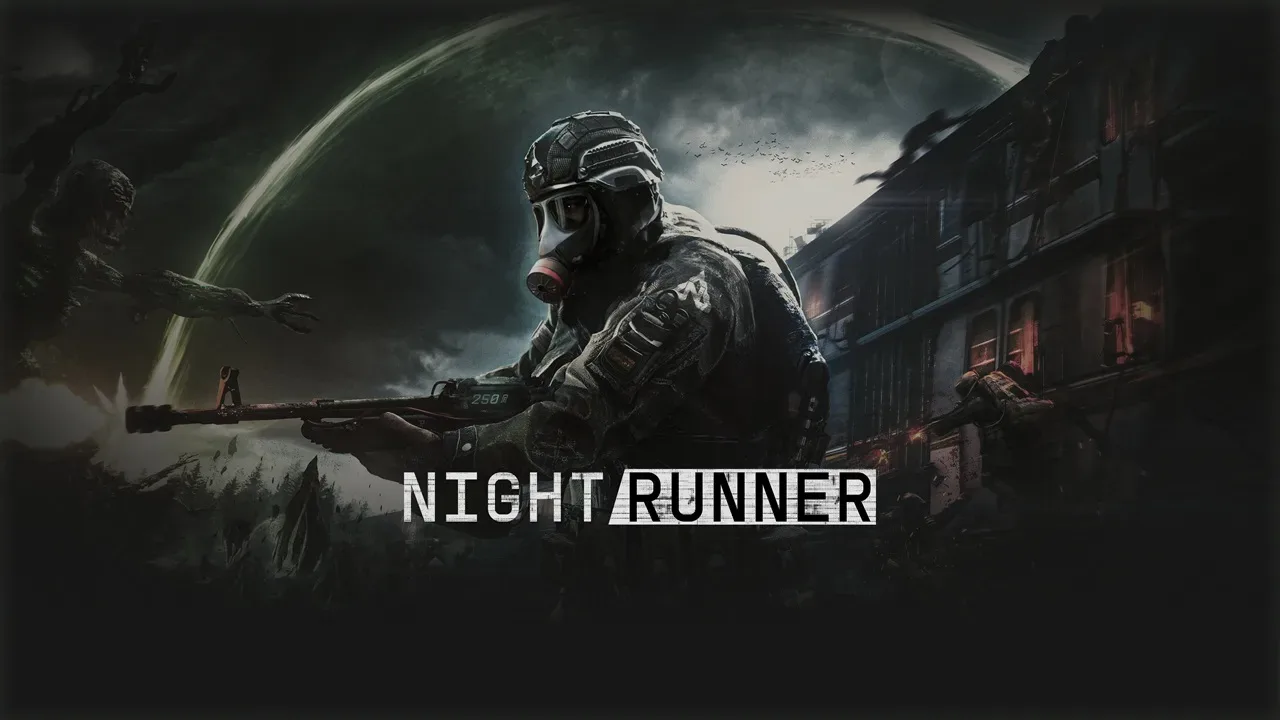
NightRunner’s first public playtest is scheduled to begin Saturday, October 3, 2026. The upcoming PC game puts one to four players aboard a perilous rail network where the job is far more involved than simply riding the train to the next stop. Crews must deliver cargo through hostile territory, leave the relative safety of the railcars to scavenge, protect the train against mutants, and get back on board before the sun catches them.
The initial playable build centers on an area called The Silent Blocks. There, squads will defend the NightClaw Wagon while gathering the resources needed to keep their operation moving. It is an immediately clear setup for co-op tension: the train is both the team’s transport and an objective that needs defending, while the most useful supplies appear to require excursions into dangerous scavenging zones.
A newly released Devlog trailer offers the latest extended look at the project. NightRunner is currently planned for Steam in 2027, with playtest registration and wishlist options available through its Steam page.
A horde-survival game built around getting back to the train
NightRunner is described as a PvE horde-survival extraction game. Those terms outline the broad shape of the experience, but each carries a specific implication.
PvE, or player versus environment, means the opposing force is controlled by the game rather than another human squad. In this case, the central threat is deadly mutants. That makes the planned combat structure cooperative by design: players are expected to work together against the world’s hazards and enemy pressure rather than compete directly with other players.
Horde survival suggests combat against large or sustained groups of enemies, with survival and defense being more important than a single isolated encounter. The NightClaw Wagon is especially significant in that arrangement. When a team is defending the wagon, players are not only trying to keep their own Runner alive; they are protecting the mobile base that enables the wider cargo run.
Extraction is the other crucial piece. In a conventional mission structure, completing an objective may be enough. An extraction loop adds another requirement: players must successfully leave the dangerous area with what they collected. NightRunner frames that exit as a fight to get back aboard the train. A successful scavenging push therefore involves more than locating loot. The squad needs to judge whether it can survive the return trip and secure its haul.
The game’s threat of sunrise gives this idea a thematic time pressure. The available details do not establish exactly how that system will work from run to run, so it would be premature to treat it as a confirmed timer with fixed rules. What is confirmed is the intended tension: crews are fighting hostile creatures and making resource decisions while trying to avoid being left out when the sun arrives.
The Silent Blocks will introduce the core risk-and-reward loop
The first playtest sends players to The Silent Blocks, a location built around defending the NightClaw Wagon and scavenging materials to keep the rails alive. That phrasing points to a loop in which the train’s continued movement is tied to the team’s willingness to venture into danger.
Scavenging zones are expected to contain both resources and more powerful loot. In practical terms, that creates a familiar but meaningful co-op dilemma. A team can prioritize a safer return with modest supplies, or push farther in pursuit of a more valuable payoff. Neither choice is automatically right. The best call will depend on enemy pressure, what the group has already recovered, the condition of the train defense, and the tools available to the squad.
The consequences are high because a failed escape can mean losing everything gathered during the run. That is the extraction element doing real work: loot only becomes secure if the crew survives long enough to extract it. The design aims to turn each trip outside the train into a decision rather than a routine detour.
Because NightRunner is positioned as PvE, communication should be especially important. The game’s announced structure naturally invites players to divide responsibilities: one person may focus on holding off mutants, another may search for resources, and others may provide combat or support cover. Whether those roles are rigidly separated or can overlap will be one of the details the playtest may help clarify.
Four Runners, distinct kits and a persistent progression layer
Players will choose from four playable Runners. Each has a unique kit designed to influence combat, scavenging and support duties. The exact abilities and identities of those Runners have not been detailed in the available information, but the stated role categories indicate that the game is not treating every squad member as an identical fighter.
That distinction could matter substantially in a four-player game. A kit geared toward support may help the squad endure a defense phase or recover after an aggressive loot run. A combat-focused kit could be useful when mutants are pressuring the NightClaw Wagon. A scavenging-oriented Runner may affect how efficiently the team can search risky zones. These are potential tactical uses inferred from the announced categories, not confirmed character-specific functions.
NightRunner also includes Runner-Tech upgrades with permanent unlocks. This is the game’s persistent progression component: improvements that continue beyond a single attempt rather than disappearing at the end of every run. Permanent unlocks can give players a reason to return after a failed extraction and, as described here, are intended to help crews tackle tougher jobs.
The game pairs that ongoing progression with roguelite mechanics. A roguelite typically uses repeatable runs where failure carries meaningful consequences, but may retain some progression between attempts. In NightRunner’s case, the announced blend appears to be the tension between risking run-specific loot and building longer-term Runner-Tech unlocks. The final balance between those systems remains to be seen, but the premise is clear: a lost haul should sting, while permanent advancement may help make future attempts more capable.
What the October 3 playtest can establish
A first playtest is not the same thing as a finished game, and NightRunner still has a 2027 Steam launch target rather than a confirmed release date. The October build is nevertheless an important opportunity to establish how the game’s many interlocking ideas feel in motion.
The headline question is whether the train works as a strong focal point for the action. It has the potential to bind several systems together: cargo delivery gives the squad a reason to travel, the NightClaw Wagon needs defending, scavenging maintains the operation, and returning to the train defines extraction. If those pressures reinforce one another, the rail network could provide a distinct rhythm for a co-op survival game.
Another key question is how readable the risk decisions are for players. High-risk, high-reward scavenging is most compelling when a squad has enough information to make a genuine choice, even if that choice goes badly. Players need to understand that a zone is dangerous, have a reason to want its rewards, and feel that an escape remains possible through coordination and sound judgment. The available announcement confirms the concept, while the playtest will be the first public chance to assess its practical shape.
The four Runner kits will also be central. Distinct kits can make a group feel interdependent and encourage teams to adapt their plans, but they need to remain useful under pressure. In a game where defending, searching and escaping may all happen in close succession, players will likely be watching how each role contributes when the plan falls apart.
How to follow NightRunner’s development
NightRunner is headed to Steam in 2027. Interested players can sign up for the October 3 playtest and wishlist the game through Steam. The Devlog trailer is also available now for a deeper preview of the project’s current direction.
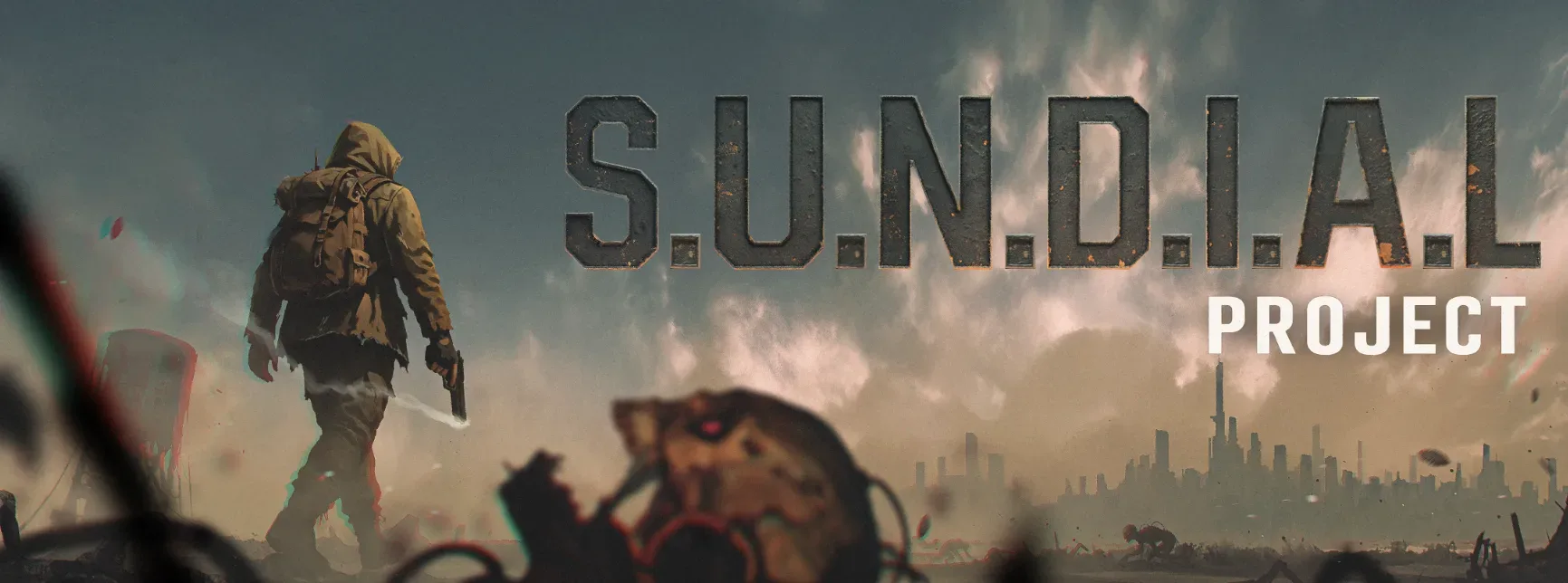
The game joins a growing set of PC projects using extraction-style stakes in different ways. For another upcoming Steam release built around PvPvE extraction runs, see Project S.U.N.D.I.A.L.’s announced 2027 plan. NightRunner, however, is explicitly built around cooperative PvE play, a defensible train, cargo delivery and the pressure to make it back on board before dawn.
For now, The Silent Blocks is the first stop. The October playtest should offer the earliest indication of whether a squad can keep the NightClaw Wagon alive, collect what it needs and escape with its cargo intact.