PC builders watching graphics-card prices may have another reason to keep their upgrade plans flexible. A leak circulating through Chinese tech channels claims that MSI has raised GPU prices in China, with Nvidia’s GeForce RTX 5080 reportedly receiving by far the biggest increase.
The claim has not been independently confirmed, and it is important to treat the figures as leak-based rather than as official MSI pricing. Still, the alleged change arrives during a period of strained component supply and rising PC hardware costs. If accurate, it would be another sign that the RTX 5080 remains especially exposed to the market pressures surrounding high-end gaming hardware.
What the leak alleges
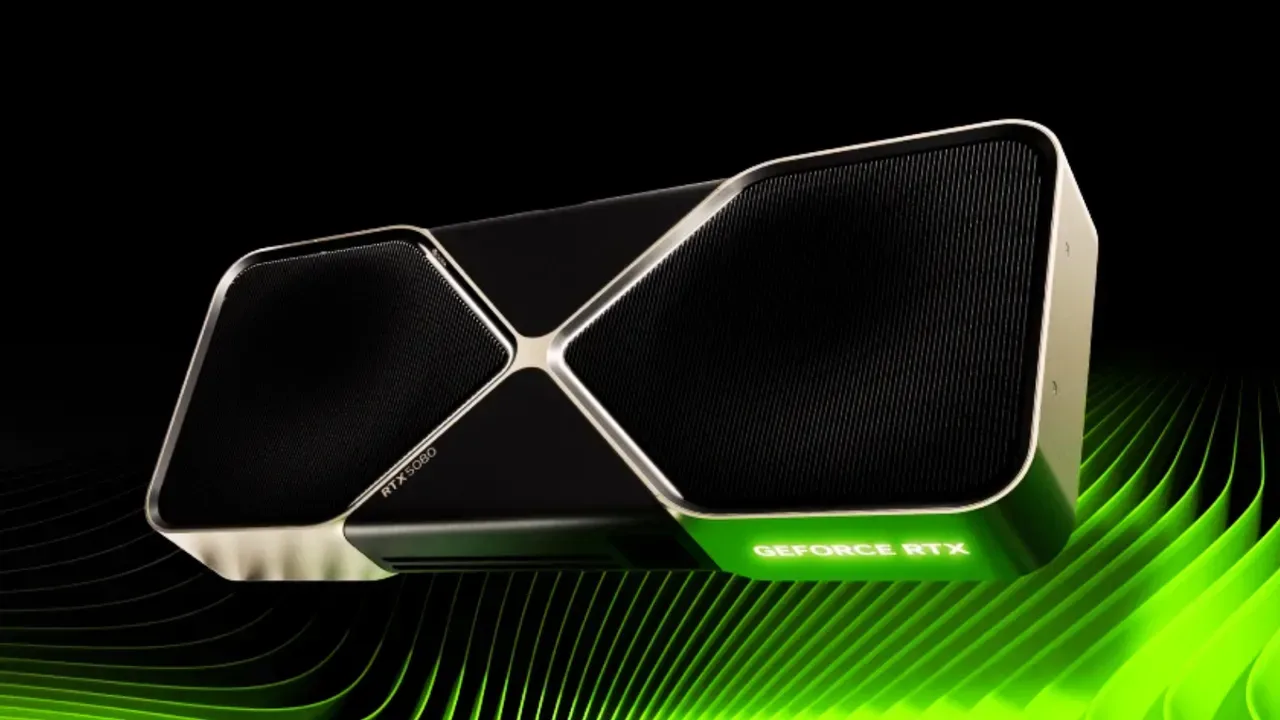
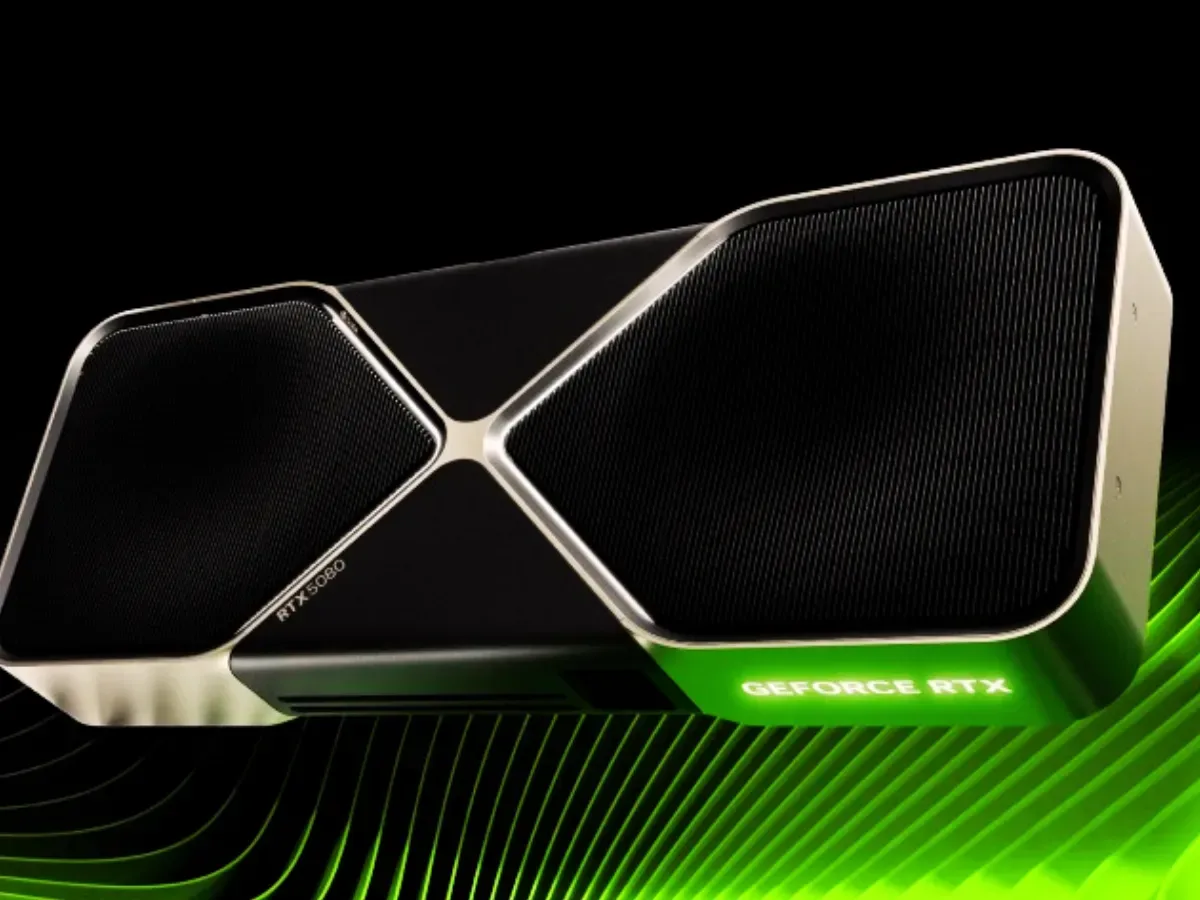
The reported MSI adjustments apply across its graphics-card range in China, but the RTX 5080 is said to be the standout case. The leak describes an increase ranging from 1,300 yuan to 8,000 yuan for that model, equivalent to roughly $194 to $1,199 using the conversions provided alongside the claim.
That is a range of reported increases, not a single universal MSRP or a confirmed new shelf price. The wide gap suggests that any impact could vary considerably by specific MSI card configuration, seller, or other pricing circumstances that are not established by the leak.
Lower-tier cards are reportedly seeing a much smaller movement. The RTX 5060, for example, is said to be increasing by between 200 and 500 yuan, roughly $30 to $75. Even there, though, prospective buyers should avoid treating a report about one country’s market as proof that every version of a GPU—or every region—will move by the same amount.
Why the RTX 5080 is the focal point
The RTX 5080 launched as part of Nvidia’s Blackwell graphics-card family with a $999 starting price. That starting point was difficult to find for a time, and the market had reportedly begun to look more normal before broader memory pressure began pushing prices upward again from February.
A GPU is the processor responsible for rendering game graphics and other visually intensive workloads. The RTX 5080 sits near the top of Nvidia’s consumer gaming range, which makes it a costly part already—and makes a four-figure reported price rise in one market particularly consequential. For buyers, the difference between a recommended starting price and the real cost at retail is what determines whether a build remains viable.
In the United States, RTX 5080 cards were listed from around $2,199 at the time of the report. That figure is already dramatically above the model’s original $999 starting price. A comparable increase reaching the US would put the entry point at $2,400 or higher, although that outcome is speculation rather than a confirmed plan.
Related coverage includes MSI GPU Price Hike Leak Points to Further RTX 5080 Pressure in China.
The central takeaway is not that US prices have definitely changed, but that a reported Chinese adjustment could be a warning signal for a supply-constrained product category.
China pricing is not a US price announcement
There is no confirmation that MSI is imposing the same increases outside China. Regional graphics-card pricing can differ because of supply allocations, distributor arrangements, retailer competition, local demand, currency conditions, and other factors. A price movement in one country is therefore not a reliable calculator for what a buyer elsewhere will pay.
It can nevertheless matter. High-end GPU availability is tied to a global supply chain, so sharp price shifts in a major market can reveal where pressure is building. The responsible reading is cautious: the leak may indicate tighter conditions around certain cards, but it does not establish that American stores will follow with a matching increase.
That distinction is especially useful for anyone comparing listings. A retailer’s price is not necessarily Nvidia’s recommended starting price, and it is not necessarily proof of a manufacturer-wide change. Buyers should compare the exact model, the seller, and the region before deciding whether a given listing reflects a broader trend or simply an unusually expensive configuration.
Supply constraints remain part of the picture
The reported price movement follows Nvidia’s removal of the RTX 5080 from its own storefront because of hardware shortages. Nvidia has said it will continue producing the RTX 5080 and intends for it to return to its marketplace once supply stabilizes. No firm timetable for that return has been established.
Availability matters as much as a listed price. When a product is difficult to source, the lowest advertised figure may not be meaningful to a shopper who cannot actually buy the card at that amount. Conversely, a high price on a single available model does not show that every option has permanently reached that level. Both availability and comparable listings need to be considered together.
The issue also reaches beyond the GPU itself. The continuing RAM crunch has made a broader range of gaming-PC components more expensive. RAM, or random-access memory, is the short-term working memory a PC uses while programs and games are running. It is distinct from a graphics card, but a shortage affecting memory supply can make an entire build costlier even before the buyer selects a GPU.
Why memory pressure could persist
Samsung has indicated that memory supply is expected to tighten over the following year. Multiple RAM manufacturers have also reportedly sold through their manufacturing capacity for the next year, leaving less capacity available for consumer-focused products.
That does not mean every PC part rises in price at the same rate. The alleged gap between the RTX 5080 and RTX 5060 increases illustrates the point: component markets can hit premium products more severely than lower-specced alternatives. It does mean builders should think about the cost of a full system rather than focusing solely on the graphics card.
Demand from AI companies is another part of the supply discussion, as those firms are taking a large share of global memory production. For gaming-PC buyers, the practical implication is straightforward: the pressure on memory can affect the affordability of upgrades even when the desired purchase is a graphics card rather than a RAM kit.
Practical implications for PC builders
For now, the most sensible response is information rather than panic. The MSI claims are unverified, restricted to China in the information available, and do not amount to an announced worldwide pricing policy. Rushing to buy an expensive GPU solely because of a leak can be just as risky as ignoring a changing market.
- Check exact models: An RTX 5080 name alone does not make two cards equivalent in price. Compare the precise board-partner version and seller.
- Separate MSRP from retail pricing: The $999 launch starting price is a reference point, not a guarantee of current availability at that figure.
- Budget for the whole build: Memory constraints can raise the cost of RAM and add to pressure around other PC components.
- Watch stock as well as price: A card’s return to a manufacturer storefront depends on supply stabilizing, not merely on a visible price tag.
- Do not assume regional parity: A reported China increase does not confirm a US increase, much less one of identical size.
The broader moment is a reminder that PC gaming hardware is being shaped by supply as much as specifications. Buyers who can wait may want to track availability and multiple retailers instead of anchoring their decision to one unusually high listing. Those whose system needs an upgrade immediately may find that choosing a less supply-sensitive tier is more realistic than treating a flagship-adjacent GPU as the only route to a capable gaming PC.
Hardware costs have always influenced what games people can play and how they play them, whether that means a current high-end build or a tiny retro machine doing more with less. For a very different example of constrained-computing creativity, this Commodore Amiga project runs music software in 1 MB. The RTX 5080 situation is not comparable in purpose or era, but it underlines why changing component economics remain relevant across PC culture.
Until MSI confirms or disputes the reported China prices, the biggest fact remains uncertainty. The RTX 5080’s supply is constrained, memory supply is expected to tighten, and the alleged price changes point to further pressure in at least one market. What they do not yet prove is a global increase—or a specific date and price for the next RTX 5080 available to a shopper outside China.