Black Friday may fall on November 27 this year, but the familiar one-day buying frenzy has long since expanded into a much wider sales window. That matters for anyone shopping for a living-room gaming screen: the question is no longer simply whether to wait for the calendar’s biggest retail date. It is whether a current reduction, a panel type and a set of ports line up with the way you actually play.
Five early offers span a remarkably broad range. At one end is a 55-inch LG QNED AI listed at $300; at the other, a 77-inch Samsung S85H is listed at $1,798. Between them are OLED options aimed at players who care about deep blacks, fast refresh rates, variable-refresh-rate support and multiple HDMI 2.1 inputs. Discounts and inventory can change, so these should be treated as reported snapshots rather than promises that a price will remain in place or fall further.
The sensible way to read a TV deal is to separate three things that advertising often combines: screen size, picture technology and gaming connectivity. A bigger diagonal does not automatically mean a more capable gaming display, and a dramatic percentage reduction does not automatically make a model the best match for a room or a console setup.
There is also a practical limit to what the television itself solves. A 4K set can present a game sharply, but it will not make a large game download arrive faster. For the other half of a living-room setup, it is worth remembering that connection bottlenecks can sit elsewhere; our guide to why Ethernet can be slower than Wi-Fi outlines the kind of troubleshooting that may matter when the console, PC or network is the weak link.
The early TV deals at a glance
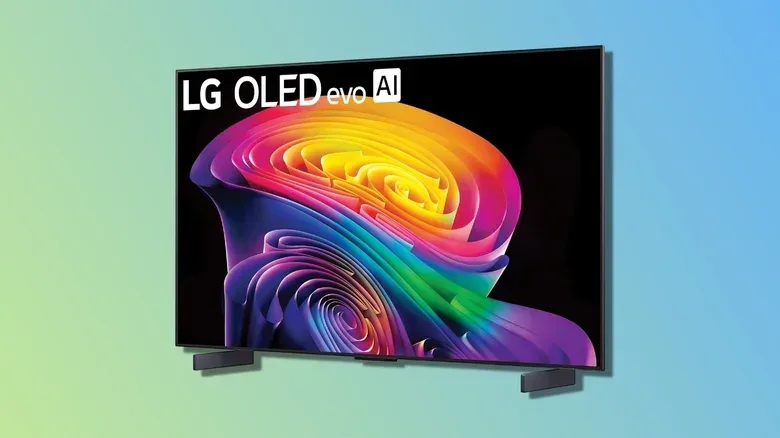
- LG OLED evo AI C6, 42-inch: listed at $890, described as 37% off and $520 below MSRP.
- Sony Bravia 6, 65-inch: listed at $1,198, down from $2,000 and described as 40% off.
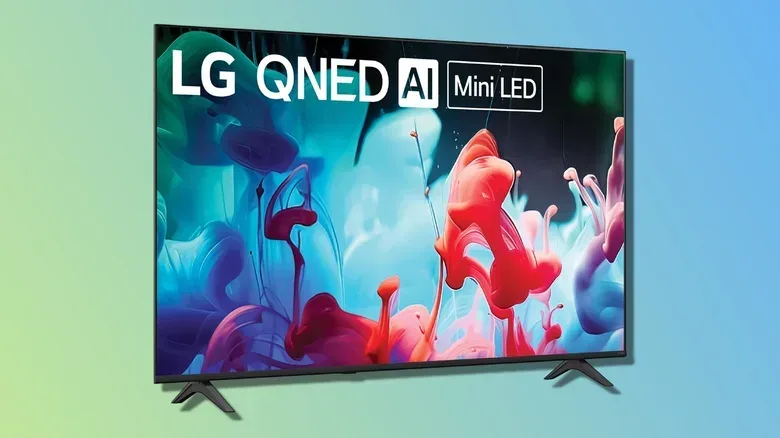
- LG QNED AI, 55-inch: listed at $300, described as 40% off.
- Samsung Class S85H, 77-inch: listed at $1,798, described as 18% off.
- Samsung S90H, 65-inch: listed at $1,398, a $500 reduction and described as 26% off.
Those figures establish the basic trade-off. The LG QNED is the inexpensive route to a 55-inch 4K-oriented set. The C6, S85H and S90H target buyers looking for OLED-level black performance or high-end gaming specifications. The Sony sits in the middle with a 65-inch screen, four HDMI 2.1 ports and 4K/120Hz support.
LG OLED evo AI C6: compact OLED with unusually game-focused specifications
The 42-inch LG OLED evo AI C6 is the smallest television in the group, but its feature list is tailored closely to a gaming desk or a smaller room. Its OLED panel is reported to provide deep blacks and high contrast. OLED, or organic light-emitting diode, means pixels can be illuminated individually rather than relying on a separate backlight. In straightforward viewing terms, that is why OLED displays are associated with more precise dark scenes: areas meant to be black do not have to be lit by the same broad backlight used for brighter portions of the picture.
The C6 is listed at $890 and has been described as reaching its lowest observed price, although a conflicting referenced price of $880 also appeared in the deal details. The more useful number for buyers is the stated $520 reduction from MSRP, alongside the need to verify the retailer’s live listing before checkout.
For games, the headline specification is an up-to-165Hz refresh rate with a stated 0.1ms response time. Refresh rate is how often a screen can update the picture per second. A higher maximum can help motion appear smoother when the connected system can supply matching frames. Response time refers to how quickly pixels transition; the low quoted figure is intended to limit lingering transitions during fast movement.
Related coverage includes Early Black Friday TV Deals Highlight OLED, Mini-LED and Big-Screen Savings.
The C6 also supports NVIDIA G-Sync and AMD FreeSync Premium. These are variable refresh rate, or VRR, technologies. Their purpose is to let a compatible display vary its refresh cadence in step with the output device, reducing the mismatch that can make motion look uneven. It is a feature worth valuing only in the context of compatible hardware, but it is a meaningful inclusion for a TV that may serve a console and a PC.
Four HDMI 2.1 ports with 4K support may be just as consequential as the panel. Rather than continually moving cables between a PC and multiple consoles, owners can keep several devices connected. The set also lists Dolby Vision, Filmmaker Mode with Ambient Light technology, and an A11 AI processor Gen 3 for picture upscaling and sound processing. Upscaling is the attempt to map lower-resolution material onto a 4K display; it does not turn old video into native 4K detail, but it is relevant if a screen will show a mix of older games, DVDs and lower-resolution streams.
Its reported limitation is equally important: it can handle some daytime glare, but a matte display is expected to be more effective at suppressing reflections. A buyer with a bright room should not overlook that caveat simply because the gaming specifications are strong.
Sony Bravia 6: 65 inches, four HDMI 2.1 ports and a dark-room caveat
The 65-inch Sony Bravia 6 is listed at $1,198, a reduction from $2,000. It runs Google TV and includes Gemini integration for voice control and smart-home use. Software ecosystems can matter for a television that will serve as the central screen for streaming as well as games, but the more direct gaming case comes from its connections and latency-oriented features.
The Bravia 6 has four HDMI 2.1 ports supporting 4K at 120Hz, VRR and auto low latency mode. Auto low latency mode, often shortened to ALLM, is intended to switch a compatible display into a lower-latency setting when the connected device calls for it. Low input lag refers to less delay between an input being sent and its appearance on the screen. Together with smooth motion, these are the specifications that make a TV more responsive in play rather than merely pleasant for video.
For films and slower-paced games, the reported picture assessment says the Bravia 6 performs especially well in a dark room. The corresponding warning is that bright scenes can appear dim. That does not make it a poor option; it makes room conditions central to the purchase. A person playing primarily at night may weigh that differently from someone whose screen faces daytime windows.
It is also useful to distinguish app availability from performance claims. Google TV provides access to a broad app and game library, while Gemini integration enables voice commands and smart-home interaction. Neither feature replaces the wired specifications that matter for a high-frame-rate console or PC, but both can affect daily convenience.
LG QNED AI: the $300 size-first option
The 55-inch LG QNED AI is the clear price outlier, listed at $300. It is not an OLED model. The supplied specifications describe QNED here as LG’s branding for mini-LED technology and note that the screen uses backlighting instead of individually illuminated pixels.
That distinction explains the large pricing gap without requiring a verdict that one technology is universally better. A backlit set will not offer the same per-pixel control described for OLED, while the lower price can make a much larger screen achievable for buyers working to a fixed budget. This is the model for someone whose first requirement is a 55-inch TV at the lowest entry cost, not someone seeking the most advanced contrast control in the list.
LG’s a7 AI processor handles upscaling, while webOS and Gemini integration cover the smart-TV and voice-control side. Again, upscaling can help present sub-4K sources on a 4K screen, but it is image processing, not new source detail. Buyers should view it as a useful accommodation for varied material rather than a substitute for content produced at 4K.
Notably, the available deal details do not list HDMI 2.1 port counts, 120Hz or 165Hz operation, VRR support, or low-latency specifications for this QNED model. That absence should not be filled in with assumptions. For buyers whose priority is a specific console or PC feature, confirming the exact retailer and manufacturer specifications is necessary before treating it as equivalent to the OLED sets above.
Samsung S85H: maximum scale, bright-room performance and 2026 hardware
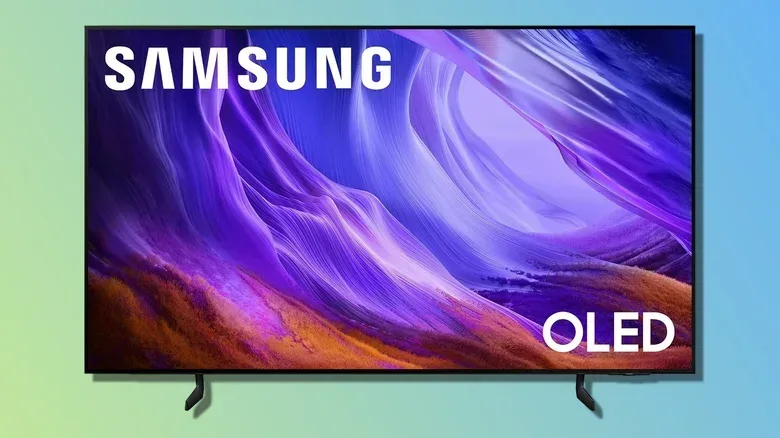
The 77-inch Samsung Class S85H is listed at $1,798, an 18% reduction. The percentage is smaller than the other offers, but the model is identified as a 2026 release and as being at its best observed price so far. Percentage discount alone is not a complete measure of value: the starting price, the screen size and the capabilities being purchased all matter.
This is a 4K model with reported strong bright-room performance and gaming capability. It uses Samsung’s NQ4 AI Gen2 processor for image and sound enhancement, including 4K AI upscaling. The practical interpretation is the same as with the other sets: lower-resolution discs or standard-definition streams are processed for a 4K panel, but the source still defines the underlying information available to the television.
At 77 inches, the physical scale deserves as much attention as the specification sheet. The screen needs a room where it can fit comfortably, and a buyer should account for the location of every connected device before committing. The supplied details mention app availability but do not specify refresh rate, VRR format or the number of HDMI inputs. Anyone putting PC gaming or several consoles ahead of cinematic scale should verify those items, rather than presume that a larger and pricier model includes every feature found on the 42-inch C6 or 65-inch S90H.
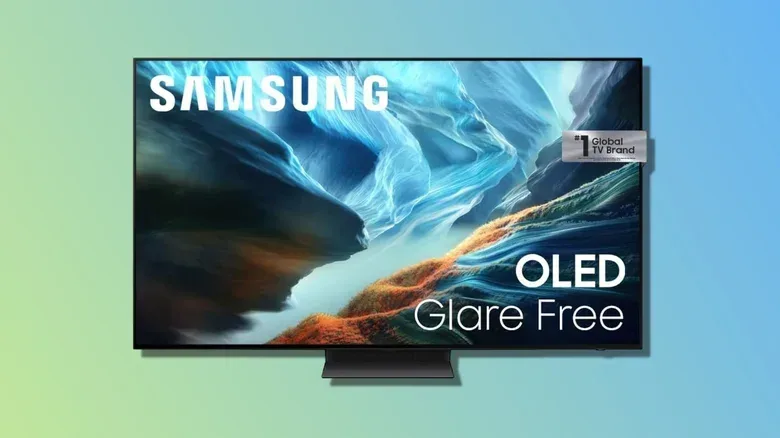
Samsung S90H: 65-inch OLED, matte finish and 165Hz support
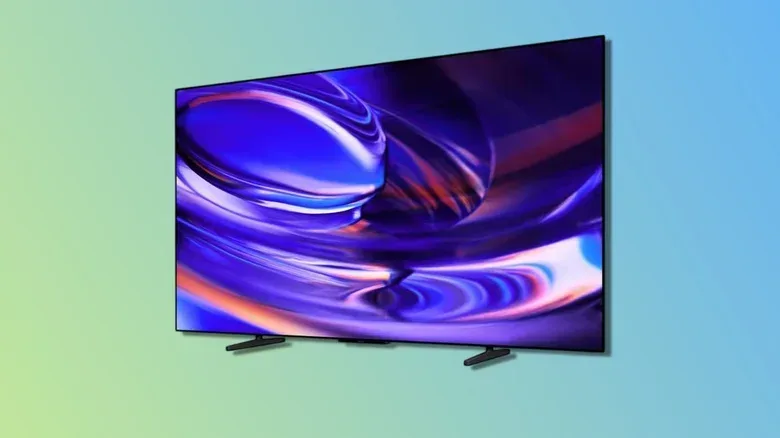
The 65-inch Samsung S90H is listed at $1,398 after a $500 price cut, described as 26% off and its best observed price to date. Its OLED HDR+ panel has a matte finish, the most direct answer among these listings for a room where reflected light is a concern. The available evaluation credits it with deep blacks, bright and vivid color, and largely consistent viewing angles.
Viewing angle consistency matters when more than one person is watching and not everyone sits directly in front of the screen. It is not merely a specification for a demo room; it affects whether a couch-bound multiplayer session looks substantially different for people seated at the sides.
The S90H supports 4K, upscaling and picture/sound processing through Samsung’s NQ4 AI Gen3 processor. Its gaming credentials are particularly explicit: a 165Hz refresh rate, NVIDIA G-Sync and AMD FreeSync Premium Pro. As with the LG C6, these specifications point to a television intended to accommodate high-frame-rate, VRR-capable hardware. They do not guarantee every game will run at 165 frames per second, because the output device and the game determine what can be delivered. They do mean the display is equipped to accept that class of signal where compatible.
How to choose without being distracted by the discount badge
The five deals divide into clearer roles once the marketing language is stripped away:
- For a compact, high-spec gaming arrangement: the 42-inch LG OLED evo AI C6 combines OLED, 165Hz, G-Sync, FreeSync Premium and four HDMI 2.1 inputs.
- For a 65-inch Google TV setup with 4K/120Hz connections: the Sony Bravia 6 offers four HDMI 2.1 ports, VRR and ALLM, with the stated caveat around bright scenes.
- For the lowest listed upfront cost at 55 inches: the LG QNED AI is the size-and-price option, while its unlisted advanced gaming details should be verified.
- For a very large screen in a brighter room: the 77-inch Samsung S85H is the scale-focused choice, though key gaming connection details remain worth checking.
- For a 65-inch matte OLED built around high refresh-rate gaming: the Samsung S90H combines deep-black OLED characteristics, reported glare resistance and 165Hz/VRR support.
Finally, there is no source-supported certainty that any of these offers will fall further by November 27. The reported reductions are already substantial in several cases, while stock can disappear during sales periods. The strongest buying decision is therefore not a prediction about the next price movement. It is choosing the display whose panel, glare handling, size, refresh capability and HDMI layout solve the setup in front of you now.
Shop the products
Check current price, model and availability at the retailer.