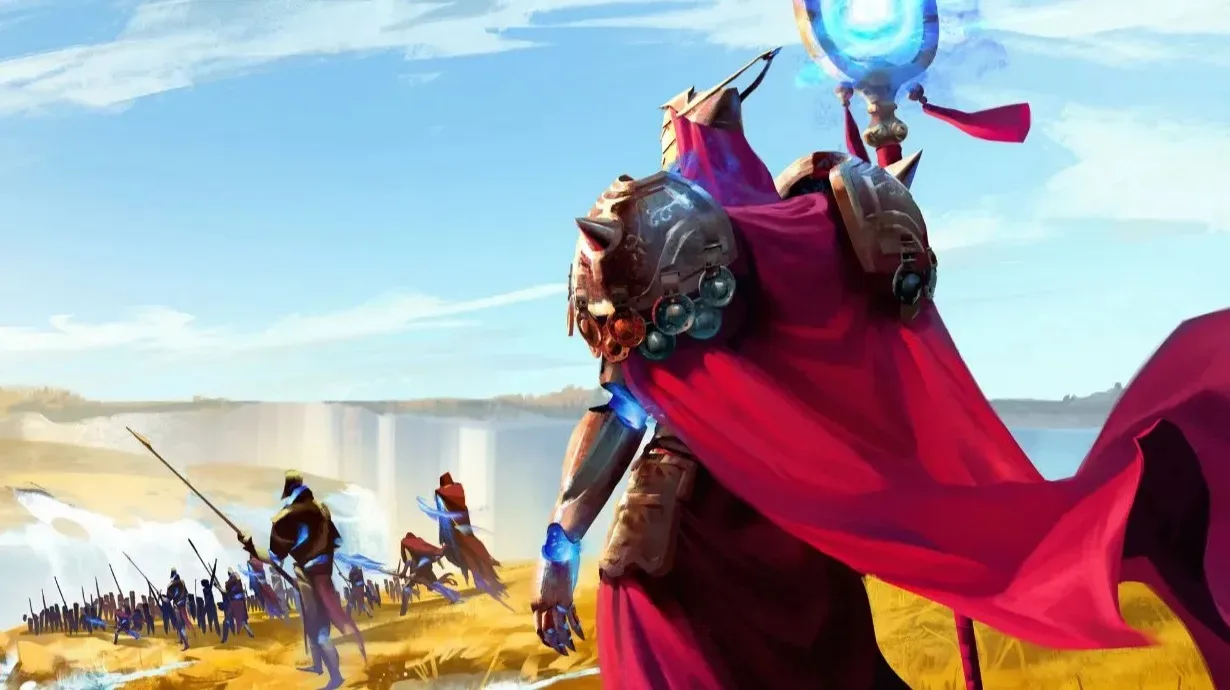
Endless Legend 2 is scheduled to leave Steam Early Access on September 17, roughly a year after its development began in public. The approaching 1.0 release is also putting a wider question around modern game development into focus: what, exactly, do players believe they are buying when they buy an unfinished game?
Amplitude Studios chief executive and cofounder Romain de Waubert de Genlis has described a meaningful shift from the studio’s earlier experience with the format. In his view, audiences 10 to 15 years ago generally understood that an Early Access game was incomplete. Today, a paid Early Access launch can face the scrutiny of a full retail debut immediately, with players asking why a game they purchased has not yet reached a finished state.
That tension matters especially for a 4X strategy game. “4X” is shorthand for the genre’s core loop: explore, expand, exploit and exterminate. These games typically ask players to learn interlocking systems involving maps, resources, factions, diplomacy, research, warfare and long-term strategic planning. A rough interface, missing content, or an unclear system can therefore have an outsized impact. It is not merely one isolated blemish; it can affect how comfortably a player understands and manages an entire campaign.
Endless Legend 2 arrives with notable expectations of its own. The original Endless Legend made Amplitude’s name in fantasy 4X strategy more than a decade ago, while Endless Space, the studio’s first sci-fi 4X game, was among the early examples of a development approach built around working with players while a game was still being finished. For Amplitude, the premise of Early Access was not simply selling a game ahead of time. It was a way to expose ideas to a player community, learn what worked, correct what did not, and shape the final experience through that exchange.
When Early Access became the main event
The central change described by de Waubert de Genlis is one of attention and timing. Earlier in the model’s life, players and the press were more likely to wait until a project was complete before engaging with it. The public launch into Early Access was not necessarily treated as the defining moment.
That balance has flipped. An Early Access debut can now be the moment when a game draws its largest early wave of attention, conversation and judgment. The later 1.0 launch may be perceived less as a fresh arrival and more as a substantial update to something the audience has already evaluated. In practical terms, the studio must make a compelling first impression while openly admitting that the work is unfinished.
That is a difficult communication problem even before the design work begins. “Early Access” states a development status, but it does not automatically establish a shared understanding of what is incomplete, how incomplete it is, or what kind of change remains possible. One player may read the label as an invitation to join a work in progress and tolerate visible rough edges. Another may reasonably see a paid release, a Steam store page, and a playable game, then judge it against the standards they use for any other purchase.
Neither perspective disappears just because a game is marked Early Access. The result is an audience with competing expectations: some players want the chance to influence development, while others want a strategically rich and polished game on day one. Developers have to serve both groups in the same public space, with patches and updates instantly becoming evidence in an ongoing discussion of whether the game is improving quickly enough.
Related coverage includes Endless Legend 2 Faces a Tougher Early Access Audience Ahead of 1.0.
Endless Legend 2’s specific challenge
By the account shared ahead of the 1.0 date, Endless Legend 2 had a promising start but encountered this newer version of the Early Access trap. Some players entered expecting a more complete experience. Some established fans, meanwhile, held back after hearing that the initial state could feel unfinished. The game has been recognized for strong worldbuilding and a distinct identity, but player concerns have included a clunky user interface and insufficient content.
Those criticisms point to two different parts of the 4X proposition. Worldbuilding is the game’s ability to establish a convincing setting, atmosphere and sense of place. A clear identity means it can be recognized as its own thing rather than a generic entry in a crowded strategy field. Both are important foundations, particularly for a fantasy sequel with a known name.
But an interface is the layer through which players issue orders and interpret the state of a strategy game. In a genre built around information and decisions, a UI—short for user interface—is more than decoration. It helps players find the relevant details, compare choices, understand consequences and act efficiently. If that interaction feels clunky, the friction can be felt repeatedly across turns. Likewise, content concerns can speak to the breadth and depth players expect from a game designed to support lengthy, replayable campaigns.
The supplied picture is not one of a development team ignoring those issues. Amplitude has put time and energy into dozens of patches and major updates. The harder question is what gets displaced when each update must respond to immediate complaints. A studio may want Early Access to create room for bold design trials, yet the demands of a highly visible live audience can turn the process toward fixing the most urgent and visible pain points first.
Feedback can improve a game—and narrow its room to change
De Waubert de Genlis has framed experimentation as an essential part of creative work. Trying a new approach means accepting that some attempts will not succeed; learning from those failures can lead to a stronger final result. Avoiding risk altogether may be safer, but it can also produce something less distinctive.
That is the core trade-off in this form of public development. Feedback is valuable because it reveals where a game is frustrating, confusing or failing to meet its promise. Patches are valuable because they demonstrate that feedback can have concrete results. Yet a public experiment can be judged before it has had time to develop, and a flawed update can create a sharp reaction even if it is part of an iterative process.
Iteration means revising a design repeatedly after observing results. In software and games, it is a practical cycle: make a change, see how it performs, gather feedback, adjust, and repeat. The theory is simple. The reality is more complicated when every stage is purchased, played and discussed by a community that may not agree on the destination.
Amplitude’s leadership says players can be unforgiving when an update is not perfect. That does not mean player complaints are unimportant; complaints about UI friction and missing content directly concern the day-to-day value of a strategy game. Rather, it underscores the pressure created when audiences expect both fast responsiveness and reliable updates. Teams may be asked to make changes decisively, then face criticism if those changes introduce new roughness or do not solve every related concern at once.
For players deciding whether 1.0 is the moment to return or jump in, the most useful distinction is between an official release milestone and a guarantee that every person’s concerns will vanish. Version 1.0 conventionally identifies a game as having reached its intended full-release state. It does not require every player to agree that the interface is ideal, that there is enough content for their tastes, or that the game no longer has areas to improve. Existing Steam skepticism about the September 17 date makes that distinction especially relevant here.
Why the 1.0 label still matters
If the current market often treats Early Access as a release event, 1.0 can still be an important moment. It is a chance to reassess the game on the state Amplitude considers complete rather than on its earliest public build. It also provides a clearer reference point for discussion: players can weigh the game’s worldbuilding and identity against the UI and content concerns that have followed it through development.
There is no supplied indication that all criticism will be resolved at launch, and it would be premature to treat the date as proof of a particular outcome. What is clear is that the studio has spent the public-development period working through feedback under a far more demanding set of expectations than the one it encountered with Endless Space.
The broader industry lesson is not that Early Access has stopped working. It is that the label no longer creates as much patience by itself. A developer using the model must make the unfinished nature of a game legible, show progress without promising perfection, and protect some room for design work that may not be immediately popular. Players, in turn, have to decide whether they want to participate in that process or wait for a formal release.
Endless Legend 2’s journey illustrates how hard it is to preserve both sides of that bargain. Amplitude wants a finished game with personality rather than a risk-free but flat one. Its audience wants a purchase that already feels worthwhile and updates that consistently move the game forward. As the 1.0 launch approaches, that conflict is as much a story about the changing role of Early Access as it is about one fantasy strategy sequel. For another look at the pressures and disputes shaping PC game business decisions, see our coverage of Denuvo’s lawsuit involving the alleged cracker known as voices38.