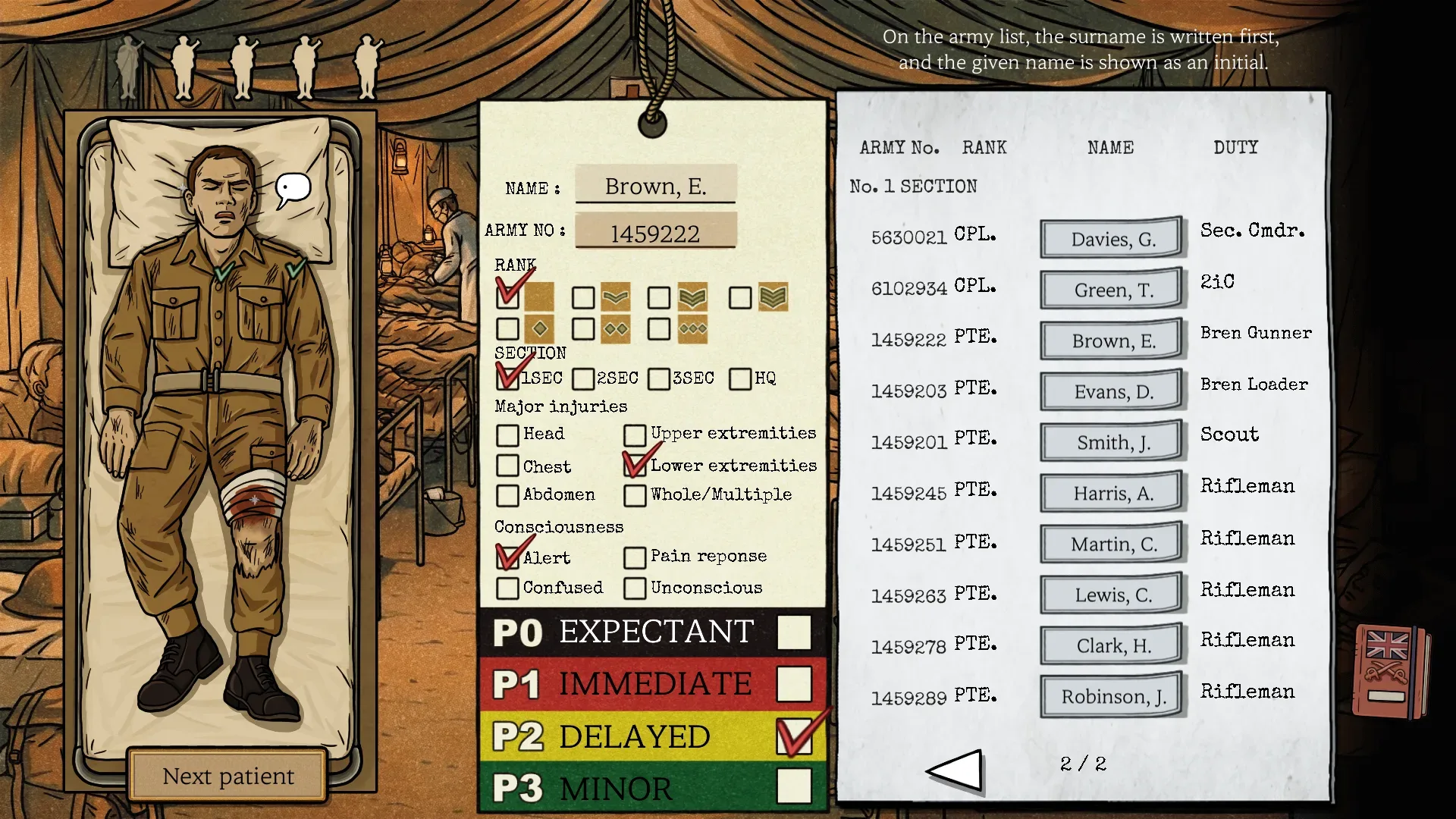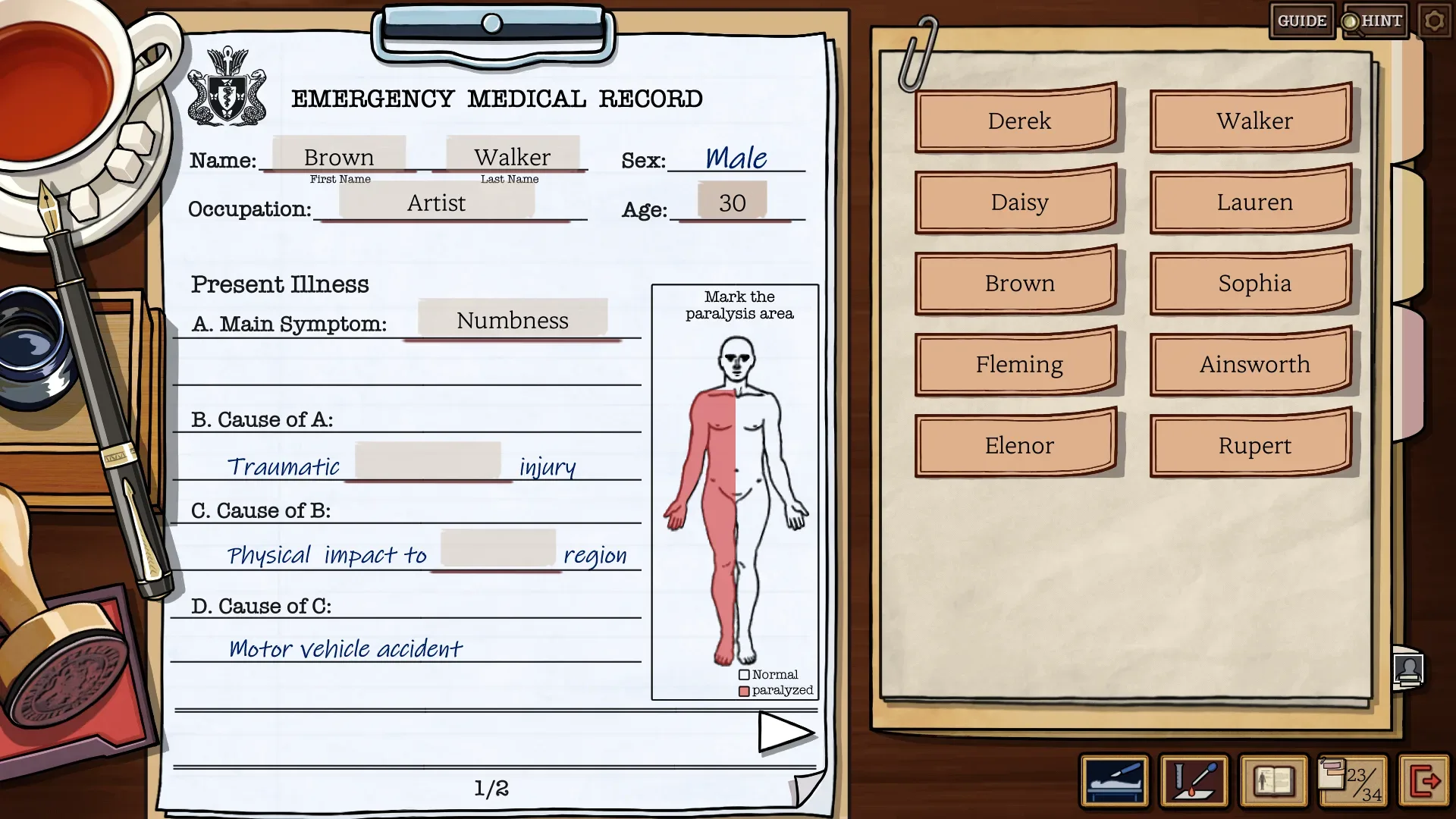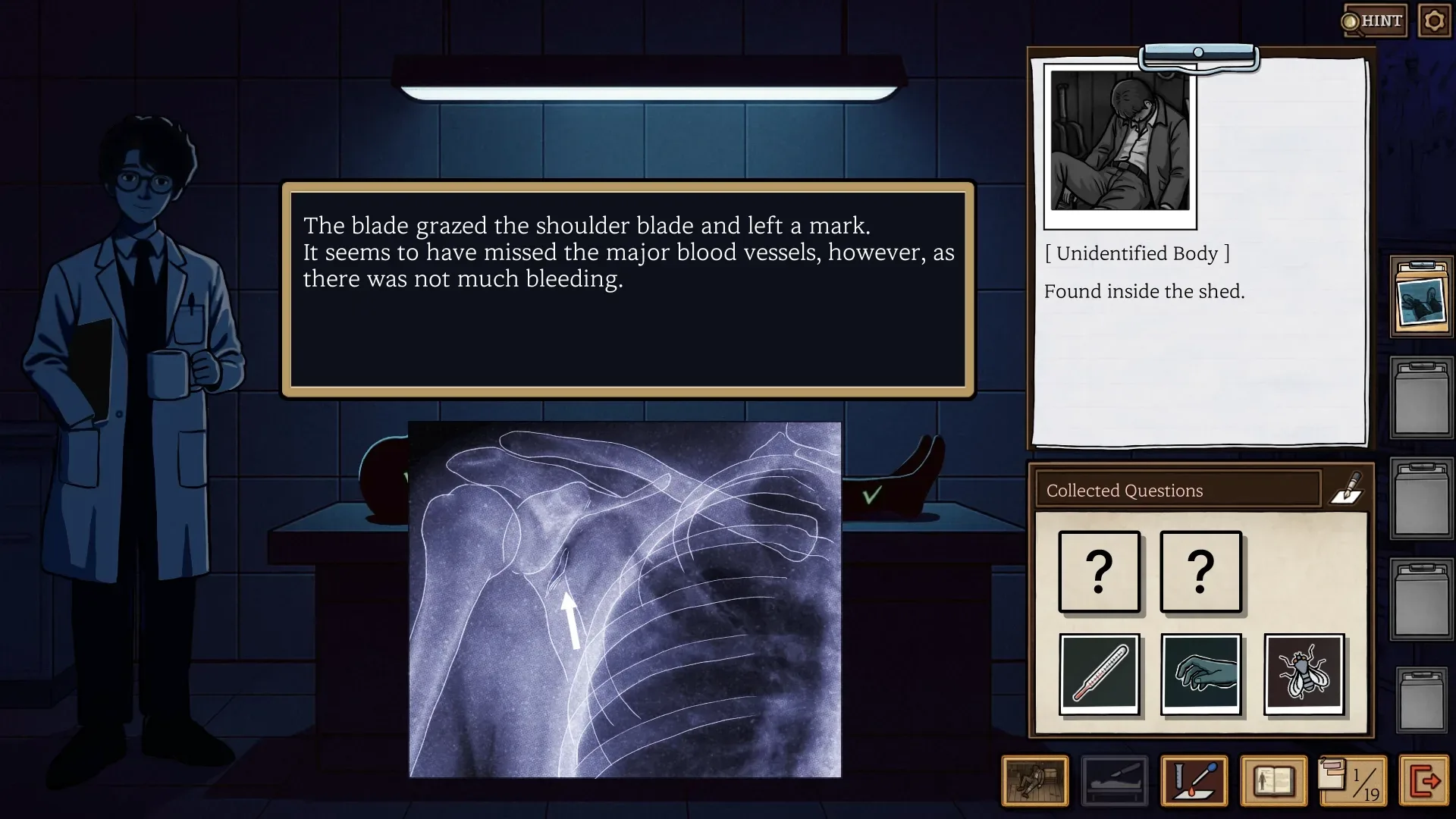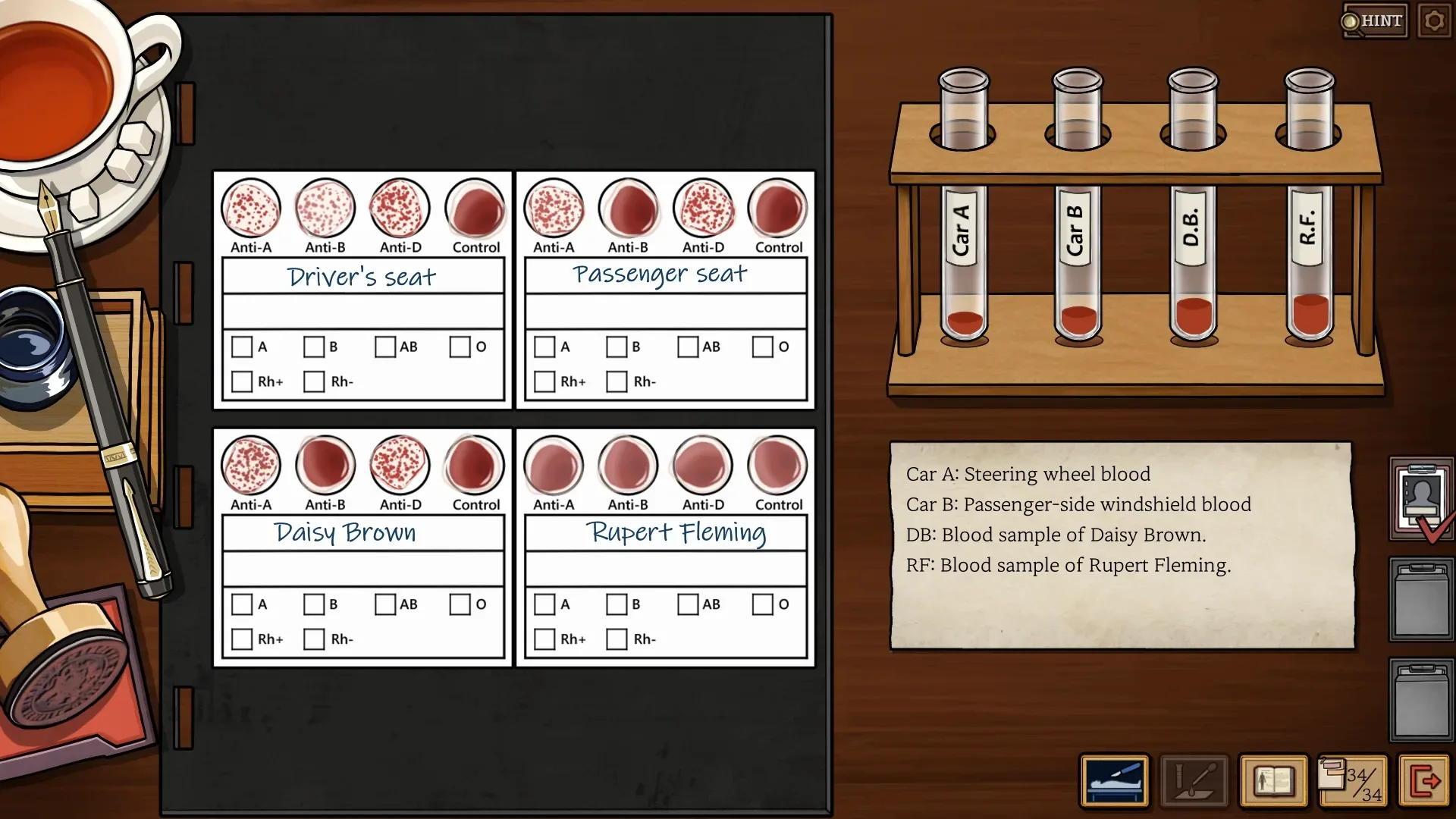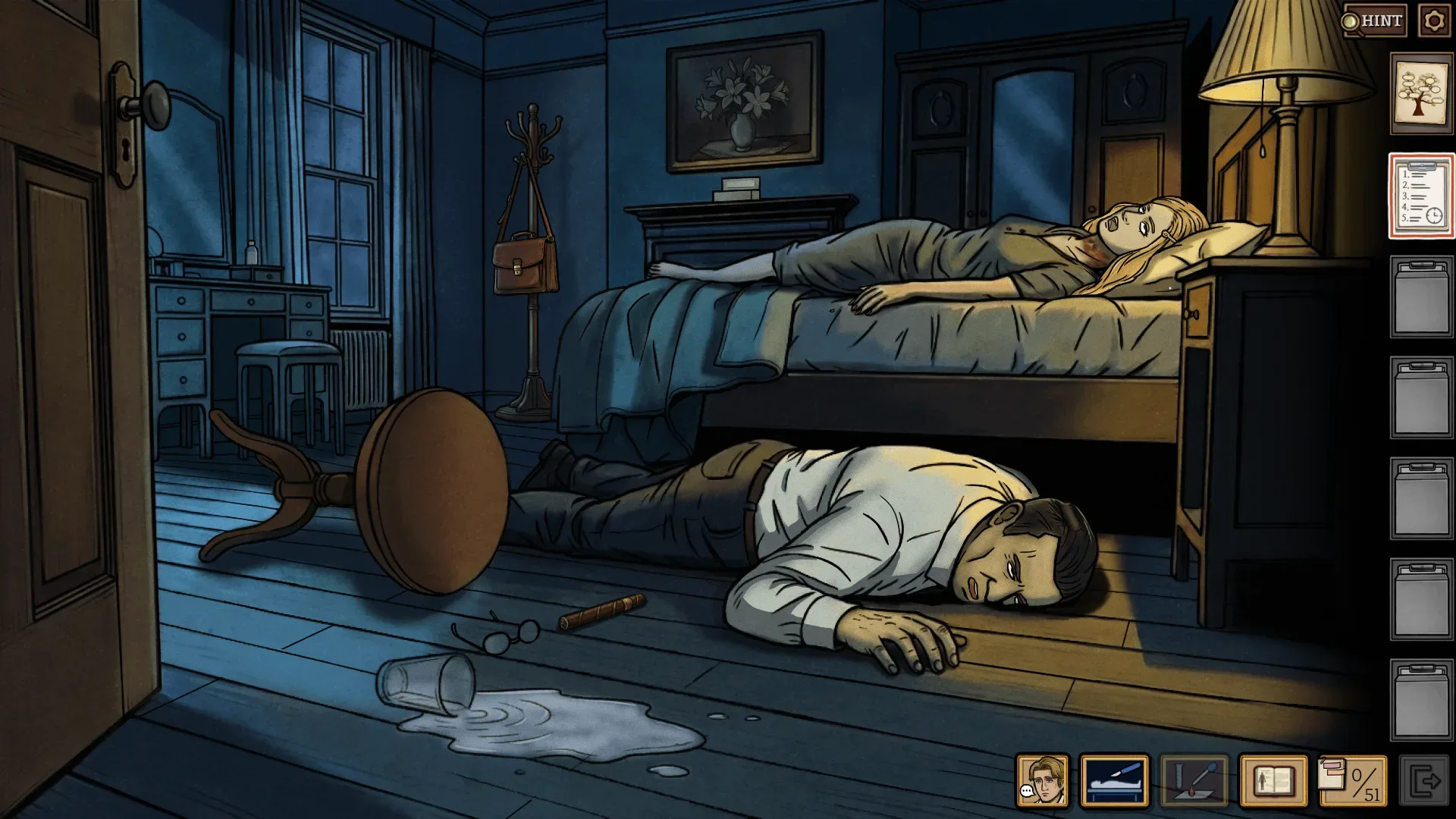
Death at Fleming Manor, the forensic mystery from SUPERTHUMb, is now available on Steam for PC and Mac. Released on November 3, 2026, it puts players in the role of an investigator sent to an isolated English country estate in 1959 after a series of unexplained deaths.
The premise has a particularly procedural twist: the objective is not simply to identify a culprit or select a story branch. Players examine scenes and bodies, speak with the manor’s residents, review evidence, and then complete official paperwork. Death certificates and emergency reports require conclusions on a victim’s identity, cause of death, and manner of death—whether an incident was accidental, self-inflicted or murder. Those determinations influence the case’s eventual outcomes.
It is priced at $17.99 in the US, £14.99 in the UK, €17.99 in Europe and ¥1,840 in Japan. A 10% launch discount is running for the game’s first two weeks. The launch supports English, Japanese, Korean, Simplified Chinese and Traditional Chinese.
The game arrived with more than 120,000 wishlists recorded ahead of release, and it has also been named a finalist for Best Design at the Taipei Game Show’s Indie Game Award 2027. SUPERTHUMb will additionally bring the game to AdventureX in London on November 7 and 8, where attendees will be able to play it on the show floor.
A mystery where the report matters as much as the reveal
Many detective games make deduction feel like a sequence of revelations: notice a clue, make an association, and move closer to the answer. Death at Fleming Manor frames the process differently. A finding has to be entered into a formal record and supported by the available evidence.
That distinction is important. A cause of death is the physical reason a person died. A manner of death is the classification of how that death occurred, such as accident, self-inflicted death or homicide. The game asks players to establish both, alongside the identity of the deceased, rather than treating a general suspicion as sufficient. The work therefore sounds less like merely guessing the culprit and more like building a case that can survive an official filing.
The design’s stated refusal to automatically validate suspicions should be a major part of its appeal for players who enjoy careful note-taking and revisiting evidence. Rather than being told that an instinct is correct as soon as it occurs, investigators are expected to connect individual findings to each conclusion on their own reports. In practical terms, that means an apparently convincing theory may not be enough if the paperwork cannot be properly substantiated.
Analysis: This approach gives the game a useful source of tension without needing a reflex challenge. The pressure comes from responsibility: a player must decide whether the evidence justifies a conclusion, then live with the result of recording it. It also creates room for mistakes that are more interesting than simply failing a puzzle, because the error can arise from an unsupported or incomplete case theory.
Related coverage includes Death at Fleming Manor Opens Its Forensic Mystery on Steam.
What investigators will actually be doing
The estate is the central crime scene, but the investigation is presented as a collection of interlocking tasks rather than a single examination. Players will:
- Inspect locations around Fleming Manor for relevant details.
- Study bodies for information needed to establish what happened.
- Question residents who may provide context, testimony or contradictions.
- Review gathered evidence before committing it to reports.
- Complete death certificates and emergency reports based on the case they have assembled.
That structure draws a line between gathering information and interpreting it. Finding a detail is one part of detection; deciding what it proves is another. The source material does not specify the exact interface, report formats or number of cases, so prospective players should not assume a particular degree of simulation beyond the documents named. But the central promise is clear: the reports are not decorative flavour text. They are the mechanism through which a player’s conclusions are expressed.
The setting also provides an appropriate frame for that process. A 1950s British manor mystery naturally places a contained group of residents around a limited set of rooms, routines and relationships. An isolated estate is a familiar mystery-story structure because it concentrates both the evidence and the potential explanations. Here, it gives the forensic work a defined place to unfold rather than sending the investigator across a broad open world.
Ligne claire art meets classic detective-drama atmosphere
SUPERTHUMb describes the visuals as hand-drawn ligne claire artwork inspired by European mystery comics of the 1960s. Ligne claire, literally “clear line,” is an illustration approach associated with clean, precise outlines and a readable visual presentation. In the context of an evidence-heavy investigation game, that visual clarity is a fitting match for a design focused on noticing and connecting details.
The game also uses a soundtrack influenced by classic detective dramas. Combined with the 1959 setting and comic-inspired presentation, that positions Fleming Manor as a stylised period mystery rather than a modern procedural. The art and music are not presented as proof systems in themselves, of course, but they should help give the paperwork and body examinations a deliberately authored, old-school detective-story mood.
The development team cites Return of the Obra Dinn and The Case of the Golden Idol among its inspirations. Both names signal an interest in player-led inference: games where identifying the right answer depends on reading clues and connections rather than waiting for a character to supply the solution. That does not mean Death at Fleming Manor duplicates either structure. Its specific emphasis is forensic examination and the act of formalising deductions in certificates and reports.
Who should keep an eye on Fleming Manor?
This is likely to suit players who want their reasoning to have visible consequences. If the most satisfying part of a mystery is comparing testimony, revisiting a body or scene, and finally committing to an explanation, the report-driven structure is the feature to watch. It may be especially attractive to those who prefer deductions that must be justified over systems that confirm every correct observation immediately.
Conversely, the available details suggest that patience matters. A player seeking a fast, action-focused thriller should note that the game is built around scene examination, interviews, evidence review and documentation. Its stakes come from interpretation and accountability. The final outcome changes based on the investigator’s findings, but the supplied information does not define every possible result or how forgiving the game is of an incorrect report.
Early notices have highlighted its forensic-thriller approach, its varied investigations and its connection to classic mystery fiction. That is consistent with the game’s core pitch: a case is not over when a hunch appears; it is over when the person holding the pen can explain why the record says what it says.
Launch details at a glance
- Release date: November 3, 2026
- Platform: Steam for PC and Mac
- Price: $17.99 / £14.99 / €17.99 / ¥1,840
- Launch offer: 10% off for the first two weeks
- Languages: English, Japanese, Korean, Simplified Chinese and Traditional Chinese
- Setting: England, 1959, at an isolated country estate
- Key activity: Use evidence to complete death certificates and emergency reports
For a wider look at the day’s PC arrivals, see our games releasing today roundup for November 3, 2026.