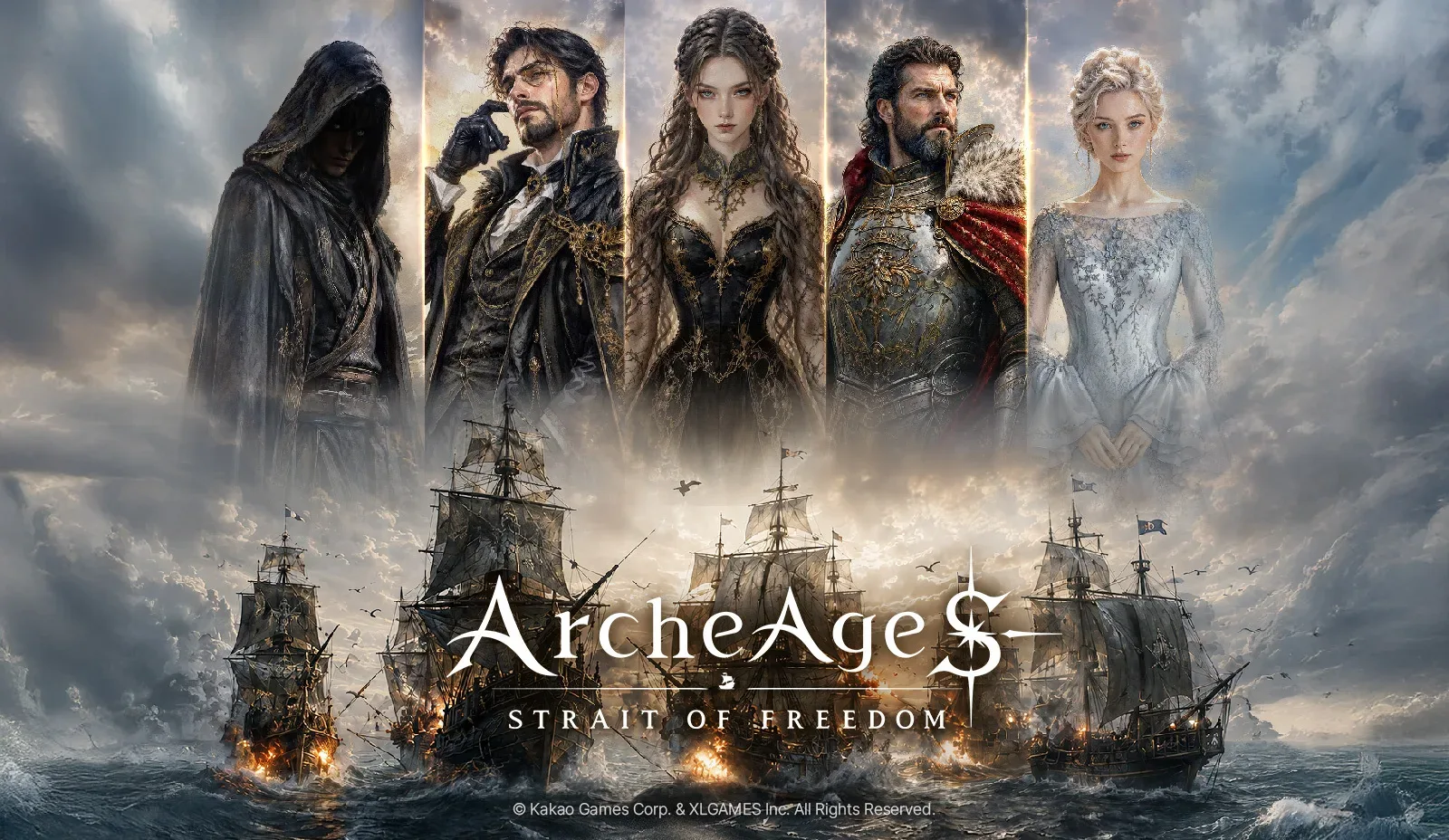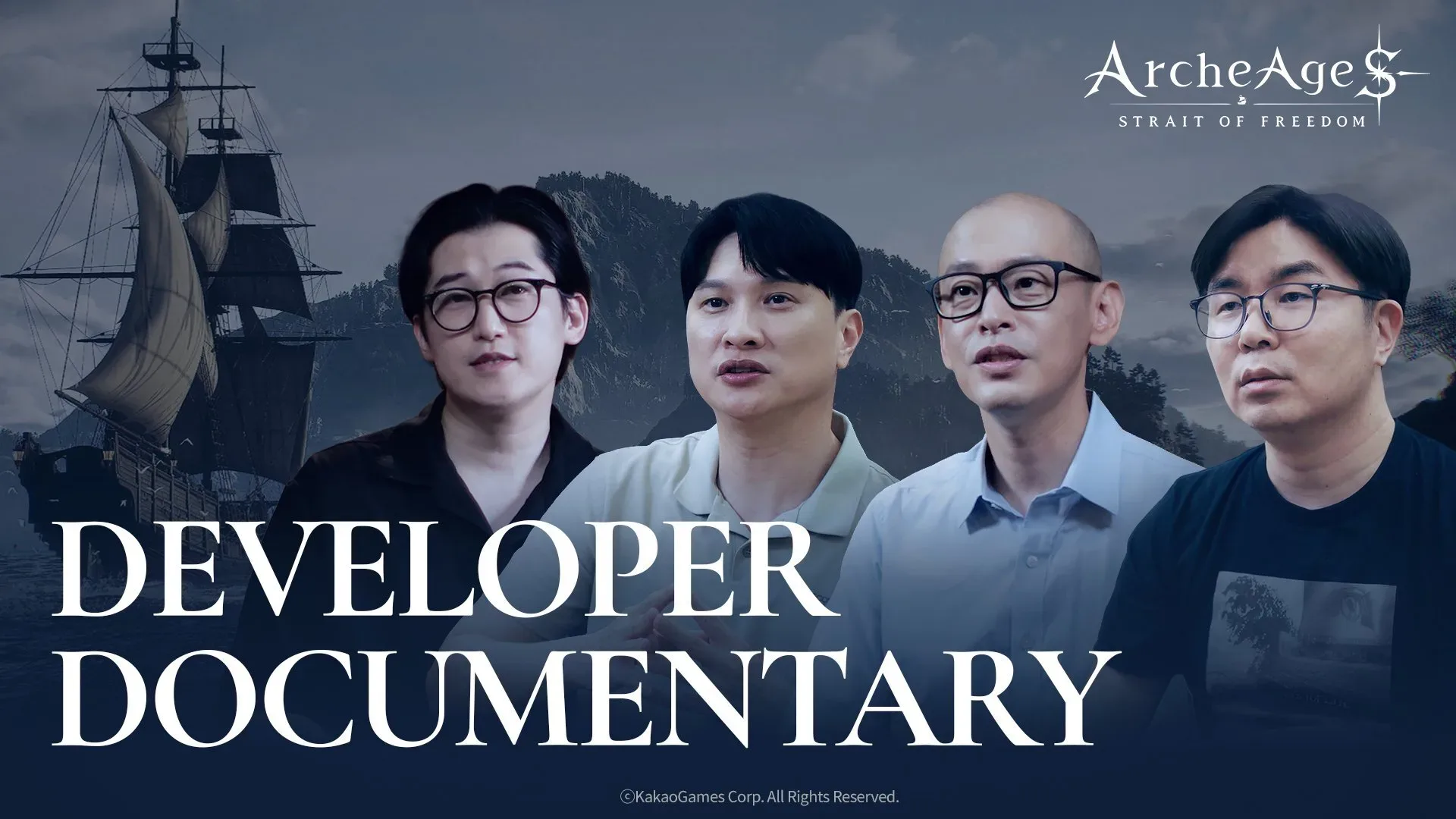
ArcheAge S: Strait of Freedom is putting player interdependence at the center of its pitch. A new developer Q&A, presented by Executive Producer Kim Kyung Tae and Producer Jeong Seok Won, lays out an upcoming PC MMORPG built around flexible melee setups, ships that need organized crews, housing with social and production purposes, and trade runs whose rewards rise alongside their PvP danger.
The 25-minute session is the second entry in the game’s ongoing video series and shows the current build while addressing community questions. It also confirms several high-level decisions that will matter to prospective players: the game will not use the original ArcheAge Labor system; production will instead depend on considerations including land fertility and processing time; and monetization is intended to center on memberships, premium passes and cosmetics rather than packs that provide character stats.
Kakao Games and alinestudio are targeting a worldwide PC launch in Q2 2027. Before then, the teams intend to hold a large-scale playtest, although its timing and access details have not yet been announced.
Melee combat is aiming for more than a weapon label
The Q&A says melee combat will support a broad range of approaches through combinations of equipment and skills. Crucially, the developers say weapons can feel noticeably different even when they belong to the same category.
That distinction matters because “melee” can be an overly broad promise in an MMO. It simply means close-range combat, but it does not by itself explain how a character attacks, which choices change their role in a group, or whether two similar-looking builds play differently. The stated goal here suggests that ArcheAge S wants a player’s gear-and-skill arrangement to carry meaningful weight, rather than treating the weapon category as the complete definition of a build.
There are still major unanswered questions. The session does not specify the available weapon types, explain individual skill interactions, or establish how accessible gear changes will be. It also does not describe class structures, balance plans or progression requirements. For now, the dependable takeaway is narrower: the team is promising differentiation within melee archetypes, not merely between obviously separate styles.
At sea, the party is meant to operate as a crew
Naval conflict is framed as a cooperative undertaking. When a party boards a ship, its members will need to divide up responsibilities such as navigation, cannon operation and repairs. Success is intended to depend on planning and coordinated execution, rather than every player performing the same task independently.
This creates a more specialized model of group play. Navigation concerns steering and positioning; cannon operation concerns bringing firepower to bear; repairs concern keeping the vessel functioning under pressure. In practical terms, a crew that fails to cover one of those jobs could have a clear operational weakness. A ship may be able to maneuver but lack effective attacks, deal damage without being steered well, or struggle to remain intact during a fight.
The Q&A does not yet say how many people a ship supports, whether these roles are locked to particular players, or how the game will handle smaller parties. It likewise does not detail ship customization, damage systems or the rules around boarding encounters. Still, the basic design direction is clear: a vessel is not just transportation to a combat zone. It is a shared platform that asks a party to organize itself.
That same emphasis on social coordination runs through several of the game’s other announced systems. Housing, trade and naval combat appear connected by the broader idea that players will make plans together, distribute work and decide how much risk their group is prepared to accept.
Trade routes will make safety a player decision
Trading in ArcheAge S will offer a choice between safer inland paths and more dangerous PvP routes. PvP, short for player-versus-player, means that other players can become direct opponents rather than merely fellow participants in the economy. The more dangerous routes can provide access to top-tier resources, but they also create the possibility of battles along the way.
This is a straightforward risk-and-reward structure: safer routes should offer a more controlled trip, while exposure to PvP carries the prospect of better material returns. The important part is that the trade-off is presented as a choice. Players can prioritize steadier travel, or pursue higher-value resources while accepting that another group may contest the route.
For guilds and regular parties, that setup could make logistics as important as combat ability. A group interested in valuable trade may need scouts, escorts, communication and a plan for deciding when a route is too dangerous. Meanwhile, combat-focused players have an obvious reason to watch where valuable cargo might travel. None of that confirms specific penalties for losing a battle or guarantees a particular economic outcome; those rules were not detailed. It does show how trading may create encounters between players with opposing interests.
Players following PC MMO news can also keep an eye on other recent releases and updates in the genre space, including ScopeCreep’s Steam launch and upgrade-web details.
Houses are planned as gathering and production spaces
Housing will serve as a social and production hub, with players able to gather, craft and interact with other people there. This gives homes a stated function beyond visual customization. They are meant to participate in the game’s resource and crafting loop while also providing a place for community activity.
Gathering refers to collecting materials used by other systems, while crafting is the process of turning materials into items. The Q&A does not identify the recipes, materials, property rules or limits on ownership, so it is too early to infer how scarce land might be or how homes will be acquired. What has been established is the design role: housing is expected to sit where social play and production meet.
That matters alongside the trade announcement. If players gather and craft through homes, then move goods through routes with different danger levels, the game could give groups a reason to coordinate from production all the way to delivery. This is an interpretation of the systems described, not a confirmation of a fixed supply-chain feature. The developers have not yet spelled out every connection between housing, crafting and trade.
A different approach to production than the original Labor system
One of the clearest confirmations in the Q&A is that ArcheAge S will not adopt the original game’s Labor system. In its place, production output will be influenced by elements including land fertility and processing times.
Fertility generally describes how productive land is for cultivation or resource production. Processing time refers to the time required for a production step to finish. In the context provided by the Q&A, these are factors the team intends to use when determining output. That means players interested in crafting and resource work should pay attention not only to what they produce, but also to the conditions of the land and the time involved in refining or making goods.
It would be premature to call this system more generous, more demanding or more accessible than its predecessor. The developers have not published formulas, timers, yield ranges, land-management rules or a full explanation of how these variables interact. The meaningful confirmation is the change in philosophy: production is being built around world and process factors rather than the original Labor framework.
Monetization avoids stat packs, based on the current plan
The team also addressed a major concern for any long-running online game: what players will be asked to pay for. The stated plan is to monetize through memberships, premium passes and cosmetic items, rather than character stat packs.
Cosmetics are visual items that change appearance rather than a character’s combat numbers. A premium pass generally means an optional reward track with benefits distributed as players progress through it, though the Q&A does not define what rewards ArcheAge S’s pass will contain. Memberships have likewise been named without a full benefits list.
The explicit exclusion is important. Character stat packs would directly affect numerical capabilities, such as attributes tied to a character’s effectiveness. The announced model says those packs are not the intended monetization route. That is a useful boundary, but it is not a complete breakdown of the business model. Pricing, membership perks, pass contents, cosmetic scope and the eventual in-game economy have not been detailed.
As with all pre-launch monetization plans, players will want to evaluate the finished implementation once the relevant details are available. At this stage, the Q&A establishes the direction rather than every condition attached to it.
What remains to be revealed before the playtest
The planned large-scale playtest should be an important milestone because it is positioned to occur while development continues. No dates, registration process, regional scope or test content have been provided yet. That leaves many of the practical questions unanswered: how players will gain entry, which systems will be available, how long the test will run and what feedback goals the developers will prioritize.
For now, ArcheAge S: Strait of Freedom has defined a recognizable set of priorities. Its melee system is intended to allow distinct gear-and-skill combinations; ships will demand crew coordination; housing will support social and productive activity; trade will ask players to weigh security against potentially richer resources; and production will use fertility and timing instead of the original Labor system. The Q2 2027 worldwide PC target gives those ideas a distant release window, while the promised playtest is the next major opportunity for the public to learn how they function together.