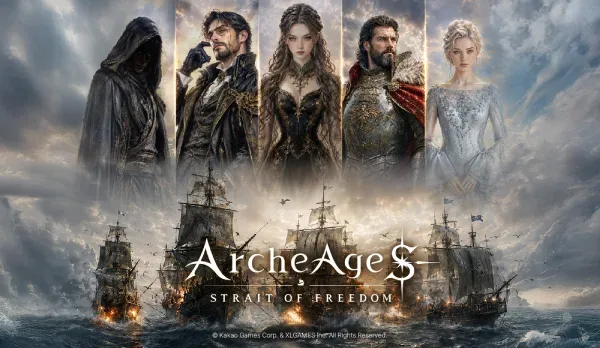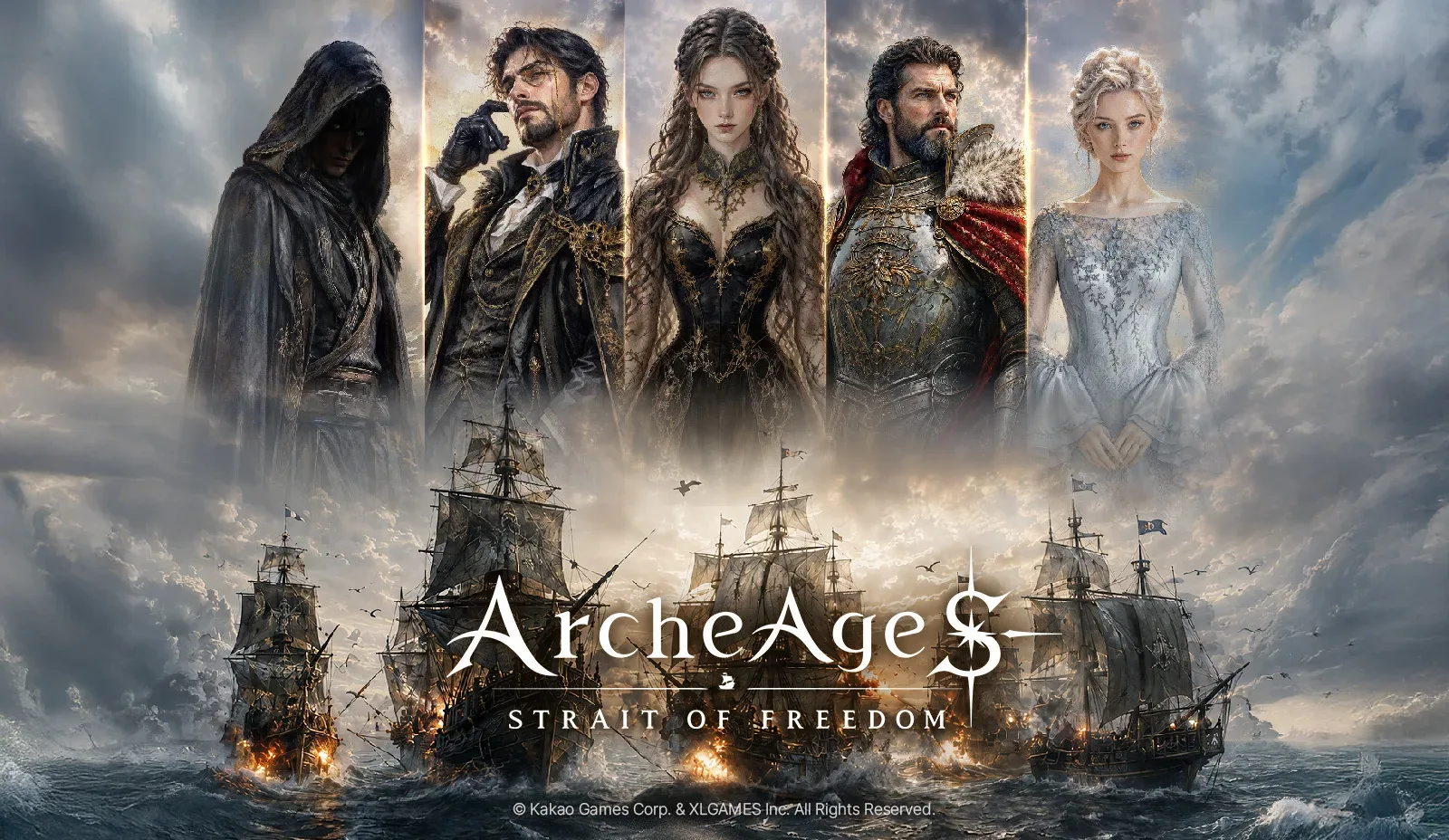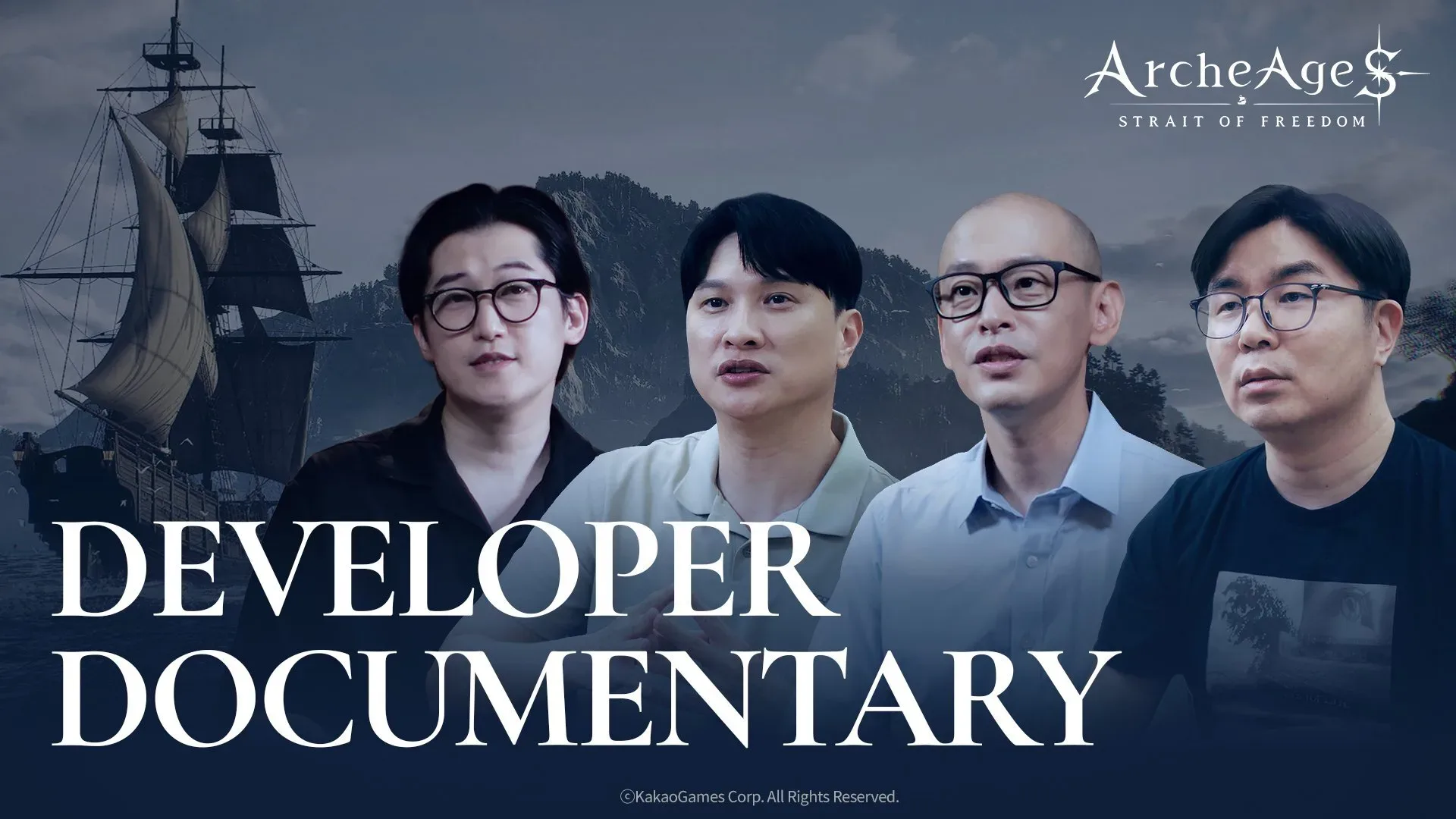
Kakao Games has begun a planned developer-diary series for ArcheAge S: Strait of Freedom, offering an early, roughly 17-minute overview of how its PC MMORPG intends to connect personal character development with guild conflict, trade, housing and open-sea warfare. The first episode, The First Step into a New World, is less a promise of one isolated feature than an outline of a game built around systems affecting one another.
That interconnected approach is the central takeaway. Executive producer Kyung-tae Kim, who also worked on the original ArcheAge, describes early player decisions as choices that can grow beyond an individual character and eventually feed into faction-scale warfare and naval battles. The broad pitch is familiar territory for an MMORPG—build a character, collect resources, work with other players—but the diary frames those activities as parts of a single progression loop rather than separate side modes.
The official video is the first substantial look at that loop. For prospective players, its most important practical detail is not a confirmed final balance number or a precise launch-day feature list. It is the stated design priority: combat-focused players, gatherers, crafters, traders and housing-oriented players are all meant to participate in character growth, while the competitive end of the game stretches from small groups to server-wide fights.
A progression model designed to spill into the wider world
ArcheAge S: Strait of Freedom is targeting a worldwide PC launch in Q2 2027. With that window still some distance away, the diary should be read as an early design presentation rather than a complete specification for launch. Still, the systems named in the video give a useful sense of the intended player journey.
Field hunting, gathering, crafting and trade are all listed as routes for improving a character. In plain terms, field hunting refers to progression through activity in the game world, while gathering is the collection of raw materials used by other systems. Crafting converts materials into useful goods, and trade moves goods through an economy-oriented activity. The important claim here is that these pursuits do not sit entirely outside advancement: materials and rewards from crafting and trade can contribute to character growth through player housing.
Housing, in this context, appears to be more than a decorative personal space. The diary says resources earned through crafting and trade can fuel growth there. It does not detail the exact upgrades, their costs, or whether housing is limited in any particular way, so those specifics remain unknown. But the outlined relationship matters. A player who prefers producing or moving goods is intended to have a progression connection to the same wider game occupied by combatants.
That creates the potential for more meaningful overlap between playstyles. A combat player may care about crafted resources; a dedicated trader may care about the security and health of the faction or group that enables a route; and a guild may have reasons to organize people whose preferred activities are quite different. Whether those links become rewarding choices or burdensome requirements will depend on the final economy, pacing and balance—details the diary does not establish. The current information supports the ambition, not a verdict on its execution.
Combat builds are tied to weapons and armour
The combat system is presented as a matter of combining skill sets associated with different weapons and armour. This is a key phrase, because it suggests a character’s combat style is not being described solely through one fixed class label. Instead, players are expected to shape a style by bringing together skills connected to their equipment choices.
A build is simply a combination of choices that defines how a character plays: abilities, gear and the role those choices create in a party or larger fight. A build might emphasize offense, survival, support, control or mobility, though the diary does not identify specific roles or confirm particular weapon and armour combinations. What it does make clear is that equipment-linked skill sets are intended to be a major lever for player expression.
That can matter a great deal in a game that includes both smaller encounters and much larger PvP. A setup effective in a small party skirmish may not have the same value in a crowded battle, while naval combat could place another set of demands on coordination and survivability. None of that guarantees that every build will be equally viable, and the diary offers no final balance details. It does, however, establish that players should expect buildcrafting—the process of making and refining a setup—to be part of the game’s combat identity.
For newcomers to MMORPG terminology, PvP means player versus player: competition against other human players rather than computer-controlled enemies. The diary describes several scales of PvP, from party and guild clashes to battles involving an entire server. A party is a smaller organized group, while a guild is a persistent player-run organization that can coordinate larger activities over time.
Rotating matchups are aimed at faction balance
One of the more consequential competitive ideas in the diary is the use of rotating server matchups. The stated goal is to stop faction imbalances from becoming entrenched over the long term. In a persistent online world, an imbalance can occur when one faction gains a lasting advantage in numbers, organization or power. Once that lead becomes self-reinforcing, opponents can find it difficult to participate meaningfully, and large-scale competition can lose its tension.
The diary’s answer is rotation: changing which servers face each other rather than leaving the same populations locked into the same opposition indefinitely. The presentation does not spell out how frequently matchups change, how participants are selected, what is carried between matchups, or how rewards and rankings will work. Those are significant implementation questions. Yet the intention is clear enough: the team wants server-scale PvP to remain contestable rather than allowing a single factional arrangement to dominate forever.
It is a notable design goal because faction warfare is not described as a distant activity reserved for a narrow elite. The video’s framing connects early choices and character progression to conflicts that can culminate in very large engagements. At the same time, it includes smaller party and guild fights, potentially giving groups with different schedules and ambitions more than one scale of competition.
The challenge will be making those scales feel connected without forcing every player into every form of PvP. The diary confirms the presence of party, guild, server-wide and naval conflict, but it does not define participation rules. Players interested primarily in trade, crafting or housing will have to wait for further details before knowing how exposed those activities may be to competitive pressure—or how optional the battlefield side will be.
Naval combat is part of the game’s larger stakes
Open-sea naval battles are repeatedly positioned as a high-stakes endpoint for the game’s wider systems. The diary links early player choices to faction warfare and then to battles at sea, making naval conflict sound like a major expression of the MMO’s social scale rather than a detached minigame.
“Open sea” generally signals activity conducted in a broad shared ocean space rather than a tightly scripted mission. The available information does not identify ship types, crew mechanics, boarding, cargo rules or how victory is measured. It would be premature to infer any of those. What is confirmed is that sea battles sit alongside land-based faction warfare in the project’s competitive vision.
The game’s music direction is also being built with this contrast in mind. Composer Yoon Sang is returning as music director and discusses the creative process behind a soundtrack intended to support both exploration and intense naval encounters. Exploration and large confrontations naturally call for different emotional textures, and the diary presents the soundtrack as part of the effort to make the world feel responsive to that shift in stakes.
That is welcome context, even if the diary does not provide track names, release details or a full account of how music changes during play. It confirms that the score is receiving attention as more than background ambience: exploration and naval combat are specifically named as situations it is meant to serve.
What players can ask next
Kakao Games is opening a community Q&A on YouTube, with selected questions set to receive answers from the development team in a later video. Given the amount of information that remains at a high level, this is an opportunity for the community to target the practical questions that will shape how approachable and durable the systems prove to be.
- How do weapon- and armour-linked skill sets combine, and how easily can players alter a build?
- What specifically can housing upgrade, and how do crafting and trade resources feed into it?
- How are rotating server matchups scheduled and judged?
- What forms of participation exist for smaller groups versus large guilds?
- How do trade, faction conflict and open-sea naval battles intersect?
Those questions are not answered by the current diary, but they follow directly from its main promises. They will determine whether the proposed interconnected structure gives players genuine alternatives or simply many systems that all demand the same kind of investment.
For now, ArcheAge S: Strait of Freedom is presenting a coherent direction: progression can come from fighting or economic activity; combat identity is built through equipment-tied skill combinations; and personal advancement can feed into conflict involving guilds, factions, servers and the sea. More developer diaries are planned, and the Q&A is expected to provide another channel for clarifying how those layers will operate before the planned Q2 2027 worldwide PC release.
Players tracking the PC release calendar can also browse today’s game releases while waiting for more concrete details from the next diary.