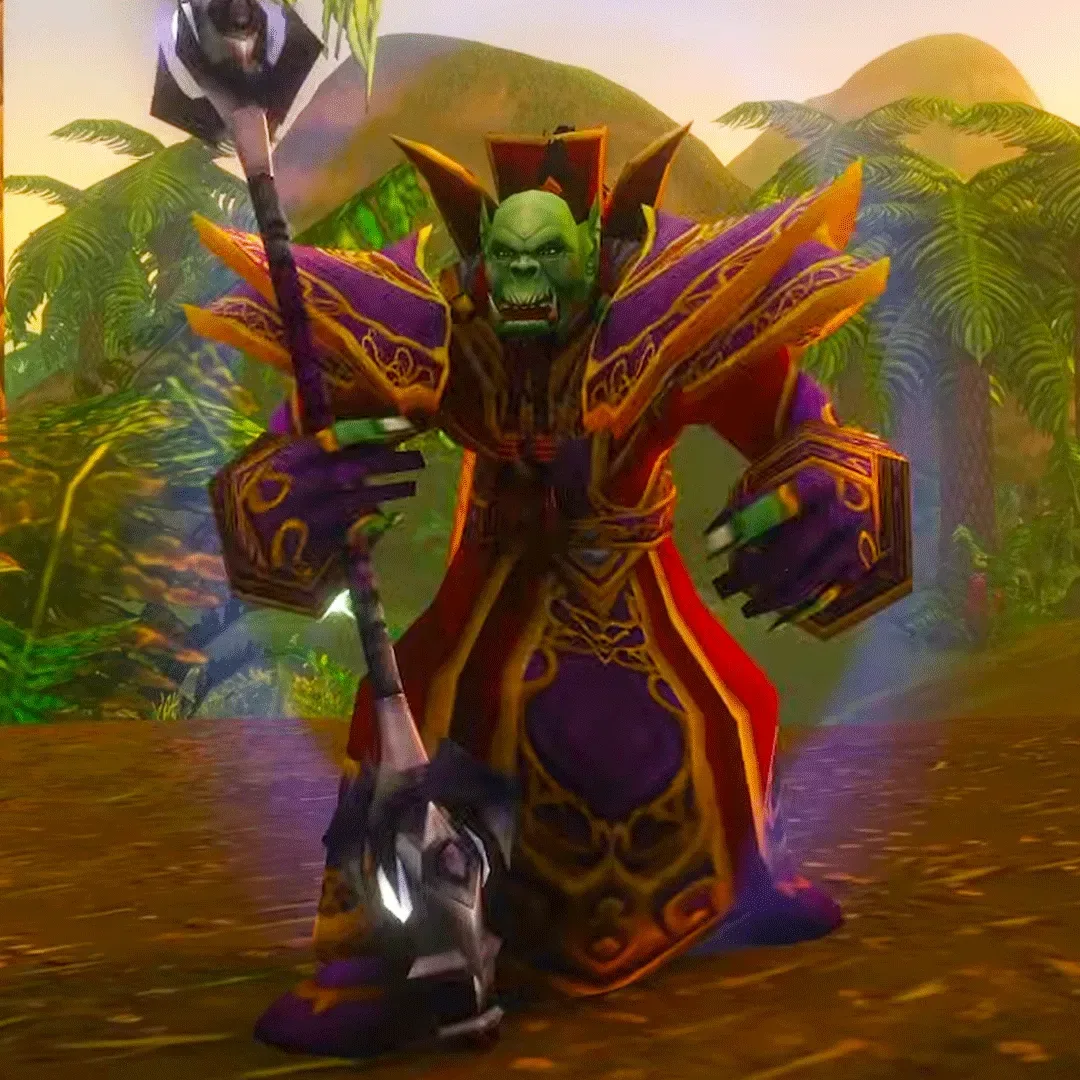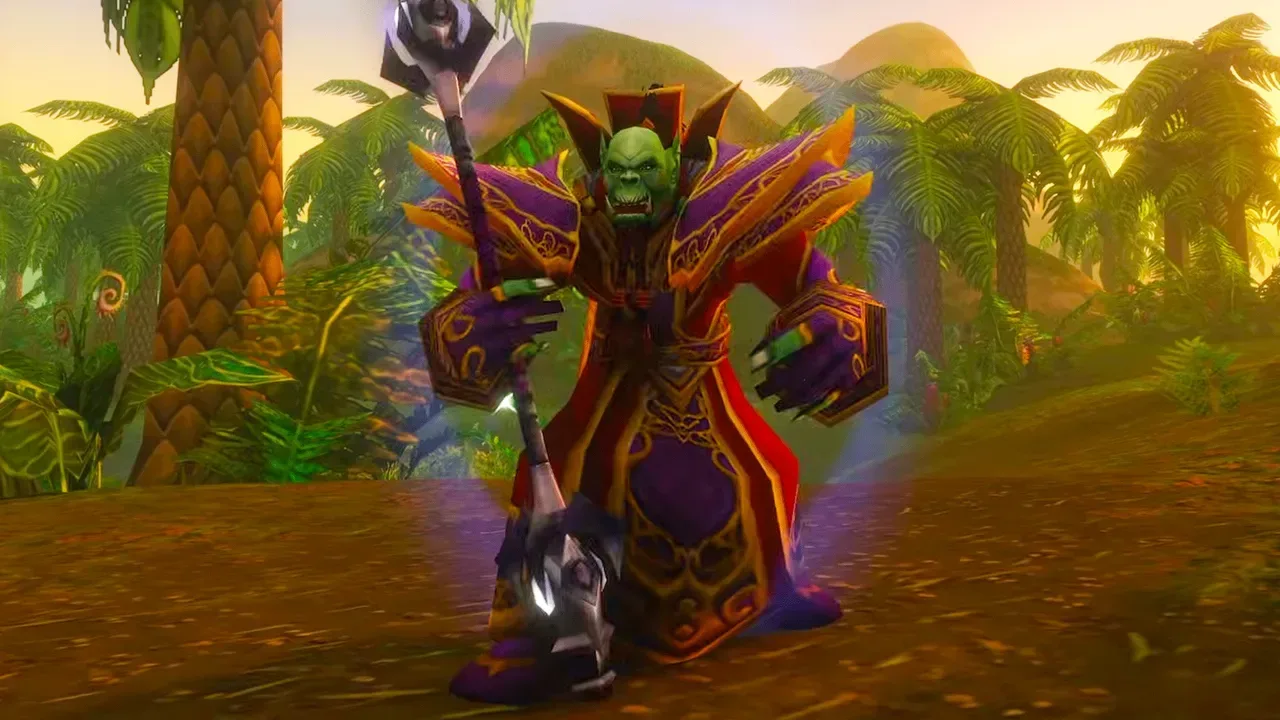
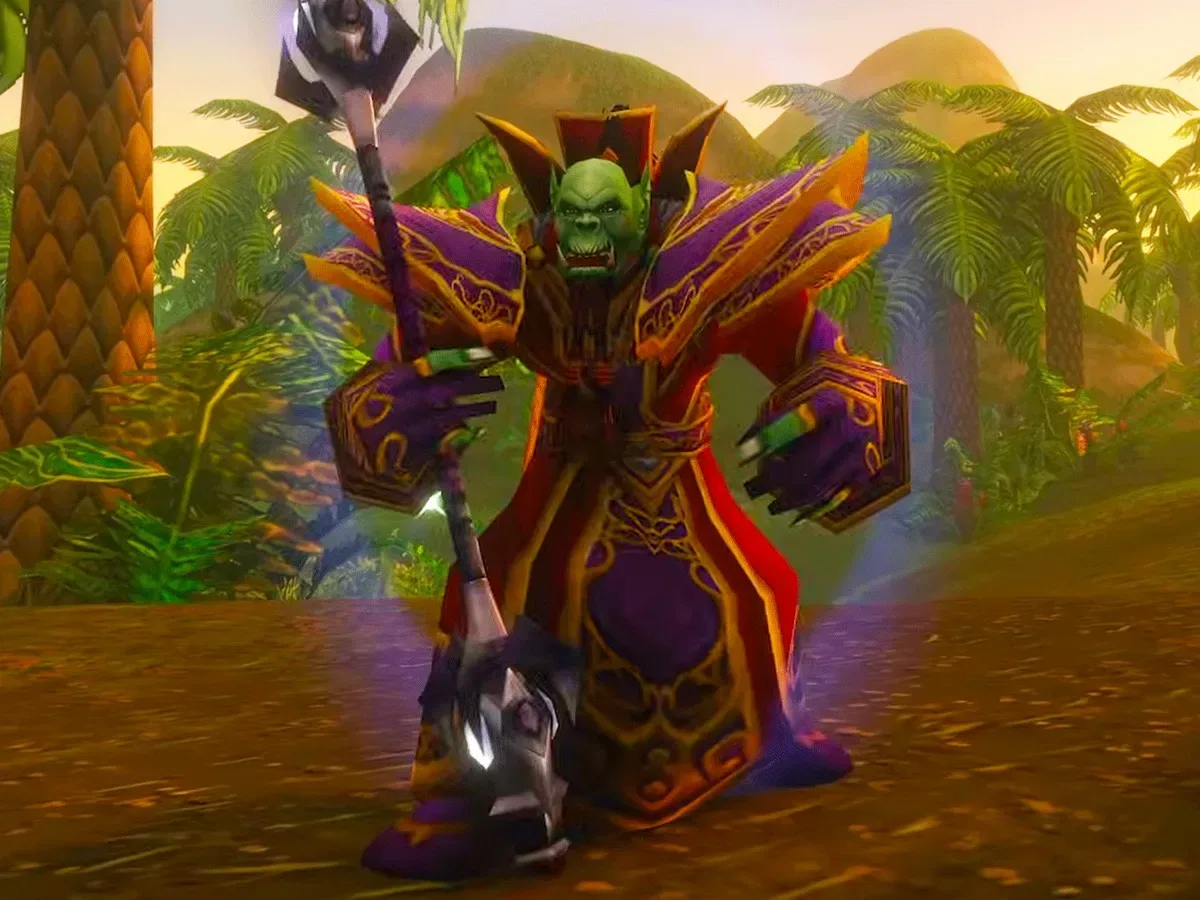
World of Warcraft: Forever is adjusting the trade-off at the center of its packed launch experience. A November 9 hotfix lowers the number of players placed together in congested zones, with a larger reduction on PvP rulesets after player feedback about crowding. The change is designed to make questing more practical without abandoning the game’s highly populated shared-world approach.
The issue is easy to recognize in an MMO’s busiest starting and leveling areas: a quest may ask players to defeat a particular enemy or collect an item, but dozens of nearby players are pursuing precisely the same target. In that situation, progression is slowed not by challenge but by availability. Players can spend more time waiting for respawns or trying to tag an enemy first than actually advancing their quests.
That congestion has reportedly been especially disruptive in early PvE areas, while PvP rulesets have the additional complication of uneven faction populations. Blizzard’s immediate response combines two different tools: reducing per-zone player density through layering and restricting new-character creation on the more populous faction in a region.
What the zone-population adjustment actually changes
World of Warcraft: Forever uses one server divided into PvP, PvE, roleplay-PvP, roleplay, and Hardcore rulesets. Rather than separating everyone across a traditional list of individual servers, the game uses layering.
Layering is a method of placing groups of players into separate instances of the same game world. Characters on separate layers can be in the same named zone while not necessarily seeing or interacting with one another. It is intended to preserve the feeling of a living world while avoiding the technical and gameplay problems that come from concentrating every player in one physical space.
In Forever’s case, the launch population has made those layers feel extremely busy. Seeing huge groups moving through the world can be part of the appeal, but the practical limits become clear when enemies, named NPCs, quest objects, and gathering opportunities are shared resources. A highly social scene can become frustrating when it creates a queue for an objective that was never presented as a queue.
The November 9 hotfix lowers the population in zones with significant congestion. Blizzard said the adjustment is even more substantial on the PvP ruleset, where players had reported overcrowding in multiple locations. Further tuning remains possible, since the team says it will keep monitoring how zones feel.
That wording matters. This is not framed as a permanent, one-size-fits-all cap for every part of the world. It is an operational adjustment to a population system that can be tuned as players spread out, level into different regions, or shift between rulesets. For players, the meaningful measure will be whether quest targets and interactable objects become reliably accessible, particularly in places where the opening rush has produced persistent competition.
Related coverage includes World of Warcraft: Forever Hotfix Reduces Zone Crowding and Targets PvP Faction Balance.
PvP crowding is also a faction-balance problem
The same hotfix arrives alongside stronger action on faction balance. In PvP world rulesets, population ratios affect far more than the visual impression of who is standing around a town. They shape who can move through contested territory, complete outdoor quests, or survive chance encounters while leveling.
Blizzard community manager Kaivax said the company wants both factions to be close to a 50/50 split. The most extreme regional case is currently roughly 55/45, but Blizzard does not regard that as sufficiently even for its PvP ambitions. The stated goal is a world where Horde and Alliance can meaningfully compete, rather than one side consistently enjoying numerical superiority.
In North American PvP rulesets, Horde is currently the more populous faction. In EU roleplay-PvP, Alliance is the more populous side. Blizzard says creating a character on the larger faction in each region will become increasingly difficult in the short term. Those restrictions may reverse if population patterns change.
This is a notably direct intervention. Character-creation throttling does not instantly move existing characters from one faction to the other, nor does it guarantee parity in each zone at every hour. What it can do is stop the imbalance from growing further while new players decide where to begin. A restriction is therefore less a dramatic fix than a population-control valve: it narrows the flow toward the side that already has more players.
For Alliance players on North American PvP rulesets, lower zone density could have two effects that pull in different directions. Less crowding should make ordinary questing smoother. Yet if the faction balance remains unfavorable, a thinner layer does not automatically make hostile encounters easier; it simply changes the size and frequency of the groups players encounter. That is why layering and faction restrictions address related but distinct problems. One manages congestion. The other aims to protect competitive conditions over time.
Why a 55/45 split can still matter in an open PvP world
A five-point difference may sound modest in the abstract, but raw regional percentages do not tell the whole story of outdoor PvP. Players do not distribute evenly across every zone, level range, play session, or objective. Concentrations can develop around a particular quest hub, entrance, route, or contested resource. In those moments, a modest overall advantage can become a much more obvious local one.
This is an explanation of the risk rather than a claim that every zone follows the same pattern. The available population figures describe regional extremes, not a live headcount for every area. Still, Blizzard’s decision to combine character-creation controls with a larger PvP layering adjustment shows it sees world population as a gameplay issue, not simply a server-performance metric.
The developer’s desired outcome is also broader than reducing deaths or cutting queues. PvP rulesets are meant to produce encounters in which both factions can plausibly win or lose. If one faction is perceived as the default choice, that perception can attract more new players, which in turn reinforces the imbalance. Making the currently dominant faction harder to join is an attempt to interrupt that cycle before it becomes more entrenched.
The patch also makes leveling and dungeon runs more rewarding
Zone crowding and faction management headline the update, but the November 9 hotfix is wide-ranging. One of its clearest progression changes is a 50% increase in experience from all enemy kills in dungeons. That adjustment increases the value of dungeon runs as a leveling activity, though the patch notes do not specify how it will affect overall leveling pacing relative to questing.
Several dungeon fixes address access, loot, and encounter difficulty. Zarla Ober in Alcaz Prison now drops loot. Blackfathom Deeps receives a fix for an issue that could leave players unable to release after dying. In Blackrock Depths, the throne room doors should now open correctly if a party wipes during the Emperor Thaurissan fight, and Heart of the Mountain can be looted more than once.
The Drowned City had creatures dealing approximately 30% more damage than intended. Within Deathless Marrow, creature health is reduced by 25%, Deathless Sorcerer Fireball damage falls by 25%, Deathless Watcher Charge damage is cut by 50%, and Deathless Guardian Shield Slam is cast about half as often. These are concrete tuning reductions rather than vague balancing language, and they should make that encounter materially less punishing than it was before the hotfix.
The Shaper’s Terrace also gets multiple corrections: Vitrix, Snowtalon, and Cinder now correctly drop loot and higher-level skinning materials, while Cinder should spawn properly after the Archival Panel is used. Elsewhere, Stratholme receives a fix preventing players from mounting inside the dungeon.
For the broader technical backdrop of large-scale game infrastructure and access, cloud delivery remains part of the conversation elsewhere too, including the questions around how GTA 6 could reach Xbox One through cloud gaming. Forever’s current solution is different: it is managing a large simultaneous population by changing how many players share an instance of a zone.
Class fixes target damage, UI behavior, and quest progression
The class portion of the hotfix is largely corrective. Druids receive several fixes involving Feral Charge (Cat), Natural Instinct, Pounce’s displayed stun debuff, and Cooldown Manager behavior. Hunters should no longer sometimes aggro distant enemies simply by targeting them, and Vulgara the Insatiable plus the Shrieklings of Zephras are assigned to the correct hunter pet families.
Mages see a correction to Arcane Concentration’s activation handling across a cast and its bolts, along with a fix stopping Flamestirke ground ticks from incorrectly consuming Clearcasting. Paladins get a Consecration fix and corrected Seal displays in Cooldown Manager. Priests should retain Shadowform when casting Fear Ward, while Power Infusion now persists properly on allies.
Other highlights include corrected Lightning Overload damage for Shamans, a Warlock fix granting the appropriate riding skill after completing Summon Felsteed, and a correction that removes Incinerate from non-Destruction specializations. Players who completed the Felsteed quest before the hotfix can obtain apprentice riding skill by summoning the Felsteed once. Warriors, meanwhile, should see Thunderclap presented as a cooldown rather than as a duration tracked on the target.
These may sound like smaller changes beside a world-population overhaul, but they affect reliability. An MMORPG launch can feel smoother when individual abilities, quest rewards, UI indicators, and creature behavior consistently behave as intended. That is particularly important when players are rapidly leveling and discovering systems for the first time.
Quest, item, and world corrections remove more bottlenecks
A number of quest items are now available to all party members, including those for “The Monster Surfaces,” “Croaky’s Head,” and “Elmpaw’s Head.” The update also repairs quest-specific progression problems involving Astor Hadren, Jom-jom’s Escape, Ever After, Unwelcome Guests, Fetch ‘n’ Fletch, and several others.
Henrig Lonebrow’s Journal now respawns faster and has moved slightly down the road, with a similar skeleton marking its location. That is especially relevant to the hotfix’s wider congestion theme: when many players require a single world object, a faster respawn can directly reduce the wait. Silverpine Forest’s Ivar the Foul also has a corrected respawn rate, while Ferocitas the Dream Eater in Teldrassil spawns more quickly.
Item fixes include dungeon drops for Waylaid Crates and Craftsman’s Writs, the intended additional hour of Camp Benefits aura duration from Pouch of Violet Dust, and a correction for Nifty Stopwatch sharing a cooldown with movement abilities such as Dash, Blink, and Sprint. Berdun’s Trusty Rifle no longer carries random stats and is no longer Bind-on-Equip.
There is also a small but practical PvP change: an invisible wall that had blocked the roof of the Alliance base in Warsong Gulch has been removed. The Camp Taurajo-to-Thunder Bluff flight path should no longer unintentionally travel through objects.
A successful launch still needs active population management
Forever’s launch reportedly proceeded without major trouble, supported by infrastructure with around 251TB of RAM and more than 70,000 CPU cores. Those figures point to considerable capacity, but capacity alone does not solve gameplay crowding. A server can remain technically stable while a leveling zone becomes too contested for players to complete ordinary tasks comfortably.
That distinction is central to this hotfix. The update is not only about preventing a service failure; it is about refining the social and competitive experience created by a very large player base. Lowering zone populations should reduce friction around shared objectives. Restricting dominant-faction character creation aims to prevent PvP from tilting further in one direction. Dungeon experience and the many targeted fixes give players more dependable ways to progress while the population settles.
Whether those systems reach Blizzard’s preferred balance will depend on player behavior over the coming weeks. For now, the direction is clear: Forever is retaining its large-scale shared-world identity, but it is dialing back the parts of that scale that turn an active zone into an obstacle course.