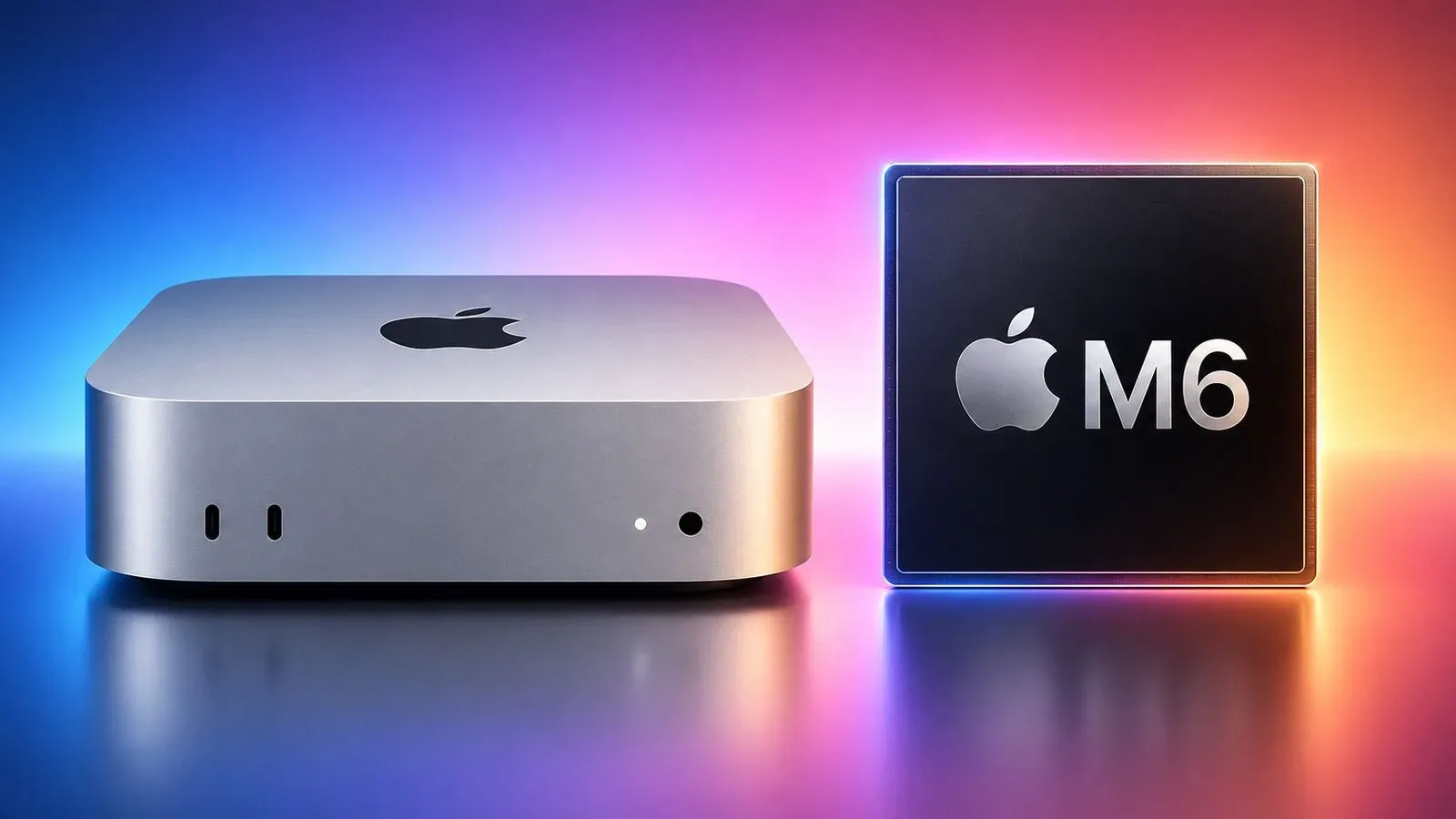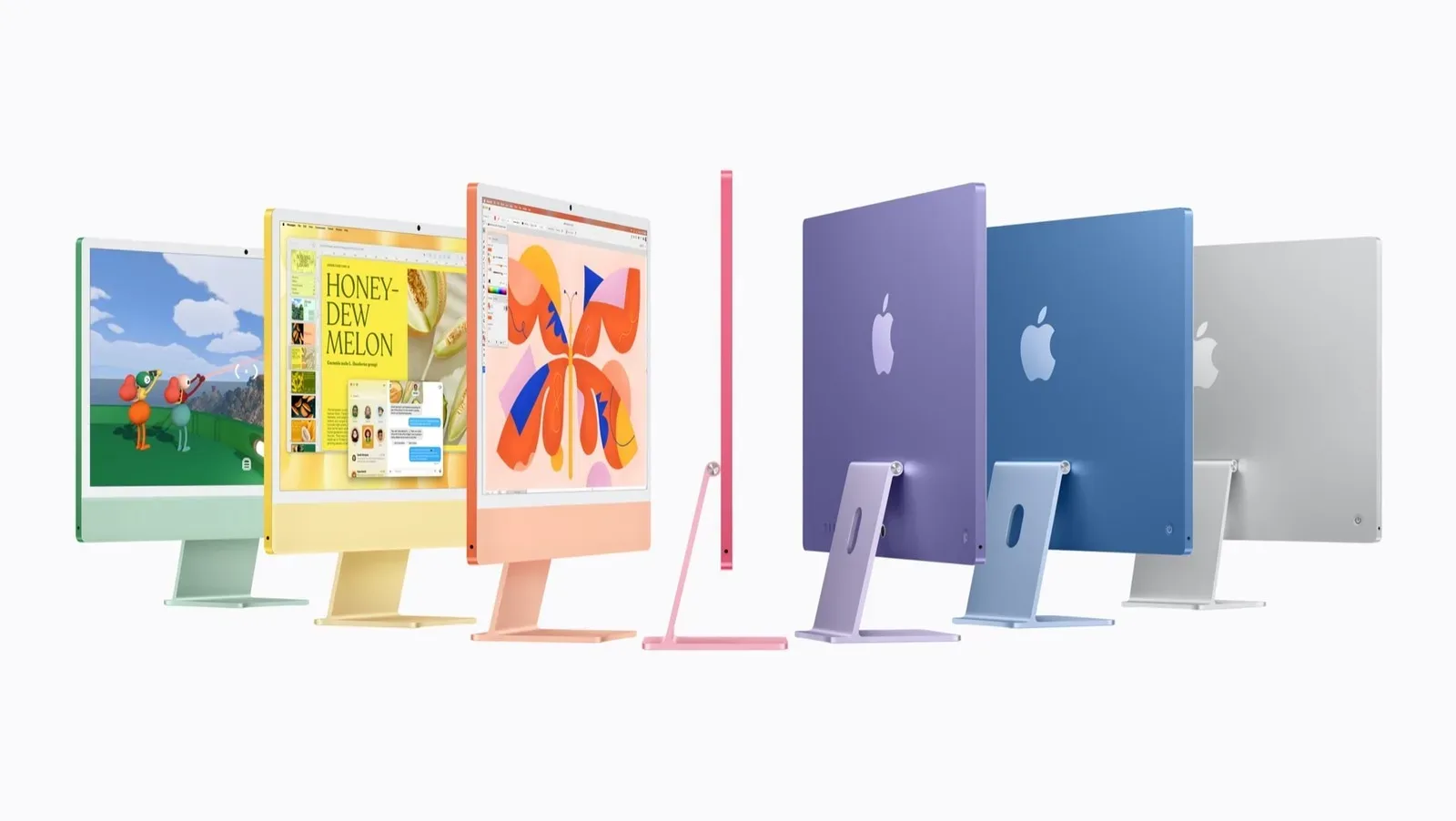
Apple’s next 24-inch iMac is arriving with an M6 processor, bringing a substantially faster internal platform to a desktop whose outward-facing formula remains familiar: a 4.5K, 24-inch Retina display, a thin all-in-one design, color-matched accessories, Touch ID and a selection of seven colors. The headline is less about a new chassis than about compute resources, local AI processing and graphics performance.
The M6 iMac starts pre-orders on October 28 at $1,499. Apple lists the entry configuration with a 10-core CPU, a second listed 10-core CPU specification and 16GB of unified memory; a $1,699 configuration has a 12-core CPU, 12-core GPU and 16GB of unified memory. Across the range, memory begins at 16GB, with 24GB and 32GB options. Those details matter because the machine is being positioned not merely as an office-oriented family desktop, but as a compact system intended to handle photo work, video work, local AI tasks and a more credible level of gaming.
What the M6 changes inside the iMac
The M6 had previously appeared in the Mac mini and Mac Studio. Its move to the iMac places the newer chip in Apple’s entry-level desktop line, where users get the all-in-one display and computer arrangement rather than purchasing a separate monitor, enclosure and accessories.
At its highest stated configuration, the chip includes a 12-core CPU, 12-core GPU and Dual 16-core Neural Engine, plus 170GB/s of memory bandwidth. A CPU, or central processing unit, handles broad computing work such as application logic, file management and many productivity tasks. A GPU, or graphics processing unit, is designed to process many visual calculations in parallel, making it particularly important for 3D games, video and image workflows. Memory bandwidth describes how quickly the processor can move data to and from memory; greater bandwidth can be valuable when graphics and creative software need rapid access to large visual assets.
Apple’s M-series systems use unified memory, meaning CPU, GPU and other parts of the chip share a common memory pool. In practical terms, the amount of memory selected at purchase can influence how comfortably the computer deals with large images, video timelines, demanding applications and AI workloads. The supplied configurations begin at 16GB, while 24GB and 32GB options provide more headroom for people whose work commonly keeps several demanding programs open at once.
Apple says the M6 iMac delivers up to twice the graphics performance of the M4 iMac. It also claims as much as a 50 percent improvement in Microsoft Excel tasks over M4, and up to 2.5 times the performance of an M1 iMac for the same sort of productivity workload. These are vendor performance claims rather than independent comparative testing, so prospective buyers should treat the figures as directional indications of where Apple expects the largest gains rather than a guaranteed result for every application.
The gaming claim: ray tracing gets a bigger bump
For gaming, Apple says the M6 iMac offers up to double the ray-tracing performance of the M4 version. Ray tracing is a rendering technique that models the path of light to create effects such as more natural-looking reflections, shadows and illumination. It can make scenes look more convincing, but it is computationally expensive. Consequently, a gain in ray-tracing performance is relevant to games that support the feature and to visual tools that use the same type of rendering work.
That claim does not establish a universal frame-rate result, nor does it tell us which games, settings or display resolutions were used. The iMac retains its 4.5K 24-inch panel, so prospective players should distinguish between a machine being faster in graphics workloads and any particular title being suitable for maximum settings at the display’s native resolution. Game support, graphics settings, resolution and the developer’s macOS optimization all remain central variables.
Still, the emphasis is notable. Apple is explicitly connecting the M6’s stronger graphics capability to both creative workloads and games, rather than presenting the iMac solely as a productivity terminal. For players who use one desktop for everyday work and a supported game library, a faster GPU and improved ray-tracing result could make the iMac a more flexible compromise than previous generations.
It is also worth separating hardware capability from platform coverage. A powerful chip can improve the experience in software that is available and well optimized for the platform; it does not, on its own, expand the list of games released for macOS. People primarily buying a desktop for a specific game should confirm that game’s macOS support and requirements first. For a look at another active corner of PC game news, see our coverage of WoW: Forever’s racial-trait changes.
Apple is making local AI the central pitch
Apple’s biggest numerical claim is reserved for artificial intelligence. The company says on-device prompt processing in LM Studio can be up to five times faster than on the M4 iMac and up to 12 times faster than on an M1 model.
On-device AI means the model’s processing is performed locally on the computer instead of being sent to a remote server for the work. Prompt processing is the work of interpreting the input supplied to an AI model and beginning its response. LM Studio is included here as the named workload for Apple’s comparison. The key implication is that the M6 iMac is designed to devote more dedicated compute capacity to local AI use than its predecessors.
Part of that capability comes from the Neural Engine and the new Neural Accelerators in each core. A Neural Engine is specialized hardware for machine-learning operations. Apple’s stated Dual 16-core Neural Engine configuration, together with additional accelerators and broader processor improvements, is meant to speed up tasks that rely on AI models without treating them exactly like conventional CPU-only jobs.
The operating-system side is equally important. The M6 iMac runs macOS 27 and the next generation of Apple Intelligence with Siri AI. Apple says users will be able to ask questions and search for information in email and photos. Siri AI is also integrated into Spotlight, where it can provide answers on a topic and accept follow-up questions. The availability caveat is significant: Apple Intelligence is not yet available in Europe. Buyers in that region should not assume the promoted AI experience is immediately part of the package.
There is a practical distinction here between an AI-capable computer and a useful AI workflow. The M6 specifications indicate potentially stronger local processing, but the benefit a person actually sees will depend on whether the applications they use can take advantage of that hardware, as well as the features available in their location. The advertised gains are compelling for people who already use local models or expect to use the new Apple Intelligence functions, but less decisive for someone whose daily computing is limited to web browsing, basic documents and streaming.
Connectivity improves, while the screen stays the same
The display remains a 4.5K, 24-inch Retina panel with 500 nits of brightness and P3 wide color. P3 is a wider color gamut than basic sRGB and is particularly relevant to people working with photos, design assets and video, where a broader range of visible colors can matter. Those happy with the existing iMac panel are getting the same core visual proposition; people hoping for a larger 27-inch iMac are not getting one in this update.
Connectivity receives clearer upgrades. The M6 iMac supports Wi-Fi 7 and Bluetooth 6, alongside 2.5Gb Ethernet. Apple says the Ethernet connection provides 250 percent more speed than before. A wired 2.5Gb connection can be especially relevant in homes or offices with compatible networking equipment, large shared files or local storage that can benefit from higher transfer speeds.
There is a limit to the I/O upgrade. The iMac has Thunderbolt 4 rather than the Thunderbolt 5 support found in the latest Mac Studio. Thunderbolt is a high-speed connection used for peripherals, storage and displays; Apple describes Thunderbolt 5 as twice as fast. That means the iMac’s connectivity is moving forward in wireless networking and Ethernet while remaining behind the Studio on this particular wired expansion standard.
For desk setups that outgrow the built-in 24-inch panel, the machine can drive up to two external 6K displays. That support could be meaningful for editors, programmers, streamers and creators who value multiple large workspaces, though the all-in-one’s existing display remains part of the arrangement. The computer also includes a 12MP Center Stage camera. Center Stage is Apple’s camera framing feature, intended to keep a person in view during video calls.
Who the M6 iMac appears to suit
The M6 iMac is most straightforwardly aimed at someone who values a compact desktop setup but wants more performance than earlier 24-inch models offered. The specification list suggests several groups that may have the strongest reason to consider it:
- M1 iMac owners who want Apple’s stated 2.5-times productivity improvement and as much as 12-times faster local prompt processing in LM Studio.
- M4 iMac owners with specific bottlenecks, particularly graphics, ray tracing or local AI work, where Apple projects notable gains.
- Photo and video users who need a brighter performance envelope without moving to a separate-display desktop configuration.
- Mixed work-and-play users who can benefit from a faster GPU in supported games but do not require the expandability of a Mac Studio.
- Multi-display workers who want the iMac’s built-in panel plus support for up to two 6K external displays.
Conversely, the update may be less compelling for someone satisfied with an M4 iMac whose work does not touch AI, graphics-heavy applications or demanding spreadsheets. The screen itself is unchanged, and Thunderbolt 5 is absent. A buyer who specifically needs the fastest wired peripheral connectivity or has a workflow built around that expansion standard should recognize that the M6 iMac is not being framed as a substitute for the current Mac Studio.
Apple’s refresh therefore looks like a performance-first update to a well-established desktop design. The claimed graphics uplift, doubled ray-tracing capability, additional memory options, faster networking and much larger local-AI claims add up to a more ambitious machine than the iMac’s consumer-friendly exterior might imply. The strongest case will be made not by the AI marketing alone, but by whether a buyer’s software, regional feature availability and preferred games can convert the M6’s new processing resources into visible daily gains.