A newly shared image said to show code from an early Half-Life 2: Episode 3 build has put two long-dormant weapon ideas back in the spotlight: the Blobulator and a much less understood item called the Weaponizer. Neither reference is confirmation of a new Half-Life game, a recovered playable build, or a final design Valve intended to ship. It is, however, another glimpse at the broad and experimental set of mechanics considered for Gordon Freeman’s unmade continuation.
The distinction matters. Episode 3 did not release, and the available material appears tied to a version of the project from around 2008. Game source code can preserve names, tests and systems that never became player-facing content. A weapon mentioned in code may have been prototyped, renamed, drastically revised or discarded before it reached a polished level. For a series with an unusually long history of speculation around its next chapter, that uncertainty is not a footnote—it is the central rule for interpreting the discovery.
The Blobulator was designed as more than a gun
Of the two names, the Blobulator has the clearer history. Valve had previously shown the concept during the 2007–2008 period, when it was associated with Episode 3. The basic idea was strikingly strange even by Half-Life standards: a large, mercury-like blob that could be used against enemies or to hold them in place.
Its value was apparently meant to come from malleability. Rather than behaving like a conventional projectile with one obvious purpose, the substance could be divided into pieces and shaped for different situations. Those separate portions would then reunite, giving the weapon a liquid-metal quality reminiscent of the T-1000. In design terms, that makes the Blobulator a multi-purpose systemic tool: a mechanic whose usefulness changes with player intent and surrounding conditions instead of being fixed to a single attack animation.
That approach would have fit neatly beside the Gravity Gun, the signature Half-Life 2 device that turns physics objects into ammunition, shields and impromptu puzzle solutions. The Gravity Gun’s enduring appeal is not merely that it can hurt enemies. Its strength is that it reframes ordinary scenery as something the player can manipulate. The Blobulator seems to have chased a related kind of flexibility, but by introducing a controllable material rather than allowing players to grab the objects already placed in a room.
There was a catch: the blob was described as somewhat sentient. It could turn hostile in the wrong circumstances, meaning its power came with risk. That is a notable wrinkle for a tool built around adaptation. A weapon that asks players to manage its behavior, rather than simply aim and fire, can create tension between improvisation and caution. Used well, it might trap or assault foes; used carelessly, it might become one more hazard in the fight.
That last point is important because it prevents the Blobulator from being reduced to “a second Gravity Gun.” The comparison is understandable—both concepts imply experimentation beyond standard firearms—but their proposed roles are different. The Gravity Gun is fundamentally an object-manipulation device. The Blobulator appears to have been a mutable offensive substance with an unpredictable element of its own.
Prototype ideas can survive even when the game does not
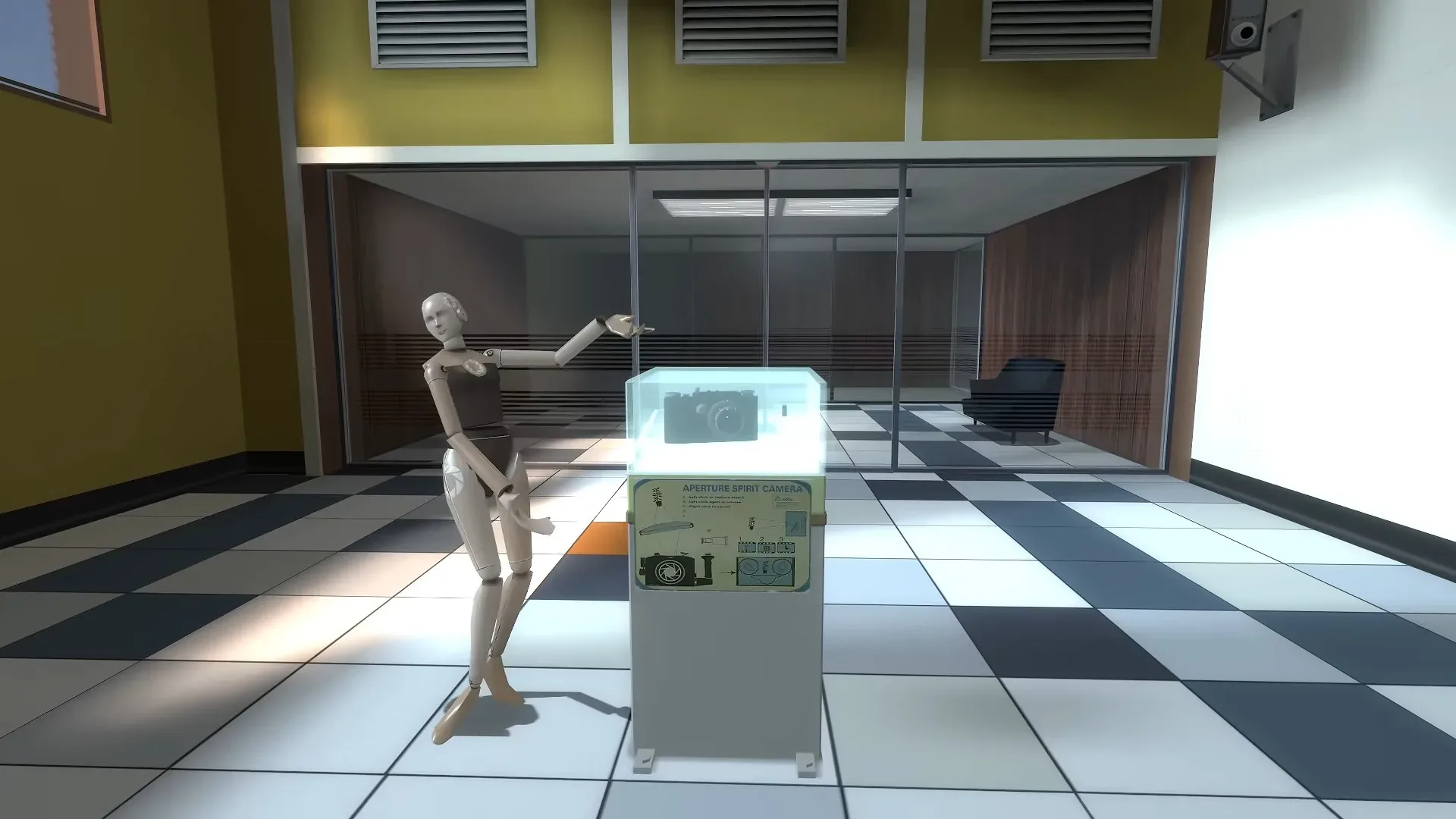
The reported code reference is especially interesting because the Blobulator’s underlying technology did not simply disappear with Episode 3. Elements of that work reportedly made their way into Portal 2 through the Mobility Gels. That does not mean the gels are the Blobulator under another name. It does show how game development can preserve individual technical ideas after a larger project changes direction or is abandoned.
Related coverage includes Half-Life 2: Episode 3 Code Leak Points to Blobulator and Mysterious Weaponizer.
Mobility Gels are a useful example of a broader development reality: a project’s cancellation is not necessarily the end of all its research. Physics experiments, rendering techniques, interface concepts and level-design lessons can be repurposed when they suit another game’s needs. In this case, a concept initially connected to a dangerous, shape-changing material in Half-Life apparently helped inform a traversal-oriented system in Portal 2.
That lineage gives the apparent leak more context than a simple list of unused weapon names. It illustrates an alternate direction for the series: one in which Freeman’s equipment may have become even more material-focused and less dependent on traditional shooting. It also suggests why isolated code fragments should be read carefully. A named feature can reveal what a team explored, but it cannot tell us exactly how that feature would have felt in a finished campaign, nor whether it would have survived the next internal revision.
The Weaponizer remains almost entirely undefined
The Weaponizer, meanwhile, is the more tantalizing and less informative find. Its name strongly implies an offensive or weapon-related function, but the currently described material does not establish what it did, how it was used, or whether it ever existed beyond an early concept. It could have been a tool, a working label, a component of another system or an experiment abandoned before its purpose was fully realized.
That lack of detail is precisely why the Weaponizer should not be treated as evidence of a specific lost feature. Names in development code can be evocative without being descriptive. A label may communicate an internal intention to developers while leaving open a huge range of player-facing possibilities. Until more context emerges—such as related functions, asset references, design documents or footage—the responsible reading is simply that an early Episode 3 codebase appears to include a reference to something called the Weaponizer.
The reported 2008-era dating also places the material in an early version of the project, one later set aside as Valve explored other approaches to the next Half-Life installment. That timeline further narrows what can be concluded. It is evidence of a road not taken, not a blueprint for a game that was close to completion.
Why code leaks excite modders—and why they have limits
For modders, even partial code material can be creatively valuable. It can offer terminology, technical clues and inspiration for projects that imagine what a different Half-Life continuation might have looked like. A community-made project informed by such fragments could explore physics tools, experimental weapons or story-adjacent settings in ways official releases never did.
But there is a sharp line between being inspired by development remnants and reconstructing an authentic lost game. Code alone does not automatically supply the complete design logic behind a mechanic. It does not provide all the authored maps, animations, narrative beats, balance work, art direction or iterative testing that turn a prototype into a finished experience. Even a familiar name such as Blobulator comes with unresolved questions: how much control did players have, how were its risks communicated, which enemies were affected, and how often would levels expect it to be used?
That is why fan work based on these fragments should be understood as interpretation. It may be fascinating interpretation, and it may reveal how compelling the old ideas still are, but it cannot settle the question of what Valve ultimately would have made.
The same caution applies to expectations around an official follow-up. The apparent leak does not signal that Valve has revived Episode 3, confirmed a sequel, or committed to revisiting the Blobulator or Weaponizer. It adds another piece to the archive of concepts associated with an unfinished period in the franchise’s history. For players, that is enough to reignite discussion about the kinds of tools that made Half-Life 2 distinctive: tools that encouraged experimentation, redefined familiar spaces and made a weapon feel like part of the world’s physics rather than merely another trigger pull.
For now, the Blobulator remains the more legible curiosity: an ambitious living-metal weapon concept whose technical legacy reportedly continued in Portal 2. The Weaponizer is the real mystery, a suggestive name attached to far too little information. Together, they are a reminder that the unfinished Episode 3 was not just an absent release. It was a field of ideas, many of which changed, migrated or vanished before players could see where they might have led.
Valve’s history of experiments moving between projects is also a useful lens for reading broader conversations about game-development systems and design ideas, including how developers reassess ambitious mechanics during production. The lesson here is less a promise of recovered content than a practical one: prototypes can matter long after the specific game built around them is gone.