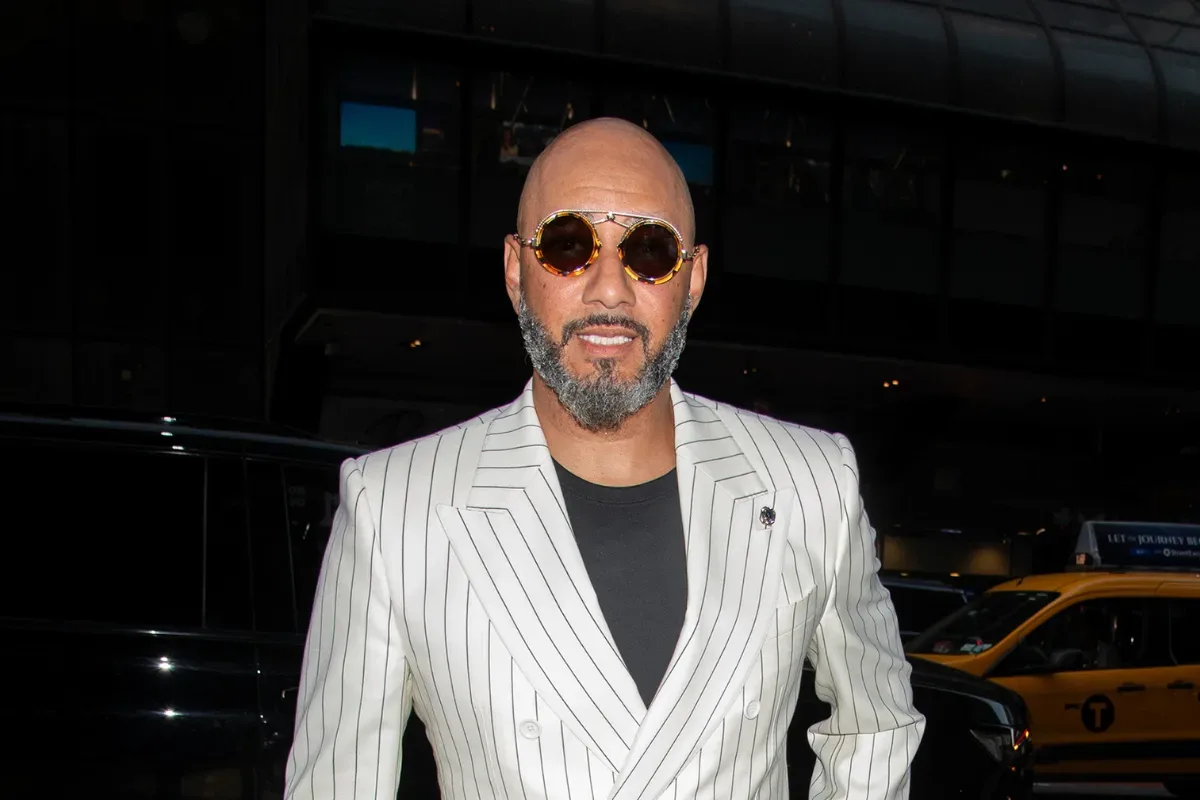
Papoose has added a musical response to the long-running public conflict involving Remy Ma and Claressa Shields. His new song, “Jezebel,” arrives after a fresh exchange between Remy and Shields on social media, and one day after a virtual divorce hearing between Papoose and Remy on September 11 did not settle their marriage.
The record does not name Remy Ma outright. Its references, however, point strongly toward Papoose’s estranged wife and their shared history. He revisits the support he says he gave her while she was incarcerated, including sending mail and bringing food. He also alleges that he played a major creative role in some of her best-known work and says he continues to transfer money to her through Zelle.
That approach makes “Jezebel” less like an isolated release and more like the latest round in a dispute that has been moving through several formats at once: posts, screenshots, allegations, divorce proceedings, apparent diss tracks, and now another direct response on wax. The circumstances are personal, but the public-facing format has increasingly become competitive and performative.
A dispute revived by a boxer-rival appearance
The latest flashpoint followed Remy’s appearance in filmed content with Alycia Baumgardner and Amanda Serrano, both of whom are rivals of Shields. Shields reacted online with insults aimed at the trio and made clear that she viewed the appearance as a provocation.
Shields also referenced battle rapper Eazy The Block Captain, who has been romantically linked with Remy, while defending her own relationship with Papoose. In posts from the exchange, Shields said she had been involved with Papoose for more than two years and suggested that Remy had repeatedly turned the dispute into music.
Remy countered by stressing that she and Papoose are still legally married. Her replies included criticism of Shields and calls for Papoose to complete the divorce paperwork. Shields responded that she was not intimidated and characterized Remy as preoccupied with a relationship she supposedly no longer wanted.
The conversation escalated further when Remy shared a screen recording of messages that appeared to show Shields communicating positively with her from 2020 through 2024. Remy used the material to argue that Shields had previously sought contact and support from her before their relationship soured. The messages, their broader context, and the competing interpretations offered online remain part of a public dispute rather than a settled account.
The legal case remains open
The September 11 hearing was held virtually. Remy reportedly asked for Papoose’s divorce filing to be dismissed, but the judge denied that request. The case therefore remains unresolved, despite the increasingly final-sounding language that all sides have used in public.
That unresolved status matters because much of the argument has centered on two different ideas of a relationship: its legal standing and its lived reality. Remy has emphasized that she remains Papoose’s legal wife. Shields has emphasized the duration of her relationship with him. Papoose’s song, meanwhile, frames his own grievances through the couple’s past, financial claims, and creative disputes.
None of those competing narratives can be reduced to a clean scoreboard. A divorce case can proceed on its own legal timeline while the people involved make public claims about betrayal, support, new relationships, and old sacrifices. Here, each new post or song has also invited a much larger audience to assess fragments of a private collapse in real time.
How the conflict became public
Questions around Remy and Papoose’s marriage had circulated well before the current exchange. In June 2023, reports suggested that Papoose confronted Eazy The Block Captain at a Chrome 23 event. Remy denied a claim that Papoose knocked Eazy out, but the rumors kept attention fixed on the state of the marriage.
The situation burst into much wider public view on December 12, 2024. Remy posted what she described as private messages between Papoose and Shields. At the time, she alleged that Papoose fell asleep during a phone conversation with Shields while at their home. Shields answered by accusing Remy of having other romantic partners.
Papoose then publicly accused Remy of repeated infidelity and described her with a mental-health label in an accusation that should not be treated as a diagnosis. He said he had attempted to leave the marriage and had stayed quiet in an effort to protect their daughter.
Shields later said that she and Papoose began dating privately in August 2024. Once their relationship became public, the boxer was no longer merely adjacent to the marital conflict; she became one of its central public participants. That shift helped turn a split between two music figures into a three-person story spanning hip-hop, battle rap, professional boxing, and the social-media audience surrounding all of them.
From posts to records
The argument did not stay in comment sections. During 2025, Shields said she would fight Remy for $1 after accusing the rapper of leaking her phone number. Reports that the two women had actually fought circulated later, but both denied that a fight had occurred.
By April 2026, Remy had brought the conflict explicitly into her music with “W.Y.F.L.” The track took aim at Papoose’s assertions about writing her rhymes and also included attacks on Shields. Papoose’s attorneys reportedly demanded that Remy stop distributing that song, adding another layer of tension around what can be said, recorded, and circulated during a deeply public separation.
Remy followed in August with “Wanna Go,” another apparent diss track. Its rollout drew on Shields’ fondness for Crime Mob’s “Knuck If You Buck,” using an existing cultural reference to sharpen an already personal confrontation. More recently, Remy’s content with Baumgardner and Serrano gave Shields a new reason to respond, setting the conditions for Papoose’s “Jezebel.”
The escalation demonstrates how diss records can now work as one piece of an always-active argument rather than a rare, standalone event. A song can answer a post; a post can promote a song; an appearance can generate a new verse. The boundaries between music release, interpersonal message, and fan-facing content become extremely thin.
That overlap is especially visible in conflicts where audiences already know the participants from different worlds. Shields brings the profile of a world champion boxer, while Remy and Papoose have long-established identities in rap. Eazy The Block Captain adds battle-rap associations, and appearances by Baumgardner and Serrano give the dispute another connection to the boxing landscape. Each side has supporters accustomed to reading confrontation as both personal expression and competition.
There is a wider entertainment pattern behind that attention cycle, too. As explored in the changing audience for overlapping entertainment stories, a single narrative can pull in communities that would not normally follow the same personalities or genres. In this case, the crossover is unusually combustible: fans can follow a court update, a music release, a boxing-related social post, and alleged private messages as chapters in the same unfolding story.
What “Jezebel” changes—and what it does not
“Jezebel” is significant because Papoose is now answering through music rather than simply reacting through statements. The song places his version of the relationship at its center, including his claimed support during Remy’s incarceration, the question of authorship around her music, and ongoing financial assistance. These are assertions from Papoose, not independently established findings.
It also lands as Remy prepares “Why I Get Married,” an announced collaboration with Keke Wyatt. The timing raises the possibility that the musical back-and-forth may continue, although no further response has been confirmed. Given the course of the feud so far, it would be unwise to treat any social post, song title, or snippet as proof of what comes next before the artists themselves release it.
For now, the known facts are narrower than the spectacle around them: the divorce proceedings continue; Papoose has released “Jezebel”; Remy and Shields have resumed trading hostile public messages; and the conflict has once again crossed from social media into recorded music. The personal issues at the center remain unresolved, even as the public argument has found another, louder platform.