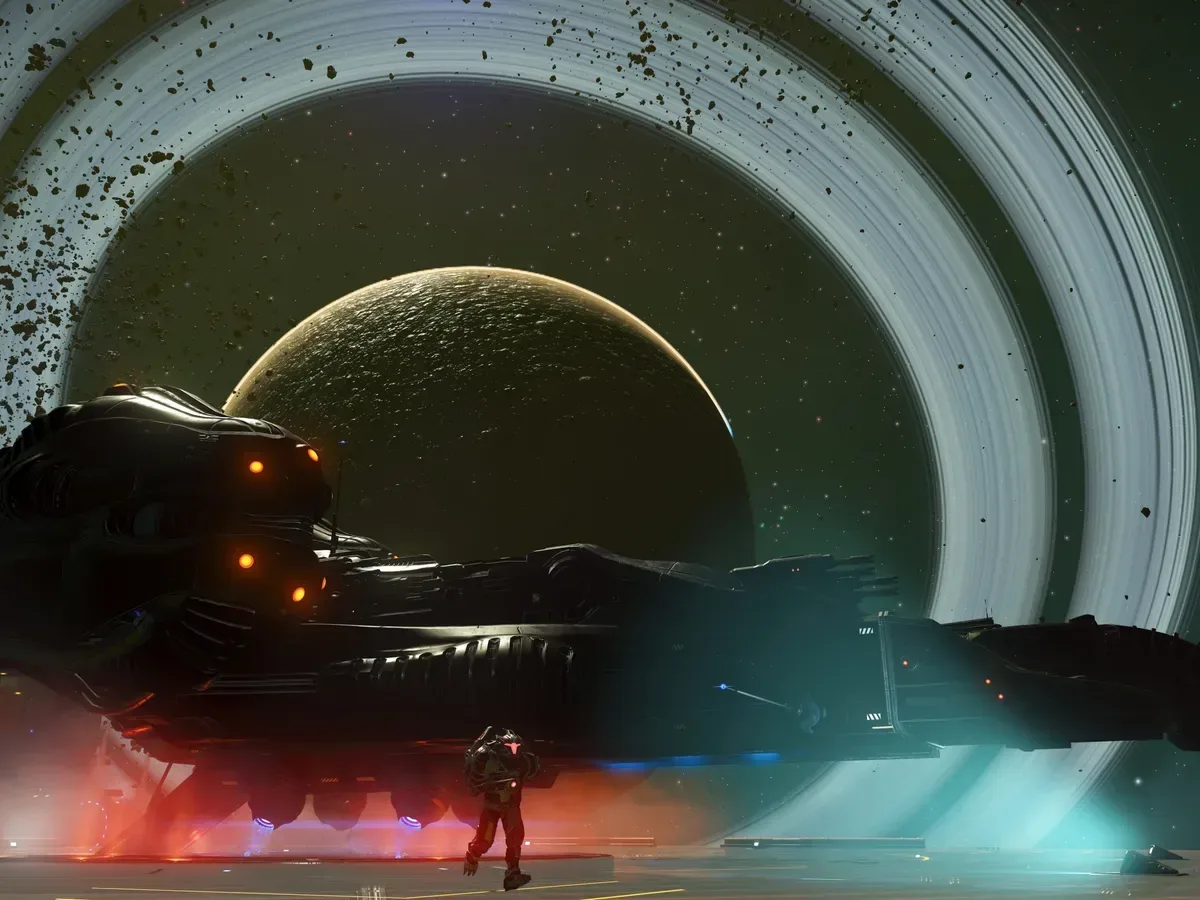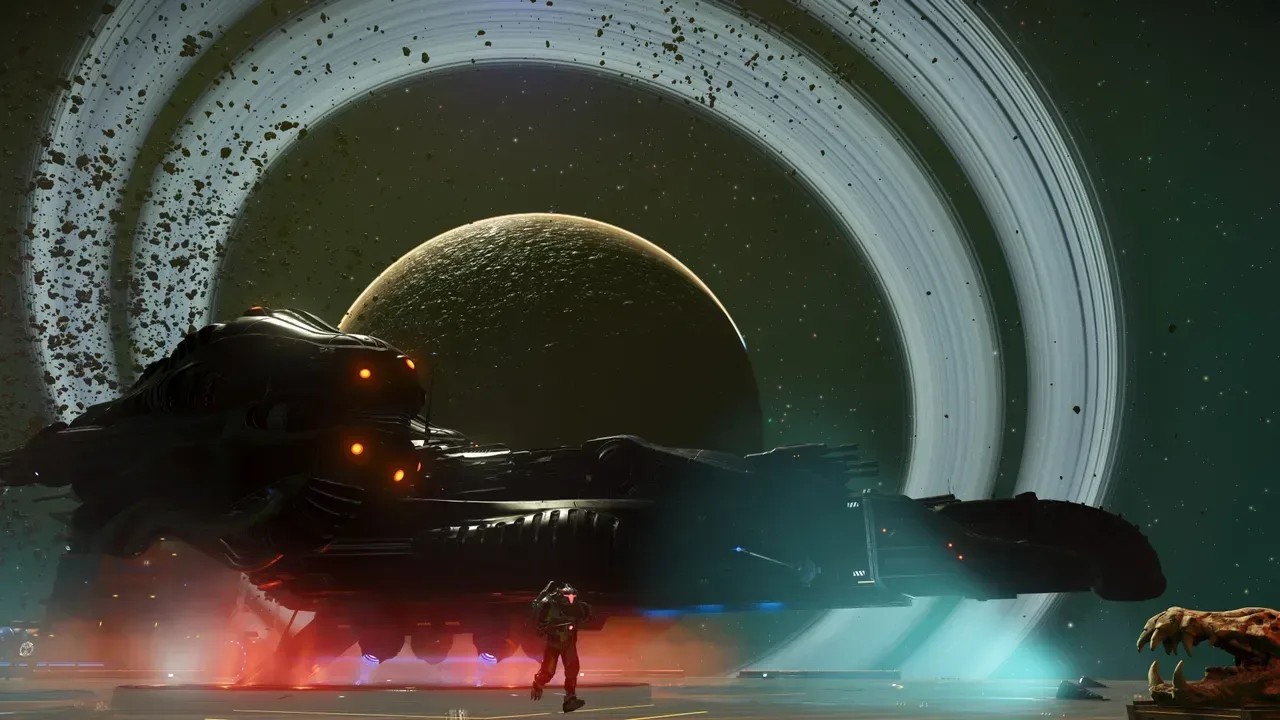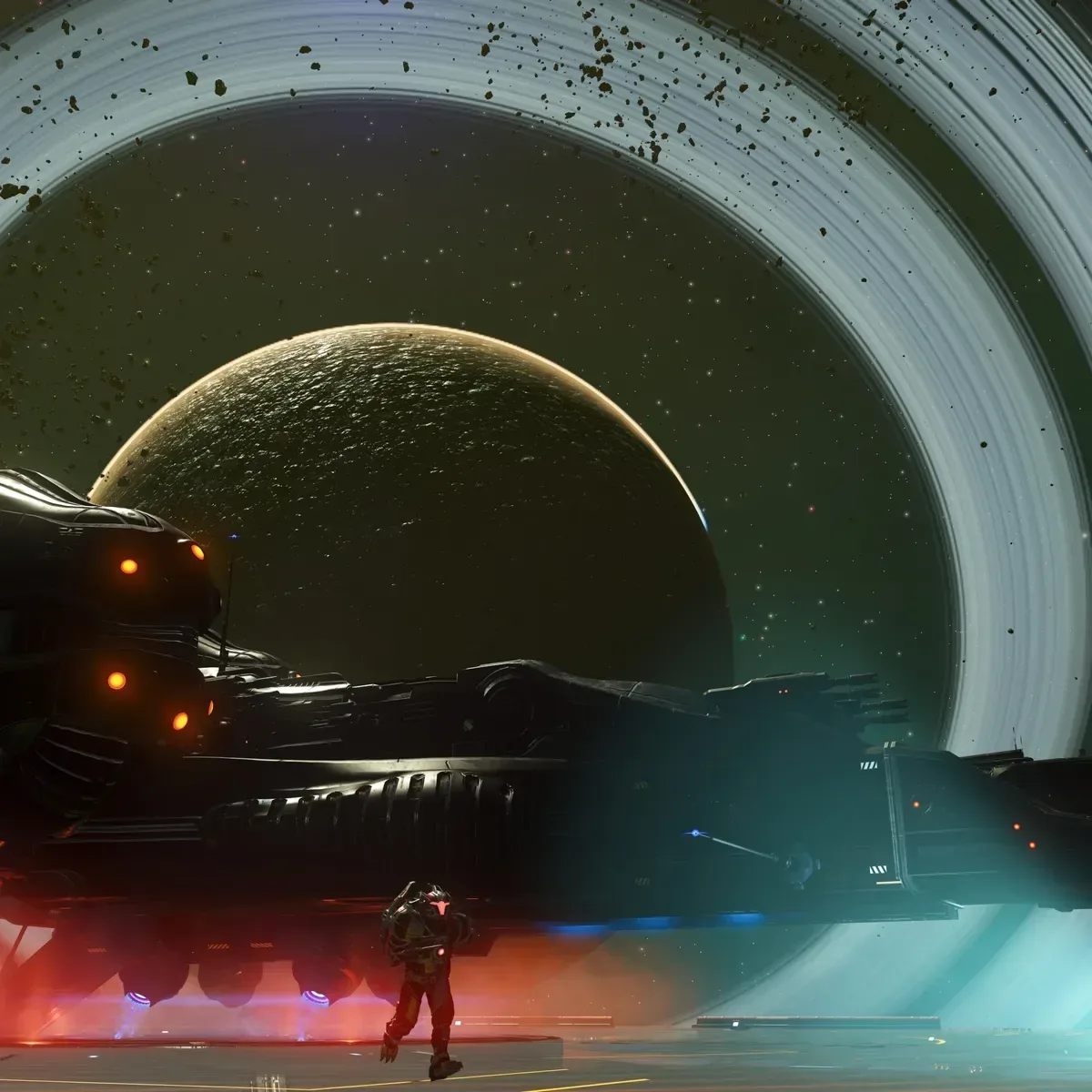
No Man’s Sky has received the Forsaken update, a Halloween-timed expansion that sends its vast procedural universe in a distinctly creepier direction. The new content centers on finding haunted technology and biological horrors in dangerous reaches of space, then exchanging those discoveries with eccentric traders for seasonal rewards.
Forsaken arrives shortly after the Cosmos update, which marked the game’s tenth anniversary with changes aimed at making space exploration more dramatic. That earlier release allowed players to approach stars more closely, construct their own space stations and investigate the remains of enormous space hulks. Forsaken does not abandon that exploratory foundation; instead, it gives the journey a more unsettling purpose. The universe remains huge, but the update asks players to look for things that perhaps should have stayed undiscovered.
A seasonal trip into No Man’s Sky’s darker universe
The headline addition is a loop built around recovery and trade. Players seek out haunted pieces of technology and biological horrors, both described as being located in especially harrowing areas of the cosmos. Those items can then be sold to unusual traders, unlocking seasonal items in return.
That distinction matters. Forsaken is not merely adding a spooky coat of paint to existing equipment; it ties its Halloween atmosphere to activities in the world. Exploration creates the opportunity to find the strange materials, while trading converts that risk into visual and building rewards. Players who want the update’s themed items will have a reason to head toward its more forbidding corners rather than simply waiting for a cosmetic menu to appear.
The available details do not specify precisely how the haunted technology and biological horrors are found, how frequently they appear, or whether their dangers take the form of combat, environmental hazards or something else. Those are important practical unknowns for anyone planning a focused reward run. What is clear is the intended cadence: venture out, recover unsettling discoveries, trade them, and apply the resulting seasonal parts or cosmetics to a ship and character.
What “seasonal rewards” means here
Seasonal rewards are limited-theme items connected to a particular update period. In Forsaken, the design language is deliberately organic and alien rather than conventionally monstrous. The rewards include shipbuilding choices such as alien cockpits and mysterious modules, along with character cosmetics including larva-tank helmets. Multi-tools can also take on a writhing, worm-like look.
A multi-tool in No Man’s Sky is a piece of player equipment used across exploration and survival activities. The update’s new variants are therefore cosmetic expressions attached to one of the game’s most visible tools, while the ship components offer a route to making a personal spacecraft fit the event’s bio-horror mood.
For builders, the organic ship options may be the most flexible part of the package. A cockpit or module is not simply an item to display in an inventory: it contributes to the identity of a custom vessel. Forsaken’s parts should let players push designs away from polished sci-fi hardware and toward something more unnerving, asymmetrical or unknowable. That is an aesthetic implication of the update rather than a promise of new ship performance; no gameplay-stat changes for these components have been detailed.
Related coverage includes No Man's Sky Forsaken Update Brings Haunted Tech, Biological Horrors, and Star-to-Star Warping.
Quality-of-life changes may outlast Halloween
Forsaken also includes a set of usability and accessibility improvements that are separate from the seasonal horror theme. These include an improved radial menu, a minimal HUD option, and further quality-of-life and accessibility settings.
A radial menu is a circular selection interface, typically used to quickly access actions or equipment. Refining it can make a difference in a game where players regularly switch between exploration tools, ship functions and other systems. The supplied details do not describe the exact changes to the menu, but the inclusion of a revised version signals an effort to reduce friction in routine play rather than only introduce new collectibles.
The HUD, or heads-up display, is the layer of on-screen information shown while playing: markers, meters, prompts and other interface elements. A minimal HUD setting reduces that visual overlay. For players who prefer a cleaner cockpit or planetary view, it can make the act of travelling through No Man’s Sky feel less cluttered. Conversely, people who rely on interface information can continue to use a fuller display, making the option a matter of presentation and comfort rather than a single mandated experience.
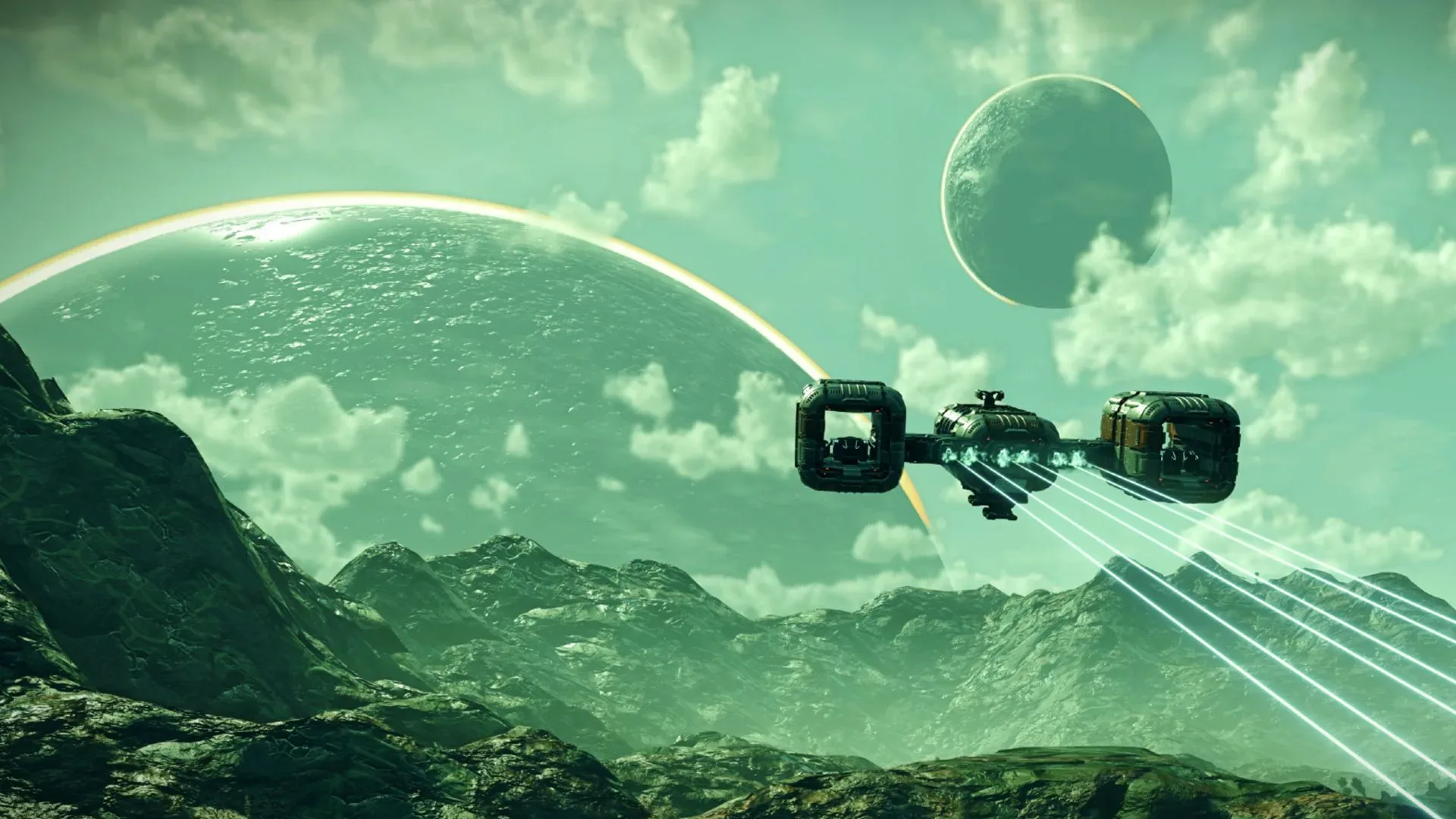
The update’s most immediately transformative navigation feature is the ability to warp directly to any star visible from a ship’s cockpit. Warping is the game’s faster method of travelling between stellar destinations, so allowing a visible star to become a direct destination narrows the distance between spotting somewhere interesting and acting on that curiosity.
There are boundaries worth keeping in mind. Forsaken is described as enabling travel to stars that can be seen from the cockpit; it is not described as a freeform teleport to every point in the galaxy or a replacement for every existing travel rule. Still, the feature sounds well aligned with the game’s central fantasy: look out into space, choose a light on the horizon, and go there.
Cosmos set the stage for a more hands-on galaxy
The timing makes Forsaken feel like a tonal follow-up to Cosmos. Released last month for No Man’s Sky’s tenth anniversary, Cosmos expanded the sense of scale and physical presence in space. Players could get close to stars, build their own space stations and explore wrecked giant space hulks.
Forsaken takes that renewed emphasis on the unknown and gives it a horror angle. Wrecks, distant stars and isolated regions already carry a natural sense of risk in science fiction. By placing haunted technology and biological horrors in tough-to-reach or threatening spaces, the update turns those broad ideas into a themed incentive loop. The practical takeaway is that players returning after Cosmos may find the newer update complements, rather than replaces, the activities introduced a month earlier.
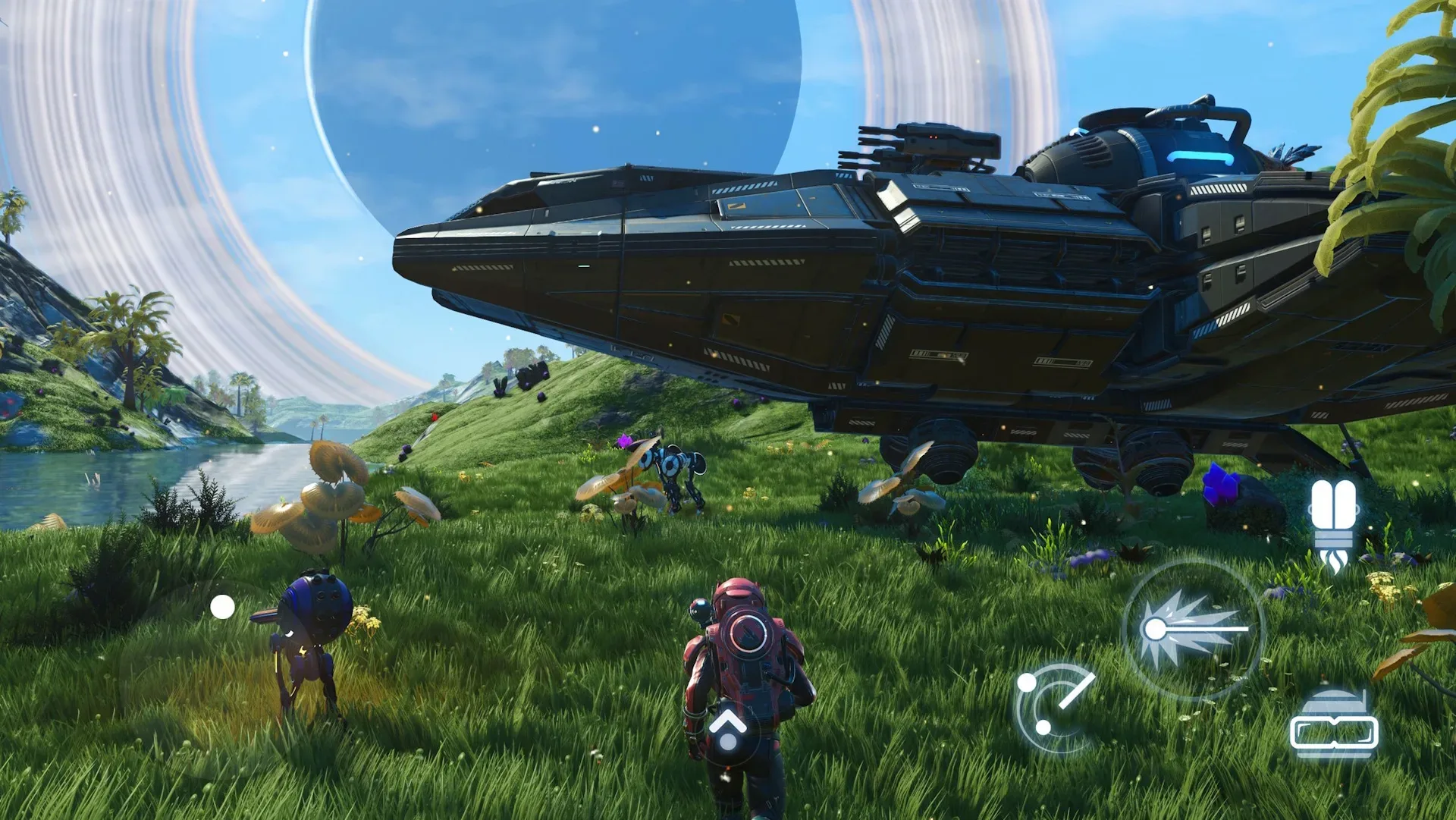
The update is available now across all platforms, including the recently released iOS version of No Man’s Sky. The mobile launch means players entering through iOS arrive with both Cosmos and Forsaken as part of the game’s current direction: larger-scale space exploration on one hand, and a seasonally sinister expedition into the galaxy’s strange debris on the other.
Hello Games’ updates and the road to Light No Fire
Hello Games has continued to expand No Man’s Sky long after its troubled initial launch, delivering major free updates over the years. The ongoing support also sits alongside the studio’s next project, Light No Fire, a sword-and-sorcery role-playing game built around a dense, full-scale planet rather than an effectively endless galaxy.
Light No Fire is expected to let players travel through the skies on dragonback. The project was last shown at The Game Awards in 2023, so its current state and release timing have not been detailed here. However, the studio’s work on No Man’s Sky updates has been described as contributing technical advances useful for the new game. That makes features such as richer exploration, large environments and travel-system refinements especially interesting beyond their immediate use in Forsaken.
Players interested in a different kind of Halloween-friendly adventure may also want to browse the latest PlayStation Plus lineup, which includes Dead Island 2. Forsaken, though, offers a notably different flavor of unease: not a ruined city or a haunted house, but the disquiet of seeing a familiar star through the cockpit glass and deciding to warp toward it anyway.
What returning players should know
- Forsaken is available now on all platforms, including iOS.
- The core event activity involves locating haunted technology and biological horrors, then trading them for seasonal items.
- Seasonal customization includes organic and alien-themed shipbuilding parts, character cosmetics and multi-tool looks.
- Navigation is changing through direct warps to stars visible from the cockpit.
- Interface options are expanding with a better radial menu, a minimal HUD setting, and other quality-of-life and accessibility adjustments.
- Cosmos remains relevant, having recently added closer stellar exploration, player-built space stations and huge wreck sites.
Forsaken’s strongest idea is not simply that No Man’s Sky has added some Halloween cosmetics. It is that the update uses the game’s defining scale as the source of the scare. A galaxy full of destinations can be beautiful, but it can also be lonely, unknowable and occasionally full of items that look as if no sensible traveler should pick them up. Forsaken gives players a reason to do exactly that—and then turn the results into a spaceship with an alien cockpit.