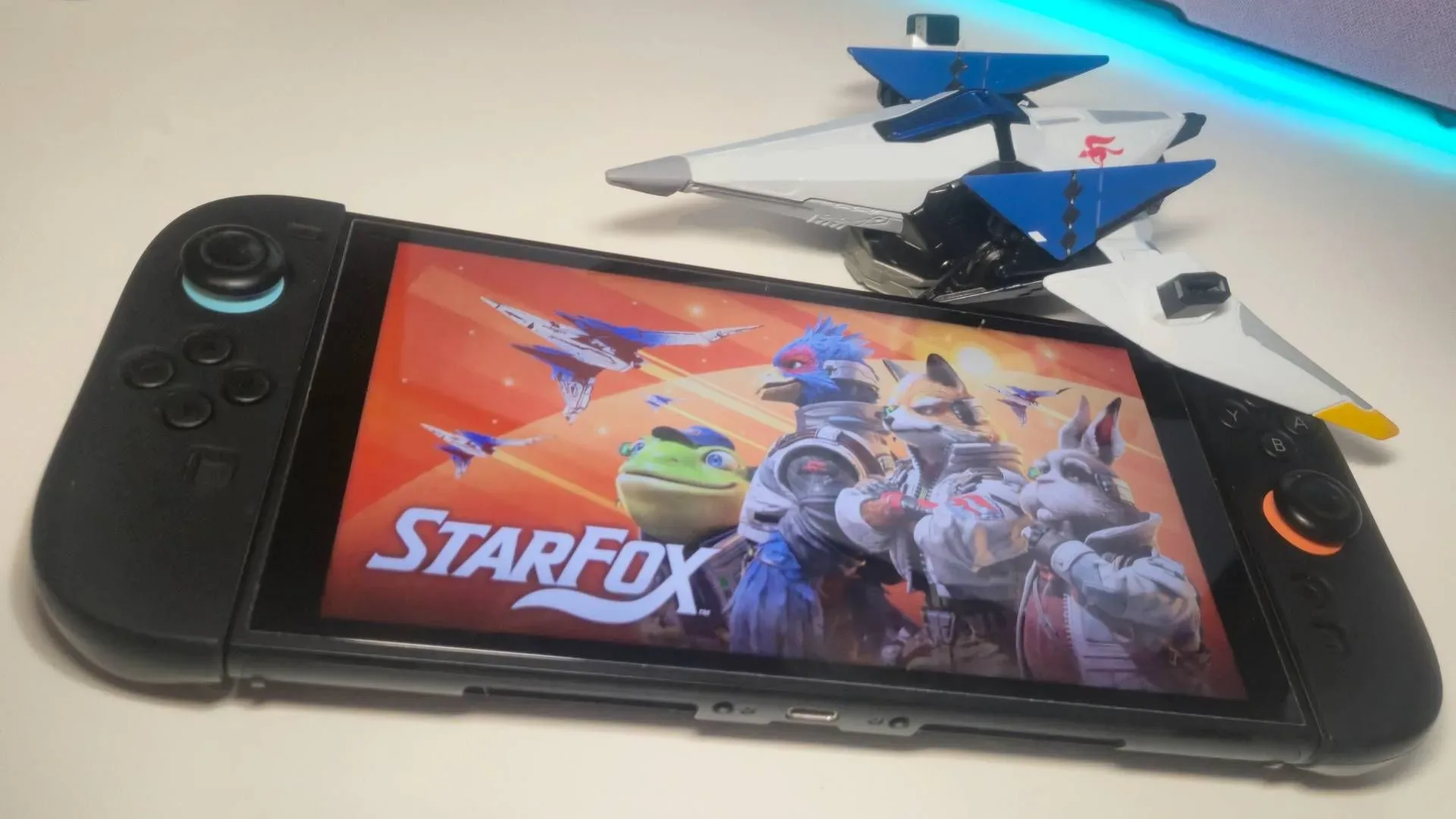
Star Fox on Switch 2 has received its free Version 1.2.0 update, bringing a notably multiplayer-focused package of additions alongside a campaign readability improvement. The patch adds Katina, Sector X and Venom to Battle Mode, enables four-player split-screen on one Switch 2, introduces new battle items and changes lobby behavior so a host leaving no longer ends the session for everyone else.
For players working through the story rather than pursuing dogfights with friends, the headline change is clearer feedback when a boss is being damaged. The game now makes it much more apparent when attacks connect with a point that can actually hurt the boss. That sounds modest on a feature list, but it addresses a fundamental communication job in an action game: telling the player that their chosen target and weapons are producing useful results.
The update does not add a new story level or a new overarching mode. Its value is instead in giving Battle Mode more places, more player capacity and a little more continuity, while making encounters in the core campaign easier to read. For a compact remake of a Nintendo 64 classic, that split is meaningful. A short game benefits especially from repeatable modes, and an arcade-style campaign benefits when its immediate visual language is easy to understand.
What Version 1.2.0 changes
- Three Battle Mode stages: Katina, Sector X and Venom join the mode.
- Four-player local split-screen: Four people can play Battle Mode on a single Switch 2.
- New battle items: Additional items can appear during battles.
- More durable lobbies: A lobby does not disband simply because its host leaves.
- Better boss damage feedback: The campaign more clearly signals when players are striking a vulnerable, damage-dealing point on a boss.
Those parts serve different audiences. The stages, items and split-screen option are directly for Battle Mode players. Lobby persistence matters for groups playing online or using hosted sessions, because it reduces a frustrating interruption: a match space vanishing when the person who created it departs. The boss-feedback update is for solo campaign runs, where the goal is less about adding content than making the existing challenge more legible.
Why the boss-feedback adjustment matters
“Hit feedback” is the collection of signals that tells a player an attack has connected and what that connection means. In this case, the important distinction is between merely firing into a boss encounter and successfully hitting a location that causes meaningful damage. Clearer feedback can be visual, audio-based or both; the key outcome described for Version 1.2.0 is that players can more readily tell when they are attacking a spot that hurts the boss.
That is particularly useful in a rail-shooter-style experience built around fast movement and limited time to interpret enemies. Bosses can ask players to identify a weak point while avoiding incoming attacks. If the game does not communicate whether a target is valid, failure can feel like guesswork rather than a test of aim, positioning or reaction time. Improved signaling does not necessarily make an encounter easier, but it makes the rules of that encounter clearer.
It also gives repeat players better information. In a score-minded or replayable action game, players often want to know why a run went well or poorly. A visible confirmation that a vulnerable point has been hit turns a vague strategy into an understandable one. Players can then adjust their aim with confidence instead of spending time wondering whether their shots are landing where intended.
Battle Mode gets the biggest share of the patch
Katina, Sector X and Venom are the major content additions, all arriving as Battle Mode stages rather than campaign missions. More arenas matter because multiplayer longevity depends heavily on variety. Different spaces can change sightlines, movement routes and the moments when players collide, even if the patch does not spell out the precise layout or rules of each stage.
Related coverage includes Star Fox on Switch 2 Gets Free 1.2.0 Update With Battle Mode Stages and Split-Screen.
The new battle items add another variable to matches. An item in a competitive mode is a pickup or effect that can influence the course of a fight. Without further details, it would be premature to assume exactly how these items work or how strongly they alter balance. Still, their inclusion means Version 1.2.0 is not solely a map pack: it expands the set of things that can happen during a match.
Four-player split-screen is the other substantial practical addition. Split-screen means multiple players share one display, each using a section of the screen for their own view. Here, the limit is four players on a single Switch 2. That makes Battle Mode more accessible for households or local get-togethers that want to play immediately without arranging separate systems. It is a different proposition from online multiplayer, emphasizing shared-room play and the familiar benefits and distractions of seeing opponents react in real time.
Not every multiplayer improvement has to be flashy to be useful. The lobby change may be the patch’s quietest quality-of-life adjustment, but it solves a basic social problem. A lobby is the pre-match or between-match space used to hold a group together. Previously, the host’s exit could dissolve that group. With the new behavior, the remaining players can stay connected rather than rebuilding the session from scratch.
A reminder that Switch 2’s N64 revival is not only Zelda
The update lands in a year when Switch 2 has also received a remake of The Legend of Zelda: Ocarina of Time. That comparison helps explain why this Star Fox release can be easy to overlook: Zelda is one of Nintendo’s most prominent series, while Fox McCloud’s return is a smaller, shorter experience. But the patch is a reminder that the platform’s Nintendo 64 revival includes more than its biggest adventure game.
Star Fox’s current digital price is listed at $50, while its story mode runs for less than two hours. Those facts put special pressure on the value of replayability and extra modes. A campaign can be brief by design and still reward repeat runs, but the Battle Mode additions provide a more straightforward reason for groups to return. Version 1.2.0 does not change the length of the story, yet it increases the number of multiplayer configurations and arenas available around it.
Fox McCloud also appeared in the hugely successful Mario Galaxy movie earlier this year, though that visibility has not translated into enormous sales for the Star Fox remake so far. With the holiday season ahead, the new update gives the game a clearer set of features to point to, particularly for families and local multiplayer groups. Whether that will materially change its commercial momentum is unknown, and the adjacent presence of Ocarina of Time makes for formidable competition on store shelves.
For more recent Nintendo-related context, see our coverage of Shigeru Miyamoto’s unexpectedly persistent Mario Kart character choice.
What the update does—and does not—suggest about Star Fox’s future
There are rumors that another Star Fox game could be in development, but no confirmed new project is established by this update. Version 1.2.0 should be read as support for the existing Switch 2 remake, not proof of a larger sequel or revival. The distinction matters: a patch with new multiplayer stages demonstrates that the current game is receiving post-launch attention; it does not reveal Nintendo’s longer-term plans.
Players looking for more Fox McCloud material do have another option on Switch Online: Star Fox Adventures, the GameCube game, arrived on the service over the summer. Its availability broadens the series’ presence on the platform, while the new patch gives the Switch 2 remake a more complete Battle Mode package.
The strongest case for Version 1.2.0 is therefore practical rather than speculative. It gives solo players better information at the moments bosses demand precision. It gives local groups four-player split-screen. It gives competitive players three more battle spaces, additional items and less fragile lobbies. None of that is a new campaign, but for a short, replay-oriented Star Fox release, it is a purposeful set of improvements.