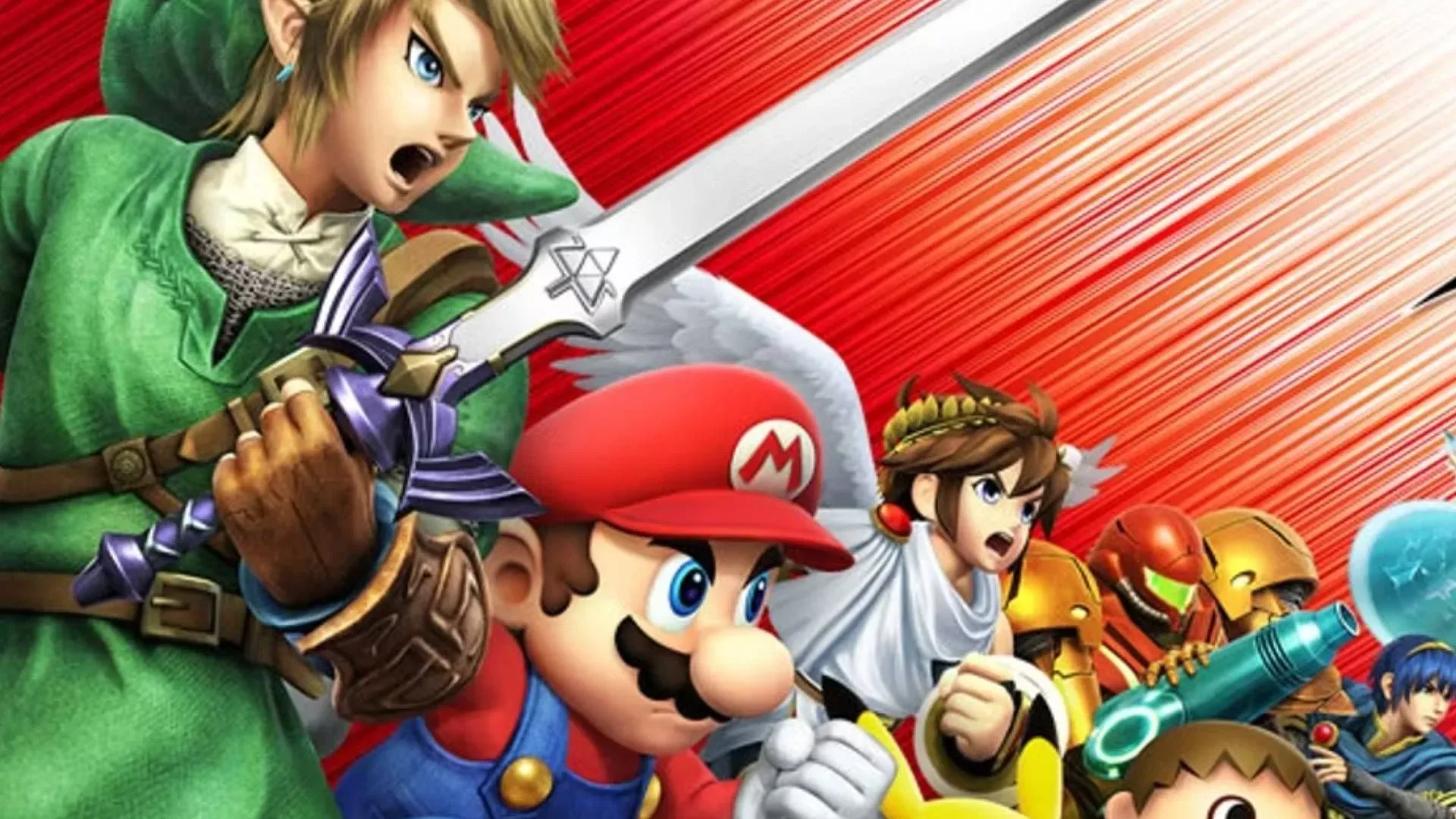

Nintendo’s stated response to a digital entertainment market swollen by internet distribution and AI is not simply to make more stuff faster. It is to make experiences people recognise as distinctly Nintendo.
Speaking during an investor meeting, senior executive officer and corporate director Yusuke Beppu framed development as the foundation of the company’s competitiveness and value. His comments came in response to a question about whether Nintendo’s focus on quality has extended individual game-development cycles, and how the company intends to manage the tension between creative ambitions and the commercial realities of running the business.
Beppu’s answer is direct in principle, if challenging in practice: Nintendo sees new, unique products as its highest priority. Development, in this view, is not merely a production function that feeds a release calendar. It is the engine that creates the reasons consumers might choose Nintendo in the first place.
“Development is the engine of Nintendo’s competitiveness and value,” Beppu said, adding that creating new and unique products is the company’s top priority.
That emphasis matters because the question was not only about quality. It was about time. Big games can take longer to create, while the business still has to make plans, manage costs, schedule products and meet consumer expectations. Beppu acknowledged that balancing creativity and business is always difficult, but stressed that work which fails to satisfy consumers will not produce strong business results either.
In other words, Nintendo’s argument is that the commercial side cannot be separated from the creative side. A shorter path to market does not automatically create a healthier outcome if the resulting product gives players no compelling reason to care.
AI changes the volume, not the need to stand out
Beppu placed that challenge in the context of technologies that have radically increased the amount of digital content available worldwide. He specifically pointed to both the internet and AI, alongside the large amount of entertainment people can access for free.
That is an important distinction. The comments do not present AI as a single rival product, nor do they establish a particular Nintendo policy on using AI in game development. Instead, they describe an environment: consumers have an enormous and growing menu of things to watch, play, read and interact with. In such an environment, being present is not the same as being chosen.
Related coverage includes Nintendo Says Distinctive Experiences Matter More as AI Expands Digital Content.
Digital-content abundance is the useful term here. It means that access to content is no longer the main obstacle for audiences. The harder problem is attention. When free and paid options are plentiful, every entertainment company must give people a reason to spend scarce time on its work.
AI is relevant to that problem because it can contribute to a broader increase in available digital material. But the core point extends beyond any one technology. Nintendo is operating in a market different from an earlier era, Beppu said, because the supply of entertainment has expanded so dramatically.
Its proposed answer is differentiation: experiences that are “very Nintendo.” That phrase is deliberately broad, and Beppu did not define it as a checklist of mechanics, genres or production tools. Still, its business meaning is clearer. Nintendo wants consumers to feel that its releases offer something they cannot simply replace with the next plentiful option in an already crowded feed, storefront or subscription library.
What “very Nintendo” means in business terms
For an audience, “very Nintendo” may sound like a description of tone, familiar characters, hardware-specific ideas or a certain kind of playful design. For investors, it also describes differentiation.
Differentiation is the ability of a product or company to be meaningfully distinct from alternatives. It does not require that every player prefer the product. It requires that enough people see a reason to choose it rather than treating it as interchangeable with something else.
Beppu’s comments make that concept central to Nintendo’s development strategy. The company’s objective is not described as pursuing technology for its own sake, racing to fill every available gap in the release schedule, or matching the sheer volume of content available elsewhere. The objective is to create new and singular entertainment that earns consumer interest.
That framing also explains why the length of development is not a simple metric of success or failure. A longer production period can be a concern because it affects planning and costs. Yet an aggressively shortened process can be a concern too, if it weakens the originality or consumer appeal Nintendo believes makes its games competitive. The meaningful question is whether the process results in an experience consumers want.
Beppu put the consumer at the center of that equation. The company’s efforts, he said, will not lead to good business results unless consumers are satisfied. That is a straightforward reminder that development strategy is ultimately tested outside the meeting room. A company can identify a market trend accurately and still miss if its work does not connect with people.
The release-cadence question needs nuance
The investor question linked Nintendo’s commitment to quality with the perception that each title’s development period is becoming longer. That concern is understandable at a high level: as projects become more demanding, companies have to decide how they will maintain output without reducing the room for experimentation and polish.
However, the available release picture does not support a simplistic idea that Nintendo is absent from the market while it waits on a handful of major projects. Since Nintendo Switch 2 launched, Nintendo has been releasing games roughly every month, with multiple releases in some months.
That does not tell us how long any particular game took to make, nor does it settle whether individual development cycles have increased. Release frequency and development duration are related but not identical measures. Different projects can overlap, teams can work on separate products at once, and the rhythm of releases does not reveal the production history of each title.
Still, the cadence provides useful context. The business challenge Beppu described is not necessarily a choice between quality and releasing anything at all. It is the more complex task of sustaining a catalogue while protecting the conditions needed to make products that feel distinctive.
Development time versus release frequency
These terms are easy to blur together, but they answer different questions:
- Development time is the period spent making a particular title.
- Release frequency is how often products reach consumers.
- Portfolio management is how a company balances multiple products, teams and schedules across a broader period.
Beppu’s remarks address the third issue as much as the first. Nintendo has to maintain its business while prioritising development that produces new, unique work. The fact that releases have continued regularly after the Nintendo Switch 2 launch is evidence that consumers are still seeing a steady flow of games, even if it does not reveal every project’s internal timeline.
What Nintendo did—and did not—say about AI
It is tempting to turn any executive reference to AI into a declaration that a company is either fully embracing it or holding it at arm’s length. That would go beyond the comments here.
Beppu did not announce a new AI initiative, a development tool, a release plan, a policy governing generative AI, or a claim that AI will shorten Nintendo’s production timelines. He identified AI as one of the technologies contributing to a far more crowded digital-content environment.
That makes the comments more strategic than technical. The point is about the consequence of abundance: when audiences have more choices, a company needs a sharper identity and more compelling work. Other entertainment businesses are confronting that same attention problem in different forms; for example, AI-driven changes to music-platform features have also become part of the broader industry conversation, as seen in this report on Spotify’s AI DJ options.
Nintendo’s particular answer, based on Beppu’s remarks, is to focus on entertainment that consumers perceive as unique to Nintendo. That is a high bar rather than a slogan that can be met by branding alone. If development is the company’s competitive engine, it has to continue producing the kinds of products that make the claim credible.
Why the message matters now
The most notable part of Beppu’s statement may be its refusal to frame abundance as an excuse. More content, more free entertainment and more AI-enabled output create a tougher market, but Nintendo’s answer is not presented as resignation. It is presented as a reason to be more deliberate about what it makes.
For players, that approach suggests the company sees distinctiveness as the value it must protect when choosing how to develop and manage games. For investors, it explains why questions about creativity and business cannot be reduced to development speed alone. The goal is to turn creative work into satisfaction for consumers, and satisfaction into sustainable business results.
Whether Nintendo consistently achieves that goal will be judged title by title. But the strategy outlined by Beppu is clear: as the world gets more digital entertainment than it can possibly consume, Nintendo believes its best defence is to make the kind of entertainment people feel they cannot get anywhere else.