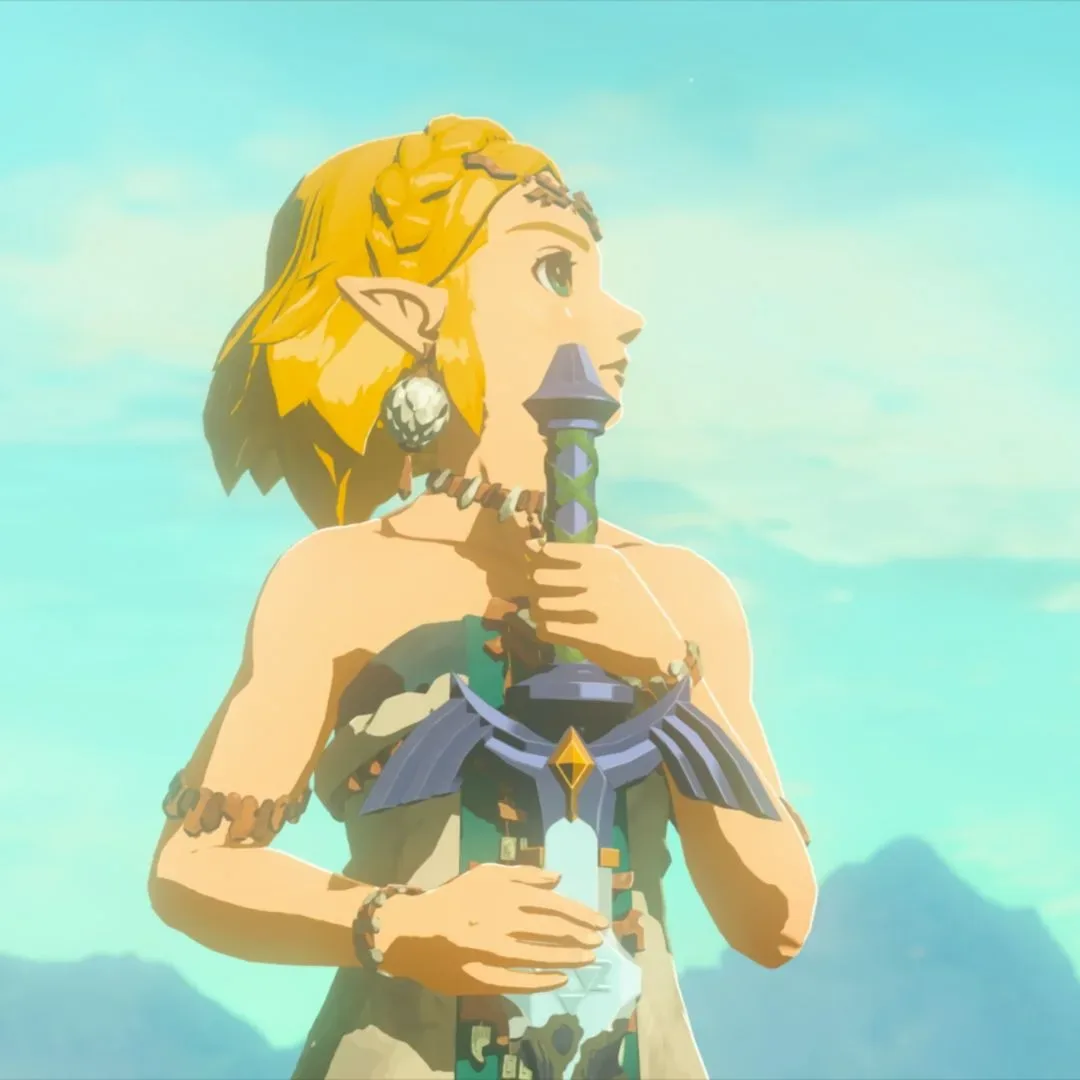
Nintendo’s official English-language Zelda chronology has been updated in a way that radically changes the apparent distance between The Legend of Zelda: Breath of the Wild and the Great Calamity that shaped its world.
The revision keeps a major point that has already fueled extensive discussion: the Hyrule seen being founded in The Legend of Zelda: Tears of the Kingdom’s past sequences is a new Hyrule, established after the kingdom associated with earlier games had passed into distant history. But its placement of later events is the more startling change. On the revised chronology, 9,900 years separate the Imprisoning War from the Great Calamity, followed by only 100 years before the events that lead into Breath of the Wild.
That is a dramatic departure from the commonly understood arrangement in which the Great Calamity occurred 10,000 years before Breath of the Wild. The new version appears to call the calamity connected to Link’s 100-year slumber the “second Great Calamity,” creating a two-disaster structure rather than treating the game’s return of Calamity Ganon as a simple repeat after ten millennia.
The old reading versus the new chronology
Before this update, the broad sequence was relatively easy to state even if it was difficult to situate within the series’ much larger mythology:
- Hyrule is founded or re-founded in the ancient past depicted by Tears of the Kingdom.
- Ganondorf attacks and is sealed during the Imprisoning War.
- At some later, unspecified point, Calamity Ganon devastates Hyrule and is repelled with Sheikah technology.
- Ten thousand years pass.
- Calamity Ganon returns, Link is left in a 100-year sleep, and Breath of the Wild begins after he awakens.
The revised official English timeline substantially changes steps three through five. Its ordering is now presented as follows:
- The Imprisoning War takes place.
- 9,900 years pass.
- The Great Calamity occurs.
- One hundred years later, Ganon returns in what is labeled the second Great Calamity.
- Link’s century-long sleep leads into Breath of the Wild.
Simple arithmetic is what makes this update so consequential. If the Imprisoning War is followed by 9,900 years and the first Great Calamity is then followed by 100 years, the Great Calamity is no longer an event 10,000 years before Breath of the Wild. It is instead positioned only about a century before the game’s present-day opening, with the exact phrasing leaving readers to consider whether there is any additional small gap between the stated events.
The change does not merely add another date to a famously knotty franchise chronology. It moves an entire civilization-shaping catastrophe by 9,900 years.
Why the wording is difficult to reconcile with Breath of the Wild
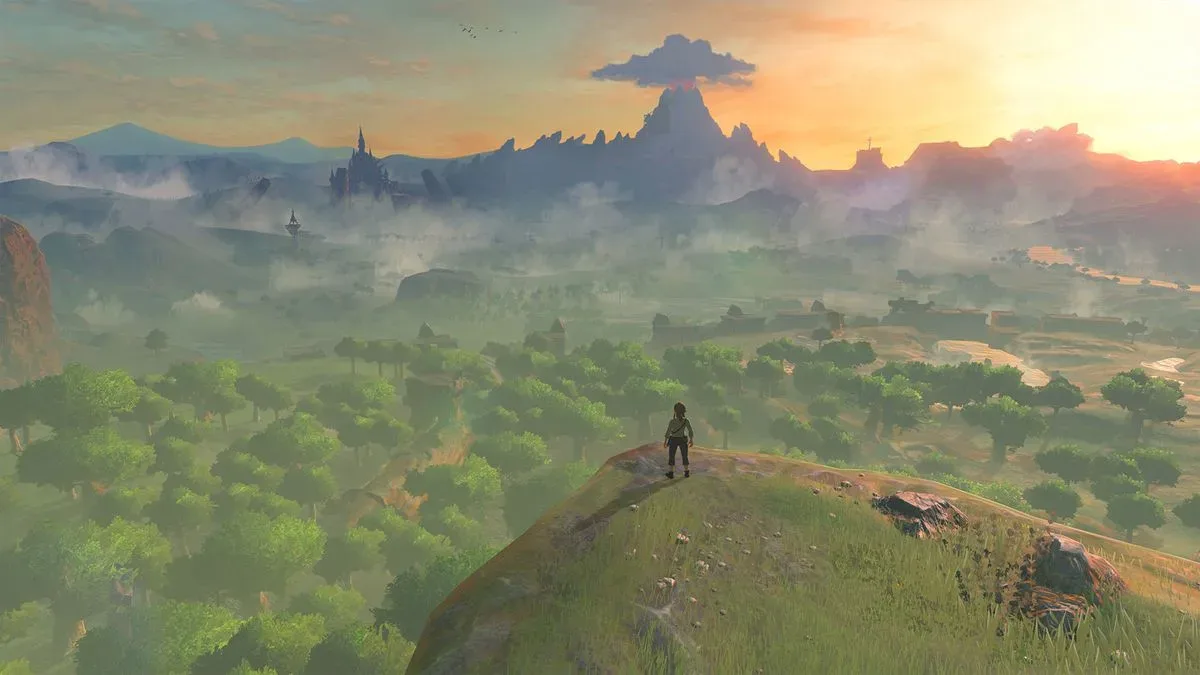
Breath of the Wild is built around the sense that the ancient Sheikah era belongs to an almost unimaginable past. Its world contains relics, ruins and knowledge whose origins have faded into legend. People seek to understand the civilization that existed before the earlier Great Calamity, while the advanced technology used to oppose that disaster carries the weight of something rediscovered rather than recently abandoned.
Related coverage includes Nintendo's Updated Zelda Timeline Moves the Great Calamity 9,900 Years Closer to Breath of the Wild.
Under the previous reading, that atmosphere had a straightforward chronological explanation. Ten thousand years is enough time for a society’s records, institutions and everyday context to fall away, leaving fragments for later generations to interpret. The distance helps make the ancient machines and their history feel mythic.
A roughly 100-year interval produces a very different implication. A century is still a meaningful span, especially after a catastrophic conflict, but it is not naturally equivalent to ten millennia. The new placement invites immediate questions about why knowledge of the pre-Great Calamity world would be treated as so remote and obscure. It also makes the difference between “ancient” as a cultural description and “ancient” as a numerical claim unusually hard to ignore.
That tension is why some fans may see the revised timeline as an error, an awkward label, or a chronology that needs further explanation. Those are interpretations, not facts established by the update itself. What the update clearly does is present a sequence whose numbers conflict with the former 10,000-years-before-Breath of the Wild understanding.
What “refounding” changes in the larger Zelda picture
The update also reinforces the interpretation that Tears of the Kingdom’s ancient Hyrule is not simply the first Hyrule from the earliest point of the overall series timeline. Instead, it is a later kingdom formed after the older Hyrule had disappeared into history.
That matters because Zelda continuity has long been organized around branching paths following Ocarina of Time. The series timeline divides into three branches based on that game’s outcome. Yet the distant era that eventually produces Breath of the Wild and Tears of the Kingdom has been treated as a far-off historical destination beyond those divisions.
A refounding provides a narrative bridge of sorts: it allows the kingdom in Tears of the Kingdom to be recognizably Hyrule while also acknowledging that an older Hyrule had existed and become ancient history. It is a useful distinction between a nation’s name and a single uninterrupted state. In ordinary historical terms, a refounding means a later polity adopts or restores an earlier identity; it does not require every institution, ruler or event from the first version to continue unchanged.
That clarification may make the placement of Tears of the Kingdom’s flashbacks easier to understand at a high level. It does not, however, resolve the new Great Calamity problem. In fact, separating a new Hyrule from the much older one makes the precise timing of events within the new kingdom even more important to readers trying to map the era’s history.
Terms worth keeping separate
The discussion is easier to follow when several similarly named events are not collapsed into one another.
- The Imprisoning War: In this context, the conflict in the ancient past of Tears of the Kingdom, ending with Ganondorf being sealed away.
- The Great Calamity: The catastrophe associated with Calamity Ganon and the use of Sheikah technology to push back the devastation.
- The second Great Calamity: The new timeline’s apparent name for Ganon’s later reemergence, the crisis that precedes Link’s 100-year sleep and the beginning of Breath of the Wild.
- Refounding: The idea that the Hyrule shown in Tears of the Kingdom is a later Hyrule established after the previous kingdom had already receded into history.
The distinction between the two calamities is especially significant. Calling the latter event the second Great Calamity suggests that the official chronology now treats it as its own named catastrophe, not merely the tail end of the earlier disaster. That nomenclature is the basis for the new 9,900-years-plus-100-years ordering.
A continuity question, not a gameplay change
For players, this update does not alter the games’ quests, maps, combat systems or story scenes. Nothing in the available information indicates a new game release, patch or rewritten in-game text. This is a change to the franchise’s published chronology and therefore matters chiefly to people reading Zelda as a connected historical saga.
Still, continuity documents influence how players interpret what is already on screen. A ten-thousand-year gap frames Sheikah technology as the inheritance of a civilization unimaginably distant from the people of Breath of the Wild. A century-long gap would instead frame much of that same material as the aftermath of a comparatively recent national disaster. Those readings give very different emotional and historical weight to the ruins scattered throughout Hyrule.
The debate also arrives while fans are closely watching Nintendo’s presentation of older Zelda material. A separate recent detail involving A Link Between Worlds drew attention after a platform label was removed; here is what changed with that Switch Online label. Neither matter proves anything about the other, but together they illustrate how carefully the series’ community follows official wording and classification.
Why fans are unlikely to let this one pass
Zelda has never been a series where every new release functions only as a self-contained tale. Its repeating names, eras, heroes, princesses and antagonists actively encourage players to look for connections. Nintendo has maintained an official chronology since at least 2003, even as its stories have left room for mystery and its timeline has remained exceptionally complicated.
There is also a long-standing tension at the center of the franchise. Shigeru Miyamoto has said the timeline is not especially important to the creators, while the existence of official charts and later revisions encourages close scrutiny. Eiji Aonuma has also resisted attempts to pile further Ocarina of Time references into newer material. Taken together, those points suggest a series that values recurring myth, themes and imaginative freedom without necessarily treating every numerical relationship as immovable.
That creative approach can support reinterpretation, but it also makes a 9,900-year shift particularly conspicuous. This is not a subtle reorder of two vague legends. It changes the stated proximity of a defining catastrophe to the era in which Breath of the Wild takes place.
Until the wording is further clarified or changed, the most accurate position is a cautious one: the official English timeline currently appears to locate 9,900 years between the Imprisoning War and the first Great Calamity, then 100 years between that calamity and the second Great Calamity tied to Link’s slumber. Whether that reflects an intended rethinking of Hyrule’s recent history or a contradiction awaiting correction remains unresolved.